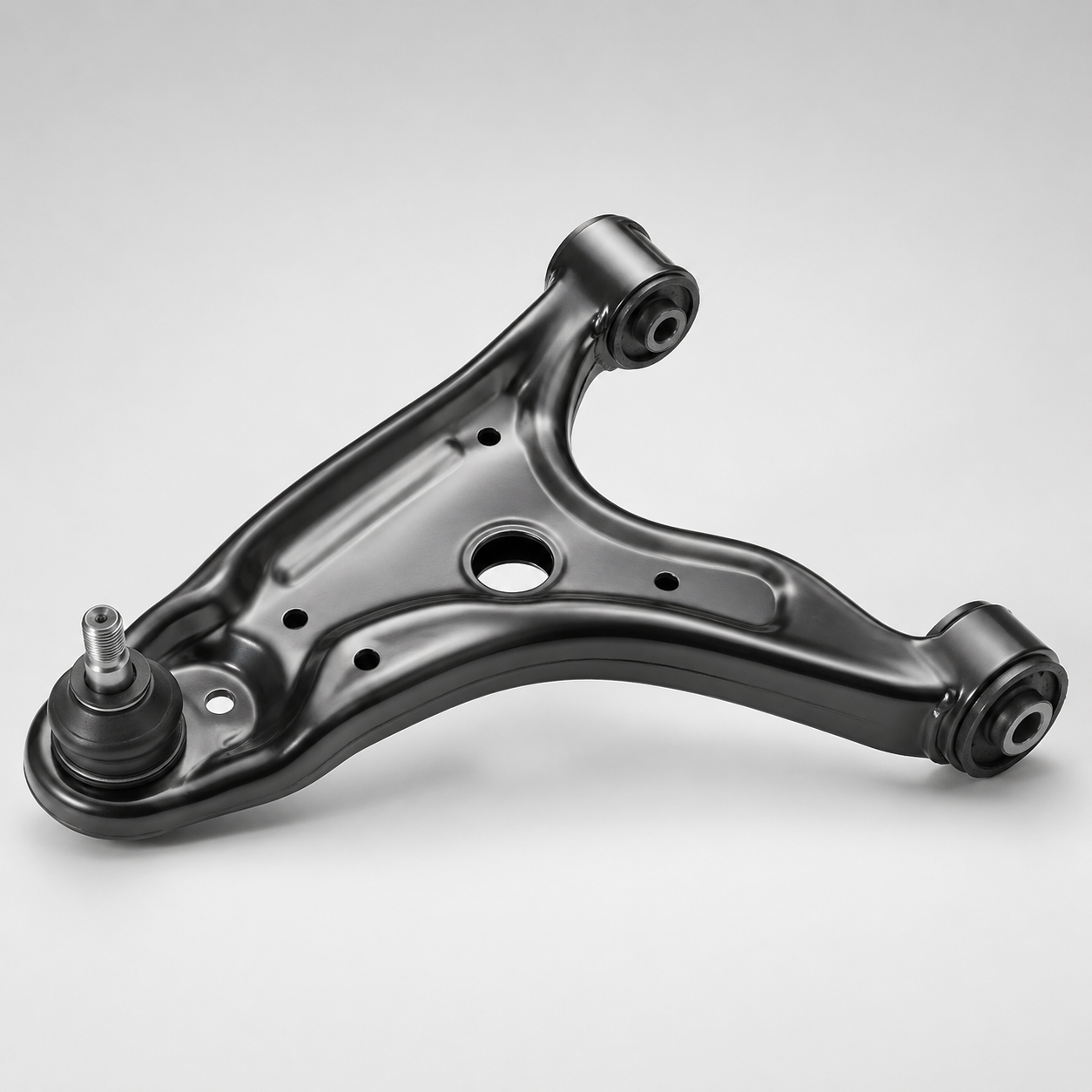
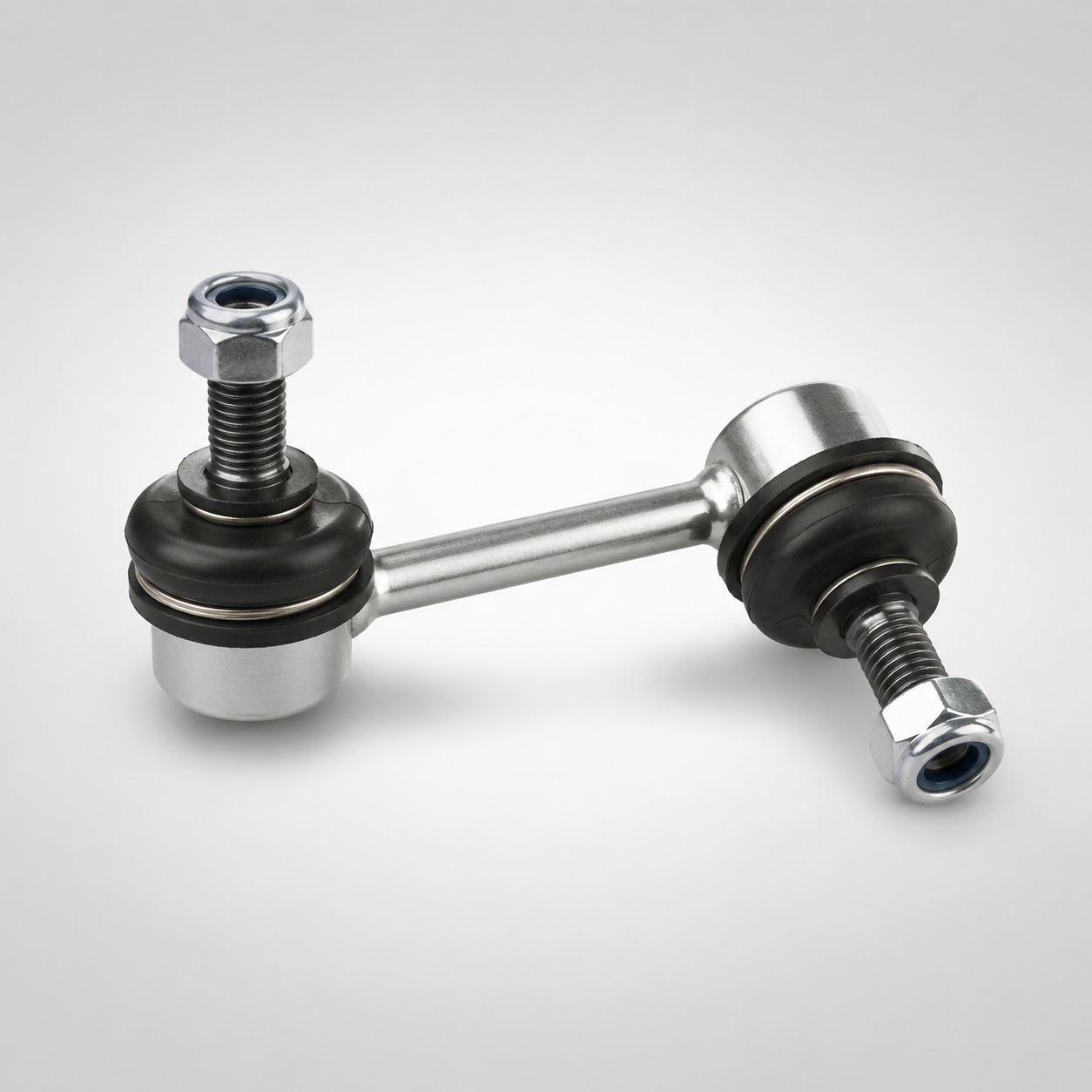
Buying **oem gm parts** for aftermarket programs is rarely a simple price exercise. Procurement teams are usually managing three expensive risks at once: fitment mistakes, unstable batch quality, and warranty claims that erase any nominal savings.
The useful question is not whether a supplier uses the right label. It is whether the part can repeatedly match OE-critical dimensions, material requirements, and functional validation closely enough to perform across the intended GM applications. That means tighter RFQs, better supplier screening, and clearer acceptance criteria before volume orders begin.
This article is for distributors, importers, and repair-chain purchasing teams sourcing replacement engine and powertrain components for GM platforms. It lays out how experienced buyers define the term, where sourcing programs usually fail, what to compare beyond price, and which documents and checkpoints should appear before approval. Driventus is an independent aftermarket manufacturer; brand names are referenced for fitment only.
Start with a definition: what buyers should mean by OEM GM parts
In B2B aftermarket sourcing, oem gm parts means very different things to different sellers. If the RFQ leaves the term undefined, quotations become hard to compare and easy to misread.
Some buyers use the phrase to mean parts sold through an original equipment service channel. In import aftermarket purchasing, the more practical definition is usually this: replacement parts built to OE-equivalent specifications for GM applications, with evidence.
That evidence should cover:
OE cross-reference control for each SKU
Dimensional conformity to drawing or approved sample
Material traceability by lot
Process stability supported by inspection records
Validation testing relevant to the part type
Compliance documentation for the destination market
Without those points, a low quote can hide the real issue: looser machining tolerance, weaker elastomer, reduced coating protection, incomplete heat treatment, or a downgraded inspection routine.
So define the acceptance criteria in measurable terms. State whether critical dimensions must hold within ±0.03 mm, ±0.05 mm, or ±0.10 mm depending on function. State whether sealing surfaces must stay within 0.05 mm flatness. State whether rotating parts must be weight-matched within 3 to 8 g per set. For gasket programs, thickness tolerance often needs to be written as ±0.05 mm to ±0.10 mm rather than described as “standard.”
Then go one level deeper. Ask whether the supplier machines, casts, tests, and packs in-house or mainly assembles from outside sources. A manufacturer with real process ownership should be able to explain sample lead time, normal lot size, first-off inspection, in-process checks every 30 to 60 minutes, and final AQL release. Buyers building a broader inquiry can review our catalog before consolidating SKUs.
Failure modes first: how to judge OE-equivalence before approval
The fastest way to assess oem gm parts is to start with likely failure modes, not marketing language. A credible supplier should be able to discuss numbers, checkpoints, and test methods.
Core checks before approval
Check area
What to request
Why it matters
Part identification
OE cross-reference list, application list, revision status
Reduces catalogue and fitment errors
Dimensions
Key measurements, tolerances, gauge plan, CMM report where relevant
Confirms interchangeability
Materials
Material grade, hardness range, coating or surface treatment data
Affects wear, sealing, and corrosion resistance
Performance
Bench test or durability test summary
Screens out early-life failures
Packaging
Barcode format, inner/outer pack standard, corrosion protection
Supports warehouse handling and export transit
Traceability
Lot code format and production date logic
Helps contain warranty claims
</tr></thead><tbody> </tbody></table>Take a water pump as an example. Bolt pattern and pulley alignment are not enough. Buyers should also verify bearing specification, seal material, impeller geometry, and leakage test method. For gaskets and other sealing parts, compression set and thermal ageing resistance may matter as much as the outline dimensions.
The same logic applies across the range. For pistons, request pin bore size, skirt diameter, groove width, and weight data by cavity or batch. For crankshafts, ask for main journal diameter, rod journal diameter, surface hardness range, and runout records. For water pumps, a usable sample file should include housing critical dimensions, shaft runout, bearing end play, seal leakage criteria, and rotation torque values.
Push the discussion into actual limits. Typical checkpoints may include shaft runout no greater than 0.03 to 0.05 mm, zero visible seepage during the agreed leak-test window, and controlled assembly torque after lubrication. Those numbers make supplier answers comparable.
Many importers keep approval simple: document review, sample validation, then pilot-order verification. A practical pilot may be 100 to 300 pieces for complex machined parts or 500 to 2,000 pieces for gaskets and seals, followed by incoming inspection against the agreed plan. That is how repeatability gets tested, not assumed.
Compare the system, not just the sample: supplier qualification questions
One good sample does not prove stable production. Buyers sourcing tolerance-sensitive oem gm parts need to qualify the production system behind the part.
Minimum documents to request
IATF 16949:2016 certificate
ISO 9001:2015 certificate
Process flow chart for the quoted part family
Control plan and incoming inspection standard
PPAP elements when required by the programme
REACH (EC) No 1907/2006 declaration where applicable
Packing specification and carton load data
Warranty handling procedure
Practical audit questions
Audit point
What a buyer should check
Warning sign
Traceability
Can the factory trace raw material to shipment lot?
Manual records with gaps
Tooling control
Are wear limits and maintenance intervals documented?
No preventive tool records
Measurement system
Are gauges calibrated and linked to inspection plans?
Calibration overdue or outsourced without records
Non-conformance control
Is there a quarantine process and disposition workflow?
Mixed good/bad stock areas
Change management
Are drawing, material, and supplier changes formally approved?
Informal verbal changes
Capacity planning
Can output meet forecast without shift instability?
Heavy dependence on emergency outsourcing
</tr></thead><tbody> </tbody></table>A documented quality system matters because it reduces batch-to-batch variation, especially for rotating and sealing parts where small deviations become field failures quickly.
Ask for more than certificates. Ask how corrective actions are closed, how recurring defects are tracked, and how fast the factory responds when a quality claim appears. If the program includes private label, custom packaging, or modified specifications, the supplier should also be able to support custom manufacturing under controlled revision management.
It also helps to ask blunt operating questions. What is the normal MOQ by SKU? Will the factory accept mixed-SKU trial orders? What surcharge applies below standard batch size? Real manufacturers usually explain MOQ in terms of changeover time, heat-treatment economics, plating minimums, or packaging setup cost. That answer often tells you more than the certificate file.
Spec deep-dive: validation points that should change by part family
A single generic inspection sheet is not enough for all oem gm parts. Validation should follow function, load, and failure risk.
For common aftermarket replacement categories, buyers can use the following baseline:
Crankshafts: chemical composition, hardness profile, fillet rolling or equivalent process verification where specified, runout measurement, balance control, crack detection method
Water pumps: housing dimension checks, bearing durability, seal leakage test, impeller clearance, rotation torque verification
Turbocharger-related components: casting integrity, machining tolerance, balancing records, leakage or pressure integrity checks depending on part scope
For friction- and durability-related products, buyers may also ask how the supplier references recognised frameworks such as SAE J2527 where relevant. For emissions-adjacent components entering regulated markets, the compliance discussion can also touch vehicle-level frameworks such as ECE R-83, even if the replacement part itself is not directly certified under that regulation.
What matters is relevance. “Tested before shipment” is not a serious validation statement.
A better approach is to define a minimum data pack for each family. For pistons, that may include alloy certification, hardness or microstructure data where relevant, skirt diameter report, pin bore report, groove-width report, and batch weight spread. For crankshafts, request hardness range, crack-test record, journal size report, runout result, and balance result. For gaskets, require material stack confirmation, thickness report, recovery or compression data, and fluid exposure review where oil, coolant, or fuel contact applies. For water pumps, ask for leakage test pressure and duration, bearing endurance standard, impeller clearance, and assembled torque report.
Process sequence matters too. A supplier should be able to explain whether crankshafts are magnaflux inspected before finish grinding, whether pistons are visually checked after machining and groove deburring, whether water pumps receive 100 percent leak testing, and whether multilayer or composite gaskets are verified lot by lot for thickness and bead integrity. If they cannot describe the real manufacturing flow, the validation claim is probably weak.
Landed value versus cheap price: how procurement teams should compare offers
The cheapest quote is not always the lowest-cost program. Buyers sourcing oem gm parts should compare landed value, not just ex-works price.
Main cost drivers include:
Raw material grade and volatility
Machining cycle time and tolerance level
Heat treatment, coating, or finishing steps
Validation scope and inspection frequency
Packaging specification for export routes
MOQ and production batch size
Rejection rate and warranty exposure
Lead time stability during peak season
A supplier offering 6 to 10 percent less may still cost more over the year if quality instability forces 100 percent incoming inspection, weak packaging causes transit damage, or fitment errors drive returns.
That is why many procurement teams use a weighted matrix covering price, PPM history, lead time, documentation quality, responsiveness, and audit score. The point is not to make sourcing more complicated. It is to stop false savings from slipping through the comparison.
Ask suppliers to separate one-time cost, batch-sensitive cost, and repeat cost. The first order may include sample charge, tooling refresh, package artwork setup, barcode setup, or a low-volume surcharge. Repeat orders should usually show unit price, packaging cost, and shipping term more cleanly.
MOQ logic should also be explicit. A gasket set may require 300 to 500 sets because die-cutting and packing are efficient at that level. A machined crankshaft may sit closer to 50 to 100 pieces because grinding, balancing, and protective packaging are higher-value operations. Water pumps often fall between those ranges depending on casting source and assembly loading.
Lead time deserves the same breakdown. Sample preparation may take 7 to 15 days if tooling and materials are ready. Repeat production may run 20 to 35 days under normal load. Constrained castings, forgings, or coatings can stretch that to 35 to 60 days. Ask how much of the schedule belongs to raw material purchase, machining, outsourced treatment, assembly, inspection, and packing. That makes delays easier to forecast and safety stock decisions easier to justify.
A simple landed-cost model should also convert quality variation into money. Saving $0.80 per unit on a 5,000-piece order looks attractive until a 2 percent defect rate adds inspection, service, replacement freight, and brand damage. Cheap on paper can get expensive fast.
Step by step: the RFQ structure that produces usable quotations
A weak RFQ creates vague offers. A structured RFQ makes oem gm parts suppliers easier to compare and usually shortens the approval cycle.
Include these fields in the first enquiry:
Part description and intended application
OE cross-reference if available
Annual volume forecast and first order quantity
Target market: EU, UK, US, Canada, Australia, Brazil
If the part must match an existing field-proven sample, say so directly. Identify the dimensions, material properties, or test requirements that cannot change without buyer approval.
Then add a short commercial-technical schedule for each SKU or family. State annual demand, launch quantity, target MOQ, required sample date, acceptable production lead time, and whether mixed loading is allowed. Identify critical limits clearly, such as bore size ±0.02 mm, gasket thickness ±0.05 mm, shaft runout ≤0.05 mm, or balance limit per drawing. If surface treatment matters, specify plating type, coating thickness where relevant, salt-spray expectation if applicable, and rust-prevention packing for sea shipment.
It also helps to request process detail in table form: which operations are in-house, which are outsourced, how often inspection occurs, how lot traceability is coded, what the standard carton quantity is, what the gross weight limit is, how pallets are built, and what the container loading estimate looks like.
On the commercial side, ask suppliers to split quotation lines into unit price, packaging cost, tooling or setup charge if any, sample charge if any, MOQ, sample lead time, mass-production lead time, and payment term. That format exposes where an apparently low offer depends on thin packaging, weaker inspection, or unrealistic timing.
For first orders, many importers add a simple release gate: sample approved first, pilot lot approved second, mass production third. It is straightforward, and it prevents arguments later.
Driventus is an independent aftermarket manufacturer; brand names are referenced for fitment only.
Frequently asked questions
The main risk is assuming visual similarity means OE-equivalence. Buyers should verify dimensions, material grade, process control, validation data, lot traceability, and agreed tolerances such as bore, thickness, runout, or weight spread before approving volume supply.
At minimum, ask for IATF 16949:2016 and ISO 9001:2015 certification, along with relevant compliance declarations such as REACH (EC) No 1907/2006 where applicable to the part and destination market. For higher-risk programmes, also request control plans, inspection standards, calibration evidence, and PPAP elements where required.
Use a weighted scorecard covering price, MOQ, lead time, documentation quality, audit results, traceability, validation scope, batch economics, and warranty performance. Buyers should also compare sample lead time, standard production lead time, low-volume surcharge, defect-rate exposure, and whether the supplier can support mixed-SKU trial orders or safety stock.
If you need OE-equivalent aftermarket components for GM applications, send your part list, target volumes, tolerances, MOQ expectations, and document requirements to **[request a quote](/contact.html)**.