Motor Mount Replacement: OE-Fit Checks for Buyers
Motor mount replacement is easy to underestimate. On paper, it is a rubber-and-metal part. In the field, it sets engine position, affects driveline angle, shapes NVH behaviour, influences exhaust clearance, and changes how nearby hoses and harnesses sit. A mount that looks close enough can still create warranty cost if geometry or stiffness drifts outside the vehicle’s working window.
That is why serious aftermarket buyers do not approve these parts on catalogue coverage alone. They check bracket hole position, stud perpendicularity, bonded rubber hardness, corrosion protection, and load validation. They also want to know what process controls sit behind those numbers.
In most programmes, motor mount replacement should be bought against measurable limits, not broad claims like “OE quality”. Typical control points include installed height tolerance around ±0.5 to ±1.0 mm versus approved drawing, centre-to-centre hole position around ±0.2 to ±0.5 mm depending on bracket size, stud perpendicularity typically within 1° or less, thread class confirmation, and elastomer hardness often held within ±3 to ±5 Shore A of target. Commercial terms matter too: a stocked SKU may ship in 15 to 30 days, while a new private-label item may need 45 to 75 days including sampling and approval.
This article takes a buyer’s view of motor mount replacement: how to make the approval decision, where failures usually start, what data separates a real supplier from a catalogue trader, and which MOQ, lead-time, and test questions affect programme viability.
Build the approval decision around risk, not just bolt-on fit
A mount has two jobs: hold the powertrain in the right resting position and control movement under torque, vibration, gear changes, and road shock. If either job is done badly, complaints arrive fast.
For motor mount replacement, the first decision should not be “Does it fit the application listing?” It should be “What can go wrong if this part is slightly off?” That framing changes the approval process.
The main buyer checkpoints are usually:
- Dimensional interchangeability with the OE sample or approved drawing
- Rubber-to-metal bond integrity under heat, oil exposure, and cyclic load
- Correct stiffness window for idle isolation and torque restraint
- Bracket and stud positional accuracy to avoid installation stress
- Corrosion resistance for the target market
- Traceability and lot consistency under a documented quality process
The trap is assuming a mount is acceptable because it bolts in. Many bad parts are installable. They simply place the engine slightly too high, too low, or off-centre. That can alter axle geometry, exhaust alignment, shifter feel, and the life of nearby components. Workshops usually report those issues as vibration, difficult installation, or premature wear rather than obvious mount failure.
OE references such as OE 11251… help identify fitment, but they do not prove equivalence. For responsible motor mount replacement sourcing, buyers should still verify against an OE sample, approved drawing, or fixture. Catalogue matching without measurement is weak control.
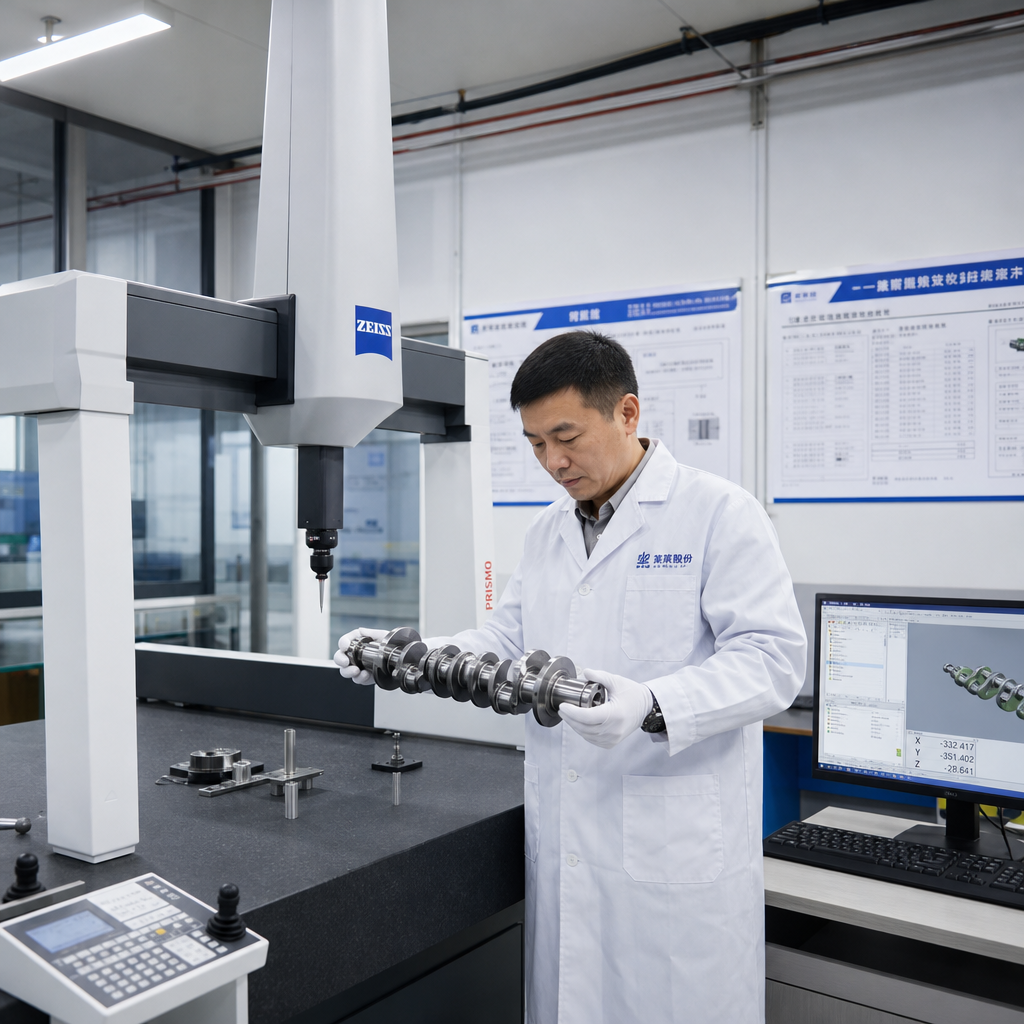
On first article review, many buyers measure 10 to 20 critical dimensions. Common points include overall height, hole centre distance, bracket width, slot length, stud projection, thread pitch, rubber pad position, and stopper clearance. Installed height is usually high-risk; even a 1 to 2 mm shift can move the powertrain enough to create clearance or NVH issues. Hole position is often held around ±0.3 mm on stamped-steel brackets, and sometimes tighter on compact layouts.
A practical approval flow is:
1. Teardown and measure the OE sample 2. Compare sample and drawing on a critical-dimension sheet 3. Run a pilot build on vehicle or fixture 4. Validate static and dynamic performance 5. Retain a golden sample for serial comparison
Commercial alignment should happen early, not after technical approval. Standard aftermarket motor mount replacement SKUs with existing tooling may start around 200 to 500 pcs per item. Private-label packaging, compound changes, or dedicated versions can push MOQ to 1,000 pcs or more. On fragmented ranges, platform consolidation often reduces mixed-container risk and improves landed cost.
At Driventus, buyers typically start with our catalog, then review critical dimensions, validation scope, and supply terms before approving serial production.
Where replacement mounts fail: the spec points that actually drive returns
Most return problems in motor mount replacement come from two places: dimensional drift and elastomer mismatch. The part may look fine. It may even install cleanly. But in service it transmits too much vibration, allows too much movement, or loads the bracket and fasteners in the wrong direction.
| Check point | Typical buyer concern | Why it matters in service |
|---|---|---|
| Centre-to-centre hole distance | Misalignment at installation | Can preload brackets and shorten service life |
| Stud diameter and thread accuracy | Fastener mismatch | Causes assembly delays and stripped hardware |
| Stud perpendicularity | Off-angle loading | Increases stress on bonded areas and fasteners |
| Installed height | Engine position shift | Affects axle angle, exhaust clearance and shifter feel |
| Rubber hardness and stiffness | NVH complaints | Too hard increases vibration; too soft allows excess motion |
| Bonded area coverage | Separation risk | Weak bonding can fail under repeated torque cycles |
| Surface coating | Corrosion return rate | Salt spray performance matters in EU, UK, US and Canada |
| Test area | What is checked | Typical purpose |
|---|---|---|
| Dimensional inspection | Hole position, overall height, bracket profile, thread data | Confirms installation compatibility |
| Static load test | Compression and displacement under defined load | Verifies load-bearing capability |
| Dynamic fatigue test | Cyclic loading over defined frequency and amplitude | Assesses service-life durability |
| Bond strength test | Rubber-to-metal adhesion | Screens delamination risk |
| Salt spray test | Corrosion resistance of coated metal parts | Evaluates coating durability |
| Heat ageing | Property change after elevated temperature exposure | Checks stiffness and crack resistance |
| Fluid resistance | Exposure to oil or other automotive fluids | Confirms elastomer stability |