turbocharger · 2026-06-06

Minimum Order Quantity for Turbocharger Sourcing

Minimum order quantity affects landed cost, inventory risk, supplier selection, and overall programme viability when sourcing turbochargers. For procurement teams, MOQ is more than a pricing threshold. It is tied to foundry lot size, CNC setup time, rotor and CHRA balancing flow, packaging print runs, inspection frequency, and the workload around compliance documents. A low MOQ can reduce stock exposure and make market testing easier, but it usually comes with a higher piece price, weaker freight efficiency, and fewer options for private-label packaging or engineering changes. A high MOQ can improve batch efficiency and price stability, yet it also increases working capital needs, storage pressure, and the risk of holding slow-moving or superseded references.

This article explains how to evaluate minimum order quantity for turbocharger programmes in a practical B2B sourcing context. It looks at what drives MOQ at factory level, how standard catalogue items differ from private-label and customised builds, which documents and process details to request before placing an order, and how buyers can negotiate terms without creating hidden quality, lead-time, or claim-handling risk. Driventus is an independent aftermarket manufacturer; brand names are referenced for fitment only.

What MOQ means in turbocharger procurement

MOQ is the smallest order volume a supplier is willing to produce, assemble, package, or ship under defined commercial terms. In turbocharger supply, that threshold is not always a single figure. It may be set per part number, per purchase order, per production batch, per packaging format, or per minimum shipment value. Some suppliers also separate assembly MOQ from shipment MOQ. For example, they may build 100 units in one batch but allow releases of 20–25 units if the full batch has already been planned.

In practice, the minimum order quantity for turbocharger programmes should be treated as an operating and cost-control variable, not just a sales-policy number. A supplier may quote a low MOQ, but if that level sits below the economic batch size, the cost usually returns somewhere else through a higher unit price, separate setup fees, longer replenishment lead time, or less flexibility on packaging and documentation.

For buyers, MOQ should be reviewed alongside:

  • Annual demand per SKU
  • Forecast stability over 3, 6, and 12 months
  • Carton quantity and pallet loading pattern
  • Tooling, fixture, or gauge requirements for non-standard variants
  • Rotor assembly and CHRA balancing batch size
  • Lead time split for castings, machining, balancing, assembly, and export packing
  • Inspection and traceability document cost
  • Warehouse capacity, stock-turn target, and ageing risk
  • Warranty exposure on slow-moving technical items

It is also worth defining exactly what the supplier means by MOQ. For example:

  • A 50-piece MOQ per part number is very different from a 50-piece MOQ across mixed references.
  • A low MOQ for neutral packaging may become a much higher MOQ for private-label cartons with printed artwork.
  • A supplier may accept a small first order, but only with non-recurring engineering, label, or carton-plate charges billed separately.

So the key question is not just "What is your MOQ?" but also "What production, packaging, and documentation assumptions sit behind that MOQ?" That conversation usually shows whether the number reflects real process economics or simply a broad commercial preference.

For standard aftermarket references listed in our catalog, MOQ is usually lower than for tailored programmes because drawings, routings, balancing parameters, packaging formats, and inspection plans already exist. That makes smaller replenishment orders easier to support and reduces the number of production variables the supplier has to control.

What drives order thresholds at factory level

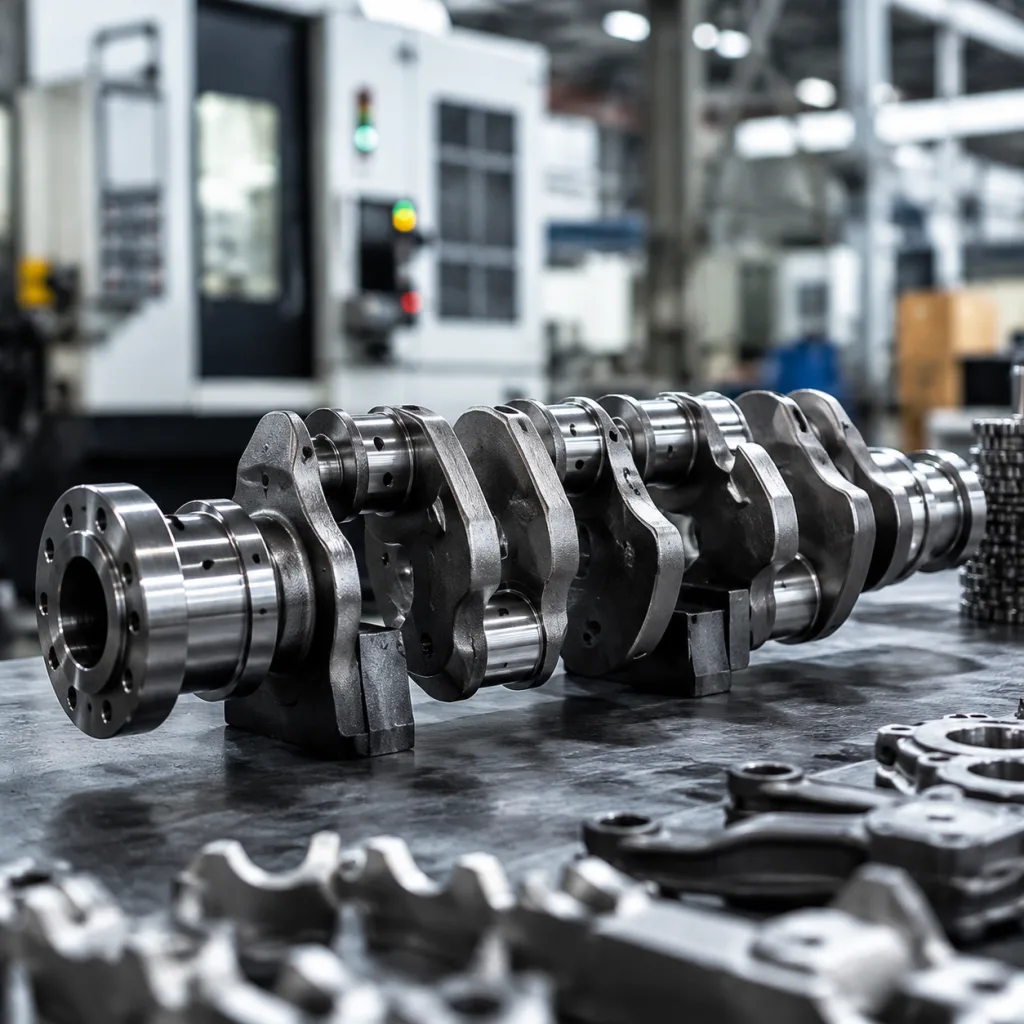
Turbochargers combine multiple precision components: turbine housing, compressor housing, shaft, turbine wheel, compressor wheel, CHRA parts, bearing system, seal components, fasteners, and actuator-related parts where applicable. MOQ is shaped by the cost and complexity of keeping these parts in controlled, repeatable production. Even when final assembly looks simple, the real threshold is often set upstream by casting, machining, balancing, incoming supply, and packaging constraints.

Typical factory-side drivers

1. Casting and forging economics Turbine and compressor housings are commonly sourced in foundry lots rather than one-piece flow. Foundries may impose minimum melts or pattern-run quantities, and a supplier may need to buy housings in lots far above the buyer's requested release. For heat-resistant turbine housings, scrap allowance, heat-treatment load size, and batch testing can also shift the break-even point.

2. Machining set-up time CNC fixture changeover, tool-offset setting, datum verification, and first-off inspection all create fixed cost every time a reference runs. On low-volume SKUs, 2–4 hours of setup plus first-article approval can make up a large share of total conversion cost, especially where several housing or flange variants are involved.

3. Balancing operations Turbocharger rotating groups are typically controlled through separate balancing stages such as component balancing, rotor balancing, and CHRA/core balancing. Tolerance depends on design and process route, but balancing is usually treated as a controlled parameter, not a casual assembly step. Very small runs are technically possible, though machine scheduling, calibration checks, operator time, and record retention do not shrink in a straight line.

4. Material purchasing Bearing alloys, thrust parts, seal rings, shafts, compressor wheels, actuator hardware, and high-temperature fasteners may be bought in fixed inbound lots. If a sub-supplier sells a shaft-and-wheel set in batches of 100 or 200, the turbocharger assembler will often mirror that constraint in its own MOQ.

5. Sub-supplier dependencies Even when final turbocharger assembly is handled in-house, a critical part such as a shaft, wheel, actuator bracket, or machined housing insert may carry its own lot minimum, lead time, and quality-release requirement. This is common in aftermarket programmes that combine internal machining with external specialty components.

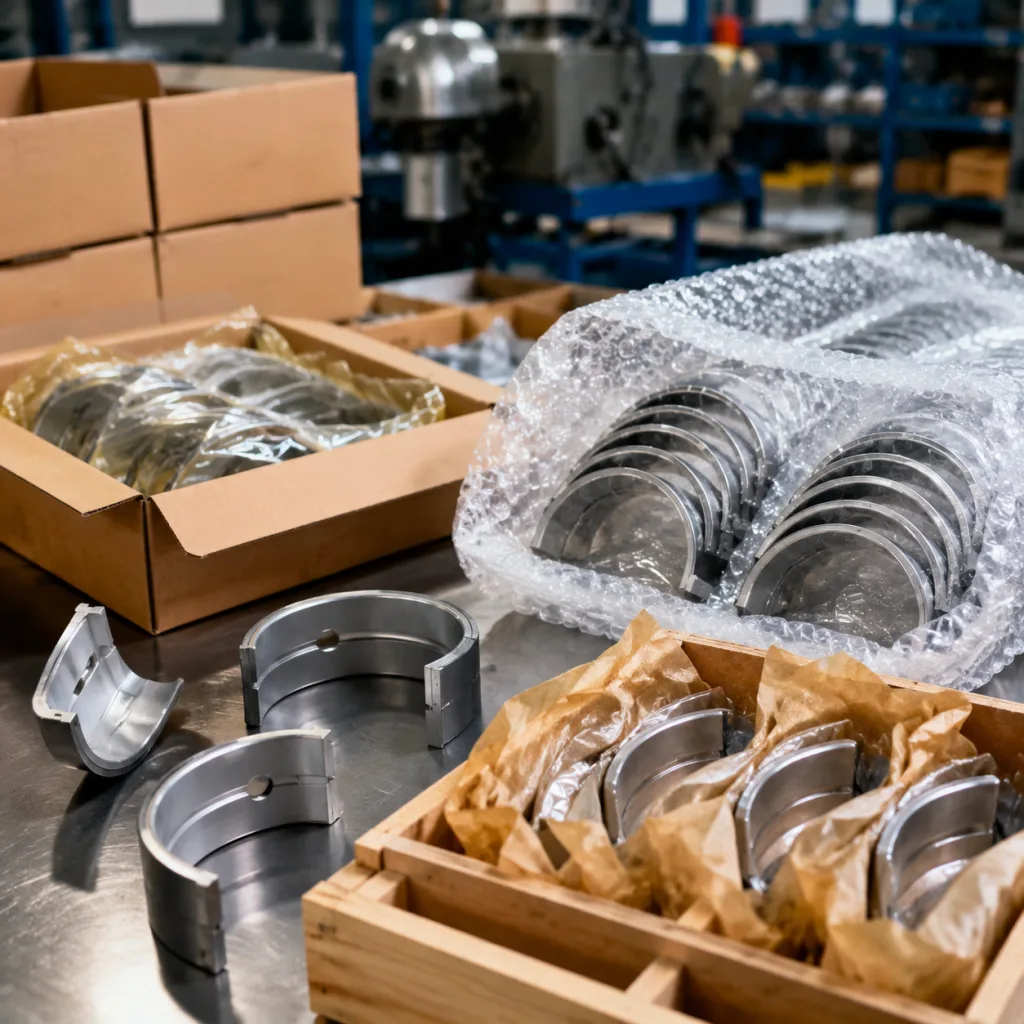
6. Packaging specification Custom barcodes, private-label cartons, colour printing, inserts, desiccant requirements, drop-protection changes, and region-specific shipping marks all raise the break-even quantity. Printed cartons often have separate print-run MOQs, sometimes in the high hundreds or low thousands, even when the turbocharger itself can be supplied in much smaller quantities.

7. Validation and compliance paperwork Buyers may request dimensional reports, balancing records, material declarations, inspection summaries, or PPAP-style files. Substance reporting aligned with REACH (EC) No 1907/2006 or other market requirements also adds engineering and document-control time. Those fixed administrative costs are easier to absorb across larger lots.

8. Inventory liability Slow-moving references with uncertain reorder patterns often attract a higher MOQ because the supplier is trying to avoid holding dedicated housings, actuator variants, or private-label cartons for 6–12 months or more.

9. Production line planning Factories commonly group references by housing family, machining route, balancing program, or actuator type. MOQ may be set to fit a planned production window and keep labour and machine utilisation at a stable level.

10. Warranty and traceability control Small irregular runs can make lot segregation, rework tracking, and root-cause analysis more difficult. Suppliers with disciplined traceability often prefer clearer batch structures so claims can be linked back to component lots, balancing records, and inspection status with less ambiguity.

A supplier operating under IATF 16949:2016 and ISO 9001:2015 should be able to explain how batch control, traceability, inspection planning, and nonconformance handling affect production planning and order thresholds. You can review our quality system for the framework used in production and inspection.

From the buyer's side, understanding these drivers helps separate a justified MOQ from an arbitrary one. If the threshold comes from foundry batching, balancing flow, or printed packaging, there may be workable alternatives. If it comes from genuine application complexity and low demand, a different stocking strategy may be the better answer than simply pushing for a lower number.

Typical MOQ ranges by sourcing model

The practical minimum order quantity for turbocharger sourcing depends heavily on the commercial and technical model behind the order. A standard replacement turbocharger already in regular production behaves very differently from a private-label order or a custom-engineered fitment programme. Buyers should compare MOQ by sourcing model rather than assume one benchmark applies to every project.

The table below shows common B2B procurement patterns.

</tr></thead><tbody> </tbody></table>\*Indicative ranges only. Actual MOQ varies by application popularity, housing family, balancing route, packaging specification, and requested documentation.

How MOQ usually changes by model

Standard catalogue items These normally offer the lowest MOQ because the supplier has already standardised drawings, routings, balancing parameters, quality checks, and packaging. Many suppliers can also support mixed-SKU consolidation on the same shipment, which reduces stock exposure per reference.

Private-label standard items The turbocharger itself may be unchanged, but custom cartons, labels, barcode formats, inserts, and master-carton marks often push MOQ upward. The product is standard; the packaging commitment is not.

Custom fitment or modified specification When a buyer asks for changes such as a housing variation, actuator bracket difference, machining revision, or fitment-related modification, MOQ usually rises. The supplier may need drawing review, sample approval, dedicated gauges, or special sourcing for certain parts.

New development or OE-style programmes This is usually the highest-MOQ model. Sample builds, validation cycles, controlled documentation, and dedicated purchasing all require enough volume to absorb setup and ongoing control cost. In these cases, MOQ is often linked to a framework agreement, forecast commitment, or nominated annual volume rather than a one-off purchase.

For some high-volume references, mixed container orders can reduce per-SKU exposure because several active part numbers share the same logistics and planning cycle. For niche or ageing applications, by contrast, the threshold may be driven more by housing sourcing, balancing setup, or custom packaging than by final assembly itself.

If you need non-standard packaging, kitting, market-specific labels, or fitment adaptation, discuss it early as part of custom manufacturing. Late changes usually push the minimum upward because cartons, components, or labels may already be committed. Early alignment gives the supplier a chance to suggest more efficient options, such as neutral launch packaging followed by private-label rollout once demand is proven.

How to evaluate an MOQ before you approve it

Procurement teams should test whether the proposed minimum order quantity for turbocharger supply is commercially rational, operationally workable, and technically aligned with the target application. The aim is not simply to force the smallest possible quantity. It is to confirm that the quoted MOQ supports stable supply without creating excess stock, blurred quality responsibility, or avoidable cost.

Buyer checklist

  • Confirm whether MOQ is per part number, per order, per shipment, or per packaging design.
  • Ask whether the threshold differs for sample order, pilot batch, and repeat order.
  • Verify whether pricing is based on EXW, FOB, CFR, or CIF Incoterms.
  • Check whether the quantity fits your monthly usage, target stock cover, and warehouse capacity.
  • Review the supplier's traceability method: lot code, serial marking, date code, or batch label.
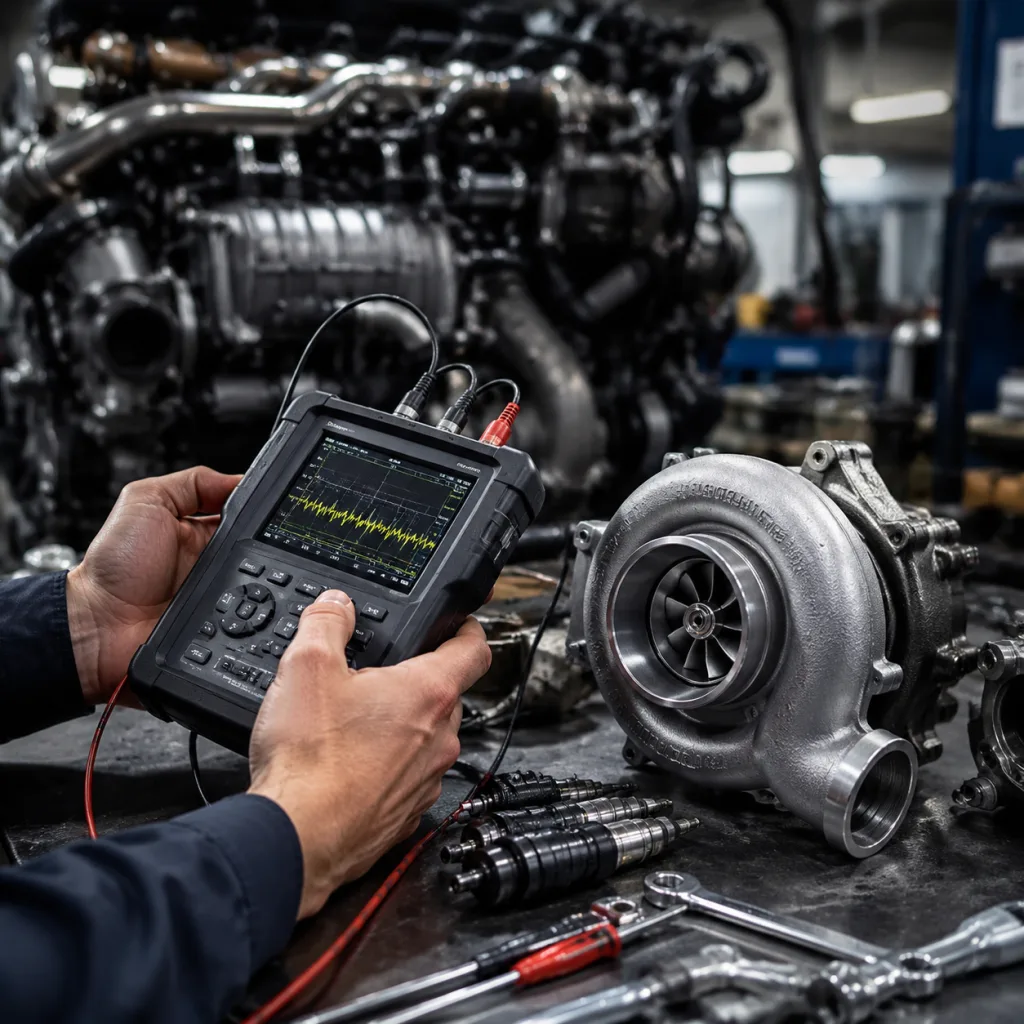
  • Request inspection scope for critical dimensions, balancing status, actuator setting where applicable, and any leak- or sealing-related checks used in the supplier's process.
  • Confirm inner carton quantity, master carton quantity, and pallet pattern to avoid broken-pallet inefficiency.
  • Ask whether the supplier supports mixed-SKU consolidation within one shipment.
  • Review chemical compliance declarations for destination markets, including REACH (EC) No 1907/2006 where required.
  • For regulated vehicle applications, verify the supplier understands aftermarket compliance expectations in the destination region.
  • Clarify whether tooling, sample, label, or packaging setup charges sit outside the unit price.
  • Check whether the quoted MOQ depends on a forecast commitment, blanket PO, or only the immediate order.

Questions that help validate the MOQ

A few direct questions can make the discussion far more productive:

  • Is the MOQ driven mainly by foundry lot size, machining setup, balancing batch, packaging, or commercial policy?
  • Can the supplier separate product MOQ from private-label packaging MOQ?
  • Is a lower quantity possible if the buyer accepts neutral cartons and standard labels?
  • Can the supplier hold finished goods or key components against a scheduled release plan?
  • Does MOQ change if the buyer orders several references from the same housing family or application family?

These questions often uncover room for a more flexible structure even when the supplier cannot officially lower the per-SKU minimum.

Evaluate MOQ against demand, not in isolation

An acceptable MOQ should match real consumption. A batch equal to 6–8 weeks of stable demand may be manageable; the same batch could be excessive for a low-rotation or seasonal reference. Review:

  • expected monthly and quarterly usage
  • reorder frequency
  • supplier lead-time variability
  • safety-stock target
  • warehouse cost per pallet location or bin location
  • warranty reserve assumptions
  • risk of supersession, fitment revision, or application ageing

Where buyers request PPAP-style submission, define the level in writing. Not every aftermarket order needs the same document pack as a full OEM programme, but ambiguity often turns into hidden cost in later quotes. It is better to specify exactly what is required: dimensional report, material declaration, balancing record summary, packaging approval, or sample sign-off.

For fitment-sensitive ranges, include any available OE cross-reference in your RFQ, for example OE 06A107065 style formatting when it is already used in your internal data. This reduces ambiguity in catalogue matching, although final interchangeability should still be confirmed by drawing review, dimensional verification, and application validation.

A sound internal approval process treats MOQ as part of total programme design. The right quantity is the one that supports reliable supply, acceptable stock turns, realistic freight economics, and clear technical control—not simply the lowest number offered in the quotation.

How to negotiate lower MOQ without adding supply risk

Lowering the minimum order quantity for turbocharger purchases is often possible, but the route you take matters. Buyers usually get better results by restructuring the programme rather than only asking the supplier to accept a smaller number. A supplier may agree to a lower MOQ on paper, then recover the cost through a higher piece price, weaker packaging, longer lead time, or less flexibility during claim handling. The real objective is to reduce stock exposure while keeping quality, responsiveness, and process discipline intact.

Consider these options:

  • Bundle several active references into one scheduled order.
  • Accept neutral packaging for the first batch, then switch to private label after sell-through is proven.
  • Use rolling forecasts so the supplier can reserve castings or critical parts while shipping in smaller releases.
  • Order a pilot batch at a higher unit price, with a written review at the next volume tier.
  • Share annual volume expectations by region or channel to support capacity planning.
  • Standardise documentation requirements so every order does not trigger separate reporting cost.
  • Align order timing with existing production families to avoid isolated low-efficiency machine setups.
  • Consolidate shipments across several SKUs or product categories where the supplier supports combined loading.

Practical negotiation approaches

1. Separate product from packaging One of the simplest ways to reduce MOQ is to keep the turbocharger on a standard production basis while simplifying launch packaging. Neutral boxes, monochrome labels, or master-carton-only branding can reduce the minimum materially compared with fully printed private-label retail packaging.

2. Use phased commitment Instead of insisting on a very small standalone order, propose a phased structure: pilot batch now, reorder trigger at agreed sell-through, and private-label conversion once demand is confirmed. This gives the factory better visibility and limits inventory risk for the buyer.

3. Offer better forecast quality Factories are more willing to support lower release quantities when they can see a credible 6- to 12-month forecast. Even a non-binding forecast improves planning for castings, shafts, balancing slots, packaging, and export scheduling.

4. Build mixed-SKU programmes If your range includes several turbocharger references, ask whether MOQ can be applied at family level rather than SKU level. This approach is especially useful for distributors serving multiple vehicle applications with moderate but consistent turnover.

5. Accept a transparent first-batch premium A small pilot order at a higher unit price is often safer than forcing a standard production price onto a non-economic batch. If performance and sales velocity are confirmed, both parties can reset pricing at the next agreed volume break.

A realistic negotiation balances unit cost, lead time, packaging quality, and traceability. Very small purchase quantities can create hidden problems such as split component sourcing, odd-lot packaging, partial-batch production, or under-utilised freight. Those issues often cancel out the inventory benefit and may increase warranty risk later.

For importers and distributors, a useful method is to compare total quarterly cost rather than piece price alone. Include:

  • freight utilisation
  • stock turns
  • pallet and bin usage
  • inbound receiving cost
  • inventory carrying cost
  • warranty reserve
  • purchasing and documentation workload per order

If you are comparing suppliers, ask each one to state clearly:

  • MOQ for standard references
  • MOQ for private label
  • MOQ for custom specification
  • Lead time by order type
  • Documentation included in base price
  • Rework and claim-handling process
  • Packaging options at each quantity level
  • Whether mixed-SKU orders are accepted

This makes quotations easier to compare and reduces the risk of apparent savings disappearing after award. In many cases, the best outcome is not the lowest stated MOQ, but the most workable mix of supply flexibility, stable quality, and transparent commercial terms.

When a higher MOQ is justified

A higher minimum order quantity for turbocharger sourcing is often reasonable when the programme includes custom engineering, dedicated materials, market-specific packaging, reserved stock, or unusually heavy documentation. In those situations, the supplier is carrying setup cost, planning complexity, and inventory exposure that cannot be absorbed efficiently through very small orders. The buyer's task is to confirm that the added commitment is matched by clear commercial or operational value.

Examples where a higher commitment may be justified include:

  • New application development with sample validation and fitment review
  • Unique compressor or turbine specification
  • Dedicated balancing program, fixture, or gauge requirement
  • Customer-specific carton artwork, barcode logic, and master-carton marking
  • Reserved safety stock for multi-branch distributors or repair chains
  • Extended document packs, portal reporting, or customer-specific traceability rules
  • Market-specific labels, inserts, or regulatory declarations
  • Low-volume references requiring dedicated component procurement

Situations where higher MOQ can improve the programme

Stable multi-market demand If the same reference sells consistently across multiple countries, channels, or business units, a larger production batch can lower unit conversion cost, improve loading efficiency, and reduce the risk of repeated short runs.

Custom branding with repeat purchase plans Private-label programmes generally work better when the buyer commits enough volume to justify carton printing, label control, and consistent stock rotation. A higher MOQ may unlock cleaner presentation and more stable replenishment.

Sensitive technical applications Where fitment accuracy, balancing consistency, actuator setting, or material control is particularly important, larger and more structured batches can support steadier process control and clearer traceability than sporadic very small runs.

Dedicated safety stock agreements Distributors supplying workshop networks or service chains may need guaranteed availability. In that case, a higher MOQ may be part of a broader stock-reservation strategy rather than just a production constraint.

The right decision depends on demand profile and programme maturity. If the reference is stable and strategically important, a larger order can reduce conversion cost, smooth replenishment, and avoid repeated setup loss. If demand is uncertain, it is usually safer to begin with a standard reference from our catalog and move to a tailored programme only after sell-through data is established.

Before award, ask the supplier to confirm the commercial and quality assumptions in writing, including:

  • what technical specification the MOQ covers
  • which packaging format is included
  • what documentation is included in base price
  • what lead time applies at that quantity
  • whether components or finished goods will be stocked specifically for your programme
  • how claims, rework, and supply interruptions will be handled

That written confirmation should then become the baseline for the purchase contract, supplier scorecard, and future order reviews. If you want to discuss batch planning, packaging options, or mixed-SKU ordering, you can request a quote.

Frequently asked questions

There is no single industry-wide figure, but standard catalogue turbochargers in regular production are often quoted from about 10 to 50 pieces per SKU, while private-label or custom programmes may start around 50 pieces and rise much higher depending on packaging, validation, and component sourcing. The practical MOQ is driven by housing supply, machining setup, balancing flow, packaging print runs, and documentation scope.

Often yes. Suppliers may support a pilot quantity through neutral packaging, mixed-SKU consolidation, phased ordering, scheduled releases, or a transparent first-batch premium. Buyers should confirm in writing whether repeat-order pricing depends on annual volume commitment, forecast visibility, or conversion to standard packaging quantities.

Yes. Quantity alone is not enough. Review process control under IATF 16949:2016, quality management under ISO 9001:2015, and market-specific substance reporting such as REACH (EC) No 1907/2006 where relevant. If the buyer requires balancing records, dimensional reports, material declarations, or PPAP-style files, that documentation workload can materially affect the economically realistic MOQ.

If you are reviewing turbocharger sourcing options, Driventus can help you assess batch size, documentation, packaging, and commercial terms with practical factory input. Contact our team to discuss your programme at /contact.html

Request a Quote
Sourcing model Typical MOQ tendency Practical range often seen* Main reason Buyer implication
Standard catalogue turbochargerLow to medium10–50 pcs per SKUExisting tooling, routings, inspection plan, neutral packagingFaster ordering and easier mixed-SKU purchasing
Private-label standard itemMedium50–200 pcs per SKU or per carton designCustom cartons, labels, barcode setup, print-run minimumsBetter brand consistency, but higher packaging commitment
Custom fitment or modified specMedium to high50–300 pcs depending on change scopeEngineering review, fixtures, validation, special componentsBetter application match, longer planning cycle
New development / OE-style programmeHigh200+ pcs, often tied to annual volume agreementSamples, validation, process control, dedicated inventory, documentationLower long-term risk when volume is stable