connecting rod · 2026-05-27

Connecting Rod for Jaguar XF Aftermarket Replacement Guide

If you are sourcing a connecting rod for Jaguar XF aftermarket replacement, the useful question is not only whether the part fits the engine bay. It is whether the rod matches the OE geometry, weight class, material condition, and inspection record closely enough to support normal service life. Jaguar XF applications vary by engine family, so the correct part must be checked against engine code, sample measurements, and the bearing and pin interfaces, not just the model name. Driventus is an independent aftermarket manufacturer; brand names are referenced for fitment only. For B2B buyers, the value is in consistent dimensions, documented traceability, and repeatable supply. That means asking for the same data you would expect from any serious engine component source: dimensional reports, heat-treatment control, batch traceability, and export-ready packing. The sections below cover what to verify before you place a repeat order.

What OE-equivalent replacement means

For a Jaguar XF engine, OE-equivalent does not mean a visually similar rod. It means the replacement is controlled across the dimensions and properties that affect loading, bearing life, and balance.

A buyer should confirm:

  • Centre-to-centre length matches the reference part or confirmed engine specification.
  • Big-end bore size and roundness support the correct bearing clearance.
  • Small-end bore and bushing fit the piston pin without excessive lash.
  • Beam weight is consistent across a matched set.
  • Offset, cap alignment, and part orientation match the original geometry.

If any of those points drift, the engine may still assemble, but the repair will carry higher risk of vibration, oil-film breakdown, or accelerated wear. In replacement sourcing, the model name is only the starting point; the engine code and measured sample are the decision factors.

Dimensions buyers should check

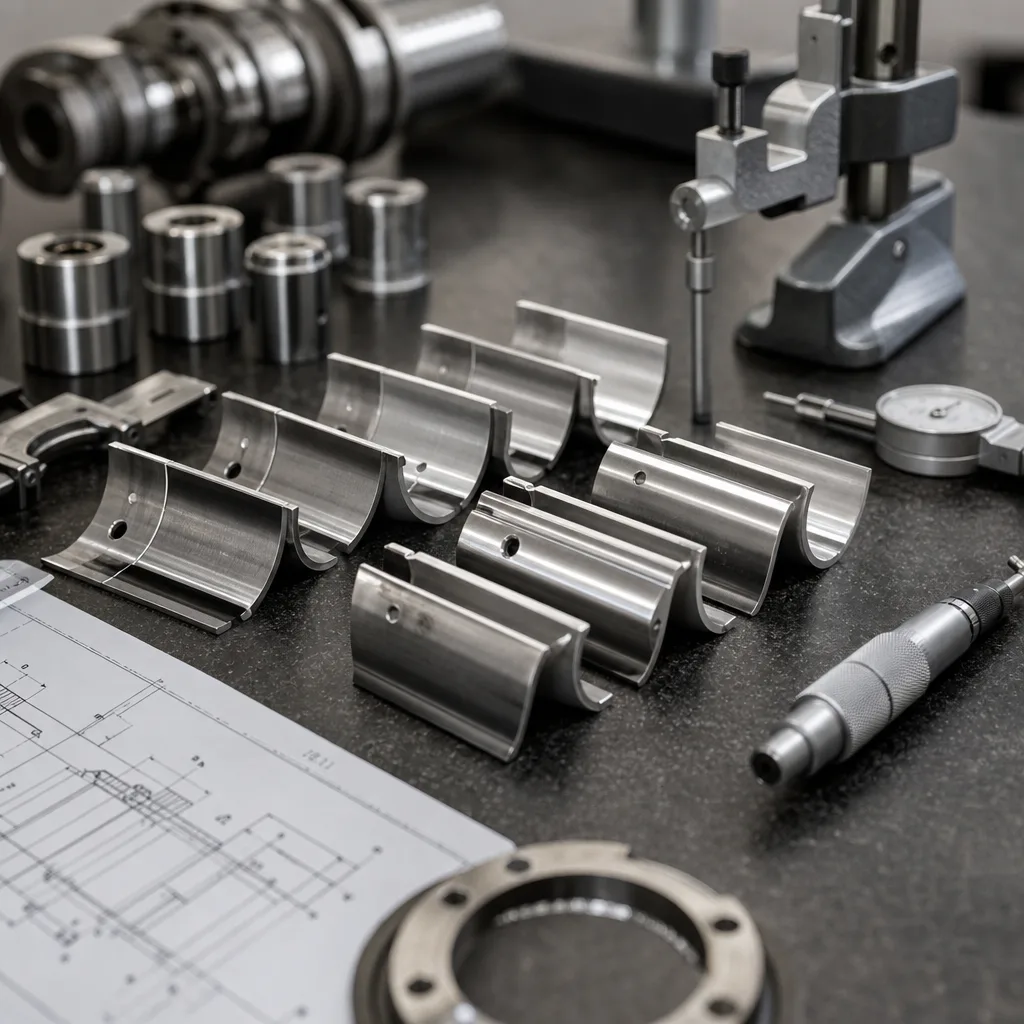
The fastest way to avoid a mismatch is to compare the supplied rod against the sample or OE data before purchase approval. The table below is the minimum check list for a production order or a workshop supply programme.

</tr></thead><tbody> </tbody></table>For larger orders, request one retained master sample, a lot-level dimensional report, and a simple acceptance standard that your receiving team can apply without interpretation.

Materials and manufacturing control

A credible replacement rod should not be judged only by price. The core questions are alloy selection, heat treatment, machining stability, and traceability. In practice, buyers usually expect forged alloy steel for high-load applications, with controlled heat treatment, shot peening where specified, and finish machining that keeps the big-end and small-end within the agreed tolerance window.

Driventus is an independent aftermarket manufacturer; brand names are referenced for fitment only.

Published quality and compliance references should include IATF 16949:2016 and ISO 9001:2015 for process control, plus REACH (EC) No 1907/2006 documentation where material declarations are required. Those documents do not replace your own incoming inspection, but they reduce ambiguity when the part is moving across borders and between multiple resellers.

Useful supplier evidence includes:

  • Heat-treatment batch record
  • Hardness range by lot
  • Dimensional inspection report
  • Traceability to raw material batch
  • Packaging that protects machined faces and threads during export

Validation before release

Before a purchase order is released, the sample should be checked as a functional component, not just as a catalogue line. For aftermarket replacement, the most common failure mode is a part that is dimensionally close but not stable under load.

A practical validation package should include:

1. Dimensional inspection on the first sample and one production lot. 2. Weight matching across the full set. 3. Verification of big-end roundness after cap assembly. 4. Check of small-end finish and pin fit. 5. Visual inspection for machining marks, burrs, and coating defects. 6. Packaging review so the rods arrive free of nicks and corrosion.

If you are building a repeat supply chain, this is the point where our catalog, the engine components range, and our quality system should be compared against your own acceptance criteria. If a programme needs a special finish, set, or packing format, custom manufacturing is the right route to define it before volume starts.

How B2B buyers should source for Jaguar XF programmes

For distributors, repair chains, and importers, sourcing is usually a balance of fitment certainty, lead time, and inventory risk. The right supplier should be able to work from the OE sample, engine code, or a verified measurement sheet, then hold that specification across repeat production.

A clean sourcing process normally includes:

  • Engine code and build year
  • Sample rod photographs and measurements
  • Required annual volume and reorder pattern
  • Target market and labelling needs
  • Packaging preference for retail, workshop, or bulk supply

When the demand is steady, ask for a production plan that covers MOQ, lead time, and packing configuration. When demand is mixed, use a narrower SKU definition and keep the dimensional control tighter. That is the simplest way to avoid returns and avoidable claim handling. For the next step, send the reference data through request a quote so the sample, tolerance target, and production path can be reviewed together.

Frequently asked questions

Use the engine code, a measured OE sample, and the piston pin and big-end dimensions. Model name alone is not enough because XF applications vary by engine family and production year.

Ask for dimensional reports, hardness or heat-treatment records, lot traceability, and evidence of process control aligned with IATF 16949:2016 and ISO 9001:2015. For material declarations, REACH (EC) No 1907/2006 is relevant.

Yes, if the request is defined by measurements, target volume, and packing needs. Custom manufacturing works best when the OE sample or validated specification is available before tooling and production release.

If you need fitment confirmation, dimensional checks, or a production quotation, use [request a quote](/contact.html).

Request a Quote
Check Why it matters What to ask for
Centre-to-centre lengthAffects piston position and compression geometryMatch to OE sample or engine code
Big-end boreControls bearing clearance and oil film thicknessMeasured bore report and roundness data
Small-end boreGoverns pin fit and piston stabilityPin size, bush material, and finished bore
Beam weightInfluences balance across the setMatched set weight in grams
Cap fit and fastener controlAffects clamp load and repeatabilityFastener spec and torque procedure
Surface conditionStrongly affects fatigue lifeShot-peen and finish records