Cylinder Liner Iveco Manufacturer China: Sourcing Guide
Procurement teams sourcing an Iveco cylinder liner from China should start with engine data, not vehicle badge. The same model line can use different bore sizes, flange heights, and liner constructions across engine families, so fitment must be confirmed from drawings, samples, or measured references. Driventus supplies cylinder liners for aftermarket distribution, OEM programmes, and repair networks with controlled machining, traceability, and export packaging. Driventus is an independent aftermarket manufacturer; brand names are referenced for fitment only. For buyers, the main questions are simple: can the supplier hold geometry after honing, can it document material and heat traceability, and can it ship repeat orders without revision drift. The sections below set out what to verify before release, which documents to request, and when a standard catalogue item is enough versus a custom-spec production run.
What Buyers Should Verify First
IVECO applications are not interchangeable by badge alone. Before releasing a purchase order, confirm the engine family, displacement, liner type, and the exact dimensional envelope.
- Bore diameter and allowable oversize path
- Flange outer diameter and flange thickness
- Installed height and deck protrusion
- Dry, wet, or semi-wet construction
- Ring travel, skirt clearance, and piston compatibility
- Cooling exposure and corrosion risk
For multi-site fleets and distributors, the fastest way to reduce returns is to source from engine data, not model year. If you are building a programme around an existing part family, compare it with our catalog and adjacent engine components before placing volume orders.
Materials And Machining Control
Most liner failures trace back to poor metallurgy or poor geometry control. A supplier should be able to explain the casting route, machining sequence, and final inspection method.
A practical specification request usually covers:
- Base material grade and casting process
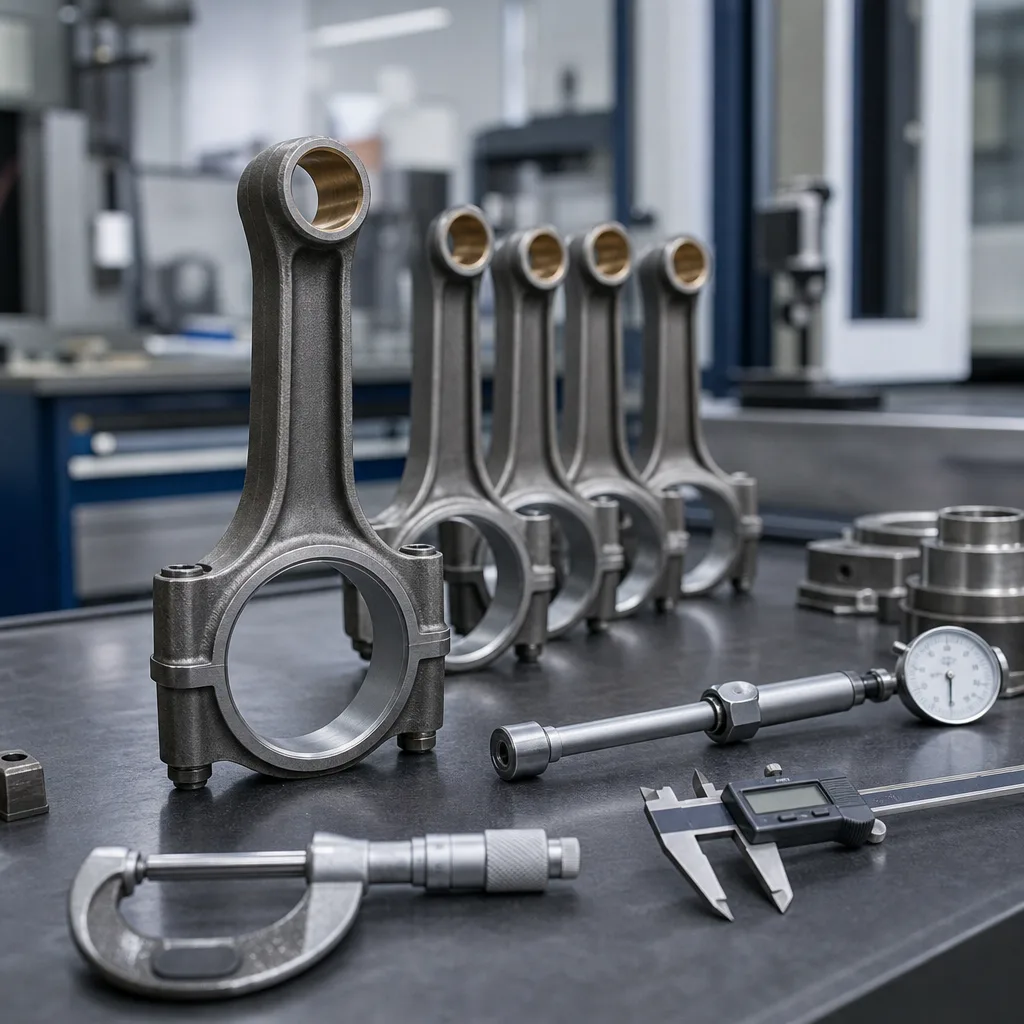
- Bore straightness, roundness, and taper control
- Surface finish after honing
- Hardness verification and microstructure checks where specified
- Protective oil, desiccant, and carton design for sea freight
A properly controlled liner should hold bore geometry after machining and transport, not just pass a visual inspection. Buyers should ask for the inspection method used for each critical dimension, especially when the part will be used in repair networks that expect repeatability across multiple shipments.
How China Sourcing Should Be Structured
China supply is competitive when the factory controls casting, machining, honing, and packing in one flow. That matters because the cost of a cylinder liner is often driven by scrap and rework, not only raw metal.
Procurement teams should confirm:
- MOQ by part number and machining route
- Sample approval path and revision control
- Lot traceability and heat number retention
- Carton and pallet specification for export
- Spare stock policy for seasonal demand
- Whether drawing-based projects are accepted through custom manufacturing
Lead time should be quoted against a confirmed drawing revision and inspection method. A supplier that can show the machining sequence and final inspection plan is usually easier to scale across distributors, workshops, and OEM supply chains. For broad range planning, review our catalog before asking for a private-label extension.
Quality And Compliance Documents
Quality evidence matters more than claims. A credible supply file for cylinder liners should include:
- IATF 16949:2016 certificate
- ISO 9001:2015 certificate
- Incoming material checks and heat traceability
- Dimensional inspection report
- Hardness and microstructure records where specified
- Packing photos and export marks
- REACH (EC) No 1907/2006 declaration for relevant materials and coatings
For coated parts, durability testing may reference SAE J2527. For engine programmes subject to emissions validation, ECE R-83 is a system-level reference, not a liner-only approval. Review our quality system before approving a new vendor. The same file should also show how deviations, nonconformities, and revised drawings are controlled across repeat orders.
Standard Versus Custom Supply
Some buyers need a direct replacement. Others need a revised liner for local machining practice, private-label packaging, or fleet maintenance planning. The right choice depends on how much engineering control you need.
| Route | Best for | Main advantage | Watch-out |
|---|---|---|---|
| Standard catalogue liner | Fast replenishment and wholesale distribution | Lower setup cost and shorter procurement cycle | Must match engine data exactly |
| Drawing-based custom liner | OEM, Tier-1, and private-label programmes | Controlled dimensions, coating, and packaging | Requires agreed revision control |
| Cross-reference programme | Multi-brand aftermarket distribution | Easier SKU consolidation | Fitment must be validated by measurement |