How to Choose a Head Gasket Supplier
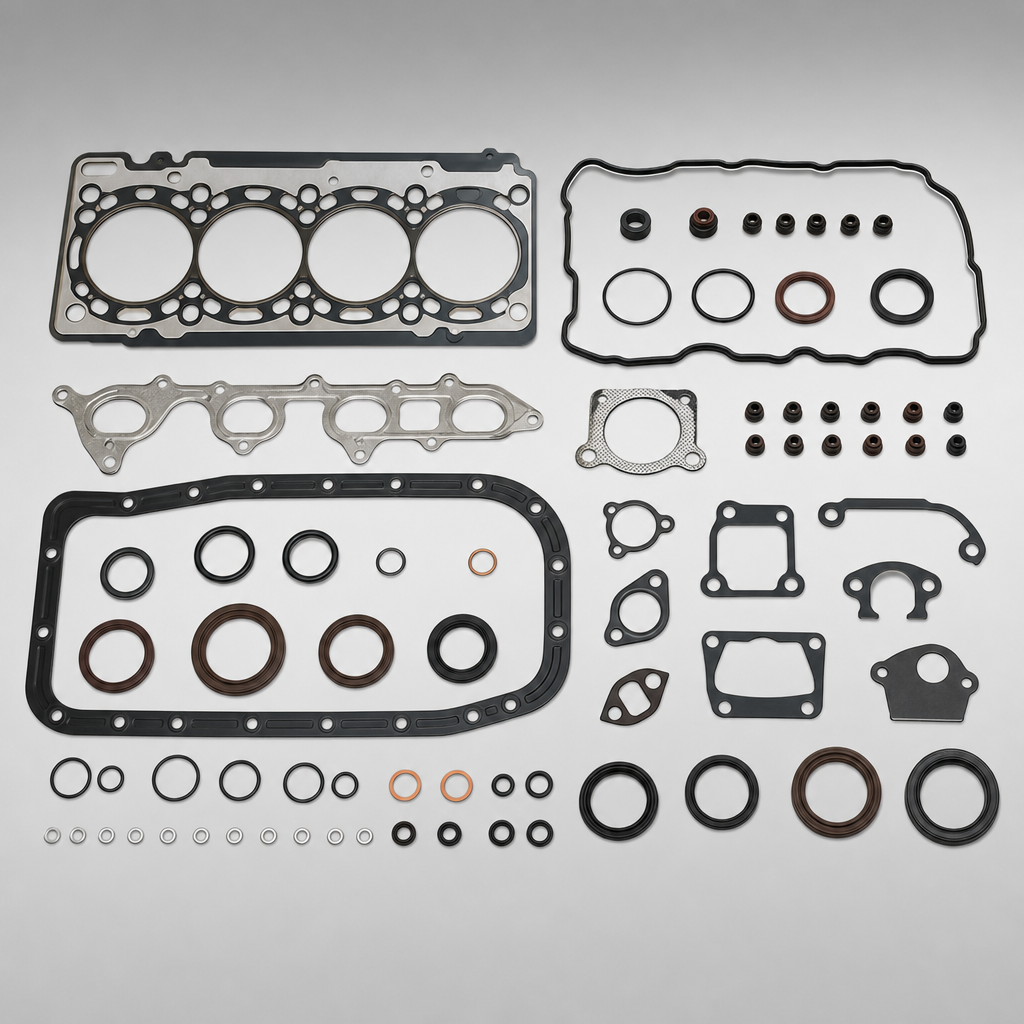
Knowing how to choose a head gasket supplier goes well beyond comparing prices. For importers, distributors, and OEM purchasing teams, the real cost usually shows up later: fitment returns, installation failures, production delays, warranty claims, and batch-to-batch inconsistency. A capable supplier should be able to document material construction, dimensional control, traceability, testing, and delivery performance before commercial terms are finalised. That matters even more for multi-layer steel and composite gasket programmes, where bead geometry, coating consistency, and compression behaviour directly affect sealing reliability.
The most effective sourcing reviews are not generic checklists. They combine technical verification, commercial realism, and launch discipline in one qualification process. In practice, buyers need hard numbers: nominal thickness by part family, hole-position tolerance, flatness limit, sample-to-production change control, MOQ by SKU, repeat-order lead time, and defect-response timing. The framework below is built for B2B teams sourcing cylinder head gaskets for aftermarket distribution, private label supply, or OE-adjacent production. Driventus is an independent aftermarket manufacturer; brand names are referenced for fitment only.
First filter: can this supplier control the exact gasket you need?
If you want to know how to choose a head gasket supplier, start with fitment risk. Many factories can produce a gasket that looks correct in a catalogue photo. Fewer can hold the exact bore openings, oil gallery locations, coating layout, and finished thickness needed for reliable sealing across repeated production lots.
Ask for a product matrix that shows:
- Head gasket construction types: MLS, graphite composite, fibre composite, metal-reinforced
- Supported engine segments: passenger vehicle, light commercial, agricultural, industrial
- Thickness range and layer options, for example 0.70-2.00 mm finished thickness with 2-layer, 3-layer, and stopper-layer MLS variants
- Bore diameter and fire-ring control capability, such as bore tolerance to ±0.05-0.10 mm and concentricity control to drawing requirement
- Aftermarket, private label, or build-to-print support
- OE cross-reference handling where relevant, such as OE 06A107065 format when supplied by the buyer
Then move from catalogue scope to control method. Ask how fitment data is managed, who owns the latest revision, and how a new or revised part number is released to production. A dependable answer should include revision-controlled drawings, approved cross-reference lists, and first-article verification against a master sample or buyer drawing.
For MLS programmes, do not stop at part-family language. Confirm whether embossment height, stopper height, and coating window are controlled by part number. Generic family standards are often where sourcing problems begin.
If the supplier also covers related engine parts, procurement can sometimes reduce complexity through shipment consolidation and fewer vendor touchpoints. Review our catalog if you want to assess whether gasket supply can be combined with other engine components.
A strong early test is simple: ask the supplier to explain the functional difference between MLS and composite head gaskets without reading from a price sheet. Serious manufacturers can connect construction type to sealing behaviour, flatness requirements, coating control, and clamp-load sensitivity. Typical buyer review points include finished thickness tolerance in the ±0.03-0.05 mm range for critical MLS references, hole position tolerance around ±0.10 mm unless drawing requirements are tighter, and controlled coating coverage without edge flooding that can affect clamp behaviour. If the explanation stays vague, the production control often does too.
Manufacturer or trader? Use the process map to find out
The next decision is not about price. It is about operating reality.
A qualified head gasket supplier should be able to show how the product is made, inspected, and traced through production. This matters especially when an exporter combines in-house manufacturing with externally sourced product lines. A trader can still be useful, but buyers should know when they are depending on one.
What to confirm in a factory review
- Pressing and forming capability for stopper layers and embossments
- Tooling management for bore profiles, coolant passages, and oil holes
- Raw material control for stainless steel grades, graphite sheets, and facing materials
- Coating process control, including cure consistency and adhesion checks
- In-process inspection points for thickness, hole position, and edge finish
- Batch traceability from raw material lot to finished packaging
Ask the factory to map the actual production route. For MLS gaskets, a credible sequence usually includes raw steel receipt and lot verification, blanking, forming or embossing, stopper control, deburring, cleaning, coating, curing, final dimensional inspection, marking, and packaging. For composite gaskets, review sheet lamination, fire-ring insertion where applicable, cutting accuracy, and compression-set control.
This is where the difference between manufacturer and trader becomes visible. If you need private label packaging, custom thickness development, or drawing-based production, confirm whether those steps are managed internally or subcontracted. Where programme requirements go beyond catalogue references, review custom manufacturing capability early.
Useful operating questions include:
- What press tonnage range is used for the gasket family?
- How often are forming tools sharpened or requalified?
- What gauge system is used for thickness checks, and what is the calibration interval?
- What is the standard sampling plan: first-off, hourly, every 500 pieces, or per batch?
- What is the normal batch size for a repeat order: 500, 1,000, or 5,000 pieces per SKU?
One practical audit question reveals a lot: if a coolant hole position is out of tolerance by 0.20 mm, who detects it, at which stage, and what happens next? A mature supplier should answer with a defined sequence such as line stop, segregation of the affected lot, 100% re-inspection where feasible, corrective-action issue within 24-48 hours, and shipment hold until disposition is approved.
Where head gasket programmes actually fail: tolerances, testing, and traceability
Certification is a starting point, not proof of part performance. When evaluating how to choose a head gasket supplier, buyers should focus on the failure modes that create claims later: thickness variation, poor hole location control, unstable coating, flatness problems, and weak traceability.
At minimum, request current certification status to IATF 16949:2016 and ISO 9001:2015. Then ask how those systems are applied to gasket production, incoming material control, calibration, non-conformance handling, and lot traceability.
You should also ask for measurable product controls rather than broad quality claims.
| Review area | What to ask for | Why it matters | |
|---|---|---|---|
| Thickness control | Nominal thickness and tolerance by part family, such as 0.95 mm ±0.03 mm or 1.20 mm ±0.05 mm | Affects clamp load and sealing | |
| Bore and hole position | Inspection method and drawing tolerance, often ±0.05-0.10 mm on critical openings | Prevents combustion or fluid leakage | |
| Surface finish | Coating consistency, dry-film thickness where applicable, and defect criteria | Influences micro-sealing performance | |
| Compression recovery | Material test data where applicable, with defined load and recovery values | Important for long-term sealing | |
| Flatness | Finished part flatness limit, for example ≤0.10-0.15 mm over the full gasket length unless drawing states otherwise | Reduces installation and sealing risk | |
| Traceability | Lot code structure and retention period, often 2-5 years depending on market requirement | Supports warranty analysis |
| Criteria | Supplier A | Supplier B | Supplier C |
|---|---|---|---|
| MOQ per SKU | |||
| Standard lead time | |||
| Private label support | |||
| Certification status | |||
| Traceability level | |||
| Corrective action turnaround | |||
| Consolidation with other engine parts |