Honda Civic Brake Pads: A B2B Sourcing Guide That Helps You Avoid Costly Mistakes
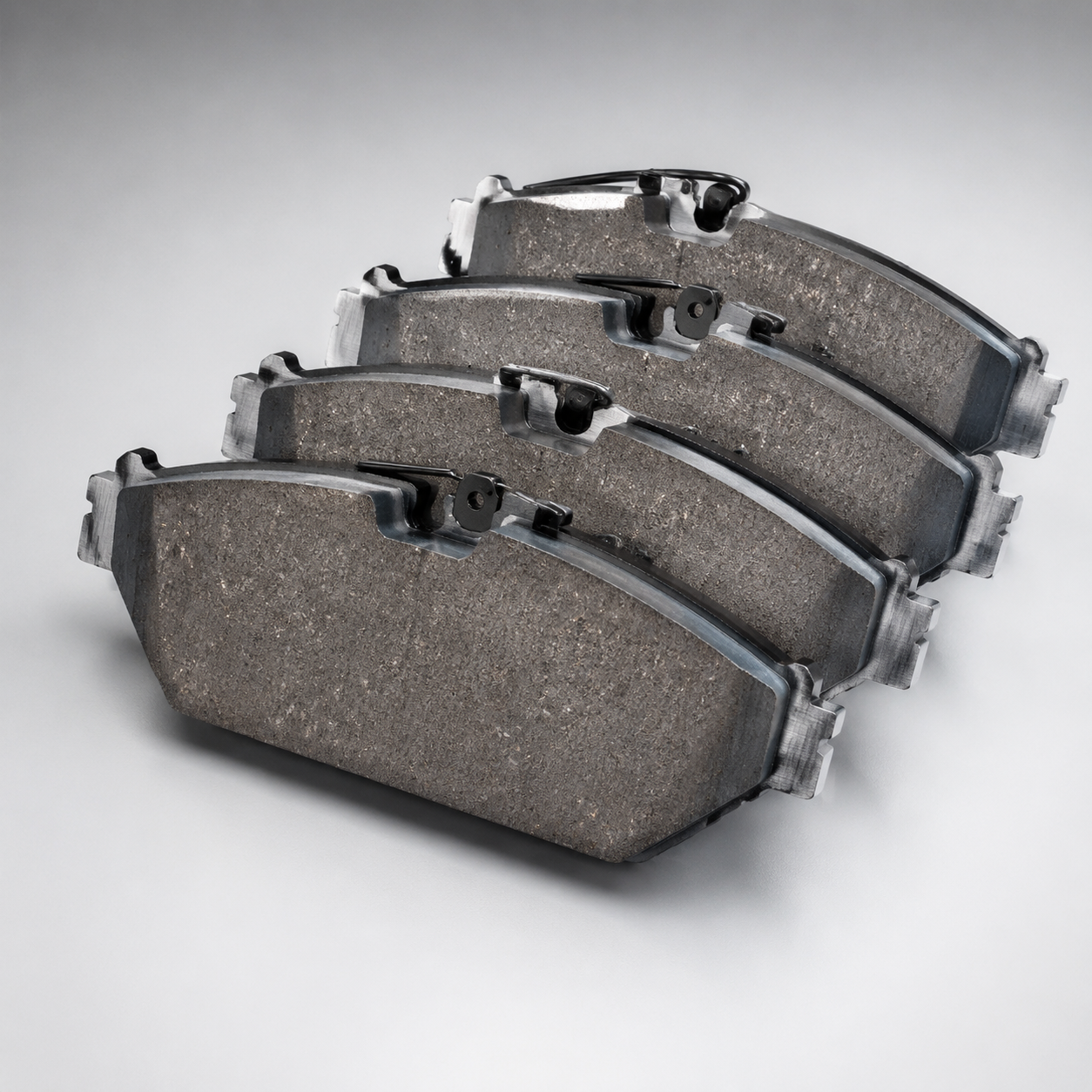
Honda Civic brake pads are a high-volume aftermarket category, but sourcing them well is less about availability than control. B2B buyers need repeatable fitment across model years, stable friction behaviour, and predictable noise performance from batch to batch. For distributors, repair chains, and private-label programmes, the hard part is managing variation: confirming the exact platform, checking dimensional consistency, and choosing a friction material that fits the target market rather than the catalog headline.
A honda civic brake pads programme can involve different pad outlines, backing plate designs, chamfers, slots, shims, and hardware depending on generation, engine, trim, and brake system. On common aftermarket ranges, front-pad overall thickness is often roughly 15-18 mm and rear-pad thickness about 13-16 mm, but approved dimensions must always be tied to the exact outline and brake package, not the vehicle name alone. Buyers should expect critical dimensional tolerances such as pad length and height typically controlled within around ±0.20-0.30 mm, backing-plate thickness within about ±0.05 mm, and total set weight variation managed closely enough to keep left-right axle performance consistent.
That is why catalogue discipline, revision control, and validation data matter before a PO is placed. This guide focuses on what procurement teams should verify before approving a supplier: fitment logic, material trade-offs, testing standards, packaging controls, MOQ and lead-time structure, and the quality documents that reduce launch risk. Driventus is an independent aftermarket manufacturer; brand names are referenced for fitment only.
Start with the real decision: which Civic application are you actually buying for?
Honda Civic applications span a long production history, and front and rear axle pad sets can change by body style, market region, generation, and brake package. In practice, the biggest risk is often not a total mismatch. It is the near match: a pad that looks right in the photo, but arrives with the wrong thickness, shim construction, wear indicator position, slot depth, or hardware content.
For honda civic brake pads, buyers should ask for a fitment matrix that maps:
Vehicle generation and production years
Front vs rear axle position
Brake system variant where applicable
Pad set outline drawing and critical dimensions
Included accessories such as shims, clips and sensors where relevant
Cross-reference structure for distributor catalogue upload
The drawing pack should show the dimensions that affect installation and running clearance, not just a sales sketch. Ask for:
Overall pad length and height in mm
Backing-plate thickness in mm
Total thickness in new state in mm
Slot width and depth where used
Chamfer angle or chamfer length where used
Shim stack-up or coating specification
Wear-indicator location and orientation
A dependable supplier should also provide revision-controlled drawings and a clear supersession process when an application changes. A practical control method is simple: one approved drawing revision per SKU, one approved golden sample, and one approved hardware list. If any of those changes, the supplier should issue a revised part status before shipment.
For businesses supplying multi-location workshops, reducing catalogue ambiguity cuts returns, installation delays, and avoidable warranty claims. Even a 1-2 mm mismatch in friction thickness or a wrongly positioned clip can create fitting resistance, pad drag, noise complaints, or carton returns that quickly outweigh a small unit-price saving.
If you are building broader brake coverage, it also helps to compare supplier range depth against our catalog and confirm whether one source can support both standard replacement lines and higher-friction or lower-noise variants.
Supplier approval checklist: the technical points that separate usable data from sales claims
For a replacement-focused braking programme, the baseline requirement is OE-equivalent fit and consistent braking under normal service conditions. That cannot be confirmed with a generic compliance statement alone.
Critical checks for B2B evaluation
Backing plate dimensions: length, height and thickness should be controlled tightly enough for proper caliper fit; many programmes expect length/height control around ±0.20-0.30 mm and plate thickness around ±0.05 mm
Overall pad thickness: friction block plus backing plate should match the approved application window; ask for nominal thickness and supplier control limit for each SKU
Compressibility: variation affects pedal feel and response consistency; many buyers ask for data at defined pressure and temperature points, not only a pass/fail result
Friction material density: influences wear rate, thermal behaviour and noise tendency; request the factory control range by compound code
Adhesive bond integrity: friction block retention should be backed by production control, including cure records and shear or bond verification method
Shim specification: multilayer or rubber-coated shims should match the NVH target, with material thickness and attachment method stated on the drawing or BOM
Chamfer and slot geometry: these should follow the approved design for noise and dust management, with measurable dimensions rather than vague visual descriptions
Hardware completeness: clips, abutment hardware and fitting kits should be defined per SKU so the same part number is not shipped with mixed content
Where the target market requires road-use compliance, buyers should confirm whether the honda civic brake pads programme is available in versions aligned with ECE R90. Internal validation may also include dynamometer testing and noise screening. For friction stability and NVH-related assessment, recognised reference methods such as SAE J2522 and SAE J2521 are widely used in brake development and comparison work.
Just as important: ask what process controls sit behind the test report. Useful checkpoints include:
Incoming inspection of steel plate thickness, hardness and flatness
Batch control of friction raw materials and weighed mixing records
Hot-press parameters such as press temperature, pressure and dwell time
Post-cure time and oven temperature record per batch
Scorch or surface-treatment settings where used
Paint or powder-coat thickness control on backing plates
100% visual inspection for edge damage, cracks, contamination and marking
During supplier qualification, request the plant's IATF 16949:2016 and ISO 9001:2015 status, along with process documentation covering incoming material inspection, curing control, plate coating, and final traceability. Driventus shares details of its quality system for buyers who require audit-level review.
Material choice is a trade-off, not a ranking: match the pad to the market
The best friction formula depends on who will buy the part and how the vehicle is used. A distributor serving urban passenger-car workshops may prioritise low noise and low visible dust. A fleet-focused programme may care more about pad life and stable performance across a wider temperature range.
Material type
Typical strengths
Common trade-offs
Suitable channel focus
Low-metallic
Strong cold bite, good heat transfer, stable general braking, often friction coefficient around the mid-0.30 to mid-0.40 range depending on formula
More noise potential, darker dust, higher rotor wear in some cases
Often higher unit cost, may feel less aggressive at initial bite, compound cost usually less flexible at low MOQs
Premium retail and workshop programmes
Non-asbestos organic
Lower noise, acceptable comfort-focused operation, lower entry cost in many markets
Faster wear or lower thermal margin in demanding use
Cost-sensitive standard replacement
</tr></thead><tbody> </tbody></table>The material package should be selected around market expectations, not just unit price. Buyers serving the EU and UK often request substance compliance declarations aligned with REACH (EC) No 1907/2006. In North America, some programmes also prioritise low-copper or copper-free friction material pathways, depending on state-level requirements and channel policy.
A smart sourcing question is whether the factory can run multiple compound families on the same outline with separate validation records. That matters if you want a good-better-best structure or a private-label range through custom manufacturing.
Commercially, compound choice also changes price and MOQ logic:
Entry replacement formulas usually allow the lowest MOQ because they run more frequently on shared production schedules
Premium low-noise or ceramic-based formulas often require a higher MOQ per SKU or per batch because changeover and validation cost is higher
If one outline is offered in two compounds, buyers should check whether MOQ applies per outline, per compound, or per branded packaging version
Lower-volume rear-pad SKUs may carry a higher unit price than front pads because annual demand is smaller even when material content is lower
For annual planning, many distributors group Civic demand by fast-moving front and rear families, then decide whether premium formulas justify slower stock turns. That is usually more effective than launching every outline in every compound at once.
RFQ side-by-side: how to compare suppliers without getting lost in brochures
Below is a practical comparison framework procurement teams can use during RFQ review for Honda Civic brake pads.
Evaluation point
Basic supplier response
Preferred B2B response
Fitment data
General vehicle list
Application matrix with axle, year range and outline drawing
Dimensions
Nominal only
Critical dimensions with tolerance control
Friction formula
Generic material label
Compound code with validation summary
Testing
Internal claim only
Reference to ECE R90 programme or comparable validation data
Traceability
Batch label only
Lot traceability from raw material to finished carton
Certifications
ISO mention
Current IATF 16949:2016 and ISO 9001:2015 documentation
Packaging
Standard box
Barcode, anti-mix controls, private-label support
Engineering support
Sales contact only
Drawing review, cross-reference support, sample approval process
</tr></thead><tbody> </tbody></table>For high-volume Civic lines, buyers should also verify operational details:
MOQ by pad set and by mixed container; for example, stock items may start around 200-500 sets per SKU, while private-label print runs often need 500-1,000+ sets per SKU depending on carton and leaflet setup
Lead time for repeat orders versus first private-label run; repeat stock orders may be 30-45 days, while first branded runs can extend to 45-60 days if artwork approval and new packaging materials are involved
Salt spray performance of backing plate coating where specified; many buyers ask whether internal targets are 72, 96 or 120 hours depending on market expectation and coating type
Noise-control features included as standard versus optional, such as rubber-coated shims, multilayer shims, slots, chamfers or grease pack inclusion
Pallet configuration and carton marking standard, including sets per inner box, inners per master carton, master-carton gross weight and pallet loading efficiency
Return-rate and field-claim handling procedure, including target response time, sample request protocol and whether debit claims require root-cause report
Price review should not stop at ex-works unit cost. Buyers should ask the supplier to separate:
Base pad-set price by compound
Increment for premium shims or hardware kit
Increment for private-label colour box, barcode label and multilingual insert
Tooling or print-cylinder cost if a new packaging format is required
Freight impact of carton size and pallet density
A supplier that answers these points clearly is usually easier to integrate into distributor systems, workshop chains, and multi-market aftermarket supply programmes.
Failure modes after launch: where returns usually come from and how to prevent them
Launch quality is usually decided before the first shipment leaves the factory. In this category, the most common commercial failures are not dramatic. They are repetitive: incorrect catalogue mapping, inconsistent accessory content, and unstable friction performance between batches.
A stronger launch process includes:
Pre-shipment controls
Golden sample approval against final labelled SKU
Carton-to-inner-to-product barcode verification
Batch traceability check on pad set and carton
Dimensional inspection on first-off and final lot samples
Friction material appearance and bonding inspection
Post-launch controls
Field feedback capture by application number
Return analysis by defect type: noise, fitment, wear or damage
Revision management when platform supersessions occur
Quarterly review of claim rate versus shipment volume
For buyers supplying large workshop networks, sample validation should include real installation checks on the intended caliper family, not drawing review alone. A useful sample-approval routine for honda civic brake pads is:
1. Confirm drawing revision, compound code and hardware list before sample dispatch 2. Measure 3-5 sample sets for critical dimensions and record actual values 3. Trial-fit samples on the target caliper or vehicle platform 4. Check free movement in bracket, piston contact pattern and hardware seating 5. Confirm carton label, barcode, country-of-origin marking and batch code 6. Release mass production only after signed sample report
Where a part line is being developed for private label, it is worth insisting on controlled PPAP-style documentation where appropriate, even if the channel is aftermarket rather than direct OEM supply. Buyers do not always need full OEM-level PPAP, but they usually benefit from having at least:
Approved drawing and BOM
Material or compound identification record
Dimensional report
Packaging approval record
Process-flow or control-plan summary
Lot traceability format
Claim control works best when targets are defined early. Many distributors monitor return rate as a percentage of shipped sets and split claims by fitment, noise, wear, damage, corrosion and packaging error. That gives procurement teams a usable basis for corrective action instead of a general complaint log.
If you are consolidating braking SKUs with engine or powertrain lines from the same source, combined procurement can also simplify audits and shipment planning. Driventus manufactures multiple automotive categories and can align brake pad supply planning with broader our catalog requirements.
What procurement teams usually need from Driventus, and how support is structured
For buyers evaluating new sources, the priorities are usually clear: dimensional consistency, friction-material control, documented quality systems, and responsive engineering support. Driventus supplies independent aftermarket programmes for global B2B customers and supports RFQ review with application matching, technical confirmation, and production planning.
Our approach is built around:
Manufacturing control under IATF 16949:2016 and ISO 9001:2015 frameworks
Fitment review before quotation finalisation
Support for standard branding and private-label programmes
Export coordination for distributors, OEM service buyers and repair-group procurement teams
Compliance documentation support where market regulations require it
In practical sourcing terms, procurement teams usually need four things quickly: application confirmation, commercial structure, sample timing, and document pack. We support that process by helping define:
Exact SKU scope by axle, year range and brake variant
Recommended compound level based on market and price target
MOQ logic for stock supply, custom packaging and mixed orders
Lead-time plan for samples, first production and repeat production
Packaging spec including barcode, carton marks and pallet standard
Quality documents needed for vendor onboarding or audit review
A typical scenario: a buyer wants to combine standard replacement front pads with premium rear pads, or mix fast-moving Civic references with other braking lines in one container. Those choices affect MOQ, carton planning, and production-slot allocation. Clarify them early and PO-stage delays are far less likely.
If you are sourcing Honda Civic brake pads for distribution or workshop supply, share your target application list, annual volume, branding format, and destination market. That makes it easier to define the right material, hardware, packaging specification, and lead-time model before tooling, samples, or commercial approval.
Driventus is an independent aftermarket manufacturer; brand names are referenced for fitment only.
Frequently asked questions
Request the application list, outline drawing, critical dimensions, included hardware details, friction material type, certification status and available validation data. This usually identifies fitment gaps before sampling. For faster RFQ comparison, also ask for nominal thickness, dimensional tolerances, MOQ per SKU, repeat-order lead time and packaging specification.
No. It depends on the target country and sales channel. However, many buyers use ECE R90-aligned programmes as a quality benchmark because they provide a clearer basis for product comparison and market acceptance. Even where it is not mandatory, asking whether the same honda civic brake pads outline has an R90-controlled version can help buyers compare validation maturity across suppliers.
Yes, if the supplier has separate compound control and validation records. This is common when buyers need standard, low-dust or premium NVH-focused variants under one private-label range. Buyers should also confirm whether MOQ, unit price and lead time change by compound, because a premium formula may require a larger batch size or longer scheduling window.
If you need application review, sample support or a quotation for your brake pad programme, you can **[request a quote](/contact.html)** and share your target market, annual volumes, required MOQ logic, packaging format and branding requirements.