Connecting Rod for Honda Accord Aftermarket Replacement
Teams sourcing a connecting rod for Honda Accord aftermarket replacement need more than a part that looks right in a catalog photo. The buying standard should be engine-code-specific fitment, verified centre-to-centre length, controlled big-end and small-end bores after assembly torque, rod-bolt specification, and traceable lot-level inspection data. A proper replacement should install without rework to the crankshaft journal, wrist pin, bearing set, or piston height stack-up. It should also ship with documentation that supports incoming inspection, revision control, and export compliance. Driventus is an independent aftermarket manufacturer; brand names are referenced for fitment only. For buyers managing warranty exposure, rebuild turnaround, or cross-border supply, the practical requirement is simple: match the OE geometry, validate the process route, and require documented quality control before release.
What a true replacement part must match
A connecting rod is a load-bearing precision component, not a generic steel link. For a Honda Accord application, the replacement has to match the exact engine family and revision because small geometry changes affect piston compression height, bearing crush, oil clearance, rod ratio, and NVH. The same model name can cover multiple displacements, cylinder-head revisions, and regional engine codes, so fitment must be confirmed at the engine level rather than inferred from the vehicle badge.
The critical match points are:
Centre-to-centre length
Big-end bore diameter after cap torque
Big-end roundness and alignment
Small-end bore diameter and pin fit
Rod cap style and rod-bolt specification
Overall mass and matched-set weight spread
Clearance to the crankshaft cheeks, block, and piston at full stroke
Mating-face finish and bearing-seat condition
Visual similarity is not enough. If the engine code, OE reference, or sample rod is missing, request the VIN range, original engine specification, or a verified dimensional drawing before ordering. That is the fastest way to avoid a mismatch that only appears during final assembly. For mixed inventory programs, separating Accord applications by engine code is not optional; it is the only reliable way to prevent cross-fit errors and unnecessary RMAs.
Specification checklist before you place an order
Use a dimensional checklist before releasing a purchase order. It reduces claims, delays, and returns, especially when the same Accord platform is supplied across multiple regions. A short confirmation step upfront is far cheaper than a line stop after the engine is on the stand.
Item
What to confirm
Why it matters
Centre-to-centre length
Match to OE drawing or verified sample
Controls piston deck height and compression behaviour
Big-end bore
Confirm after cap torque, not just raw machining
Determines bearing crush and oil clearance
Big-end geometry
Check roundness, taper, and parting-line condition
Reduces hot spots, bearing wear, and knock
Small-end bore
Verify pin diameter, bushing condition, and finish
Prevents pin seizure, scuffing, and noise
Rod-bolt spec
Confirm thread, length, grade, and clamp-load requirement
A weak or mismatched bolt is a primary failure point
Weight
Ask for individual and matched-set weight data
Helps control vibration and balance
Surface finish
Require finish callouts on machined faces
Reduces fretting, galling, and assembly damage
Packaging
Confirm corrosion protection and bore protection
Prevents transit damage before inspection
</tr></thead><tbody> </tbody></table>If you buy across multiple Accord engine families, separate the part numbers by engine code, model year, and market. The same badge can hide different internal hardware, and the wrong assumption usually shows up as an assembly delay rather than an obvious part rejection. For fleets, rebuilders, and service-channel buyers, it is also worth locking the approved revision into the purchasing specification so repeat orders do not drift over time.
Material and machining controls that affect service life
For replacement rods, the manufacturing route matters as much as the drawing. A part can be dimensionally close and still fail early if alloy selection, forging quality, heat treatment, or machining control is inconsistent. Service life depends on how well the rod maintains bore geometry, fastener preload, and fatigue resistance under repeated load cycles.
Common control points include:
Alloy selection and forge consistency
Heat-treatment records tied to production batch or lot
Shot peening where specified for fatigue resistance
Controlled big-end and small-end machining
Cap fit and bolt preload consistency
Crack detection or other non-destructive testing where required
Corrosion-protective packaging for bores, threads, and pin seats
For aftermarket use, the target is OE-equivalent function, not cosmetic similarity. That means the supplier should be able to explain the process route behind the part, not just provide a catalog listing. If your application needs a specific rod-bolt revision, an alternate coating, a balanced set, or private-label packing, custom manufacturing is the correct route. It is also the right route when you need the same part produced repeatedly against a locked specification for warranty, dealer, or wholesale supply.
Validation and quality documentation
Buyers in the EU, UK, North America, Australia, and Brazil usually need proof that the part was built under a controlled quality system. At minimum, ask for the supplier's documented quality process and the inspection record for the lot you are buying. Without those documents, incoming inspection becomes guesswork and any field claim becomes harder to isolate.
Our quality system is built around IATF 16949:2016 and ISO 9001:2015 controls, with material and process checks aligned to export supply requirements. That matters because a replacement rod is a safety-critical engine component, and buyers often need to show traceability back to the production batch.
Typical checks for a replacement rod
CMM or calibrated gauge verification of critical dimensions
Torque and clamp-load control for rod fasteners
Visual inspection for burrs, nicks, and parting-line damage
Hardness testing on treated batches
Lot traceability and packing identification
REACH (EC) No 1907/2006 material declarations where required
Final audit of labels, quantities, and set matching before dispatch
First-article or PPAP-style documentation for controlled programs where requested
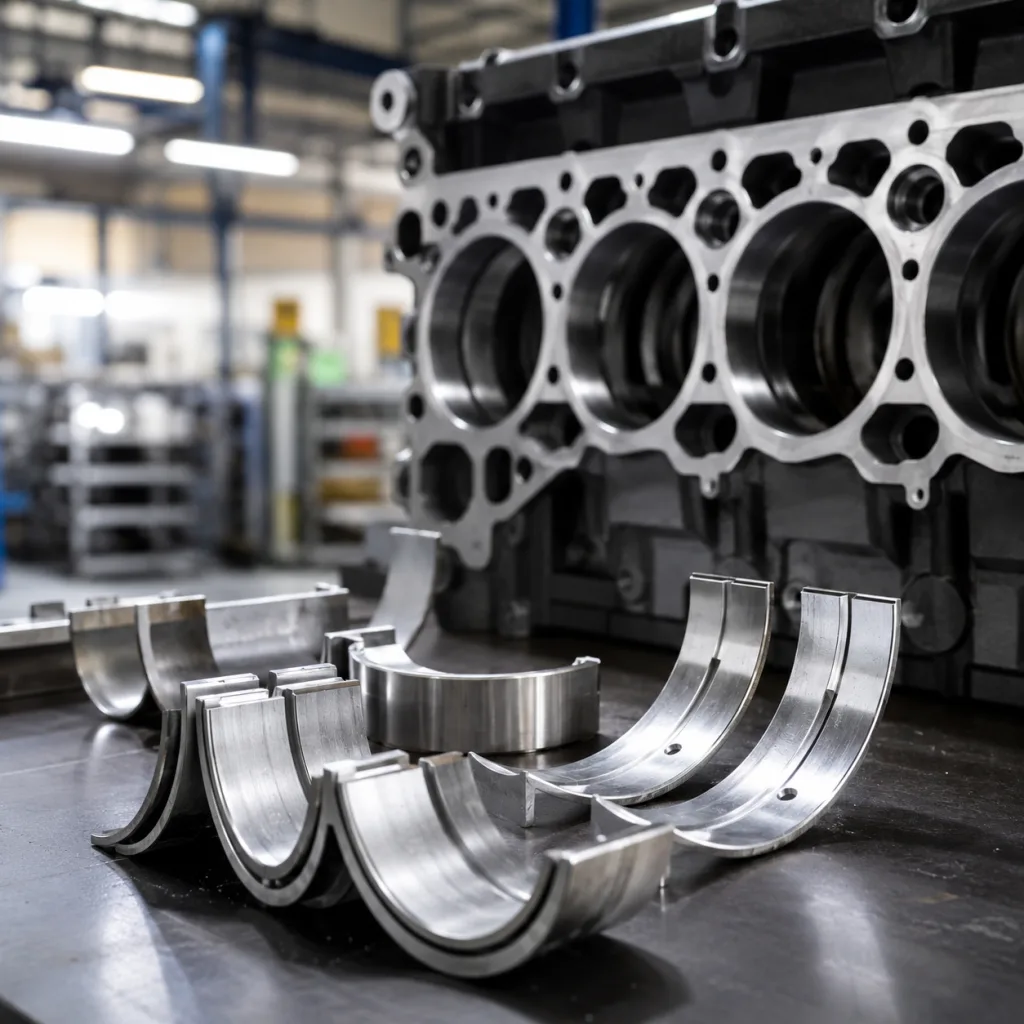
If the program includes a full powertrain refresh, link the rod order to the rest of the bottom-end bill of materials so bearings, pistons, rings, and gaskets are sourced against the same revision control. That reduces the risk of mixed tolerances and makes the rebuild easier to validate at receiving and final assembly.
How to source the right part without slowing the job
Most procurement delays come from incomplete application data, not from manufacturing itself. The fastest path is to send the engine code, model year range, OE sample details if available, target market, and the required annual volume. If the application is for a repair program, include whether demand is for single-service kits, workshop replenishment, or recurring container-load supply.
For buyers building a broader engine program, start with our catalog or the dedicated engine components section, then narrow the rod to the exact Accord engine family. That approach is faster than asking for a generic quote and correcting it later, because the supplier can align the part number, inspection standard, packaging method, and carton count from the start.
A practical sourcing workflow looks like this:
1. Confirm the engine family and market. 2. Check OE cross-reference and dimensional data. 3. Request a sample review or drawing approval. 4. Approve inspection criteria, lot marking, and packaging. 5. Release the production order with lead time and MOQ agreed. 6. Lock the revision for repeat orders and warranty tracking.
If you need a recurring supply program, batch traceability, export packing, and private-label options should be agreed before the first shipment, not after the first claim. That reduces commercial friction and makes the part easier to integrate into your receiving, QA, and distribution process.
Frequently asked questions
Match the engine code, model year range, and OE drawing or verified sample. Then confirm centre-to-centre length, big-end bore after torque, small-end bore, and rod-bolt specification before purchase. If the application has multiple market versions, verify the exact engine revision as well.
Request material traceability, inspection data for the lot, heat-treatment records where applicable, and the supplier's quality documentation. For EU programs, ask for REACH-related material declarations if needed. If you are building a controlled service program, also request lot labels, packaging photos, and first-article data where available.
Yes. For recurring supply, we can align production, packaging, and export documentation to your purchasing specification. Share the engine family, target volume, label requirements, carton count, pallet rules, and any barcode or part-number format when you contact us.
For cross-reference support, technical drawings, or a commercial quotation, use [request a quote](/contact.html).