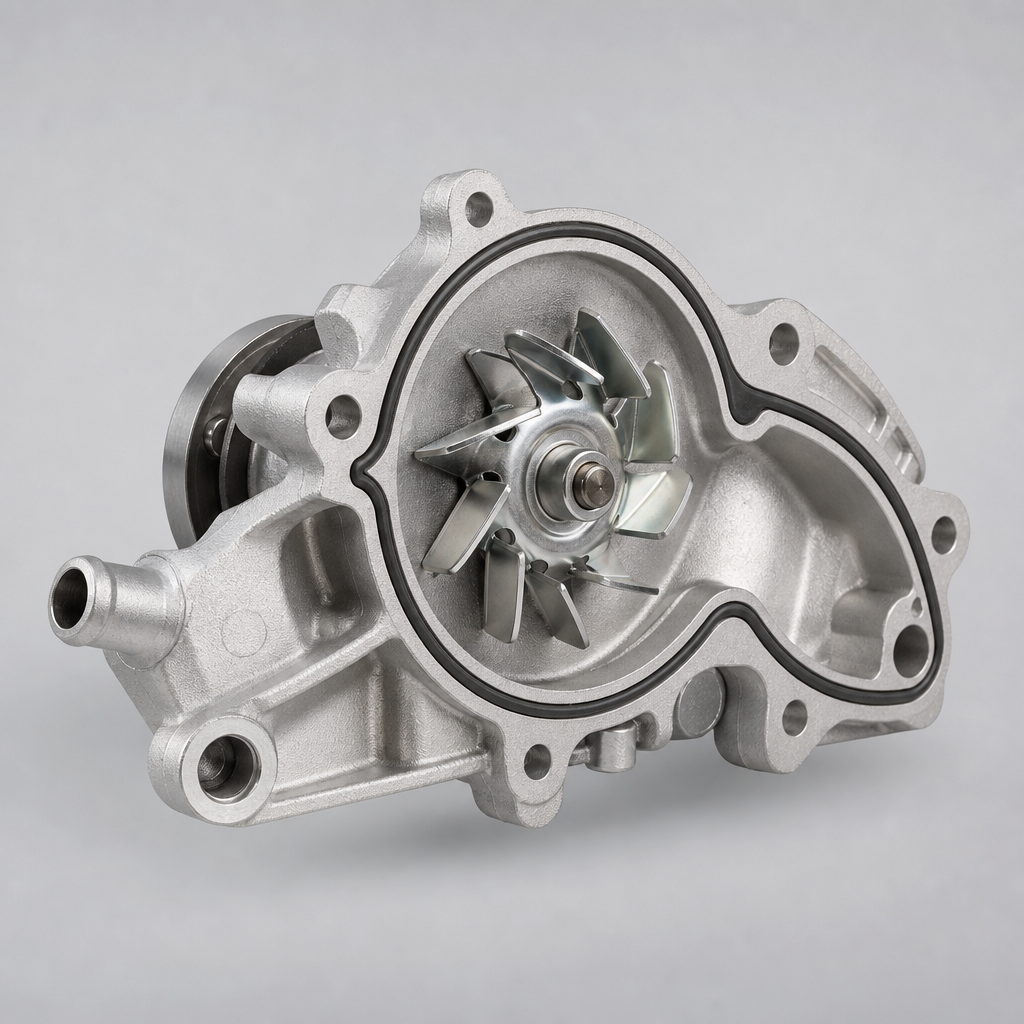
A high pressure fuel pump material grade comparison is not a catalogue exercise. It is a risk decision: which parts must resist wear, which surfaces must hold finish, which seals must survive the local fuel blend, and which supplier can prove the same process will repeat after approval samples. Procurement teams should look beyond whether a pump moves fuel. The useful question is whether the housing, cam follower, plunger, spring, seals, and surface treatments will stay inside tolerance through validation cycling, hot starts, storage humidity, gasoline E10 to E27, diesel, or biodiesel exposure. This article compares the material and process routes used in OEM-aligned and independent aftermarket pump builds, then turns them into sourcing controls: hardness bands, case depth, surface roughness, coating thickness, elastomer compatibility, batch traceability, MOQ logic, price drivers, and lead-time checks. Driventus is an independent aftermarket manufacturer; brand names are referenced for fitment only. For fitment planning, cross-check the pump family against OE numbers, then confirm PPAP-level evidence where required, finish, corrosion exposure, and fuel compatibility with the supplier. The same nominal design can behave differently when the body is aluminium, ductile iron, or steel, and when the plunger is nitrided, DLC-coated, carburised, or through-hardened. Those differences matter most when you are buying 500, 5,000, or 50,000 units.
Start With the Material Stack, Not the Alloy Name
A high pressure fuel pump is not specified by one grade. It is a stack: body material, plunger steel, follower treatment, spring wire, seal compound, heat treatment, coating, surface finish, cleanliness, and inspection frequency. Change one layer and the same pump family can move into a different risk category.
DLC 1 to 4 micrometres; adhesion test result; contact surface Ra typically below 0.20 micrometre
Coating consistency and adhesion matter as much as base alloy
Springs
SAE 9254, 50CrV4, stainless spring wire where corrosion risk is higher
Load tolerance commonly +/-5% to +/-10%; set loss after endurance usually specified below 3% to 5%
Confirm set loss after endurance and thermal cycling tests
Seals / O-rings
FKM, HNBR, PTFE
Shore A hardness, compression set, volume swell after fuel soak; temperature range often -30 C to 150 C depending compound
Verify ethanol, diesel, and biodiesel compatibility for the target market
</tr></thead><tbody> </tbody></table>This is why an alloy-only quote is incomplete. A lower-cost aluminium housing can be acceptable when the wear interface is hardened correctly and the fuel path remains stable under thermal cycling. A premium alloy can still fail if the coating varies, the casting has sealing-land porosity, the machining leaves burrs in fuel passages, or the elastomer is wrong for the fuel blend.
For a clean comparison, ask every supplier to quote the same drawing revision and the same inspection package. For established catalogue items, MOQs may start around 100 to 300 units per SKU when inventory exists. Private-label packaging or uncommon references are usually closer to 500 to 1,000 units. New tooling, custom material changes, or dedicated validation often need 2,000 to 5,000 units, or a separate tooling and validation charge. In many quotes, the price spread comes less from raw alloy cost than from CNC cycle time, grinding, coating batch minimums, leak testing, and rejection after hardness or roughness inspection.
Housing Choice: Where Aluminium Wins and Where It Does Not
The housing carries the load path, mounting features, fuel passages, threads, and sealing surfaces. It also sets much of the machining cost and affects corrosion behaviour, service tolerance, and dimensional stability. Choose it against pressure map, clamp load, thread engagement, port geometry, and environment. A simple strength ranking is not enough.
Aluminium alloy
Aluminium works where weight, cycle time, and cost matter, and where structural loading is moderate. Die-cast ADC12 or A380 suits complex, cost-efficient housings. 6061-T6 or equivalent billet or forged routes may be used when machining stability and lower porosity matter more than casting efficiency. Aluminium machines quickly and supports detailed port features. Its weak points are threaded-interface wear and galvanic corrosion risk when the surrounding installation, fasteners, or coating system are poorly matched. Buyers should check thread engagement, insert strategy if used, anodising or conversion coating where specified, maximum porosity at sealing lands, and leakage after thermal cycling from about -30 C to 120 C or the agreed application range.
Cast iron and ductile iron
Iron-based housings bring stiffness and thread confidence. Ductile iron grades such as EN-GJS-450-10 or EN-GJS-500-7 are usually preferable to grey cast iron when fracture resistance, impact tolerance, and fatigue margin matter. The trade-off is mass, and often more machining effort. For commercial vehicles, high-mileage service, or repeated installation and removal, ductile iron can be more forgiving. RFQs should define casting cleanliness, minimum nodularity where ductile iron is used, critical bore tolerance, sealing-face flatness, and anti-rust treatment for storage and sea freight.
Steel
Steel housings fit compact, high-load designs where pressure stability or structural margin is the priority. Low-carbon steel may be used with local hardening or coating. Alloy steel is used for higher stress sections. The concerns are machining cost, corrosion protection, burr control in drilled fuel passages, and process consistency. Steel is not automatically the best sourcing choice if the application does not need the extra strength.
Use a failure scenario to choose. Will the housing see high clamp load, vibration, repeated service removal, pressure pulsation, fuel vapour exposure, 240 to 720 hours of salt spray where exposed, storage humidity, or packaging compression? Aluminium usually gives the lowest machining cost and shortest cycle time. Ductile iron adds weight but improves thread confidence. Steel can add 10% to 35% to housing machining and finishing cost depending on geometry. The right question is what the housing must survive, not which metal sounds strongest.
The Wear Parts Decide the Warranty Curve
The plunger, cam follower, tappet surface, and related contact areas usually decide durability faster than the outer shell does. They run under high contact stress, frequent cycling, and boundary lubrication, especially during start-up, hot operation, or low-lubricity fuel conditions. Treat them as precision wear parts, not turned steel commodities.
Hardened alloy steel is common for plungers because it can retain geometry under cyclic load. Typical finished hardness is 58 to 64 HRC, with roundness and straightness controlled in the micron range on critical diameters.
Nitrided steel adds a hard surface layer and can improve scuff resistance when fuel lubrication is marginal. Typical compound and diffusion layer requirements should be stated, with effective nitrided depth often around 0.10 to 0.40 mm depending on design.
Carburised steel is used when a hard case and tougher core are needed together. Effective case depth is commonly specified around 0.30 to 0.80 mm for small pump wear parts, with core hardness controlled to avoid brittle failure.
Through-hardened steel may be suitable where section size and toughness requirements allow it. It simplifies the route but needs tight control of distortion, grinding allowance, and retained toughness.
DLC-coated steel is used on follower or sliding surfaces to reduce friction, galling, and adhesive wear. Typical DLC thickness is 1 to 4 micrometres; adhesion, edge coverage, and pre-coating polish are critical.
Do not accept "hardened steel" as a complete answer. Request the actual hardness band, expressed as HRC or HV, and the surface finish for each critical sliding interface. For many plungers, Ra 0.05 to 0.20 micrometre is a realistic control range. Mating bores may need a controlled plateau finish rather than the lowest possible Ra. Case depth, retained core toughness, coating thickness, coating adhesion, cylindricity, and burr-free fuel-edge condition also belong in the specification when nitriding, carburising, or DLC is used.
A polished but soft plunger can lose tolerance faster than a slightly rougher part with the correct hardness profile. That is the practical reason this comparison must include heat treatment and coating route, not only nominal alloy designation. In RFQ review, compare suppliers on Cpk for the critical diameter, leak-test reject rate, coating rework rate, and whether sliding parts receive 100% visual and dimensional checks or only sample inspection.
Fuel Compatibility: Four Questions Before You Approve the Seal Set
Material grade has to match fuel chemistry as well as mechanical load. Many replacement failures begin with a mismatch between the local fuel blend and the elastomer, coating, or exposed metal surface. Ask the supplier to validate the exact compound and exposure, not to name a generic seal family.
Wear-resistant plunger and follower materials, validated surface treatment
Wear scar or endurance data, contamination tolerance, pump output stability
Biodiesel blends
Oxidation, seal swelling, deposit formation, fuel ageing effects
Chemical resistance testing, validated elastomer choice, corrosion monitoring
Aged-fuel soak, copper strip/corrosion checks, seal swell and cracking inspection
</tr></thead><tbody> </tbody></table>Use four approval questions. What exact fuel blend was tested? At what temperature and duration? What happened to volume swell, hardness, compression set, leakage, and surface condition? Is the same seal compound used for every destination market?
FKM is widely used where heat and fuel resistance are both required. HNBR can work in selected systems, but only with compatibility data for the blend range and operating temperature. PTFE may be used in specific sealing positions where low friction and chemical stability are needed, although installation and deformation behaviour differ. Useful acceptance limits often include volume swell below 10% to 20% after soak, hardness change within about +/-5 to +/-10 Shore A, and no cracking, tackiness, or leakage after thermal cycling. Final limits should follow the application and customer standard.
A pump can have the correct housing and wear parts and still fail if the elastomer set is wrong for the market. For multi-region programmes, do not assume one seal compound covers EU, Latin American, Middle Eastern, and Southeast Asian fuel blends without evidence. Ask whether seal compound, coating, or corrosion packaging changes by destination. Upgraded FKM, PTFE back-up rings, or ethanol-tested compounds can raise unit cost, but the premium is usually smaller than one return shipment or campaign replacement.
Surface Treatment Is a Controlled Process, Not a Finish Note
A practical high pressure fuel pump material grade comparison must include heat treatment, coating, and final surface condition. The base alloy does not determine service life by itself. Freeze the treatment route in the control plan, because a coating supplier change or furnace recipe change can alter wear life even when the drawing material callout stays unchanged.
Common treatments include:
Nitriding for a hard surface layer with limited distortion, controlled by surface hardness, effective depth, and compound-layer condition
Carburising for case hardness on wear parts that also need a tougher core, typically followed by quench, temper, and finish grinding
Induction hardening for selected contact zones where local hardness is needed without treating the full part
DLC coating for low friction, galling resistance, and reduced adhesive wear, with thickness, adhesion, and pre-polish requirements stated
Phosphate or controlled anti-corrosion treatment for exposed steel features, especially where storage or humid shipping routes are expected
Passivation, conversion coating, anodising, e-coat, or other corrosion-control routes where the body material and application require them
The supplier comparison should identify the process route and the inspection method. A plunger listed as hardened steel is underspecified without hardness range, case depth where applicable, surface roughness, coating thickness, adhesion requirement, and lot inspection frequency. The same logic applies to followers, springs, and exposed steel features.
Commercially, surface treatment is a cost line with direct field-life impact. DLC may add a meaningful piece-price premium and an outsourced coating-batch lead time of 7 to 15 days, but it can reduce warranty exposure on wear-sensitive applications. Nitriding and carburising are usually more economical at volume, although minimum furnace batch charges affect low-MOQ orders. Quote it, inspect it, and control it as a functional specification.
Compare Builds by Failure Cost, Not Piece Price Alone
The table below gives procurement teams a practical comparison of common build choices. Actual performance still depends on geometry, process control, cleanliness, and validation results.
Grade / build choice
Wear resistance
Corrosion resistance
Machinability
Cost position
Typical use case
Aluminium body + hardened steel internals
Medium
Medium
High
Lower
Volume aftermarket programmes where weight and cost matter
Ductile iron body + nitrided plunger
High
Medium
Medium
Medium
Mixed-duty fleets, commercial vehicles, and longer service intervals
Steel body + carburised internals
High
Medium
Low
Higher
Higher-load designs or tighter structural targets
DLC-coated follower + hardened plunger
Very high
Medium
Medium
Higher
Wear-sensitive applications with long service expectations
</tr></thead><tbody> </tbody></table>For negotiation, separate raw material cost from process-control cost. A supplier using a lower-cost housing alloy with tight hardness control, stable coating thickness, clean machining, and documented inspection may be the lower-risk option. A supplier quoting premium steel without process evidence is not necessarily offering the better pump.
Now price the failure. Field returns, warranty handling, downtime, and brand damage can exceed the savings from a cheaper material route. A strong RFQ therefore asks for the build choice, validation package, and inspection controls behind the quoted price.
Normalise the commercial terms before comparing quotes. Existing catalogue SKUs may ship samples in 7 to 14 days and production in 30 to 45 days if inventory or semi-finished parts are available. A material-grade change, new seal compound, or coating change normally pushes lead time to 45 to 75 days because sample machining, lab testing, endurance checks, and customer approval must be repeated. New tooling, new casting, or full validation can run 90 to 150 days. Compare incoterm, packaging, test scope, payment terms, annual volume, and whether the price includes lot-level reports. A pump that is USD 0.80 cheaper but excludes leak-test data, traceable heat-treatment records, or export packaging may not be cheaper on a landed and warrantied basis.
Evidence That Separates a Controlled Supplier From a Sample Maker
Material comparison only matters if the production route is documented and repeatable. Approval samples are not enough. Procurement should verify traceability, dimensional control, corrosion exposure, fuel compatibility, and production repeatability before treating a supplier as released for volume.
Relevant standards and frameworks include:
IATF 16949:2016 for automotive quality management expectations
ISO 9001:2015 for baseline quality management systems
REACH (EC) No 1907/2006 for substance compliance in the EU
SAE J2527 for accelerated corrosion testing when applicable to exposed components
ECE R-83 where the application or system context requires emissions-related consideration
IMDS material reporting where the customer or destination market requires material declaration
PPAP elements such as control plan, process flow, FMEA, dimensional report, material report, and initial process capability where the programme requires formal release
Ask for hardness reports, coating thickness records, salt spray or corrosion test results where relevant, dimensional inspection reports, fuel compatibility evidence, and material certificates tied to batch or lot numbers. For sliding parts, request surface roughness results and confirmation that inspection points match the functional contact zones. For springs, ask for load and set-loss data after endurance exposure. For completed pumps, require leak test pressure and duration, flow or output test limits, pressure decay limits, noise or actuation checks where relevant, and the final inspection sampling plan.
For multi-market parts, confirm that the same material grade and process route are used across production lots, not only on approval samples. A useful supplier evidence package includes heat-treatment lot number, coating batch, seal compound code, operator or line record, calibrated gauge list, and date-coded final test results. Driventus quality controls are described in our quality system, and our broader product range is shown in our catalog.
RFQ Step-by-Step: Lock the Grade Before You Lock the Price
A clear RFQ reduces price variance and lowers the chance of field returns. Start with the operating requirement, then define the acceptable material and process route. If the drawing is unavailable, provide an OE reference, photos, installation market, target pressure, and expected annual volume so the supplier can quote a controlled equivalent instead of a vague replacement.
1. State the application, engine family where available, fuel type, target market, expected duty cycle, and required warranty period. 2. Identify the pump family and any OE cross-reference, for example OE 06A107065 when applicable. 3. Define the housing material family, internal wear-part grade, and seal material requirement, including any prohibited substitutions. 4. Request hardness range, case depth where relevant, coating type, coating thickness, roughness limits, and dimensional tolerance for sliding interfaces. 5. Ask for validation evidence against the relevant standards or an agreed in-house test plan, including leak, flow, endurance, corrosion, and fuel-soak results. 6. Confirm corrosion exposure requirements, packaging, traceability, lot marking, barcode or label rules, and change-control expectations. 7. Require advance notice and approval for any change in material grade, coating supplier, heat-treatment route, furnace process, machining source, or seal compound. 8. State MOQ bands and price breaks, such as 100, 500, 1,000, 5,000, and 10,000 units, so the quotation separates sample pricing from production economics. 9. Ask for lead time by stage: sample, pilot lot, mass production, inspection report issue, and sea or air freight readiness. 10. Define the commercial release gate: drawing approval, sample approval, PPAP or internal approval, packaging sign-off, and first-lot inspection.
For programmes needing a non-standard combination of body material, coating, or seal compound, custom manufacturing is the correct path. For sourcing follow-up, request a quote with the target market, annual volume, expected fuel environment, target MOQ, acceptable lead time, packaging requirement, and any OE cross-reference data you already have.
Driventus is an independent aftermarket manufacturer; brand names are referenced for fitment only.
Frequently asked questions
There is no single best grade. Aluminium is lighter and easier to machine, ductile iron improves stiffness and thread retention, and steel gives the highest structural margin. The correct choice depends on duty cycle, pressure target, corrosion exposure, service expectations, validation scope, MOQ, and cost position.
They may use different base metals, coatings, heat treatments, surface finishes, seal compounds, or inspection limits. Fitment can be identical while wear life changes materially. Ask for hardness, roughness, coating thickness, elastomer, leak-test, and validation data, not just the part number.
If the pumps are entering the EU market, you should confirm REACH (EC) No 1907/2006 compliance status and substance disclosure where required. The level of documentation depends on the exact assembly, materials, coating chemistry, supply chain, and destination market.
Yes, where dimensional, functional, durability, and validation requirements are met. The buyer should approve the material route, coating, seal compound, test evidence, MOQ, and lead-time impact before production release.
Send the target application, annual volume, MOQ band, fuel environment, lead-time requirement, packaging needs, and OE cross-reference data to our team for a technical review and commercial quote at /contact.html.