aftermarket replacement parts · 2026-06-14

Headlight Assembly Replacement for B2B Buyers

Headlight assembly replacement is a high-volume aftermarket category where minor dimensional or interface errors can create expensive returns. For distributors, importers and repair-chain buyers, the risk is rarely limited to a lamp that does not illuminate. Common problems include poor panel alignment, water ingress, unstable beam cut-off, connector mismatch, brittle mounting tabs and freight damage before the product reaches the workshop.

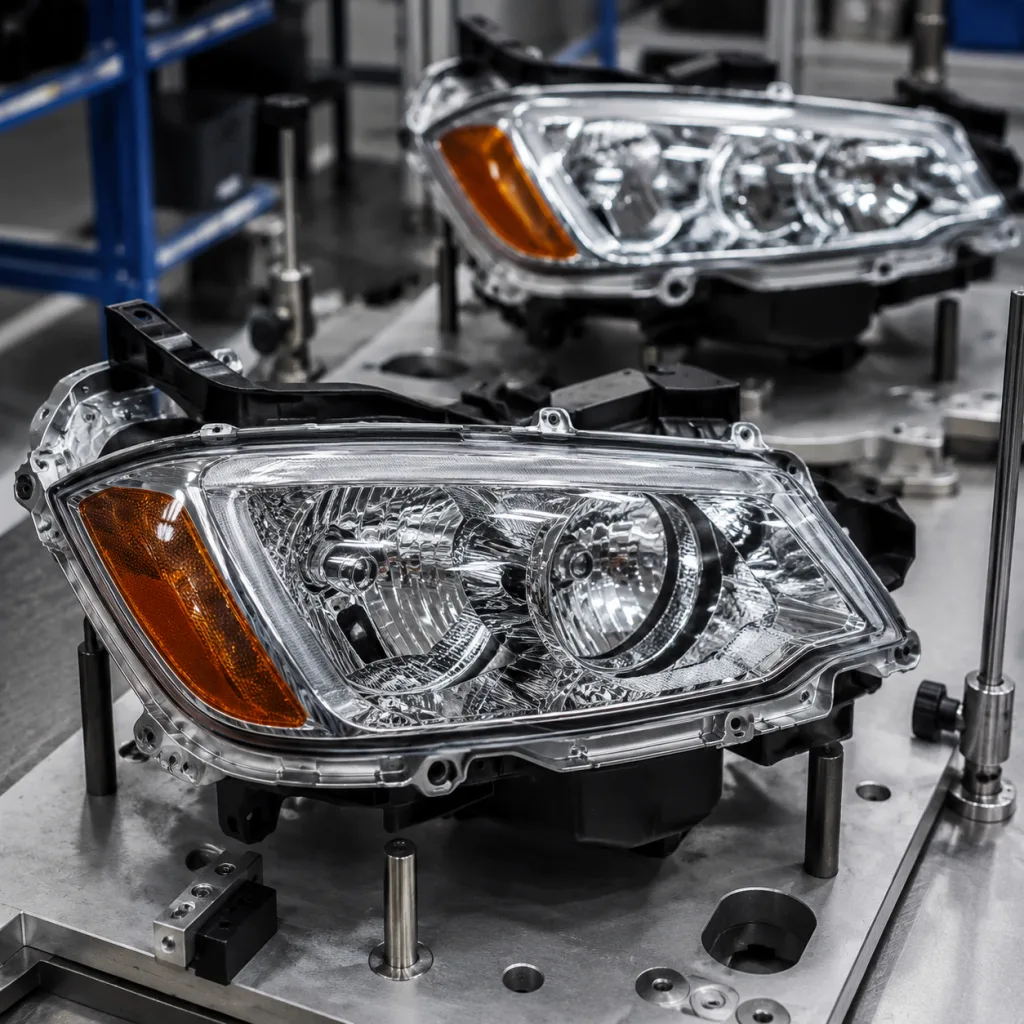
A replacement headlamp should match the original equipment envelope, optical function and installation interface without implying approval from the vehicle manufacturer. Procurement teams need evidence that the part fits the body aperture, performs safely in the intended market and can survive export handling. This guide outlines the sourcing controls B2B buyers should use when evaluating aftermarket headlamp assemblies for EU, UK, US, Canada, Australia and Brazil programmes. It covers dimensional matching, photometric validation, materials, electrical interfaces, packaging, inspection plans and supplier documentation.

Driventus is an independent aftermarket manufacturer; brand names are referenced for fitment only. Buyers can review broader replacement categories in our catalog and align project requirements with documented quality controls before launch.

OE-Equivalent Fitment Is the First Commercial Control

For a headlamp programme, fitment accuracy belongs in the purchasing specification, not as an assumption left to the workshop. The assembly should install into the same body aperture, use the same mounting datum points and support the same aiming range as the original unit. A bracket that sits only a few millimetres out of position can become bonnet interference, bumper gap variation, lamp shake or beam misalignment after installation.

Procurement teams should request CAD comparison data, fixture reports or first-article measurements for the main housing, lens perimeter, bracket positions and connector location. Where OE part-number cross-references are used, keep them in a generic procurement format such as OE 06A… only if the programme data already includes that reference. Do not publish brand-owned part numbers without permission.

Key fitment checks include:

  • Mounting points: hole position, boss height, thread insert retention and tab impact resistance.
  • Outer lens profile: flushness to wing, bumper and grille reference surfaces.
  • Connector interface: pin count, locking geometry, seal compression and harness clearance.
  • Adjustment system: vertical and horizontal aiming range after installation.
  • Side-specific tooling: left-hand and right-hand lamp symmetry, datum repeatability and mould wear control.

For multi-location repair chains, these checks reduce bay time and installer uncertainty. For distributors, they reduce avoidable returns that are often recorded as “poor quality” even when the root cause is dimensional mismatch rather than a functional lamp defect.

Validation Testing for Replacement Headlamp Assemblies

A replacement lamp is safety-related because it affects night visibility, glare control and vehicle conspicuity. Buyers should ask suppliers for test summaries that connect the part number, tooling revision and production batch. A certificate that is not tied to the purchased SKU has limited procurement value, especially when several lens, reflector or electronics versions exist for the same vehicle application.

Regulatory and quality references vary by market and lamp type. ECE R-112 applies to certain headlamps emitting an asymmetrical passing beam or driving beam. ECE R-48 covers installation of lighting and light-signalling devices on vehicles. In the United States, FMVSS 108 specifies requirements for lamps, reflective devices and associated equipment; Canadian requirements are covered under CMVSS 108. For environmental substance controls in the EU, REACH (EC) No 1907/2006 is relevant. Factory systems should be reviewed against IATF 16949:2016 and ISO 9001:2015 where automotive production control is required.

</tr></thead><tbody> </tbody></table>Driventus operates under a documented quality system aligned with automotive production discipline. For lighting parts, buyers should still approve the part-specific inspection plan, because validation requirements differ between halogen, HID and LED assemblies and between left-hand-traffic and right-hand-traffic markets.

Materials, Optics and Electrical Interfaces

A headlamp assembly is a mix of optical, structural, sealing and electrical components. Each should be specified clearly before purchase orders are released. A low-cost bill of materials may pass a visual check at the packing line but fail after UV exposure, engine-bay heat, vibration or repeated installer handling.

Validation item What buyers should request Procurement risk controlled
Photometric performanceBeam pattern, cut-off position, luminous intensity test reportGlare, poor road illumination, compliance exposure
Water ingressSealing test method, sample size and acceptance criteriaCondensation claims, corrosion, lamp failure
Vibration durabilityFixture setup, cycle profile and post-test inspectionBroken tabs, reflector movement, loose adjusters
Thermal cyclingTemperature range, dwell time and lens inspectionLens distortion, seal failure, internal stress cracking
UV exposureLens yellowing and coating adhesion checksReduced light output, warranty claims
Connector retentionPull force, terminal fit and seal verificationIntermittent electrical faults

</tr></thead><tbody> </tbody></table>LED designs need additional review. Heat sink contact, driver module protection, electromagnetic compatibility and polarity protection should be included in the approval package. If the assembly is supplied with bulbs, modules, levelling motors or daytime running light components, define whether these are included in the base price, whether they are serviceable and how replacements will be supplied during warranty handling.

For private-label or regional adaptations, custom manufacturing may be appropriate. Examples include carton specification changes, harness configuration, bracket reinforcement and market-specific packaging language. Any change affecting optics, electronics, sealing or structural mounting should trigger revalidation rather than being treated as a simple artwork update.

Inspection Plan for Incoming and Pre-Shipment Control

A practical headlight assembly replacement programme should use layered inspection. The supplier controls process quality during moulding, coating, assembly and packing; the buyer verifies shipment conformity before goods enter the sales channel. Inspection should not rely only on end-of-line appearance, because many costly defects involve hidden dimensions, connectors, seals or package performance.

Recommended pre-shipment checks:

  • Confirm part number, side, vehicle application and label data against the purchase order.
  • Check lens surface for scratches, haze, coating defects, sink marks and contamination.
  • Measure key bracket positions using a fixture or coordinate method agreed at PPAP or first-article stage.
  • Verify connector lock, terminal position, bulb holder fit and supplied accessory list.
  • Perform a sample water spray or pressure-decay check where the design allows.
  • Confirm adjuster movement and beam-setting mechanism are not seized or loose.
  • Drop-test packaging to the agreed carton and pallet configuration.

AQL levels should reflect the commercial risk. Cosmetic defects may be sampled differently from broken mounting tabs, incorrect connectors or wrong-side shipments. Critical characteristics need tighter controls, and repeated defects should trigger root-cause analysis with corrective action evidence rather than only replacement parts.

For B2B buyers, the most useful supplier response includes defect photos, containment scope, affected batch numbers, corrective action owner and implementation date. A replacement shipment without process correction may repeat the same failure in the next container.

Packaging and Logistics for Export Shipments

Lighting assemblies are large, light and fragile. Freight cost is driven by volumetric weight, while damage risk is driven by lens exposure, bracket protection and carton compression. A sourcing quote for headlight assembly replacement that excludes packaging detail is incomplete, because packaging design directly affects landed cost and claim rate.

For export programmes, specify master carton strength, internal supports, polybag or film protection, desiccant policy, pallet pattern and container loading limits. Bumper-side brackets should not carry stacking loads. Lens faces should not contact bare cardboard during vibration. If the shipment will move through fulfilment centres, define individual carton barcode placement, abrasion resistance and whether cartons must withstand single-parcel handling.

Common damage modes include broken lower tabs, scuffed lenses, loose internal bezels and crushed cartons at the bottom pallet layer. These failures are preventable through packaging validation. ISTA procedures are often used for packaged-product distribution testing, but buyers should define the exact test sequence, drop orientation, compression load and acceptance criteria instead of relying on a generic pass statement.

Documentation should include packing list, country-of-origin statement where required, HS code review, material declaration, inspection report and product photos by SKU. For EU shipments, REACH (EC) No 1907/2006 declarations may be requested by importers. For North American buyers, labelling and lighting compliance documentation should be checked against the intended sales channel before shipment.

Supplier Selection Criteria for Aftermarket Programmes

Price comparison is useful only after technical equivalence is established. A low unit price can be erased by one container of high-return lamps, a delayed claim response during peak season or a compliance document that does not match the SKU being sold. Buyers should score suppliers on engineering evidence, manufacturing control and responsiveness, not catalogue images alone.

A concise supplier scorecard can include:

Component Common material or process Critical sourcing check
Outer lensUV-coated polycarbonateCoating adhesion, haze, yellowing resistance
HousingPP, PP+Talc or heat-resistant polymerDimensional stability near engine-bay heat sources
ReflectorMetallised thermoplasticReflective coating uniformity and heat resistance
SealantButyl or equivalent sealing compoundContinuous bead, compression and rework control
AdjusterPolymer gear, metal screw or combined systemBacklash, torque range and vibration retention
ConnectorVehicle-specific plastic body with terminalsPin alignment, latch fit and terminal retention

</tr></thead><tbody> </tbody></table>Driventus is based in Taizhou, Zhejiang and supplies aftermarket replacement parts to distributors, wholesalers, OEM/Tier-1 customers and repair-chain buyers in more than 60 countries. The company manufactures engine and powertrain components as its core range and supports adjacent sourcing programmes where engineering validation, documentation and export execution are required. For lighting projects, procurement teams should provide application lists, annual volume estimates, target markets and packaging requirements before quotation.

If you are comparing suppliers for headlight assembly replacement, include sample approval, inspection scope, packaging requirements, documentation responsibilities and claim-handling terms in the RFQ. This creates a measurable basis for sourcing decisions and helps separate a technically controlled programme from a simple price enquiry.

Frequently asked questions

Verify fitment data, photometric test evidence, sealing performance, connector compatibility, packaging validation and batch traceability. The supplier should link reports to the part number, tooling revision and production batch, not only provide generic certificates.

Do not assume that. Driventus is an independent aftermarket manufacturer; brand names are referenced for fitment only. Buyers should evaluate regulatory compliance, fitment, validation and quality documentation for the intended market.

Provide vehicle applications, left-hand or right-hand traffic market, lamp technology, annual volume, packaging requirements, target compliance documents, sample approval expectations and any OE-style cross-reference format already used in your system.

For sourcing review, sample planning or programme pricing, send your application list and target markets to Driventus to [request a quote](/contact.html).

Request a Quote
Criterion Evidence to request Why it matters
Fitment capabilityFixture report, first-article samples, installation photosReduces returns from mounting and gap issues
Quality managementIATF 16949:2016 or ISO 9001:2015 certificate scopeConfirms process discipline and auditability
TraceabilityBatch labels, mould cavity records, inspection reportsSupports containment and warranty analysis
Compliance supportMarket-specific test reports and declarationsReduces import and channel risk
Packaging engineeringDrop-test records, carton drawings, pallet planLowers freight damage claims
Commercial executionMOQ, lead time, spare parts policy, claim response timeSupports stable replenishment planning