control arm · 2026-06-26

Front Lower Control Arm Replacement Guide

Front lower control arm replacement looks straightforward on paper. In sourcing, it rarely is.

Returns usually come from a short list of avoidable mistakes: geometry that is close but not close enough, bushings that behave differently from OE, ball joints with unstable torque, or coatings that look fine in the box and fail at the edges in service. For distributors, repair chains, and private-label buyers, the decision is less about finding a catalogue match and more about controlling alignment risk, warranty exposure, and replenishment consistency across multiple vehicle platforms.

A credible replacement should hold ball joint position, bushing centre distance, and mounting tolerances within a controlled range so camber and caster can still be set correctly after installation. In many approvals, that means asking for measured datums instead of relying on fitment claims alone: bushing centre distance commonly within ±0.30-0.50 mm, ball joint centre position within ±0.25-0.40 mm, mounting bore diameter within ±0.05-0.10 mm, and bushing press-fit interference often in the 0.08-0.20 mm range depending on shell design and material stack-up. Buyers should also review corrosion protection, elastomer formulation, weld integrity where relevant, and batch-level traceability.

This article approaches front lower control arm replacement from several angles: what the part has to control, where sourcing decisions usually fail, how to compare suppliers, what validation data matters, and what to request before placing an order. Driventus is an independent aftermarket manufacturer; brand names are referenced for fitment only.

Start with the decision framework: what the arm actually has to control

A front lower control arm does more than connect the wheel end to the chassis. It fixes the wheel hub in a defined path while the suspension moves, and it has to keep doing that under braking loads, cornering forces, pothole impact, and constant exposure to water, salt, and debris.

For any front lower control arm replacement, buyers should screen the part through three questions first:

  • Does the geometry match OE intent? Mounting hole position, bushing axis spacing, ball joint taper location, and overall arm profile must land where the vehicle expects them.
  • Does the structure behave like the original? Forged steel, stamped steel, or cast aluminium all work in the right application, but stiffness and fatigue resistance cannot be assumed from appearance alone.
  • Is the assembly stable from batch to batch? Bushing press-fit, ball joint retention, and coating coverage need process control, not just a passable first sample.

In practical sourcing terms, the supplier should define critical-to-function dimensions and acceptance windows. On a typical passenger-vehicle arm, mounting-point centre distance may need to stay within ±0.30-0.50 mm, ball joint stud centreline within ±0.25-0.40 mm, and bracket flatness within about 0.20-0.50 mm depending on arm size. If the assembly includes a pre-installed ball joint, articulation torque often needs to remain in a controlled window such as 2-8 N·m when new, while bushing hardness may sit around 55-75 Shore A for many comfort-oriented rubber formulations.

When those variables drift, the field symptoms appear fast: steering pull, abnormal tyre wear, noise under load, or short service life. A geometry error that looks minor on paper can still push alignment correction to the edge of workshop adjustment range. That is why front lower control arm replacement should be approved as a controlled chassis component, not as a generic metal-and-rubber assembly.

Failure mode first: the checks that prevent the most expensive mistakes

Instead of starting with catalogue coverage, start with what usually goes wrong after launch. Most avoidable claims in front lower control arm replacement trace back to a small set of technical misses.

Geometry-related risk

Ask the supplier to confirm:

  • Centre-to-centre distance between mounting points
  • Ball joint stud location relative to chassis-side bores
  • Left/right orientation controls where the platform uses mirrored geometry
  • Overall arm envelope in relation to the subframe, knuckle, and adjacent links
  • Whether the arm is supplied at neutral bushing position or pre-indexed for installation angle

A deviation of 0.5-1.0 mm at a critical datum can be enough to affect alignment range, installation effort, or subframe fit on some vehicles. For tighter applications, buyers should request actual measured values from first-off samples rather than nominal drawing dimensions only. A useful approval pack usually covers at least 5-10 critical dimensions measured across 3-5 samples from the pilot lot.

Material and interface risk

The bill of materials should identify:

  • Base material type: forged steel, stamped steel, cast aluminium, or hybrid assembly
  • Bushing rubber or elastomer specification
  • Ball pin and housing material
  • Heat-treatment condition where applicable for pins, studs, or forged sections
  • Corrosion protection system, such as e-coat, phosphate plus paint, or zinc-flake where required

For steel assemblies, vague “anti-rust” language is not enough. Buyers typically ask for e-coat film thickness, often around 18-35 μm, and a comparative salt spray target such as 240-480 hours to red rust for internal control. They should also ask whether seams, edges, and drain zones receive the same attention as open surfaces. For bushings, confirm whether the compound is natural rubber, NR/SBR blend, EPDM, or another formulation, and whether sleeve retention is chemical, mechanical, or both.

Where parts are sold into the EU or UK aftermarket, buyers often also request material compliance declarations aligned with REACH (EC) No 1907/2006 for reportable substances in supplied articles.

If a sourcing team prevents these failure modes early, it avoids the familiar pattern later: a part that installs, passes basic inspection, and still generates complaints once vehicles return for alignment re-check or early warranty.

Buyer comparison: what separates a reliable replacement from a high-return item

The table below is more useful than a generic checklist because it links each buying question to the operational risk behind it.

</tr></thead><tbody> </tbody></table>For purchasing teams managing broad catalogues, it also helps to request a cross-reference list tied to internal SKU numbers and fitment notes. That reduces mis-picks, catalogue confusion, and avoidable returns.

Commercial review should happen alongside technical review, not after it. A typical pattern looks like this:

  • Catalogue references: MOQ often 50-200 pcs per item, with reorder lead time around 30-45 days
  • Private-label packed references: MOQ often 100-300 pcs per item because of box, label, and barcode setup
  • New non-catalogue development: prototype lead time often 20-45 days, tooling or fixture adjustment 30-60 days, and SOP shipment typically 45-75 days after drawing approval
  • Price structure: unit cost usually changes with material route, ball joint inclusion, coating specification, and annual volume bracket

A cheap quote can still be a poor sourcing result if it comes with unstable batches, long replenishment cycles, or MOQ levels that force excess stock. In front lower control arm replacement, total cost is usually driven by returns and inventory drag as much as by unit price.

Spec deep-dive: which validation data is worth asking for

Test evidence matters more than broad claims in this product category. A serious supplier should be able to show what is checked at incoming, in-process, and final stages, and explain how those checks protect field performance.

Typical validation items include:

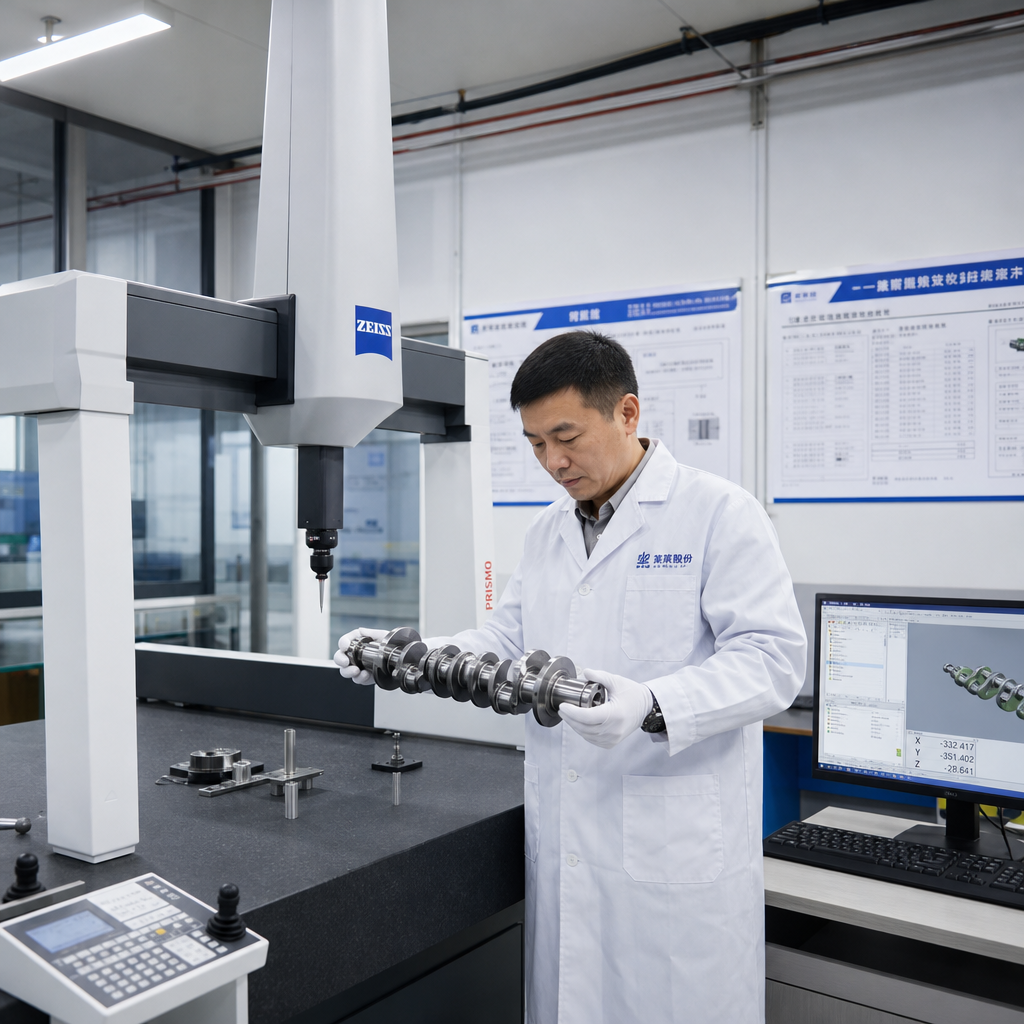
  • Dimensional inspection using fixture gauges, calipers, or CMM on critical datums
  • Bushing durability testing under cyclic radial and torsional loading
  • Ball joint articulation and endurance checks
  • Weld inspection for fabricated assemblies, including visual and destructive audit sampling where relevant
  • Corrosion testing such as neutral salt spray for comparative coating evaluation
  • Road simulation or bench fatigue aligned to internal or customer-defined duty cycles

Process detail is where the useful answers begin. Dimensional control may include 100% gauging on key bores and stud features, plus full layout inspection on first-off, changeover, and every 2-4 hours during production. Bushing validation may involve radial fatigue at ±3-5 mm over 100,000-300,000 cycles, and torsional durability at ±10° to ±25° depending on design intent. Ball joint testing often covers rotational torque, axial play, dust boot sealing, and stud pull-out or push-out verification under specified load.

For welded steel arms, ask whether the supplier checks weld penetration, nugget size, or bead profile, and whether there is a destructive audit frequency such as 1 sample per lot or 1 sample per shift. For coated parts, neutral salt spray does not predict exact road life, but it is still useful for comparing process stability when paired with film-thickness checks and adhesion testing.

There is no single universal standard covering every aftermarket suspension arm programme. The better question is whether the supplier can show a clear validation matrix: test item, method, sample size, acceptance threshold, and report date. For private-label or regional programmes, pilot-run validation and retained golden samples are additional controls worth requesting.

At Driventus, buyers reviewing suspension and steering products typically ask for process records, inspection checkpoints, and supporting documentation through our quality system. Where a standard catalogue item is not sufficient, drawing-based changes can be reviewed through custom manufacturing.

Field scenario: how post-installation complaints usually develop

Not every complaint after front lower control arm replacement is caused by workshop error. Many warranty cases start with product variation that passed sourcing review because the approval focused on catalogue fitment rather than controlled performance.

Common failure modes include:

  • Premature bushing cracking caused by weak compound selection, poor bonding, or incorrect preload condition
  • Ball joint looseness caused by inadequate housing retention or poor grease sealing
  • Corrosion at edges and weld zones due to thin or inconsistent coating coverage
  • Geometry-related complaints where arm position pushes alignment beyond the normal adjustment range
  • Noise after short mileage from incorrect bushing stiffness or poor fit at the mounting bracket

Failure timing often gives the first clue.

Complaints within the first 500-2,000 km often point to fit, preload, or installation-angle issues. Failures around 5,000-20,000 km can indicate poor bonding, under-spec rubber hardness, grease sealing problems, or weak coating in high-impact zones. Corrosion claims in snow-belt or coastal markets may rise sharply when edge coverage is inconsistent, even if flat-surface coating test results looked acceptable.

For distributors and repair chains, the practical response is to track warranty returns by platform, mileage, and defect mode. If one batch shows a concentrated issue, traceability becomes the difference between fast containment and broad commercial loss. A supplier should be able to identify the raw material lot, production date, and inspection record without delay. In practice, buyers should expect traceability back to at least production date, line or cell, operator or shift, coating batch, and ball joint or bushing lot.

This is why range size alone is not a strong buying signal. Technical files, defect coding, containment discipline, and 8D response matter more once a programme is live. Buyers comparing alternatives can review parts alongside our catalog to assess both coverage and control.

Order-stage checklist: what to request before you commit

Before approving a new supplier or expanding a programme, ask for a compact decision pack. For a mid-risk chassis component such as a front lower control arm replacement, it should usually include:

  • Product drawing or key-dimension report
  • Material and hardness data for major components
  • Validation summary for bushings, joint performance, and coating
  • Packaging specification to protect boots, studs, and coated surfaces in transit
  • Lot traceability method and label format
  • Warranty handling workflow
  • Production site certification details

Then make the commercial side equally specific. Open-ended answers slow decisions and hide risk. A useful RFQ checklist includes:

  • MOQ by SKU: for example 50, 100, or 200 pcs per reference, not only “negotiable”
  • Price break logic: unit pricing at 100 / 300 / 500 / 1,000 pcs so landed cost can be modelled
  • Sample policy: free or charged samples, lead time, and whether sample cost is credited against the first order
  • Tooling and development: whether a new fixture, die adjustment, or bushing tool is needed, with one-time cost and ownership terms
  • Lead time split: prototype lead time, production lead time, packaging lead time, and transit time shown separately
  • Packaging quantity: pieces per inner and outer carton, pallet quantity, gross weight, and export carton dimensions
  • Warranty terms: claim window, evidence required, debit-note policy, and response-time target

For many aftermarket programmes, a realistic framework is 30-45 days for repeat catalogue orders and 45-75 days for new private-label launch orders, with longer timing if custom packaging, new tooling, or special validation is required. Buyers should also confirm whether the supplier stocks core components such as ball joints and bushings or only purchases them after PO release, because that directly affects lead-time stability.

Driventus supports aftermarket and private-label programmes across multiple powertrain and chassis categories. If you need technical review for a new reference set, or want to compare current supply against a controlled replacement programme, use the request a quote page to start the discussion.

Driventus is an independent aftermarket manufacturer; brand names are referenced for fitment only.

Frequently asked questions

The main risk is geometry deviation at key mounting and ball joint datums. Even small dimensional errors can create alignment problems, installation difficulty, or abnormal tyre wear. As a working rule, buyers should review measured reports for critical dimensions held within roughly **±0.25-0.50 mm** depending on feature function, and confirm that the data comes from actual pilot or production samples rather than CAD nominal values alone.

Neither is automatically better. The right choice depends on the OE design, load case, and vehicle segment. Buyers should normally match the original construction type unless validated engineering data supports an alternative. In commercial terms, stamped or fabricated steel often offers lower unit cost and simpler repair-market positioning, while aluminium can reduce mass but may require tighter process control, different corrosion treatment, and different tooling economics.

Request drawing or key-dimension data, material certificates, test summaries for bushings and joints, coating information, batch traceability details, and evidence of controlled production under **IATF 16949:2016** and **ISO 9001:2015** processes. For sourcing decisions, also request MOQ by reference, quoted price breaks, sample lead time, production lead time, packaging specification, and warranty workflow so the approval covers both technical and commercial risk.

If you are reviewing a replacement programme for suspension arms, Driventus can provide fitment, validation and supply information for B2B evaluation. Contact our team here: /contact.html

Request a Quote
Evaluation point What to ask for Why it matters
Geometry matchDrawing, gauge report, or CMM summary with datum references and tolerance resultsControls alignment, installation fit, and OE-equivalent positioning
Bushing performanceHardness range, bonding method, durability test data, sleeve interference valueAffects NVH, steering stability, and service life
Ball joint assemblyPull-out force, articulation torque, dust boot material, grease typeReduces risk of looseness, binding, or contamination
Base materialMaterial grade certificate and, where relevant, heat-treatment recordConfirms strength and fatigue resistance
Surface coatingSalt spray or coating adhesion data plus target film thicknessSupports corrosion durability in real service conditions
TraceabilityBatch code, cavity or line identification, and production record systemSpeeds containment if field issues arise
Quality controlsPPAP-style documentation where applicable, final inspection plan, sampling frequencyImproves consistency across shipments
Management systemsEvidence of IATF 16949:2016 and ISO 9001:2015 processesIndicates structured control of production and quality
Commercial termsMOQ, unit price breaks, tooling cost, lead time, and warranty termsDetermines landed cost and replenishment reliability