By Vincent Xi, Editorial Author
Engine Rebuild Parts Supplier Sourcing Guide
Choosing an engine rebuild parts supplier is less about finding the cheapest catalog line and more about controlling fitment, documentation and supply risk before the first order moves. Distributors, wholesalers, sourcing engineers and import managers need quotes tied to the exact engine application, drawing revision, material requirement, kit contents and inspection evidence their channel expects. The practical risk is familiar: a piston ring, bearing shell, valve train part, gasket or rebuild kit may look correct in a catalog but still miss a dimensional, material or assembly requirement. This guide turns that risk into a procurement workflow: define the rebuild scope, verify cross-references, request tolerance evidence, compare documents before price, approve samples against measurable criteria and separate stock supply from custom manufacturing. It is written for B2B teams comparing engine rebuild component supply for aftermarket programs.
Start the RFQ With the Rebuild Scope, Not the Price Target
A supplier cannot quote a rebuild program cleanly until the buyer defines what is being rebuilt, for which engine and under which commercial format. Begin with the engine family, displacement, fuel type, emission configuration where relevant, OE reference numbers for fitment context, target market and rebuild level. OE references help identify the application; they do not imply approval, endorsement or identical source of manufacture.
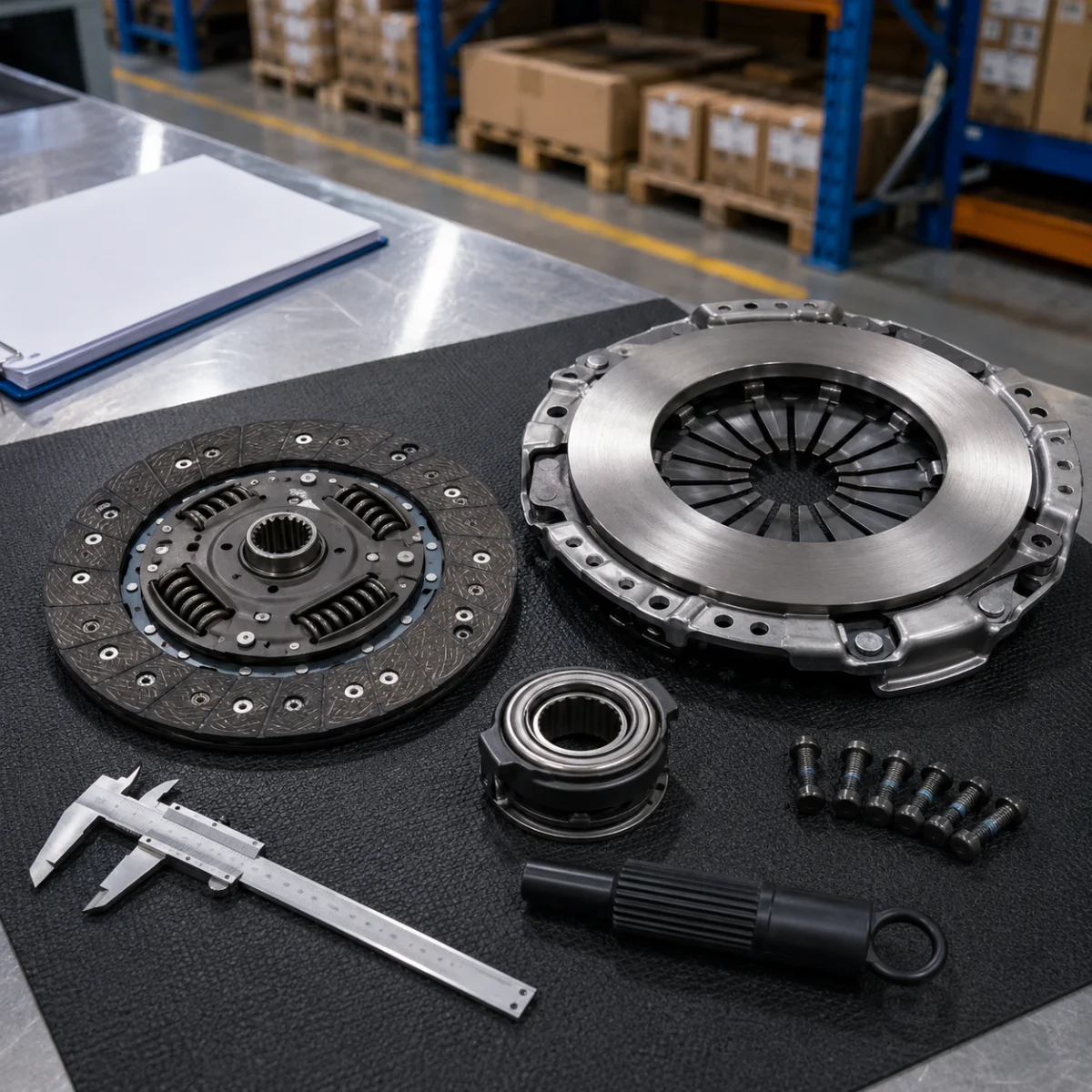
Keep loose components and kits separate in the request. A piston set, ring set, liner, valve, guide, bearing, gasket set or timing component may each need its own material evidence, dimensional control and packing requirement. A kit adds a different risk: one missing seal, incorrect bearing grade or mixed gasket layer can stop the distributor's customer from completing the rebuild.
Use engine components and our catalog to narrow the part family before asking for price. A request that says engine rebuild parts is too broad for serious comparison. A request that names the part family, engine application, reference numbers, drawing or sample basis, packing format and target quantity gives the engine rebuild parts supplier a measurable target and gives the buyer a fair basis for comparing replies.
Treat Cross-References as Leads Until the Match Is Proven
Cross-reference data can point sourcing in the right direction, but it should not approve a purchase by itself. Heavy Duty Journal's diesel engine parts cross-reference guide places verification before ordering, dimensional tolerance mismatches, material compatibility and engine rebuild components among its core topics. That is the right purchasing posture: ask what was matched, how it was matched and what evidence supports the substitution.
For each proposed replacement reference, request the source part number, target application, supersession note if available, affected mating parts and known exclusions. Exclusions deserve close attention because engine variants may share an external form while using different ring packs, bearing grades, valve stem dimensions, gasket constructions or sensor-related configurations.
Tighten the wording in supplier offers. Phrases such as replacement for, suitable for or equivalent to should be backed by drawings, measured samples, catalog logic or a formal interchange record. Without that support, the cross-reference remains a sales claim rather than a fitment decision. For higher-risk parts, review the match basis before approving samples, not after a shipment dispute.
Ask for Tolerance Evidence Where Assembly Risk Lives
Precision language needs documents behind it. Goldfarb & Associates describes diesel engine tolerances as dimensional limits often measured in microns. The supplied excerpt defines one micron as 0.001 mm, and it cites an IT7 tolerance example with a 25 micrometres total tolerance width for a nominal 40 mm part. It also notes that nozzle opening pressure tolerance for common rail diesel injectors can be as tight as 1% in certain high-precision applications. These figures should not be copied into an RFQ as universal rebuild specifications. They show why buyers need part-specific drawings and measurement evidence.
Separate tolerance from clearance when reviewing engine rebuild parts. Tolerance is the permitted manufacturing deviation of one component. Clearance is the assembled relationship between mating parts. A supplier can meet a single-part dimension while the final rebuild still depends on the buyer's assembly specification, machining condition and mating component information.
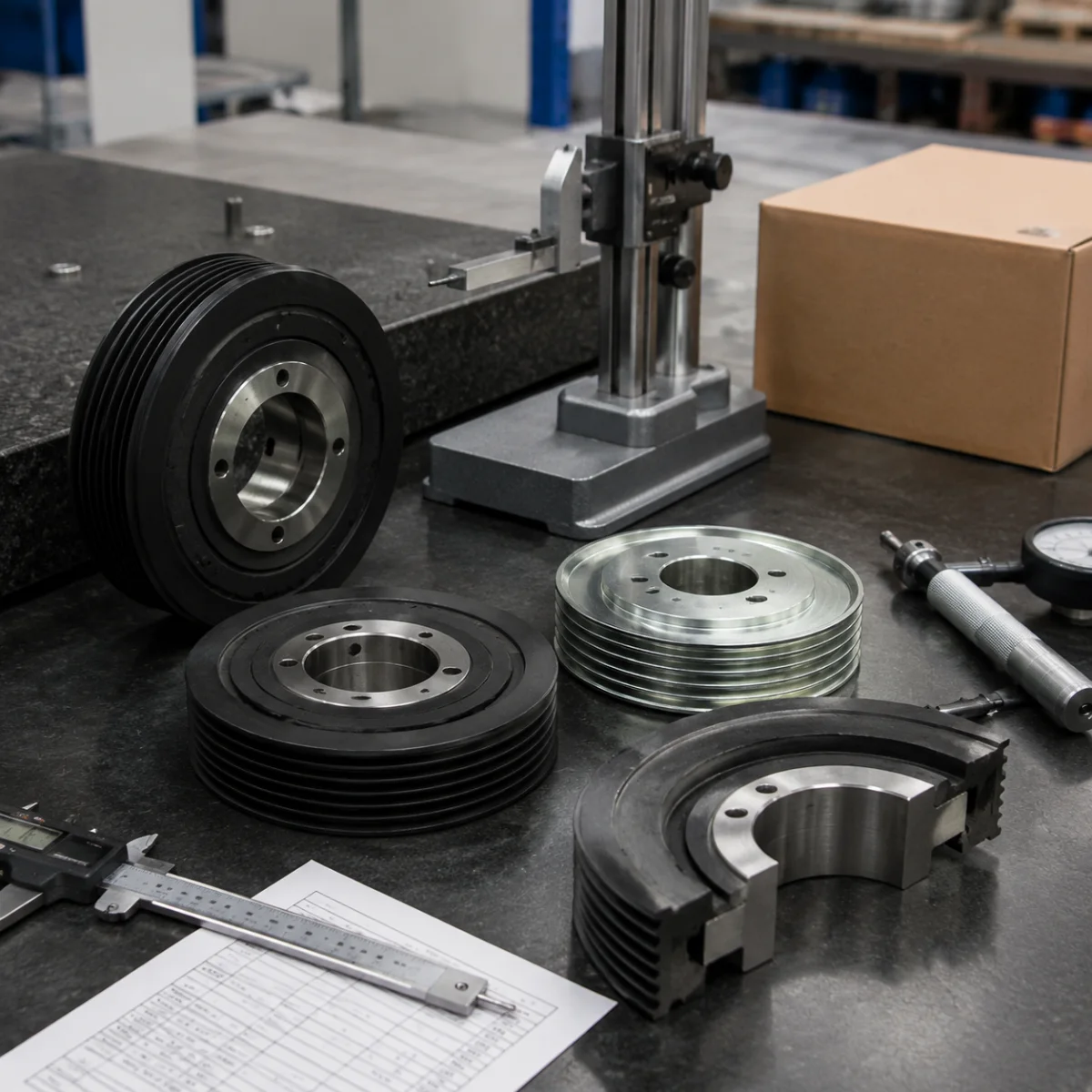
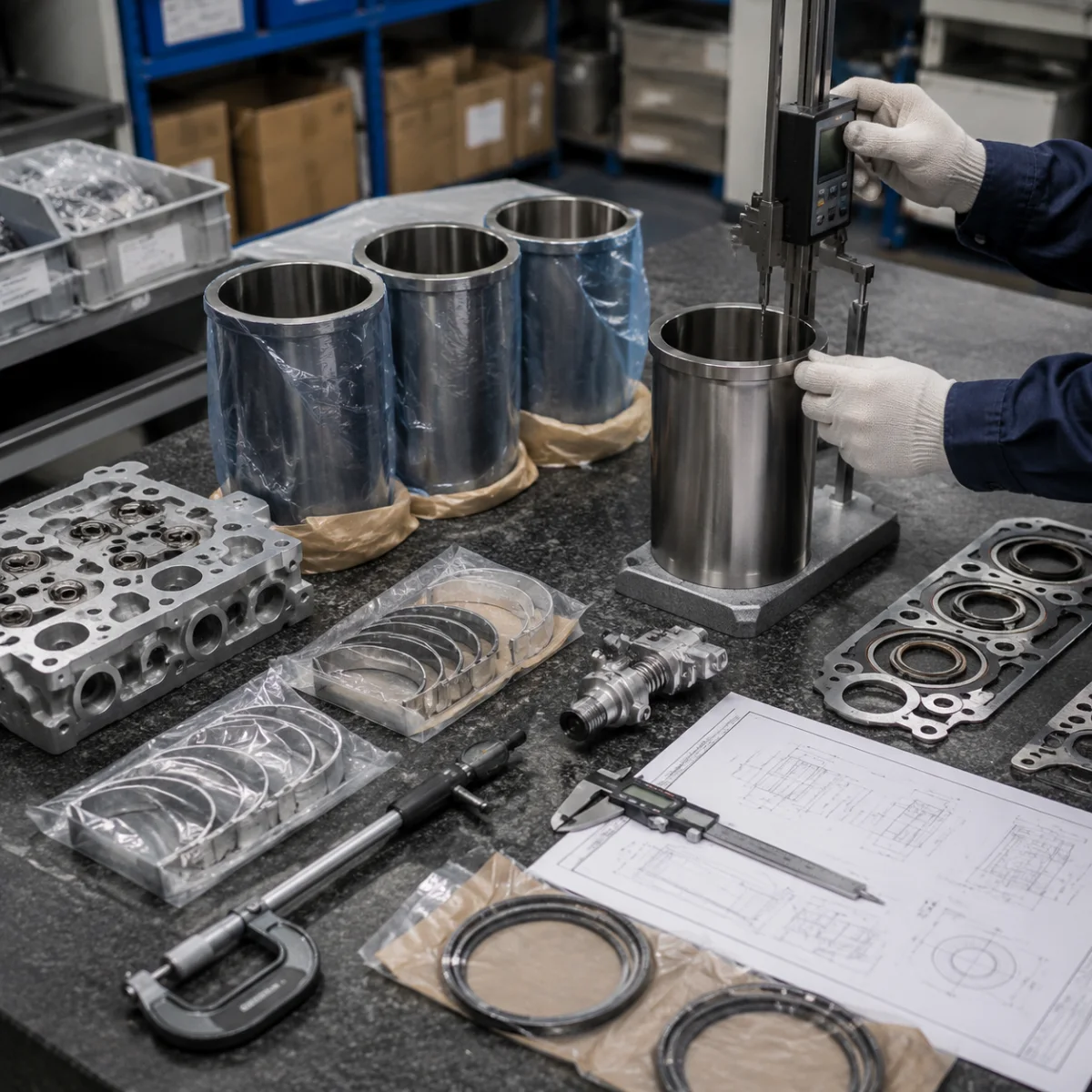
Make the request specific enough to audit. Ask for critical dimensions, tolerance bands, surface finish where relevant, material grade, heat treatment or coating requirement, and the inspection method used to confirm them. If a supplier cites an ISO tolerance grade or another standard, ask which characteristic it governs and which report shows conformance. A standard reference is not proof of company certification, and it is not proof that the part will meet an unrelated engine clearance.
Compare Price Only After the Document Baseline Matches
Price comparison becomes useful after each shortlisted engine rebuild parts supplier answers the same technical questions. Before that point, a lower unit price may simply mean missing documents, undefined packaging, incomplete kit contents or unchecked fitment assumptions.
| RFQ item | Why it matters | Buyer verification | ||
|---|---|---|---|---|
| Application and reference data | Controls fitment assumptions | Confirm engine code, OE reference and exclusion notes | ||
| Drawing or sample basis | Defines the dimensional target | Check drawing revision, sample source and approval status | ||
| Material and treatment | Affects wear, sealing and fatigue behavior | Request material declaration and process evidence where applicable | ||
| Dimensional inspection report | Shows measurable conformance | Review critical dimensions, gauge method and acceptance rule | ||
| Kit bill of materials | Prevents missing or mixed contents | Match every component to the buyer's packing list | ||
| Packaging and marking | Supports distribution handling | Verify part identification, carton data and traceability need | ||
| Commercial scope | Prevents hidden assumptions | Align quantity range, incoterm, lead-time basis and sample cost |
| Data point | Value | Scope | As of | Evidence |
|---|---|---|---|---|
| Micron conversion used in tolerance context | 0.001 mm | Definition of 1 micron in the Goldfarb diesel engine tolerances excerpt; general unit context, not a Driventus specification | Source excerpt retrieved 2026-07-13; no publication date shown in the evidence pack | Used in the tolerance section to explain why dimensional evidence may need micrometre-level detail. Source |
| IT7 tolerance width example | 25 micrometres | International Tolerance Grade IT7 total tolerance width example for a nominal 40 mm part as stated in the supplied Goldfarb excerpt; not a model-specific engine clearance | Source excerpt retrieved 2026-07-13; no publication date shown in the evidence pack | Used in the tolerance section to show why RFQs need drawing-level dimensional evidence rather than generic precision claims. Source |
| Nominal part size in IT7 tolerance example | 40 mm | Nominal part size used in the IT7 example cited by the supplied Goldfarb excerpt; included only to preserve the source example's dimensional context, not as a rebuild-part specification | Source excerpt retrieved 2026-07-13; no publication date shown in the evidence pack | Used only as the nominal size attached to the 25 micrometres IT7 example in the tolerance section. Source |
| Injector opening pressure tolerance example | 1 % | Nozzle opening pressure tolerance for common rail diesel injectors in certain high-precision applications as described in the supplied Goldfarb excerpt | Source excerpt retrieved 2026-07-13; no publication date shown in the evidence pack | Used to support buyer guidance on precision-sensitive fuel-system-related rebuild parts and acceptance documentation. Source |
| EPA rebuilding document publication year | 1995 year | EPA NEPIS metadata publication year for the document Heavy-Duty Engine Rebuilding Practices | Source excerpt retrieved 2026-07-13 | Used only to identify the historical source record; it is not evidence of current supplier capability, current emissions compliance or part quality. Source |
| EPA rebuilding document length | 96 pages | EPA NEPIS metadata page count for the document Heavy-Duty Engine Rebuilding Practices | EPA metadata lists publication year 1995; source record retrieved in the 2026-07-13 evidence context | Used in the evidence limits section to describe the source as a broad historical rebuilding reference, not supplier qualification proof. Source |
Methodology
Source retrieval from 2026-07-13T14:04:18+00:00 was reviewed as untrusted evidence, with claims extracted only when visible in the supplied excerpts. Goldfarb was used for tolerance examples and unit context, EPA NEPIS for rebuilding document metadata, and Heavy Duty Journal for cross-reference verification themes. The Heavy Duty Journal date was removed from the data-point list because the date value is not visible inside the source excerpts. The DataIntelo market source was not used because its visible numeric claims were market-report figures rather than primary registry, inspection or standards data for supplier qualification. Numeric points were not charted because their units and scopes are not comparable.
Limitations and what to verify
- The tolerance figures are general published examples, not Driventus specifications or model-specific rebuild clearances; buyers must verify current drawings, mating parts, inspection methods and sample reports.
- The EPA rebuilding source is historical and was used for context only; buyers must verify current regulatory, emissions, warranty and application requirements before approving supply.
- The cross-reference evidence supports the need for verification but does not prove compatibility for any part number; buyers must confirm supersessions, exclusions, materials and trial-fit results.
- No certification, facility operation, export market, annual capacity, defect-rate or first-person testing claim is made for Driventus; buyers should request current supplier documentation, fitment evidence and inspection records for the exact parts under quotation.
Sources used
- Why Does Micro-Level Precision in Diesel Engine Tolerances Matter? — goldfarbinc.com. Supported the article's tolerance discussion, including the cited micron conversion, IT7 tolerance width example, nominal 40 mm context and injector pressure tolerance example.
- Diesel Engine Parts Cross Reference Guide: OEM to Aftermarket ... — heavydutyjournal.com. Supported the procurement emphasis on cross-reference verification, dimensional mismatch checks and material compatibility review.
- Heavy-Duty Engine Rebuilding Practices - epa nepis — nepis.epa.gov. Supported the evidence-limits section by identifying the EPA rebuilding document metadata and its broad historical scope.
Frequently asked questions
Send the engine application, OE reference for fitment context, required part family, drawing or sample basis, expected kit contents, packaging requirement, target quantity range and the documents you expect with samples. A supplier can quote more accurately when the RFQ separates fitment data, technical evidence and commercial scope.
No. A cross-reference helps identify a possible replacement, but approval should depend on dimensions, material, mating-part compatibility, sample review and any buyer-specific inspection requirement. OE and brand references should be treated as fitment context only, not as endorsement or proof of identical construction.
For most sourcing programs, ask for drawings or sample basis, material declaration, dimensional inspection report, kit bill of materials, packaging specification and any agreed process evidence. If a supplier cites a standard, request the exact characteristic, revision and report that shows how the requirement was checked.
Consider custom manufacturing when the buyer owns drawings, needs private-label kit structure, has a hard-to-source application, or requires controlled material, packaging or inspection conditions. Keep the first order conditional on sample approval and written acceptance criteria, not on catalog similarity alone.
For a focused sourcing review, share your engine model, reference numbers, drawings or samples, kit scope and document requirements through request a quote
Request a Quote