Engine Mount Specifications: Dimensions, Materials, and Tolerances
Engine mount specifications are the difference between a part that fits on paper and a part that survives in the vehicle. For buyers, the real question is not what the mount is called, but what it measures, what it is made from, how tightly it is controlled, and how it behaves under load. The right specification reduces vibration complaints, interference at installation, and early bond failure. Driventus is an independent aftermarket manufacturer; brand names are referenced for fitment only. For sourcing, confirm OE cross-reference, bracket hole pattern, static deflection range, and any hydraulic or torque-control features before ordering volume. Published quality and compliance references such as IATF 16949:2016, ISO 9001:2015, REACH (EC) No 1907/2006, and applicable vehicle-level validation methods should also be part of the review. If you need a controlled quote package, use [our catalog](/products.html), review the [quality system](/quality.html), or ask about [custom manufacturing](/oem-services.html).
What must be on the drawing, and what can never be left vague
A useful specification sheet should let a buyer approve fit and function without guessing. At minimum, it should identify:
OE reference or OE 06A... cross-reference where applicable
Mount type: rubber, hydraulic, active, or torque rod
Installed dimensions: length, width, height, and stud or bolt locations
Bracket interface: thread size, pitch, and locating features
Material stack: steel grade, aluminium casting, rubber compound, or fluid chamber materials
Performance targets: static load, dynamic stiffness, and allowable deflection
Environmental limits: temperature range, oil exposure, ozone resistance, and salt spray exposure
Validation method: bench cycling, road simulation, and visual failure criteria
If the same housing is sold into multiple applications, split the core design data from the fitment data. Otherwise the drawing can look correct while the offset, stud length, or bushing position is wrong for one vehicle family. Buyers should also ask for the installed mass range the mount is designed to support, the engine-side and chassis-side interface part numbers, and whether the part is intended for left, right, front, or rear position. The best specification packages do not stop at shape and fitment. They state the nominal design load, the working load band, and the acceptable preload window after installation so the supplier is quoting the real vehicle condition, not a generic shell.
Dimensions that actually control fit and failure risk
For procurement, dimensional control is the first filter. A mount can be structurally sound and still fail because it sits 2 mm off its intended location. The fields below are the ones that matter most in a buying review.
Parameter
What to record
Practical sourcing note
Overall length
mm
Check against engine bay clearance
Overall width
mm
Verify bracket and insulator envelope
Overall height
mm
Critical for installed engine position
Stud diameter
mm
Match thread engagement and clamp load
Thread size
e.g. M10 x 1.5
Confirm with vehicle-side hardware
Hole centre distance
mm
Key for bolt-on replacement
Locator offset
mm
Prevents misalignment during assembly
Allowed dimensional tolerance
typically ±0.5 to ±1.0 mm for critical interfaces
Define separately for cast, machined, and rubber features
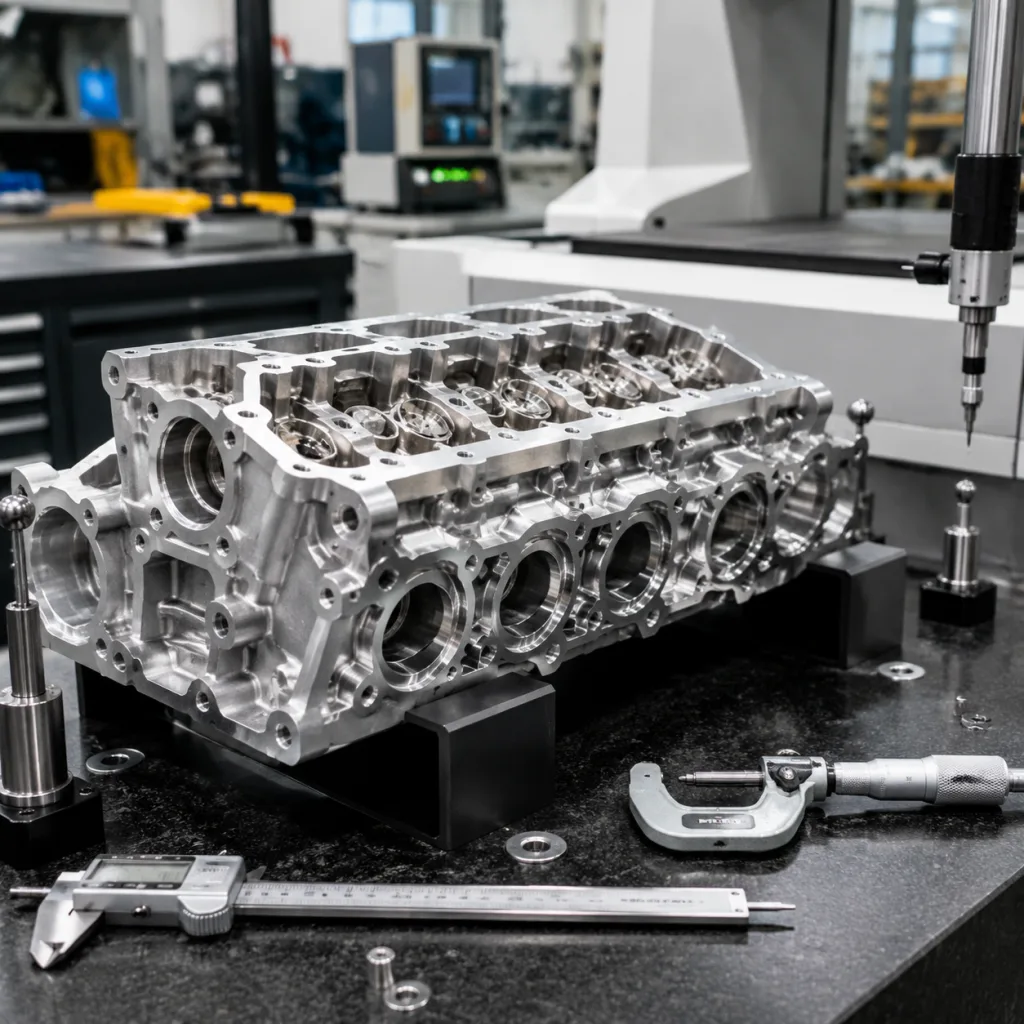
</tr></thead><tbody> </tbody></table>There is no single tolerance number that works for every feature. Critical interfaces should be tighter than non-functional outer surfaces. If a supplier cannot separate controlled from non-controlled dimensions, the drawing package is incomplete. As a practical rule, ask for separate tolerances for cast body features, machined faces, welded brackets, and bonded rubber features. Machined hole locations are usually the most sensitive, because a 0.3 mm shift can alter the load path even when the outer shape looks identical. Ask for a first-article dimensional report on every critical feature, and require the measuring method to be stated clearly: CMM, gauge fixture, or manual verification. If the part is bonded rubber, request both pre-bond and post-cure dimensions, since shrinkage and compression set can move the installed geometry.
Material choices: where they help, where they hurt
Material selection drives life, vibration response, and service risk. Common constructions include:
Steel bracket with bonded natural rubber for basic engine isolation
Steel or aluminium housing with hydraulic damping for lower idle shake
Cast aluminium top plates where weight reduction matters
Reinforced rubber compounds for oil resistance and heat stability
PTFE or low-friction liners in selected torque-control designs
For rubber elements, ask for compound identification, hardness range, and ageing data after heat exposure. For hydraulic designs, request fluid compatibility and leak-rate criteria. If the mount will be sold into the EU or UK aftermarket, document REACH (EC) No 1907/2006 substance compliance for relevant elastomers, adhesives, and coatings. For zinc-plated or painted housings, corrosion resistance should be tied to a named test method rather than a generic claim. In buyer terms, the useful material data includes the steel grade or casting alloy, the rubber polymer family, the Shore A hardness range, and the adhesion requirement between insert, rubber, and outer shell. A common sourcing target is a rubber hardness window of 55 to 75 Shore A for conventional mounts, while hydraulic or torque-control designs may use different compounds to tune vertical and fore-aft stiffness separately. If a supplier quotes "EPDM" or "NR" without compound ratio, filler type, or heat-age retention, ask for the full formulation summary and the test condition used to validate it. Also request oil-swell and compression-set values after exposure, because a mount that looks fine in storage can still soften excessively in service.
Test data that separates a credible supplier from a guess
Specification data only matters when it is backed by repeatable validation. A serious purchase review should ask for the following evidence:
1. Static load test report with load value, hold time, and permanent-set result. 2. Dynamic cycling data showing load amplitude, frequency, and cycle count. 3. Temperature ageing data for rubber or fluid-filled designs. 4. Corrosion exposure data for steel brackets and fasteners. 5. Installed-vehicle verification where engine position, idle vibration, and clearance are checked.
If road-surface durability is part of the requirement, ask whether the supplier uses SAE J2527 for environmental exposure or another documented internal equivalent. If the application is tied to vehicle emission or powertrain certification constraints, confirm any relevant ECE R-83 dependencies at the vehicle level, while keeping the mount itself within its own mechanical scope. The point is traceable test conditions, not broad marketing language. For quoting, ask for the exact pass/fail threshold on each test. A static load result without the deflection measurement is not enough; a cycling report without frequency, dwell time, and temperature is not enough either. A buyer-friendly test request should specify at least one load case at nominal vehicle mass, one overload case at a defined percentage above nominal, and one thermal ageing sequence that reflects the hottest under-hood zone the mount will see. For hydraulic designs, include leak-rate acceptance criteria and a visual seal inspection after cycling. For bonded rubber parts, include the acceptable bond-line separation limit, because a mount can still pass a generic pull test while showing early edge cracking in real use.
How to compare suppliers without getting distracted by price
A clean comparison uses measurable items, not appearance or unit price alone. Use this checklist when reviewing bids:
Drawing control: revision level, approval status, and change history
Material declaration: steel, rubber, coating, and fluid details
Dimensional report: first article or PPAP-style submission where required
Process control: bonded rubber curing, machining, and final inspection steps
Traceability: batch code, date code, and shipment record retention
Certification: IATF 16949:2016 and ISO 9001:2015 certificates in force
Driventus supports buyers that need catalogue selection, validation support, or private-label supply. Browse our catalog, check the quality system, or review custom manufacturing if you need a controlled variant. For broader powertrain sourcing, see engine components. To make supplier bids comparable, ask each vendor for the same commercial and technical data set: MOQ, unit price tiers, sample lead time, production lead time, carton quantity, and annual capacity. A supplier with a lower unit price but a much higher MOQ may be the worse commercial fit. Separate one-off sample costs from recurring production pricing, and state whether tooling, inspection fixtures, or special packaging are included. Also confirm whether the quoted lead time starts from PO date, drawing approval, or sample approval, because those dates change the real schedule. When possible, request a landed-cost comparison that includes export cartonization, pallet standard, and any special labelling so the apparent price is not hiding downstream handling cost.
What to put in the RFQ so the first quote is usable
A complete RFQ shortens sampling time and reduces quoting errors. Include the following fields:
Vehicle application and engine code
OE reference or OE 06A... style cross-reference if known
Quantity, annual forecast, and target shipment schedule
Required material and surface finish
Drawing file, photo, or sample for dimension verification
Packaging requirement, label content, and pallet standard
Compliance requests for IATF 16949:2016, ISO 9001:2015, and REACH (EC) No 1907/2006
If you need a bespoke bracket offset, bushing hardness, or logo-free export packaging, state that in the RFQ. Customisation should be agreed before tooling release, not after the first sample lot. That keeps commercial terms and dimensional approval aligned. A strong RFQ should also specify MOQ expectations, target annual volume, acceptable price break points, and the required response format for suppliers. For example, ask vendors to quote sample quantity, 100-piece, 500-piece, and 1,000-piece tiers so the purchasing team can see the cost curve instead of a single number. Include the required sample timing, such as T0 concept sample, T1 fit-check sample, and PPAP or pre-production sample if your process uses those stages. If the programme depends on a launch date, state the latest acceptable ship date and whether partial deliveries are allowed. For custom mounts, add the exact bracket offset in millimetres, the permissible rubber hardness range, the colour or surface finish if visible, and whether the final part must match an existing carrier or be re-engineered from the supplied sample. The more exact the RFQ, the less back-and-forth is needed before a usable quote is issued.
Frequently asked questions
The critical items are fitment dimensions, material construction, load control, and validation data. If those are clear, buyers can compare samples and avoid installation issues. In practice, buyers should prioritize the installed hole pattern, height stack-up, stiffness target, and temperature exposure range, because those govern whether the mount actually works in the vehicle rather than just matching the basic part shape.
Yes, if the application has a known OE match. The cross-reference should be used for fitment only, not as a claim of manufacturer approval or endorsement. The best practice is to pair the OE reference with the exact engine code, chassis code, and side/position of the mount so the buyer can verify the application without relying on brand naming alone.
A drawing or sample photo, target quantity, vehicle application, compliance requirements, and any dimensional or test expectations. That is usually enough to quote accurately. For a more actionable sourcing request, add annual volume, MOQ target, requested price tiers, lead-time expectation, packaging standard, and any required test report or first-article submission format.
If you need a controlled quotation package or a fitment review for your next programme, send the application details and drawings through /contact.html.