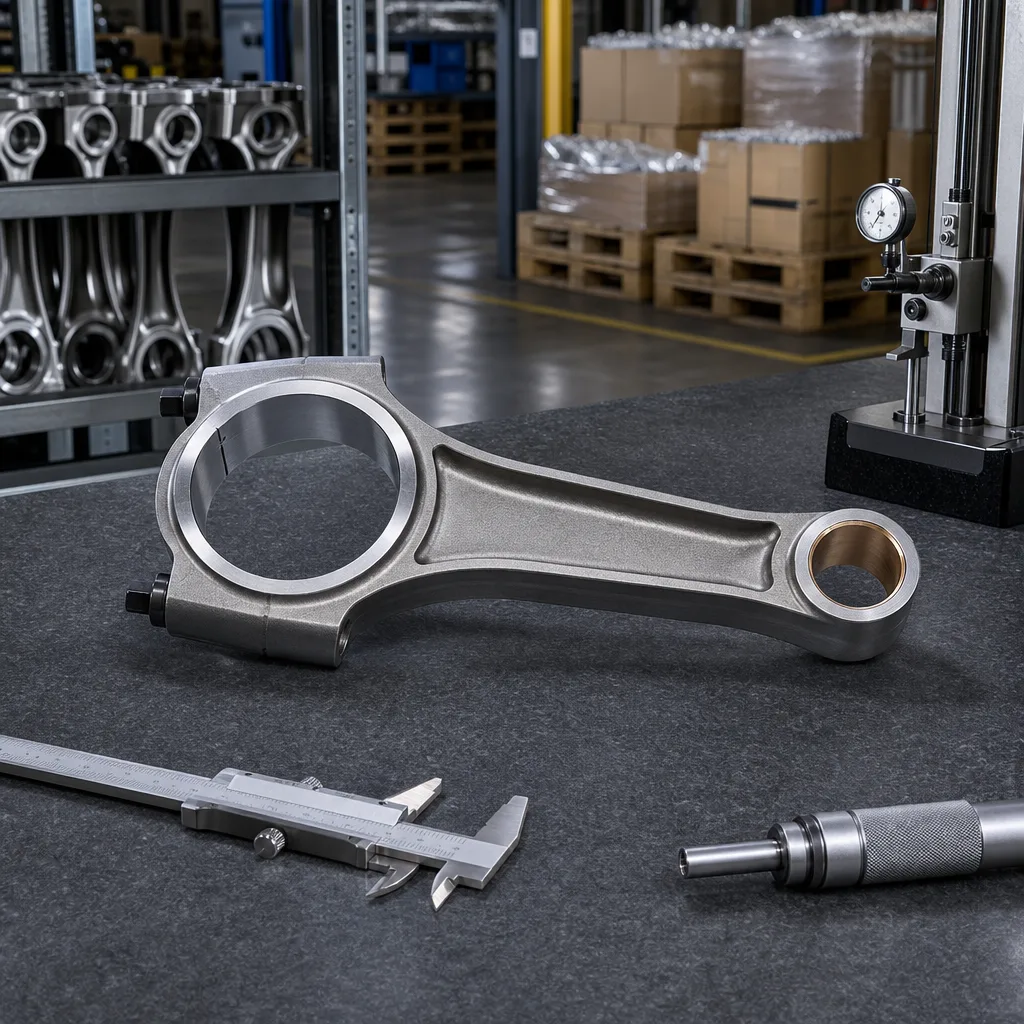
If you source an engine mount Hyundai supplier for aftermarket distribution, repair networks, or OEM-aligned programmes, the main questions are consistency, fitment, and supply control. Engine mounts must maintain correct powertrain position, isolate vibration, and withstand heat, oil exposure, and road shock without excessive deflection. For procurement teams, the buying decision usually comes down to dimensional repeatability, compound quality, test evidence, and the supplier’s ability to support stable replenishment. Driventus manufactures engine and powertrain components in Taizhou, Zhejiang, and exports to more than 60 countries. We supply B2B only, with IATF 16949:2016 and ISO 9001:2015 systems in place. Driventus is an independent aftermarket manufacturer; brand names are referenced for fitment only.
What buyers should verify before sourcing
For Hyundai engine mount programmes, buyers should confirm the following before placing a trial order:
OE cross-reference coverage for the target application, using the relevant OE number where provided by the customer
Mount type: hydraulic, rubber-to-metal, or torque mount
Rubber compound suitability for heat, oil mist, and ozone exposure
Static and dynamic deflection limits under load
Packaging specification for export and warehouse handling
A supplier should also state whether the part is designed for passenger cars, light commercial vehicles, or fleet repair channels. For mixed purchasing programmes, it is useful to separate catalogue supply from custom manufacturing early in the enquiry stage. You can review our catalog and, where the programme covers adjacent powertrain items, engine components.
Materials and construction used in engine mounts
Engine mounts are not commodity rubber parts. The material stack affects vibration control, service life, and dimensional stability.
Component
Common material
Procurement relevance
Metal bracket
Low-carbon steel or stamped steel
Weld quality and corrosion resistance affect long-term fit
Elastomer body
Natural rubber, NR/SBR blends, or specialised compounds
Must balance hardness, tear resistance, and damping
Hydraulic chamber
Rubber membrane with fluid fill
Used where idle vibration control is critical
Fasteners / studs
Plated steel
Thread integrity and coating resistance matter in humid or salted-road markets
</tr></thead><tbody> </tbody></table>For export channels, compound selection should consider REACH (EC) No 1907/2006 compliance where applicable. Buyers should also request confirmation of any restricted substances process and material traceability. If your target programme requires a non-standard bracket, bushing, or packaging format, custom manufacturing can be used to define the specification before tooling release.
Certification, audit, and quality control
Procurement teams usually need more than a part number match. They need supplier evidence that incoming and outgoing quality is controlled.
Driventus operates under IATF 16949:2016 and ISO 9001:2015. For engine mounts, quality control typically includes:
Incoming inspection of steel and rubber raw materials
Dimensional checks on critical interfaces
Bond strength verification between rubber and metal
Visual inspection for flash, voids, and surface defects
Packaging checks to prevent deformation in transit
Where customers request it, supply dossiers can include material declarations, inspection records, and lot traceability. Our quality system is structured for B2B buyers who need repeatable approval evidence for warehouse stocking or route-to-market programmes.
MOQ, lead time, and sourcing model
The practical sourcing question is whether the supplier can support forecasted demand without breaking batch consistency. For engine mounts, MOQ and lead time depend on the design family, tooling status, and packaging requirements.
Typical factors that affect supply planning:
1. Catalogue volume: established applications usually support lower MOQ than new development parts. 2. Tooling readiness: existing tooling shortens lead time. 3. Compound specification: special elastomer grades may increase qualification time. 4. Labelling and carton format: private-label and export pack changes add setup steps. 5. Forecast stability: rolling forecasts reduce stockouts and expedite charges.
For buyers managing multi-country replenishment, it is usually better to align one approved specification across regions rather than split variants by small local preferences. That reduces SKU complexity and makes factory audit and inspection simpler.
Fitment validation for Hyundai programmes
A reliable engine mount supplier should support fitment validation before mass purchase. Validation is not only about bolting the part into place. It should confirm engine position, cabin vibration behaviour, and clearance under load.
Typical validation checks
Bracket alignment against the vehicle-side and engine-side interface
Torque retention after thermal cycling
Deflection under static engine load
Clearance to exhaust, subframe, and ancillary drives
Road-simulation or endurance observation for abnormal cracking or fluid loss
Where a customer provides an OE number, the supplier should confirm cross-reference status without claiming manufacturer endorsement. If your sourcing team needs a part developed around a known reference, share the OE identifier and target market, then we can propose the closest build specification and test plan. This approach is preferred for Hyundai applications with multiple trim levels or drivetrain variants.
Why B2B buyers choose a direct factory source
A direct factory source can reduce cost layers, but the real advantage is control over specification and repeatability. For wholesalers and repair-chain buyers, direct sourcing can improve three areas:
Specification control: the same drawing, material, and packaging standard can be maintained across replenishment cycles
Supply visibility: production planning can be matched to forecast volumes
Technical response: changes to bracket geometry, compound hardness, or label format can be handled at source
Driventus supplies to aftermarket distributors, OEM and Tier-1 channels, and multi-location repair businesses. If your sourcing team needs a first quote, request a quote with the OE reference, annual volume, target market, and any packaging requirements. Driventus is an independent aftermarket manufacturer; brand names are referenced for fitment only.
Frequently asked questions
Yes. We can review the OE reference provided by the buyer and confirm fitment coverage for the target application. We do not claim vehicle manufacturer endorsement, and all brand references are for fitment only.
Our production system is certified to IATF 16949:2016 and ISO 9001:2015. For regulated markets, we also support material and compliance documentation such as REACH (EC) No 1907/2006 declarations where applicable.
Yes. We can support custom manufacturing, carton marking, barcode labels, and export-ready packaging for distributors, wholesalers, and repair networks. Share your forecast, target market, and artwork requirements in the enquiry.
For sourcing, samples, or programme review, send your OE reference and annual volume details through /contact.html so we can confirm specification and lead time.