engine parts · 2026-06-26

Engine Motor Mount Replacement: How Buyers Separate Reliable Supply from Costly Comebacks

Engine motor mount replacement is easy to underestimate. On paper, it looks like a basic fitment item: match the application, confirm the studs and holes line up, place the order. In practice, that approach is where many aftermarket problems start.

A mount can appear correct in a catalogue and still fail once it sees heat, oil mist, road salt and repeated engine movement. The visible part number match does not guarantee correct installed height, stiffness, damping behaviour or bond durability. When the mount underperforms, the cost usually spreads far beyond one returned component. Buyers end up dealing with NVH complaints, repeat labour, warranty disputes and avoidable damage to customer trust.

That is why experienced procurement teams do not treat engine motor mount replacement as a commodity purchase. They look for dimensional control, repeatable rubber-to-metal bonding, material traceability, stable lot quality and validation data that reflects real service conditions. The target is not catalogue interchangeability. It is OE-equivalent function in the field.

For most programmes, the core checks include installed-height tolerance, attachment geometry, elastomer hardness, corrosion resistance and durability under cyclic load. Typical reference windows may include installed-height tolerance around ±0.5 mm to ±1.0 mm depending on platform, centre-to-centre tolerance near ±0.3 mm to ±0.5 mm on critical holes or studs, elastomer hardness often in the 45 to 70 Shore A range with lot control of roughly ±3 to ±5 Shore A, and corrosion protection capable of 240 to 720 hours of neutral salt spray depending on bracket design and channel expectations. Whether the part is a bonded rubber mount or a hydraulic design, the buying logic is the same: verify how it performs, not just how it looks.

The sections below take a less generic route. Instead of repeating broad sourcing advice, they focus on the decisions that actually change outcomes: what a good replacement mount must do, where approvals usually go wrong, how to compare rubber and hydraulic designs, which factory controls matter in volume supply, and how procurement teams can qualify a supplier without relying on vague “OE quality” claims.

Start with the job to be done, not the catalogue listing

A replacement motor mount does more than hold engine weight. It controls powertrain motion, isolates vibration, protects driveline alignment and keeps doing that after long exposure to heat, oil, water, salt and cyclic loading. When a mount is weak, the first symptoms are usually not dramatic breakages. They are customer complaints: idle vibration, clunks on take-off, visible sagging, bracket misalignment during installation, torn rubber, or fluid loss from hydraulic units.

For an engine motor mount replacement line, buyers should expect repeatable functional performance, not just bolt-on compatibility. A serious review usually includes:

  • Dimensional match to an OE drawing, approved sample or validated reverse-engineered standard
  • Correct static and dynamic stiffness window for the target platform
  • Rubber compound resistance to oil, ozone, heat, water and road contaminants
  • Reliable rubber-to-metal bond strength before and after ageing
  • Controlled welding, stamping or casting quality on brackets, sleeves and housings
  • Surface protection suitable for storage, transport and in-service corrosion exposure
  • Consistent torque-seat geometry for bolts, studs, sleeves and locating features
  • Packaging protection that prevents thread damage, coating damage or deformation in transit

The practical rule is simple: ask for numbers, not labels. “OE quality” tells a buyer very little unless it is backed by control windows. For many engine motor mount replacement programmes, useful baseline figures include static vertical deflection under rated load, durometer range, bond-strength minimums, coating thickness, thread class, and salt-spray hours.

A supplier might, for example, control a conventional rubber mount at Shore A 55 ±3, installed height 82.5 ±0.5 mm, sleeve concentricity within 0.20 mm TIR, coating thickness 15 to 25 μm, and corrosion resistance at ≥480 h NSS with no red rust on critical surfaces. The exact values vary by design. The key point is that a credible supplier can state them clearly and explain how they are measured.

Where a recognised benchmark exists, buyers often align the engine motor mount replacement part to an OE cross-reference such as OE 11251… or another fitment reference used in the sourcing file. That helps define tooling targets and test plans without implying vehicle-maker approval.

This is also where commercial reality enters the picture. Common aftermarket references may carry MOQ levels around 300 to 1,000 pcs per item for branded export packing. Pilot runs are often possible at lower volume, but at higher unit cost because mould set-up, fixture changeover and validation expense are spread over fewer parts. Repeat-order lead time is often 30 to 45 days after deposit and artwork approval, while first orders with new packaging, new tooling or revalidation can stretch to 45 to 75 days.

In short: treat the mount as an NVH and durability component. Not as a metal bracket with rubber attached.

Driventus is an independent aftermarket manufacturer; brand names are referenced for fitment only.

Where approvals fail first: fit, preload and material assumptions

Most bad approvals do not collapse because the part looked obviously wrong. They fail because the buyer accepted a mount that was *almost* right.

Dimensional conformity is the first gate in any engine motor mount replacement approval process. Small errors in centre-to-centre spacing, stud angle, sleeve position or installed height can preload the mount, shift the powertrain, alter exhaust routing or affect half-shaft alignment. The part bolts in. The problems arrive later.

Key dimensional points

</tr></thead><tbody> </tbody></table>The next common mistake is to stop at dimensions and assume the material package will take care of itself. It will not. The service life of an engine motor mount replacement part depends heavily on elastomer formulation, metal substrate quality, bonding chemistry and corrosion protection.

Material points to request from suppliers

  • Rubber hardness range in Shore A, with stated production tolerance, for example 50 ±5, 55 ±3 or 65 ±5 depending on design
  • Compound type and whether it is formulated for heat, ozone and oil resistance, such as NR/BR, NR/SBR, CR or EPDM-based systems where appropriate
  • Metal substrate specification for brackets, sleeves or cast housings, for example low-carbon stamped steel, DOM sleeve tube, or cast aluminium body with grade declaration
  • Adhesive system and surface preparation process used before bonding
  • Coating type such as e-coat, zinc flake, galvanic protection or phosphate plus paint
  • Fluid specification for hydraulic mounts, including leak-check method and sealing controls
  • Ageing-performance data showing stiffness or hardness change after thermal exposure

Ask for more than nominal durometer. A difference of 5 Shore A can materially change idle isolation or engine roll control on sensitive platforms. Compression set and oil-swell data are also worth reviewing. Typical checkpoints include compression set after 70 h at 100°C or 22 h at 125°C, and volume swell after immersion in engine oil or IRM fluid with defined acceptance limits.

On the metal side, buyers should confirm whether bracket thickness, sleeve wall thickness and weld throat size are controlled on the drawing or left to process convention. A bracket intended at 3.0 mm nominal but produced at 2.6 mm actual can reduce stiffness and fatigue life. A sleeve ID drift of 0.15 mm can change clamp behaviour and service fit.

The lesson is blunt: a mount can pass first fitment and still be a bad sourcing decision. Good approval files connect dimensions, materials and process controls in one system, rather than treating them as separate topics.

The validation data that actually lowers warranty exposure

A buyer does not need every possible test. But a buyer does need the *right* tests, with conditions that mean something.

For engine motor mount replacement programmes, validation data should show how the part behaves after mechanical, thermal and chemical stress. The exact scope varies by design, customer and market, but the commercial purpose is constant: reduce uncertainty before launch and reduce warranty cost after sales begin.

Check item Typical buyer focus Why it matters
Centre-to-centre hole spacing±0.3 to ±0.5 mm depending on designPrevents bolt-up difficulty and bracket stress
Installed heightTypically ±0.5 to ±1.0 mm to drawing requirementAffects drivetrain position and NVH
Stud diameter/thread accuracyGO/NO-GO verification, common thread classes 6g/6HPrevents installation damage
Sleeve concentricityOften ≤0.15 to 0.25 mm TIRReduces uneven load transfer
Bracket flatnessCommon control 0.2 to 0.5 mm by fixture inspectionAvoids mounting distortion
Rubber bond line locationVisual and section validation, often within ±0.5 mm windowMaintains repeatable stiffness
Stud perpendicularity/angleOften within 0.5° to 1.0°Prevents cross-load during installation

</tr></thead><tbody> </tbody></table>The difference between useful and weak documentation is detail. Stronger reports state sample count, temperature, load range, displacement amplitude, test duration and acceptance criteria. Useful examples include:

  • Hardness: Shore A at 23°C, sample size n=5 per lot, acceptance target ±3 to ±5 points
  • Bond strength: minimum pull or peel result in N/mm or failure mode requirement such as rubber tear rather than adhesive separation
  • Heat ageing: 70 h at 100°C, 168 h at 120°C, or customer-specific cycle, with post-age hardness change often limited to about +10 Shore A max and no major cracks
  • Compression set: controlled deflection and recovery measurement after thermal ageing, often reviewed for permanent deformation trend
  • Salt spray: 240 h, 480 h or 720 h NSS depending on coating and market expectation, with defined red-rust criteria on functional surfaces
  • Durability cycling: for example 100,000 to 1,000,000 cycles at specified displacement and frequency, depending on application risk level
  • Hydraulic leak test: pressure or vacuum hold for a defined time, such as 30 to 120 seconds, plus post-cycle leak inspection

One question matters more than buyers sometimes realise: were these results taken from prototype samples, pilot lots or serial production? Hand-built prototype data can look fine and still fail to represent volume output once tooling, cure conditions or material batches change.

A capable supplier should also work inside a formal quality framework. For automotive procurement, IATF 16949:2016 and ISO 9001:2015 remain useful indicators of document control, traceability and corrective-action discipline. If coatings, materials or packaging raise market-access issues in Europe, declarations should also align with REACH (EC) No 1907/2006 where applicable.

For buyers reviewing manufacturing robustness, our quality system outlines the controls used for inspection planning, traceability and process management.

The commercial logic here is straightforward. If a distributor labour reimbursement is USD 40 to 120 per comeback and the part cost is only a fraction of that, then extra pre-approval testing is often cheap insurance. Summary claims like “tested OK” are not enough. The test conditions have to be visible.

Rubber or hydraulic? Compare the architecture before comparing price

This is one of the easiest places to make a bad sourcing decision.

Not every engine motor mount replacement uses the same design architecture, and buyers should not compare them as if they do. Conventional bonded rubber mounts and hydraulic mounts can share mounting points while delivering very different in-vehicle behaviour.

Validation area Typical method or reference Procurement relevance
Rubber hardnessShore A test to internal control planConfirms compound consistency
Bond strengthPull or peel test on bonded assembly/couponScreens for early separation risk
Compression/setHeat-aged compression set evaluationIndicates long-term deformation behaviour
Corrosion resistanceSalt spray exposure to agreed internal or customer specVerifies coating durability
Durability cyclingRepeated load/displacement cycling on rigMeasures fatigue resistance
Heat ageingElevated-temperature exposure with post-test inspectionChecks stiffness drift and cracking
Fluid resistanceOil and chemical exposureEvaluates swelling and bond degradation
Leak integrity for hydraulic typePressure or vacuum retention testPrevents early fluid loss

</tr></thead><tbody> </tbody></table>The question is not whether the part bolts in. The question is whether it behaves like the original.

If OE fitment uses a hydraulic unit, replacing it with a simpler bonded rubber design may reduce acquisition cost but increase idle shake, cabin vibration or shift shock complaints. That may be acceptable in some low-cost aftermarket segments. It is not acceptable if the sourcing brief is OE-equivalent performance.

When design type matters, ask suppliers to confirm architecture parity and provide comparative data on damping behaviour, static rate, durability, and where relevant mass or CG difference. Useful comparison items include vertical stiffness at defined preload, fore-aft rate, loss factor or damping trend by frequency, and fluid leak performance.

Hydraulic designs also need additional process control. Buyers should ask:

  • Is 100% leak testing performed?
  • Is the fluid fill controlled by weight or volumetric dosing?
  • What is the allowable fill variation?
  • Is there a pressure-retention or vacuum-retention requirement after cycling?

Even a few grams of fluid variation can shift damping behaviour on sensitive idle-frequency applications. For some programmes, buyers may require zero visible leakage plus a defined retention standard after cycling.

That said, hydraulic is not automatically better. Conventional rubber mounts are often the correct solution where that is the OE design, and they can be very durable when compound quality, bond integrity and geometry are tightly controlled. The mistake is generalising across platforms.

From a commercial standpoint, conventional mounts usually offer easier stocking and lower landed cost. Hydraulic mounts often carry longer replenishment lead times because assembly and testing are more complex. Broadly, distributors may see hydraulic mounts priced 20% to 80% higher than comparable conventional types, but the real buying decision should still be based on original architecture, complaint risk and market positioning.

Buyers managing wide vehicle coverage can review our catalog and, where relevant, /products/engine-components.html to align mount programmes with associated engine and powertrain components.

What to audit inside the factory before you trust volume supply

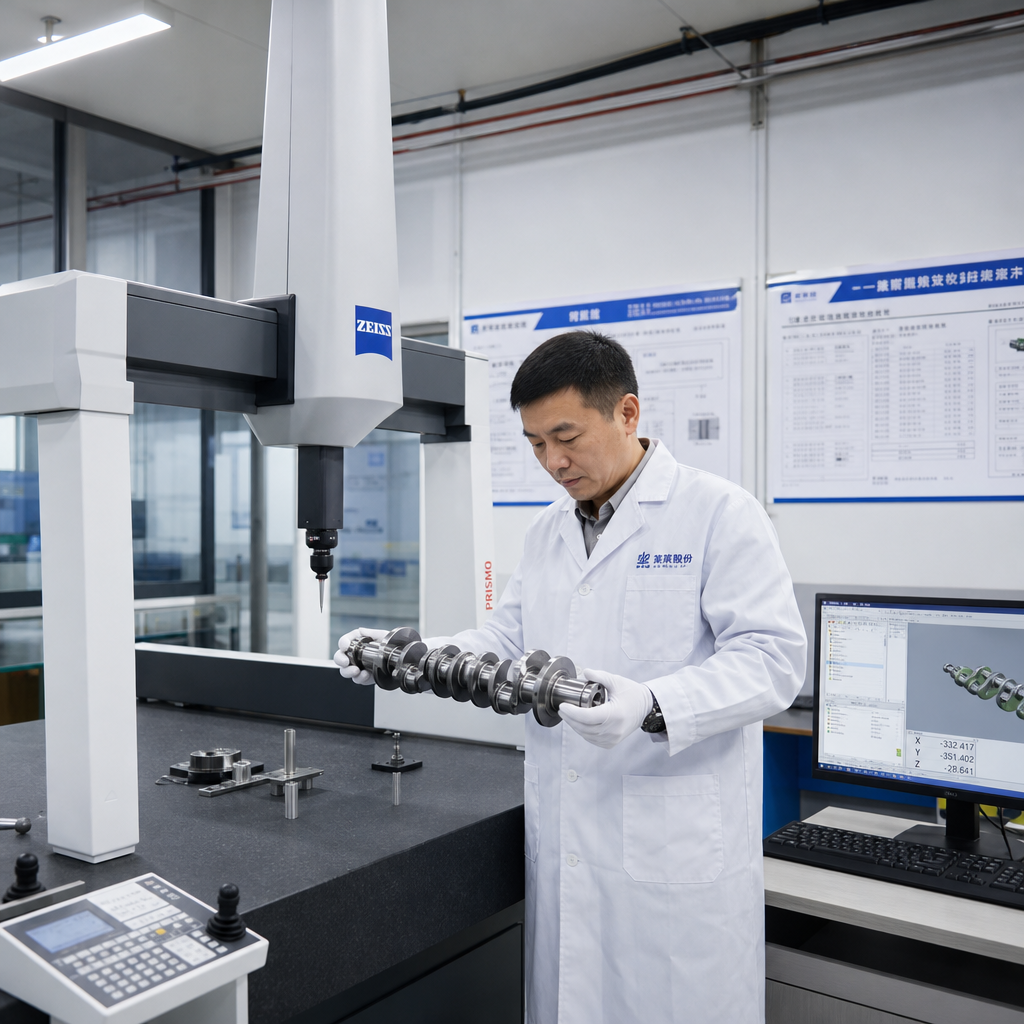
A mount can pass sample approval and still become a problem in mass production. That is why engine motor mount replacement sourcing should evaluate the manufacturing system, not just the sample.

Motor mounts are sensitive to process variation. Field performance changes when rubber mixing drifts, metal preparation is inconsistent, cure conditions move, or secondary operations are poorly controlled. The result may not be immediate rejection. It may be slow performance drift across batches.

Priority controls include:

  • Incoming material verification for elastomer ingredients, steel parts, castings and coatings
  • Tooling maintenance records for moulds, stamping dies, welding jigs and checking fixtures
  • Bonding surface preparation control, including cleanliness, blast or chemical treatment, and timing before adhesive application
  • Cure time and temperature monitoring with recorded and reviewable process parameters
  • In-process dimensional checks at defined sampling frequency and reaction plans for drift
  • End-of-line visual inspection for flash, voids, cracks, thread damage and coating defects
  • Lot traceability from raw material through packed shipment
  • Packaging validation to protect studs, sleeves, painted surfaces and hydraulic components during transport

A robust supplier should be able to explain the actual production flow, for example:

1. Metal preparation by degreasing, shot blasting or phosphating to create a repeatable bonding surface. 2. Adhesive application with controlled drying time and FIFO handling to avoid expired primer or topcoat. 3. Rubber preform weighing to a defined tolerance, often within a few grams or tighter for small mounts. 4. Compression or transfer moulding at a controlled temperature band, for example around 160 to 190°C depending on compound. 5. Cure monitoring by press time, platen temperature and cavity balance, with first-off approval after set-up. 6. Post-cure or stabilisation where required before full dimensional or stiffness inspection. 7. Secondary operations such as trimming, welding, machining, painting or leak test for hydraulic units. 8. Final inspection and packing with thread caps, separators or trays to prevent transit damage.

Just as important as the process itself is the reaction plan. Buyers should ask whether dimensions are checked hourly, per cavity, per lot, or by AQL plan, and what happens when drift is detected. If installed height moves outside a ±0.5 mm window, is the line stopped? Are suspect lots quarantined? Is reinspection required from the last accepted check? Without that discipline, inspection records alone do not protect the buyer.

Change control matters too. A different rubber batch, adhesive source, coating subcontractor or mould cavity repair can all change performance. Strong suppliers define which changes trigger notification and what level of revalidation follows.

Integrated production can also make commercial execution easier. Importers may need private-label cartons, barcode labelling, stud caps, mixed-carton packing rules, country-specific markings or application-specific hardness tuning. These requests are easier to control when engineering, tooling, quality and packing are coordinated through one source.

If you need private-label or drawing-based programmes, our custom manufacturing capability is set up for application review, sample development and controlled series production.

A practical qualification path for procurement teams

If the goal is fewer returns and cleaner supplier comparison, the qualification path should be structured. Not complicated. Structured.

For an engine motor mount replacement programme, the strongest sourcing decisions combine commercial review with technical gates that can actually be checked.

1. Confirm application scope and OE cross-reference basis, such as OE 11251… where available. 2. Review drawings or golden samples for key dimensions, mounting geometry and installed height. 3. Request PPAP-style documentation or equivalent if the programme requires formal launch control. 4. Assess quality certifications, including IATF 16949:2016 and ISO 9001:2015. 5. Examine validation reports for durability, ageing, corrosion, leak integrity and bond performance. 6. Approve pilot samples after fitment, installation and NVH evaluation. 7. Audit packaging and labelling controls to reduce warehouse errors, thread damage and returns issues. 8. Set warranty feedback rules with lot traceability, response timing and corrective-action expectations.

Commercial points should be clarified early, not after the part is technically approved. That includes MOQ, tooling ownership, lead time, stocking strategy, service-part packaging and document retention period. These items do not change the mount’s physical performance, but they strongly affect supply reliability after launch.

A useful buyer-side file for engine motor mount replacement often includes measurable gates such as:

  • Prototype sample quantity: often 3 to 10 pcs per reference for first review
  • Pilot order quantity: commonly 50 to 300 pcs depending on market and test scope
  • MOQ for series supply: often 300 to 1,000 pcs per item, or mixed-MOQ by product family where the supplier supports consolidation
  • Tooling lead time: typically 25 to 45 days for simple fixture changes and 45 to 90+ days for new moulds or brackets
  • Mass production lead time: commonly 30 to 45 days for repeat orders, longer for hydraulic types or custom packaging
  • Price logic: lower unit cost at higher annual volume because mould utilisation, setup loss, test amortisation and packaging procurement are spread across more parts
  • Payment and stock terms: for example deposit on first order, call-off against forecast, or safety-stock agreement for fast movers

Procurement teams should also define reapproval triggers. If there is a compound change, adhesive supplier change, metal thickness revision, coating process change, or tooling cavity repair, the supplier should notify the buyer and provide updated validation as agreed.

For buyers serving the EU, UK, US, Canada, Australia or Brazil, this approach produces better sourcing decisions than price comparison alone. In a category where labour cost can exceed component value several times over, one avoided comeback can justify a much stricter approval process.

Driventus is an independent aftermarket manufacturer; brand names are referenced for fitment only.

If you are comparing suppliers for an upcoming replacement line, you can request a quote with application lists, target specifications or sample requirements.

Frequently asked questions

Early failure usually comes from three issues: poor rubber compound control, weak rubber-to-metal bonding, or dimensional error that creates installation preload. Heat, oil exposure, vibration and corrosion then accelerate the breakdown. When evaluating an engine motor mount replacement supplier, buyers should ask for ageing data, durability results, installed-height control, hardness tolerance and bond-failure mode tied to actual production lots.

If the requirement is OE-equivalent performance, usually yes. Hydraulic mounts deliver damping characteristics that a conventional bonded rubber mount may not match. A simpler substitute may still fit, but it can change NVH behaviour and trigger customer complaints. Buyers should confirm architecture parity and review leak-test, stiffness and damping data before approving any substitution.

At minimum, request dimensional reports, material data, validation summaries, corrosion and durability results, traceability details and certification evidence such as IATF 16949:2016 and ISO 9001:2015. For regulated markets, ask about compliance relevant to REACH (EC) No 1907/2006 and confirm whether reports are tied to production lots. For higher-control programmes, also request PPAP-style records, control plans, sample inspection reports, packaging specifications, MOQ and lead-time terms, and change-notification rules.

If you are qualifying a new engine motor mount replacement programme, Driventus can review drawings, samples and application lists with your sourcing team. Contact us to discuss specifications, MOQ, validation scope or launch requirements at /contact.html

Request a Quote
Feature Conventional rubber mount Hydraulic mount
Core functionIsolates vibration through rubber deflectionAdds fluid damping to manage wider frequency range
ConstructionRubber bonded to metal brackets/sleevesRubber body plus fluid chamber and internal valve path
Common failure modeRubber cracking, bond separation, compression setFluid leakage, internal damping loss, rubber damage
Inspection focusHardness, bond strength, geometryLeak integrity, damping consistency, geometry
Cost profileUsually lowerUsually higher
Application sensitivityModerateHigher, especially on modern NVH-tuned platforms