Engine Block vs Mahle Alternative: Procurement Comparison
Procurement teams rarely compare castings on price alone. For an engine block program, the real questions are dimensional match, machining stability, material traceability, and whether the supplier can hold volume without shifting process control. This comparison looks at what buyers should verify when they are weighing an engine block against a Mahle alternative for OE-fit or aftermarket supply. Driventus is an independent aftermarket manufacturer; brand names are referenced for fitment only. The practical goal is straightforward: reduce warranty exposure, avoid rework in assembly, and keep replenishment predictable across regions. For buyers in the EU, UK, US, Canada, Australia, and Brazil, the sourcing decision should be based on data sheets, inspection records, and test evidence, not catalogue language. The sections below set out the technical and commercial checks that matter most.
What Buyers Are Really Comparing
The phrase “Mahle alternative” usually means an aftermarket block intended to match the same engine family, not a substitute with loose fitment. For procurement, the comparison should be made on measurable attributes, not on brand familiarity or packaging.
Criterion
OE-fit engine block
Mahle alternative
Dimensional control
Bore spacing, deck height, main tunnel alignment
Must match the same critical dimensions within the agreed drawing tolerance
Material control
Cast iron or alloyed iron to a defined chemistry
Chemistry and hardness need batch traceability
Machining level
Rough casting, semi-finished, or finish-machined
Should state exactly which bores, faces, and threads are machined
Validation
Incoming and sample testing against the print
Inspection reports should cover the same checkpoints
Supply profile
Dependent on OE channels or regional stock
Often better for repeat supply, private label, or multi-market distribution
</tr></thead><tbody> </tbody></table>The commercial value is not the badge on the box. It is whether the block can be installed without line-side correction, gasket risk, or additional machining before assembly.
Fitment Checks That Matter
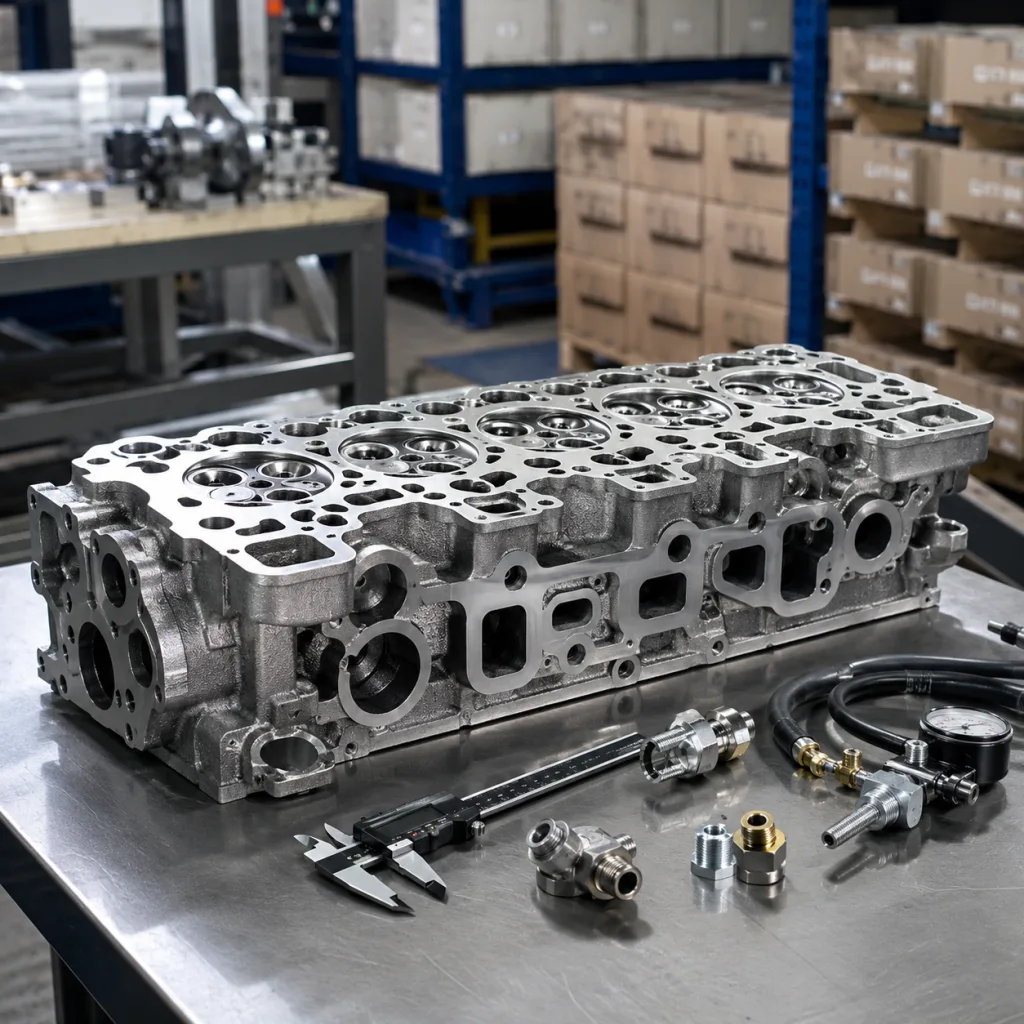
The most common sourcing mistake is to treat every block for the same engine code as identical. Small deviations in machining can create assembly problems even when the casting looks correct, especially in programs with tight compression, coolant, or bearing-clearance requirements.
Key checks before approval:
Bore diameter, taper, and out-of-round across all cylinders
Deck flatness and surface finish before head gasket fitment
Main bearing bore alignment after machining
Thread quality in critical fastener locations
Coolant and oil gallery cleanliness before packaging
Corrosion protection for sea freight and long warehouse dwell time
For process control, request dimensional reports tied to the production lot, not a generic sample sheet. A supplier operating under IATF 16949:2016 and ISO 9001:2015 should be able to show that its inspection points are stable across batches. Where chemical compliance is relevant, ask for REACH (EC) No 1907/2006 declarations and any material disclosures your market requires. If the application is regulated by a local end-market rule set, confirm those declarations before PO release, not after shipment.
Validation That Protects Warranty Margins
A block can meet the drawing and still fail in service if casting quality or machining control is inconsistent. That is why validation should cover both the part and the process, with evidence that follows the lot rather than the marketing claim.
Recommended checks:
1. Pressure test coolant passages for leaks before shipment. 2. Confirm main bore geometry after final machining, not only after rough machining. 3. Use crack inspection methods appropriate to the material, such as magnetic particle inspection on ferromagnetic castings. 4. Review sample build feedback from ring seal, oil control, and gasket seating. 5. Keep traceability from melt batch to finished carton.
For buyers comparing an engine block against a Mahle alternative, the risk reduction comes from evidence: measured parts, documented tests, and change control. If a supplier cannot explain a deviation report, a corrective action, or a rework loop, that is a sourcing risk regardless of brand position. The same logic applies to any other engine-component family: if the process cannot be documented, the part should not be treated as production-ready.
Commercial Factors Beyond Unit Price
Unit price is only one line in the landed cost model. The supplier structure around the part often determines the real cost, especially once freight, rework, and stock-out exposure are included.
MOQ: lower MOQ helps regional distributors, but it should not force unstable batching
Lead time: ask for standard production lead time and expedited options separately
Packaging: export cartons, VCI protection, and palletisation should match the route
Documentation: invoice, packing list, origin statement, and inspection records should be standard
Change control: revised tooling, alloy changes, and machining updates should be notified before shipment
If you need a wider sourcing scope, review our catalog, check the quality system, and see how custom manufacturing is handled for application-specific programs. For engine-component families, you can also review our engine components page to map related parts within the same supply chain. A supplier that can support documentation, packaging, and repeatability usually delivers more value than one that only offers a low line item on the quote.
When An Alternative Makes Sense
The strongest case for an aftermarket block is not novelty. It is continuity when the original supply route is constrained, inconsistent, or too expensive for the application.
Choose an alternative when:
The original channel has long lead times or inconsistent stock
The engine platform is still active, but OE packaging is no longer practical for the channel
You need private-label distribution across several countries
The fleet is sensitive to downtime and needs repeatable replenishment
The buy is based on verified dimensions rather than consumer branding
Driventus is an independent aftermarket manufacturer; brand names are referenced for fitment only. That distinction matters for compliance and claims. A credible program should describe fitment, material, machining, and test scope clearly, then leave the customer to decide on brand preference and channel fit. In practice, the best engine block vs Mahle alternative decision is the one that aligns technical evidence with the buyer’s replenishment model, margin target, and market obligations.
Frequently asked questions
Check critical dimensions, material traceability, machining scope, pressure test results, and the supplier’s change-control process. Ask for lot-level inspection records, not just a sample report.
Not always. The unit price can be lower or similar, but the real saving comes from stable lead time, lower rework, and fewer warranty returns. Compare landed cost, not catalogue price.
Yes, where the application and volume justify it. Use the drawing, target market, annual demand, and required test scope to define the program through the engineering team.
If you need a dimension-matched program or a volume quote, send the application details and drawings through [request a quote](/contact.html).