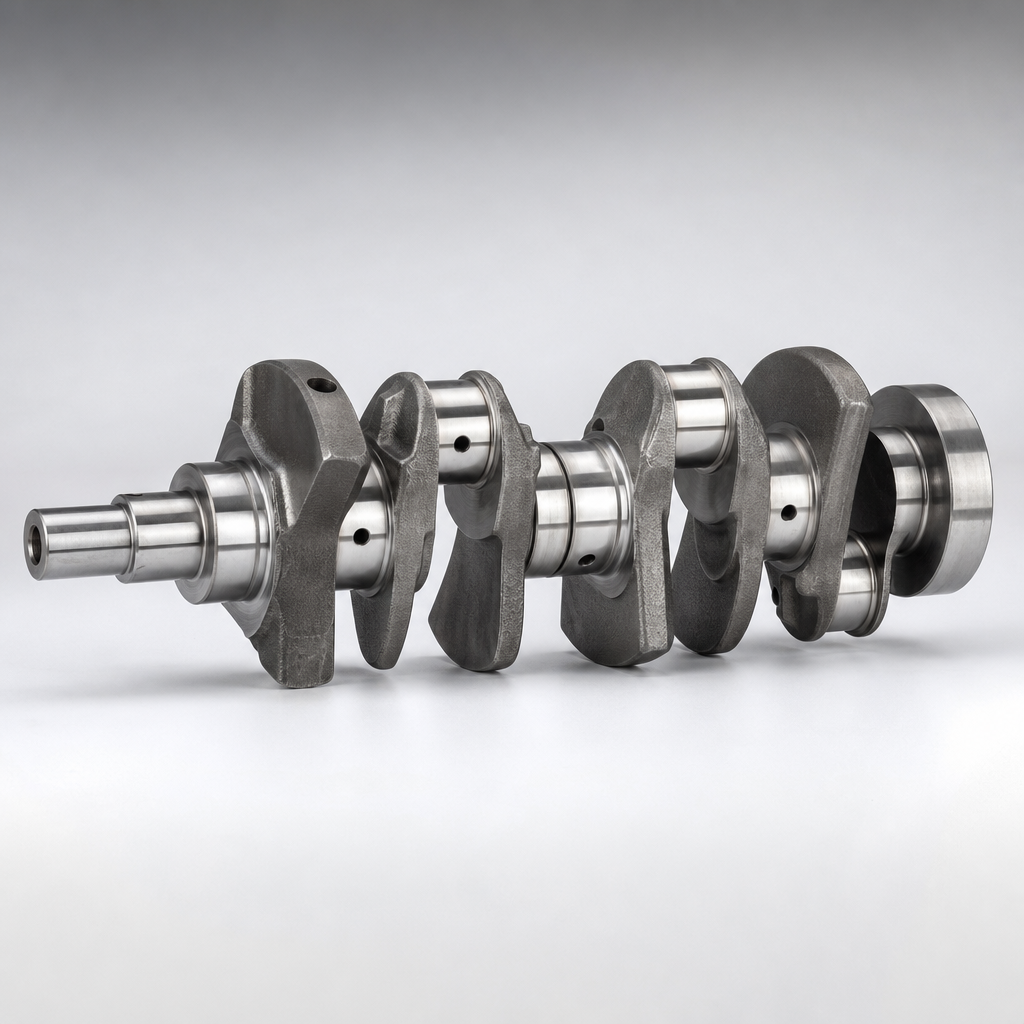
For procurement teams, comparing an engine block vs Federal-Mogul alternative is not a branding exercise. It is a sourcing decision with technical consequences: casting integrity, machining stability, documentation depth, delivery reliability, and total landed cost all sit on the table at once.
The useful question is not, "Which name is stronger?" It is, "Which supply route can hold the spec, release repeatable lots, and fit our commercial model without creating avoidable warranty or inventory risk?"
In real approval work, that comes down to evidence. Buyers need to know whether the supplier can repeatedly hold bore diameter within roughly ±0.01 to ±0.03 mm after finish honing, deck flatness within 0.03 to 0.08 mm across the sealing face, and main bearing bore alignment within 0.02 to 0.04 mm, while still offering workable MOQ, lead time, packaging control, and traceability. Those details decide whether an engine block source is usable in business terms, not just plausible on paper.
This article breaks the comparison into the decisions buyers actually make: where the risks sit, when branded distribution wins, when direct manufacturing makes more sense, and which technical checkpoints should be cleared before release. Driventus is an independent aftermarket manufacturer; brand names are referenced for fitment only.
Start with the decision, not the brand name
When a sourcing team compares an engine block supplier against a Federal-Mogul alternative, the real evaluation is broader than catalogue familiarity. The decision usually sits on four axes: fitment confidence, process control, commercial flexibility, and supply resilience.
A serious comparison should cover:
Base material: grey cast iron or aluminium alloy grade, with control of chemistry, hardness, and microstructure; typical examples include HT250/EN-GJL-250 cast iron or Al-Si foundry alloys depending on application
Critical dimensions: bore diameter, bore roundness, bore taper, deck height, main bearing tunnel alignment, and liner seat geometry where applicable
Surface condition: deck roughness, bore finish after honing, and threaded hole integrity
Supply terms: MOQ, tooling ownership, lead time, packaging standard, and export documentation
That mix matters because engine block defects are expensive to discover late. A tolerance drift in the bore, a poor sealing face, or debris left in an oil gallery can turn into assembly failure or field claims after the part has already moved through stock.
So the practical sourcing question is simple: can this supplier deliver the required specification repeatedly, lot after lot, with controls that are visible and commercially workable?
A buyer-ready review should go beyond the quotation sheet. It should spell out whether the block is supplied as rough casting, semi-machined, or fully machined; whether cylinders are plateau honed or left with finish allowance; whether freeze-plugs, dowels, and bearing caps are included; and whether pressure testing is done at 2 to 5 bar air-under-water or by dry decay method. Common acceptance checkpoints may include bore roundness ≤0.01 mm, taper ≤0.015 mm, deck Ra 1.6 to 3.2 µm depending on gasket system, thread go/no-go verification on 100% of critical holes, and residual contamination limits agreed in the cleanliness plan.
Commercial structure matters too. Standard aftermarket references may run at 20 to 60 pieces per SKU for repeat orders, while private-label or first-run production may require 100 to 300 pieces to justify set-up, packaging print runs, and final inspection reporting. Pricing is usually tiered, not absolute: trial quantities at one level, production lots at another, and pallet or container volumes lower again once machining and freight are better absorbed.
Where branded supply wins — and where an independent route wins
Evaluation point
Established branded alternative
Independent aftermarket manufacturer
Catalogue coverage
Often broad for standard references
Broad on high-volume references, selective on low-run items
Private label flexibility
Usually limited
Typically stronger for customer branding and packaging
MOQ options
May vary by channel and region
Often negotiable by part family and forecast
Engineering changes
Usually centralised and slower to customise
Faster where buyer provides drawings or approval samples
Documentation access
Standard catalogue data common
Can include PPAP-style documents on request for programme business
Cost structure
Often includes brand premium
Usually lower ex-works cost if volumes justify direct sourcing
Can be tailored to pallet, carton, and corrosion-protection needs
Supply risk profile
Strong brand recognition, but channel dependency
Higher need for source validation, but more direct control
</tr></thead><tbody> </tbody></table>The table only becomes useful when tied to your operating model.
If the business needs fast replenishment across many references in uneven quantities, branded channels often have the advantage. You may pay more per piece, but you buy convenience: stock availability, mixed low-volume purchasing, and less direct programme management.
If the business is building a private-label line or planning regular container loads, the balance shifts. In that case, direct factory control over packaging, inspection, change management, and landed cost often matters more than catalogue simplicity.
A practical side-by-side review should also quantify the commercial terms:
Trial/sample order: branded channels may offer immediate low-quantity stock, while a factory source may quote 1 to 5 pieces at a higher unit price because of set-up and special packing
Repeat MOQ: branded supply may allow mixed low-volume buying through distributors; direct factory MOQ is more often set per SKU, such as 20, 50, or 100 pieces depending on machining route and packaging format
Lead time: stocked branded supply can be days to a few weeks; direct production is more often 30 to 60 days for repeats and 60 to 90 days for first orders involving tooling checks, sample validation, or print approval
Price logic: direct sourcing usually becomes more attractive when annual demand is high enough to spread inspection, packaging development, and freight consolidation over larger lots
Batch control: factory-direct programs can define one heat range, one machining batch size, one inspection release lot, and one packaging specification, which makes root-cause analysis clearer if field issues appear
A rough rule helps. If annual demand is sporadic and scattered across many part numbers, distributor convenience may outweigh direct-source savings. If demand is stable enough for scheduled lots, private-label packaging, or consolidated shipping, an independent source often gives the buyer tighter control and better economics.
Failure modes that should drive your approval checklist
A sourcing review gets sharper when it is built around what can actually go wrong.
With engine blocks, the expensive failures are predictable: the bore is out, the deck does not seal, the main tunnel shifts, porosity appears where it should not, threads fail at torque, or internal contamination survives washing. Every approval checklist should be designed to catch those issues before serial release.
Core specification points
Cylinder bore diameter tolerance: according to drawing or agreed aftermarket specification; typical finished tolerance bands are often within ±0.01 to ±0.03 mm depending on bore size and piston pairing strategy
Bore roundness and taper: measured at multiple depths and clock positions; common control targets are ≤0.01 mm roundness and ≤0.015 mm taper after honing
Deck flatness: critical for head gasket sealing and thermal stability; many programs target 0.03 to 0.08 mm maximum across the sealing face depending on block length and gasket type
Main tunnel alignment: affects crankshaft rotation, bearing wear, and NVH; alignment and bore size should be verified after main cap installation at specified torque
Cam tunnel or housing bore accuracy: where block design requires it
Thread quality: torque retention in head bolt, main cap, and accessory mounting locations; use defined go/no-go gauges and thread depth verification
Casting integrity: porosity control in water jackets, web sections, and deck regions
Wall thickness consistency: especially important near bores and coolant passages; ultrasonic wall checks are often used for initial approval or periodic audit
Leak tightness: coolant and oil passage validation after machining; pressure test parameters should be specified in the control plan
Cleanliness standard: internal gallery flushing and debris inspection before packing
If the blocks are semi-finished, attention shifts toward datum accuracy, stock allowance, and raw geometry consistency. If they are fully machined, the emphasis moves to final bore finish, alignment, thread quality, washing, and pack-out protection.
For applications linked to regulated markets, the complete engine assembly may need to support downstream compliance work tied to emission-related systems such as ECE R-83 in certain vehicle categories. The engine block itself is not certified under that regulation, but dimensional conformity still matters because it affects compression, sealing, oil control, and rebuild quality.
Ask for measurement method, not just result. A proper approval file should state:
Bore measurement locations: top, middle, and bottom, each at 0°/90° or 0°/60°/120° depending on inspection plan
Deck measurement method: granite table and dial indicator, CMM, or straightedge/feeler for interim checks
Surface roughness: deck Ra and Rz values, plus bore cross-hatch angle where finish-honed blocks are supplied
Main bore inspection condition: caps fitted, bolts torqued to specification, and gauge zero method defined
Pressure test method: pressure level, hold time, reject criteria, and whether testing is 100% or sampling-based
Process detail matters because some failures begin upstream. For cast iron blocks, the route often includes moulding and core making, melting, pouring, shakeout, shot blasting, rough machining, stress relief where used, finish machining, honing, washing, pressure testing, rust prevention, and packing. For aluminium blocks, buyers may also need clarity on T6 or other heat-treatment status, liner installation method if present, and whether heat treatment is controlled in-house or by an approved subcontractor.
A practical approval sequence is usually:
1. Confirm reference, revision level, and supply state. 2. Agree critical dimensions and acceptance tolerances in writing. 3. Review initial sample report, material certs, and leak/cleanliness data. 4. Inspect 3 to 10 samples at buyer or third-party lab. 5. Run pilot order, often 20 to 100 pieces depending on risk level. 6. Approve serial supply only after dimensional trend and packaging performance are acceptable.
Ask for evidence that connects the system to the actual part
Certification helps. It does not close the case.
Buyers should verify whether the manufacturing site operates under IATF 16949:2016 and ISO 9001:2015, but the more important question is how those systems appear in the engine block process itself: foundry control, machining control, calibration, containment, and change management.
Useful documents and evidence include:
Material certificates for each melt or lot
Hardness and metallographic test reports where specified
Dimensional inspection reports for critical characteristics
Pressure or leak test records where relevant to the design
CMM reports for initial sample approval
Process flow chart and control plan
FMEA summary for new programme launches
Packaging specification with corrosion protection details
REACH compliance declarations under REACH (EC) No 1907/2006 for relevant materials and substances in supplied products
The key point is traceability. If the batch code on the part or carton cannot be tied back to melt records, machining records, inspection results, and shipment data, the documentation is weaker than it looks. That gap becomes painful when field returns start and the buyer needs to isolate one lot instead of quarantining everything.
A serious supplier should also be able to explain gauge calibration intervals, non-conforming product segregation, and change-management rules for casting source, tooling revision, machining updates, or subcontracted operations.
At Driventus, buyers can review the quality system to see how certification, incoming checks, in-process inspection, and final release controls are structured before discussing a programme.
For engine blocks specifically, ask for documents that reflect process reality:
Chemical composition ranges for the approved iron or aluminium grade, with actual melt results on C, Si, Mn, P, S and relevant alloying elements
Hardness range by location, for example Brinell testing on deck or outer wall zones where specified
Metallography evidence such as graphite form, pearlite/ferrite proportion, or porosity rating on initial approval pieces
Control-plan frequency showing what is checked 100%, per shift, per machine set-up, or per lot
Washing and cleanliness process including wash media, flushing sequence, drying, and rust-preventive oil or VCI application
Preservation and shelf-life logic for export stock, especially if sea transit is 25 to 45 days
Documentation maturity is also a readiness signal. A supplier that can produce a coherent initial sample package quickly for an existing reference is usually better prepared for programme business than one that sends only a generic certificate. For many aftermarket approvals, the practical document set is a balloon drawing, a 5-piece or 10-piece dimensional report, one CMM layout on critical datums, material cert, leak test record, and packaging photos before first production release.
If third-party inspection will be used, agree it before production begins. Typical checkpoints are pre-production tooling verification, a during-production audit after the first 10 to 20 pieces, and pre-shipment inspection based on AQL or 100% checks of defined critical features.
Model the commercial trade-off before you compare unit price
From a purchasing perspective, the central trade-off is usually convenience versus control.
A branded channel may reduce effort for spot buying, fragmented demand, or broad reference coverage. A direct manufacturer route can become more efficient when annual demand is forecastable and the buyer wants control over packaging, labels, palletisation, compliance documents, or adjacent product families.
Key commercial questions to compare:
What is the annual volume by reference?
Is the purchase for stock replenishment, reman support, or a private-label launch?
Do you need exclusive packaging or neutral packaging?
Is tooling amortised, supplier-owned, or customer-owned?
What is the acceptable lead time window for repeat orders?
Are mixed-container loads across engine components required?
What warranty data and field return feedback loops are available?
The invisible costs matter as much as the visible ones. Inland freight, export packing, payment terms, inspection charges, customs classification, and safety-stock carrying cost can easily erase an apparent unit-price advantage.
For importers and multi-country distributors, consolidation often changes the answer. Combining engine blocks with heads, pistons, gaskets, or crankshafts can improve freight efficiency and reduce supplier-management overhead. That is one of the most common points where direct factory engagement becomes commercially attractive.
A simple demand model is usually enough:
Low volume / irregular demand: branded channels may cost more per unit but reduce MOQ exposure and inventory risk
Medium volume / predictable reorder: direct sourcing often becomes viable once repeat demand can support stable production lots, commonly 20 to 100 blocks per SKU or a mixed monthly schedule across related references
High volume / annual programme: direct sourcing is usually strongest when the buyer can commit a quarterly or annual forecast, enabling better machining slot allocation, packaging planning, and sea-freight consolidation
Lead time often decides the real winner. A quote that is 5% cheaper can still be commercially worse if production takes 75 days and forces two more months of safety stock. If the buyer turns stock every 45 days, a source with 30 to 40 day repeat lead time may support a much leaner inventory position than a source working at 60 to 90 days. The same logic applies to first orders, where tooling confirmation, sample measurement, and packaging approval can add 2 to 4 weeks before serial production starts.
MOQ and pricing should also be viewed together:
Sample stage: 1 to 5 pieces, premium price, non-standard packing, longer handling time
Pilot order: 10 to 50 pieces, limited price break, full inspection emphasis
Repeat batch: 50 to 200 pieces, more stable unit cost as set-up and final packing are spread across more parts
Programme volume: pallet, crate, or container quantity, where buyer and supplier may agree fixed annual pricing, call-off schedules, or packaging amortisation
When comparing offers, ask suppliers to separate at least five line items: part price, tooling or fixture charge if any, packaging cost, inland transport to port, and documentation or inspection charges. That gives a usable landed-cost comparison instead of a misleading headline number.
Scenario check: when an independent alternative is the better fit
An independent aftermarket manufacturing source is usually the stronger option in three specific scenarios.
First: stable demand and margin pressure. If the engine family is mature and reorder volumes are consistent, removing intermediate layers can improve ex-works pricing and give the buyer more control over the programme.
Second: the product is not truly off-the-shelf anymore. Private-label packaging, tailored inspection plans, mixed-SKU loading, or customer-specific machining requirements all push the buyer away from standard channel logic and toward a factory relationship.
Third: the business needs direct technical communication. Tolerance questions, packaging failures, batch investigations, and field feedback are usually resolved faster when procurement and engineering can speak directly with the manufacturer.
That said, independent sourcing is only a good answer when the buyer runs the approval process properly. Samples still need to be validated. Batch traceability still needs to be confirmed. Incoming inspection still needs to be defined before full release.
If you are comparing options for a current programme or a new line launch, the most efficient next step is to request a quote with the target references, annual volume, and specification requirements.
In practical terms, the factory-direct route works best when the buyer can define the programme clearly enough for the supplier to build around it. That usually means sharing:
target part numbers or OE cross-references
annual demand by SKU
whether supply is bare block, assembled block, or machined block with included caps/fittings
required packaging format, such as neutral carton, branded carton, returnable crate, or export wood case
inspection and approval expectations, including whether a first article, CMM report, or third-party pre-shipment inspection is required
A realistic sourcing path often looks like this:
1. RFQ stage: buyer sends references, forecast, target market, and technical expectations. 2. Technical review: supplier confirms material route, machining capability, current tooling status, and likely MOQ. 3. Sample or initial pieces: 1 to 10 units submitted for dimensional and fitment verification. 4. Pilot run: small controlled lot, often 20 to 100 pieces, used to validate consistency and packaging under transport. 5. Serial release: repeat orders scheduled with agreed lead time, quality documents, and batch coding.
For many buyers, the turning point is control rather than pure price. If the programme needs custom labels, barcode format, market-specific language, anti-rust protection for sea freight, or mixed loading with other engine parts, a factory-direct model can solve problems a standard branded channel does not solve well. If the requirement is occasional replenishment of many references with no custom needs, established branded distribution may remain the more efficient route.
That is the real conclusion in an engine block vs Federal-Mogul alternative review: the better option is the one that meets bore, deck, alignment, cleanliness, documentation, MOQ, and lead-time targets at a landed cost that supports margin and service level.
Frequently asked questions
Start with the drawing or target specification, critical tolerances, material grade, inspection reports, certification status, MOQ, and lead time. Without those items, price comparisons are usually misleading because they do not confirm whether the offers are based on the same technical scope. Also ask whether the quote is for rough, semi-machined, or fully machined supply, because that changes both unit cost and the inspection plan.
Yes, if the supplier can demonstrate dimensional control, material consistency, validated machining processes, and traceable batch records. Approval should be based on data, sample evaluation, and audit results rather than brand familiarity alone. In practice, buyers should look for measurable capability on bore size, deck flatness, tunnel alignment, leak testing, and cleanliness, supported by initial sample reports and repeat-lot inspection records.
No. IATF 16949:2016 and ISO 9001:2015 indicate system control, but interchangeability depends on the actual part drawing, machining accuracy, material properties, and validation results for the specific reference. A certified supplier can still produce a non-conforming part if the drawing, tooling, machining set-up, or change control is wrong, so buyers still need part-level approval data.
If you are reviewing engine block supply options, send your target references, annual demand, technical requirements, and any MOQ or lead-time constraints for a practical sourcing review. Contact the Driventus team here: /contact.html