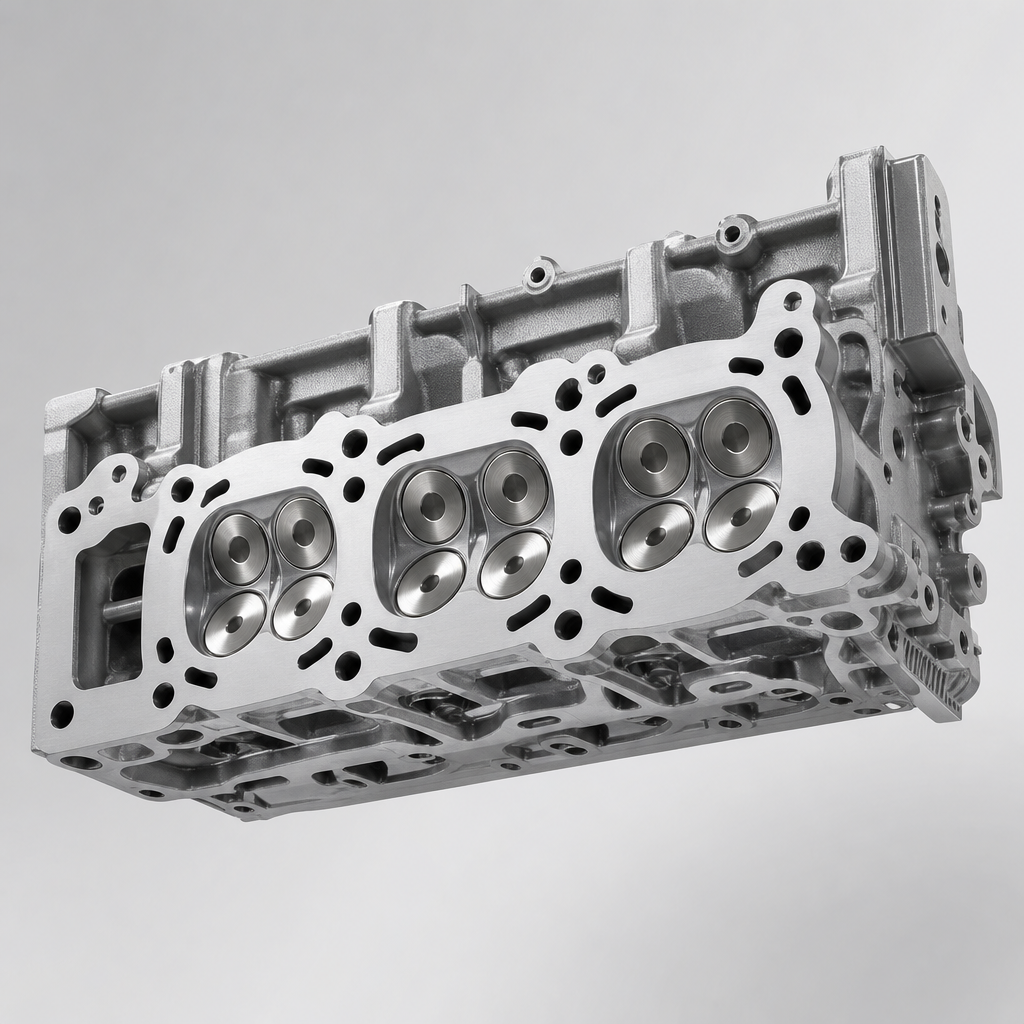
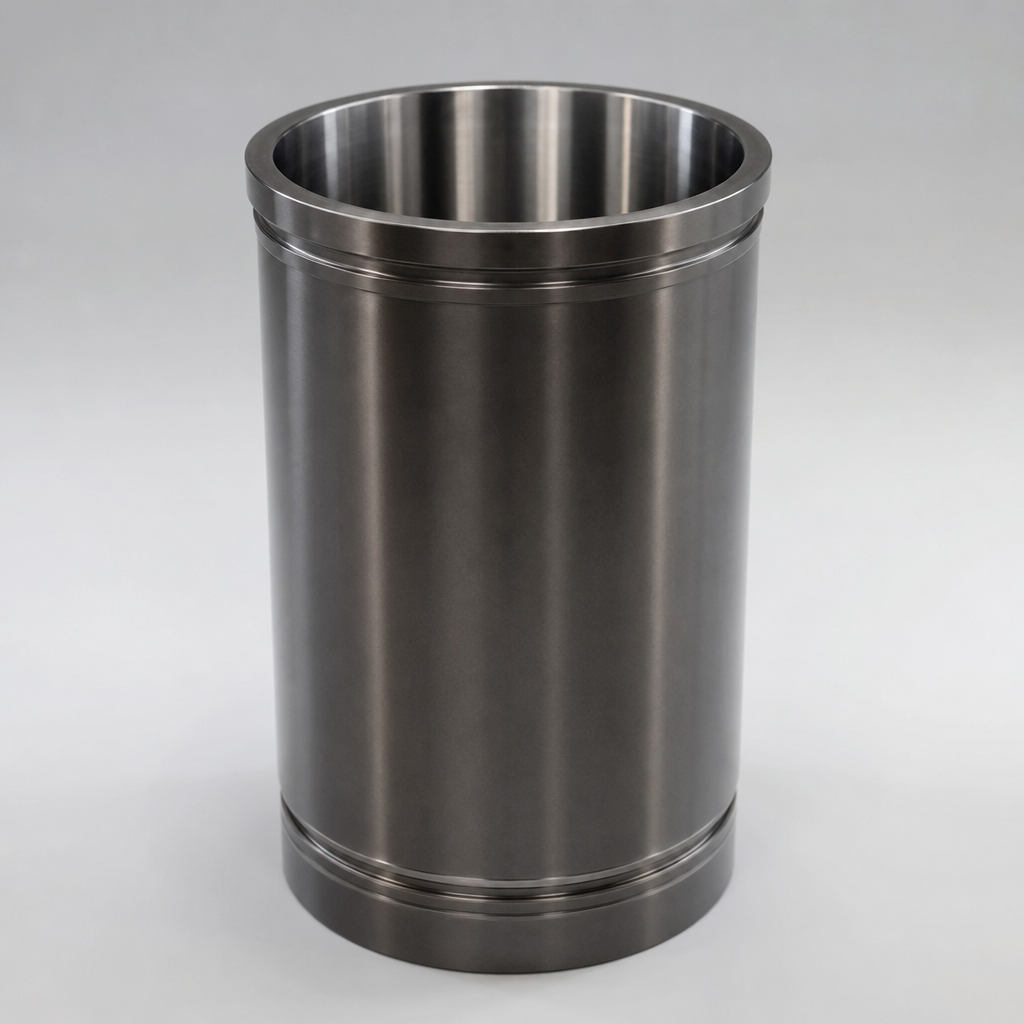
Engine Block Volkswagen Wholesale: How Buyers Compare Real Supply Risk
Buying at the **engine block volkswagen wholesale** level is less about finding a low unit price and more about controlling batch risk before it reaches your warehouse or assembly line. Procurement teams need repeatable metallurgy, stable machining, traceable lots, export-ready paperwork, and a supplier that can support both regular catalogue demand and irregular project orders.
The useful questions are specific: what material grade is used, what machining is included, which dimensions are controlled, how are castings validated, what is the true MOQ, and how quickly can repeat orders ship from a proven route rather than from a fresh development cycle?
This article breaks the evaluation into practical angles instead of a generic checklist: what to screen first, where engine block programmes usually fail, how to compare offers, which documents matter by market, and how a sourcing workflow should run. Driventus manufactures engine and powertrain components under IATF 16949:2016 and ISO 9001:2015 processes for B2B customers in more than 60 countries. Driventus is an independent aftermarket manufacturer; brand names are referenced for fitment only.
Start Here: The Four Questions That Eliminate Weak Quotes Fast
In engine block volkswagen wholesale sourcing, the first pass should narrow suppliers quickly. Do not begin with price alone. Begin with whether the quote is technically comparable, commercially usable, and repeatable at production scale.
A first-screen review should cover four points:
- What exactly is the block for? Confirm engine family, displacement, fuel type, aspiration, model-year range, transmission interface, and whether the part is intended for bare-block replacement, rebuild, or reman programmes.
- What condition is being quoted? Separate raw casting, semi-machined block, and fully machined block. Ask for a line-by-line machining-content list.
- Is this an existing route or a new development? That single distinction changes tooling cost, sample timing, validation scope, and replenishment reliability.
- Can the supplier prove control before PO placement? Documentation should be available at sample stage, not only after the order is won.
Key checks at this stage:
- Casting material: commonly grey cast iron such as HT250/EN-GJL-class equivalent or aluminium alloy such as AlSi-based grades, depending on engine design
- Critical dimensions: bore diameter, bore roundness/cylindricity, deck flatness, deck height, main bearing housing bore geometry, cylinder spacing, oil gallery features, dowel positions, and thread accuracy
- Validation method: CMM report, bore gauge report, pressure-test record, hardness result, and casting-appearance standard
- Traceability: heat number, casting batch ID, machining lot, machine or operator record, and final inspection record
- Packaging standard: rust-preventive oil or VCI, plugs/caps, separators, desiccant where required, and export pallet control
- Compliance documents: material report, inspection report, packing list, country-of-origin statement, and PPAP elements if required
- Commercial terms: MOQ, price breaks, sample policy, tooling ownership, warranty terms, and claim handling
Then push on quotation logic. A practical supplier should explain how the numbers were built.
- MOQ for mature references: often 20-50 pcs per SKU for fully machined blocks, sometimes with mixed-SKU loading to reach one pallet or one machining batch
- MOQ for new or slow-moving references: often 100-300 pcs when tooling amortisation and fixture set-up dominate cost
- Sample policy: usually 1-5 pcs, with higher unit cost because set-up and inspection are spread over very low volume
- Price-break logic: thresholds such as 50 pcs, 100 pcs, 300 pcs, and container planning usually reduce unit cost through better utilisation
- Lead-time logic: semi-machined blocks may move faster; fully machined blocks add finishing, thread verification, washing, and pressure testing
One point causes repeated confusion: the phrase "machined block." It is too vague to accept on its own. Confirm whether the quote includes finish boring, honing, line boring or line honing of main saddles, deck milling, tapping, deburring, washing, oil-gallery cleaning, plug installation, and final anti-rust treatment.
If you are comparing several engine and powertrain sources, it also helps to review the supplier's broader our catalog and related /products/engine-components.html capability before opening a block programme.
Where Engine Block Programmes Usually Fail
Most engine block problems do not begin with a catastrophic defect. They begin with a small uncontrolled variation that reaches assembly, sealing, or durability-critical surfaces.
An engine block is a reference part for the short block and for large sections of the lubrication and cooling system. If core geometry shifts, wall thickness varies, or machining datums wander, the resulting field problem may show up later as poor crank rotation, gasket leakage, oil instability, thread pull-out, or early wear.
Failure modes buyers should discuss directly
- Cylinder bore geometry drift: bore diameter, roundness, or cylindricity moves outside process capability after finish machining
- Deck inconsistency: poor flatness or roughness affects head gasket sealing and long-term compression retention
- Main housing misalignment: bearing load distribution changes, crankshaft rotation worsens, oil film stability drops
- Core shift in cast passages: water-jacket or oil-gallery wall thickness becomes inconsistent
- Thread quality issues: critical fastener holes for head bolts, main caps, plugs, sensors, or accessories fail gauge checks or assembly torque expectations
- Pressure-integrity failure: coolant or oil passages leak under test because casting porosity or machining exposure was not controlled
- Location error on machined faces: transmission interface, sump face, oil pump mounting face, and bracket surfaces miss positional targets
That is why buyers should ask for actual process windows instead of generic claims like "within standard tolerance."
Common examples on a mature machined block programme include:
- Cylinder bore size tolerance: often around +/-0.01-0.02 mm depending on design and whether final honing is included
- Bore roundness/cylindricity: commonly controlled within 0.005-0.015 mm after finish operation
- Deck flatness: often within 0.03-0.05 mm across the sealing surface, depending on block length and gasket design
- Deck surface roughness: often Ra 0.8-3.2 um depending on gasket requirement
- Main housing bore tolerance: commonly within +/-0.01 mm class, with alignment held to a similarly tight process window
- Thread verification: 100% go/no-go gauging for critical holes
- Pressure test level: many programmes use air-under-water or dry-decay testing around 2-5 bar for 30-120 seconds, depending on customer standard
- Hardness control: cast-iron blocks may be checked lot-wise, for example around 180-240 HB where relevant to the grade
A strong technical conversation also covers the process route behind those numbers:
1. Incoming raw casting verification: visual checks, key-datum checks, and random chemistry or mechanical confirmation 2. Rough machining: establish datums, rough bores, rough deck, rough critical faces 3. Stabilisation where required: some programmes use stress relief after major stock removal 4. Semi-finish and finish machining: boring, honing, line boring/line honing, deck finishing, drilling, tapping, chamfering, and face milling 5. In-process gauging: bore gauges, air gauges, dedicated fixtures, and CMM validation at defined frequency 6. Pressure or leak testing: verify coolant and oil passage integrity before packing 7. Washing and cleanliness control: remove chips, abrasive residue, and casting sand, especially from oil galleries and threaded passages 8. Final inspection and preservation: audit, rust prevention, plugs or caps where needed, and packing release
For buyer review, the real question is not whether a supplier can machine a block once. It is whether they can do it repeatedly, batch after batch. Ask for Cp/Cpk on bores or main housing dimensions, gauge R&R results, first-off approval records, calibration frequency, and the reaction plan when trends move toward control limits.
Where surface finish, sealing, or associated rotating components are part of the same programme, the wider route should sit inside an auditable quality system built on ISO 9001:2015 and automotive controls.
How to Compare Offers Without Getting Trapped by a Low Headline Price
Wholesale engine block buying is rarely linear. One buyer needs a pilot batch. Another needs mixed SKUs for regional stock. Another needs emergency replenishment after a warranty spike. The best supplier on paper is not always the best supplier once demand becomes uneven.
Use a comparison frame that separates commercial flexibility from technical control.
| Evaluation point | What buyers should ask | Why it matters |
|---|---|---|
| MOQ | Standard MOQ per SKU and mixed-order options | Reduces inventory burden during launch or range expansion |
| Lead time | Sample timing, production timing, replenishment cycle | Prevents stock-outs and expensive expedited freight |
| Tooling | Existing tooling availability, condition, and new-tooling cost | Shapes launch speed and long-term capacity |
| Inspection | First article method, in-process checks, final audit | Tests repeatability before volume shipment |
| Traceability | Coding at casting, machining lot, and carton level | Improves claim isolation and recall containment |
| Export support | Packing list, COO, HS code support, test records | Speeds customs clearance and receiving |
| Audit access | Factory audit path, process review, corrective-action follow-up | Lowers onboarding risk |