engine block · 2026-05-30

Engine Block Vauxhall Supplier: Sourcing Guide

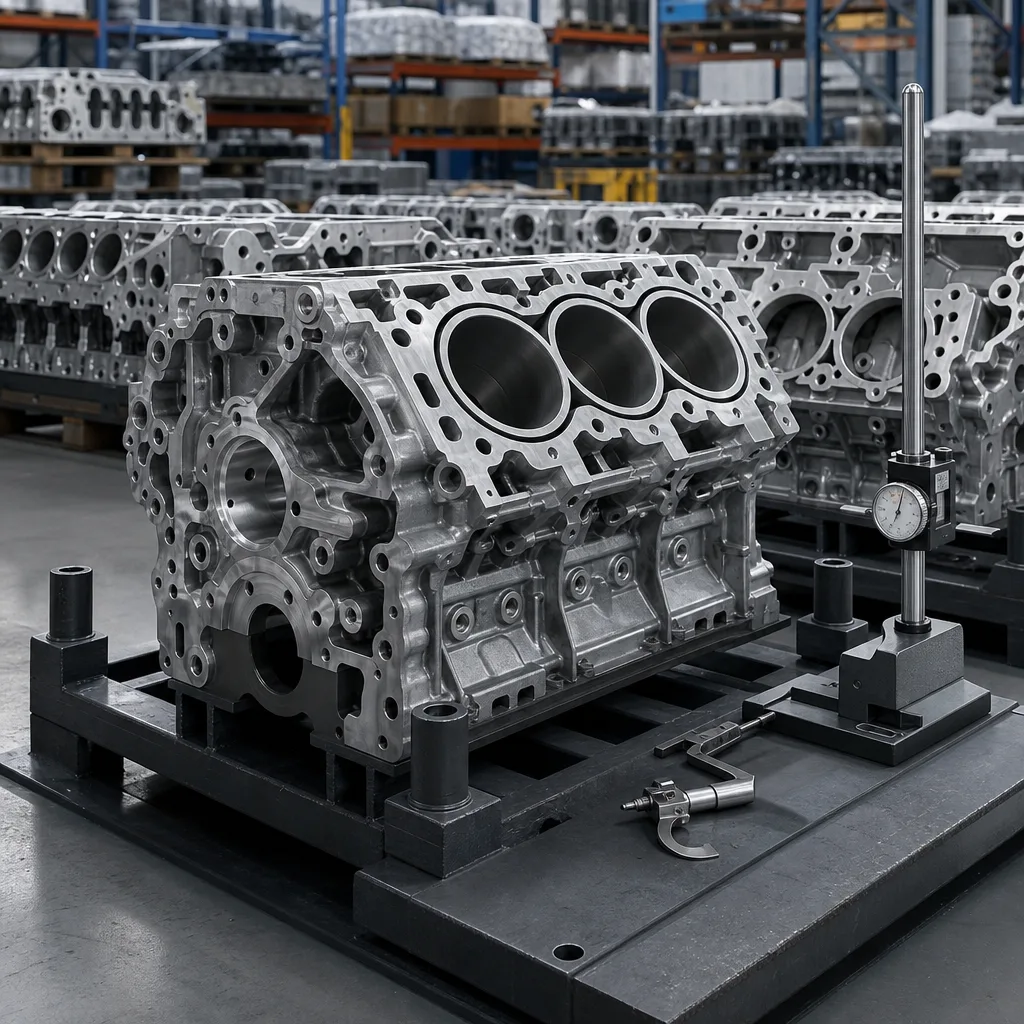
If you are sourcing an engine block for Vauxhall applications, the first question is not price. It is whether the casting, machining, inspection data, and packaging match the target fitment consistently across batches. Buyers in the aftermarket and trade repair channels usually need stable supply, clear dimensional control, and documentation that supports import, warehouse, and workshop use. Driventus is an independent aftermarket manufacturer; brand names are referenced for fitment only. For procurement teams, that means evaluating base material, bore geometry, deck flatness, main tunnel alignment, corrosion protection, and the level of traceability behind each shipment. It also means checking whether the supplier can support IATF 16949:2016 and ISO 9001:2015 controls, plus REACH (EC) No 1907/2006 awareness for EU-bound consignments. The right source should be able to quote, sample, validate, and scale without changing critical dimensions.

What to verify before you issue an RFQ

A useful RFQ for a Vauxhall engine block should define the exact engine family, base material, machining state, and acceptance criteria. Do not ask only for a part name. Ask for the casting number format, bore size, deck height, main bearing tunnel specification, and whether the part is supplied as a bare casting, semi-finished block, or fully machined block.

Key items to confirm:

  • Engine family, displacement, and fuel type
  • Block material: grey cast iron or aluminium alloy
  • Bore finish condition and oversize allowance
  • Main bearing bore alignment and cap arrangement
  • Deck flatness limit and gasket face condition
  • Oil gallery and coolant passage configuration
  • Surface protection: oil, phosphate, paint, or bare metal
  • Packaging standard for export and warehouse handling

If you are comparing sources, the same drawings should be used for all quotations. That prevents false price differences caused by hidden machining scope changes.

Material and machining options buyers compare

Most procurement decisions come down to the trade-off between cost, weight, durability, and machining risk. Cast iron remains common where stiffness, wear resistance, and thermal stability are priorities. Aluminium blocks reduce weight, but they usually require tighter control of liner fit, thread integrity, and local reinforcement around high-load areas.

</tr></thead><tbody> </tbody></table>For volume programmes, the best outcome is usually not the cheapest raw casting. It is the block that holds dimensional repeatability after machining and after thermal cycling. That reduces claims, returns, and line stoppages.

Quality system and documentation

A credible supplier should be able to explain the quality system behind the part, not just the final appearance. For export buyers, the minimum baseline is a controlled system aligned with IATF 16949:2016 and ISO 9001:2015. For EU distribution, material declarations and restricted-substance controls should address REACH (EC) No 1907/2006. If the block is part of a broader powertrain programme, the supplier should also support inspection records, traceability by batch, and incoming material control.

What buyers should ask for:

  • Dimensional inspection report for critical features
  • Material certificate or chemical composition record
  • Process flow and control plan
  • Lot traceability and heat-number linkage
  • Packaging specification for sea freight and container handling
  • Corrective-action process for nonconforming parts

If your internal team runs supplier audits, use the same checklist for every source. That makes comparisons defensible and reduces the chance of approving a vendor that only looks competitive on paper. See our quality system for the control framework we use.

Lead time, MOQ, and factory audit points

For aftermarket and trade buyers, lead time is rarely just a logistics question. It is a function of casting capacity, machining slot availability, inspection turnaround, and packing schedule. A realistic quote should separate tooling, first-article sampling, and repeating batch production. It should also state the minimum order quantity clearly, because MOQ can differ between raw castings and fully machined blocks.

Before you place a trial order, ask about:

  • Sample lead time and approval steps
  • Production MOQ by engine family
  • Peak-season capacity and buffer stock options
  • Rework policy for machining deviation
  • Container loading and pallet configuration
  • Documentation pack included with each shipment

When you audit a plant, focus on the machines that control the critical dimensions: boring, honing, decking, line boring, washing, and final inspection. A plant that can show stable process control on those steps is more reliable than one that only presents a finished sample. If you need non-standard machining, see custom manufacturing for project support.

How procurement teams should shortlist suppliers

A practical shortlist is based on evidence, not promises. Ask each supplier to quote against the same drawing revision, the same inspection list, and the same packaging requirement. Then compare their response against the following checklist.

  • Can they identify the engine family without ambiguity?
  • Do they control critical dimensions with recorded measurements?
  • Is the quality system documented and current?
  • Are samples traceable to a specific production lot?
  • Can they support EU, UK, US, Canada, Australia, and Brazil export paperwork?
  • Do they have a clear corrective-action process?
  • Can they scale from trial volume to repeat orders without changing the specification?

For buyers building a wider powertrain supply base, it is sensible to review adjacent items in our catalog and the engine components range at the same time. That reduces duplicated sourcing work and helps align freight, inspection, and supplier management. If you need a quotation package, the fastest route is to request a quote with your drawing, target volume, and destination market.

Frequently asked questions

Yes. Export supply is common for EU, UK, North American, Australian, and Latin American buyers. The key is to confirm the engine family, drawing revision, and required documentation before sampling.

Both are possible, depending on the programme. Buyers should state whether they need a raw casting, semi-finished block, or fully machined block with final inspection.

At minimum, ask for the inspection record, traceability data, material certificate or composition record, and packaging details. For regulated markets, also confirm REACH-related declarations where applicable.

If you are comparing suppliers for an engine block Vauxhall programme, send the drawing, annual volume, and target market details. We can review the specification and respond with a production quote: /contact.html

Request a Quote
Option Typical buyer priority Procurement risk Common inspection focus
Grey cast ironStiffness and durabilityHigher shipping massBore geometry, deck flatness, porosity
Aluminium alloyLower weightMore sensitive machiningLiner fit, thread pull-out, distortion
Bare castingLowest unit costMore downstream workVisual defect control, machining allowance
Fully machined blockFaster installationHigher unit priceFinal dimensions, cleanliness, traceability