engine block · 2026-06-29

Engine Block Renault Wholesale: How Serious Buyers Vet Supply

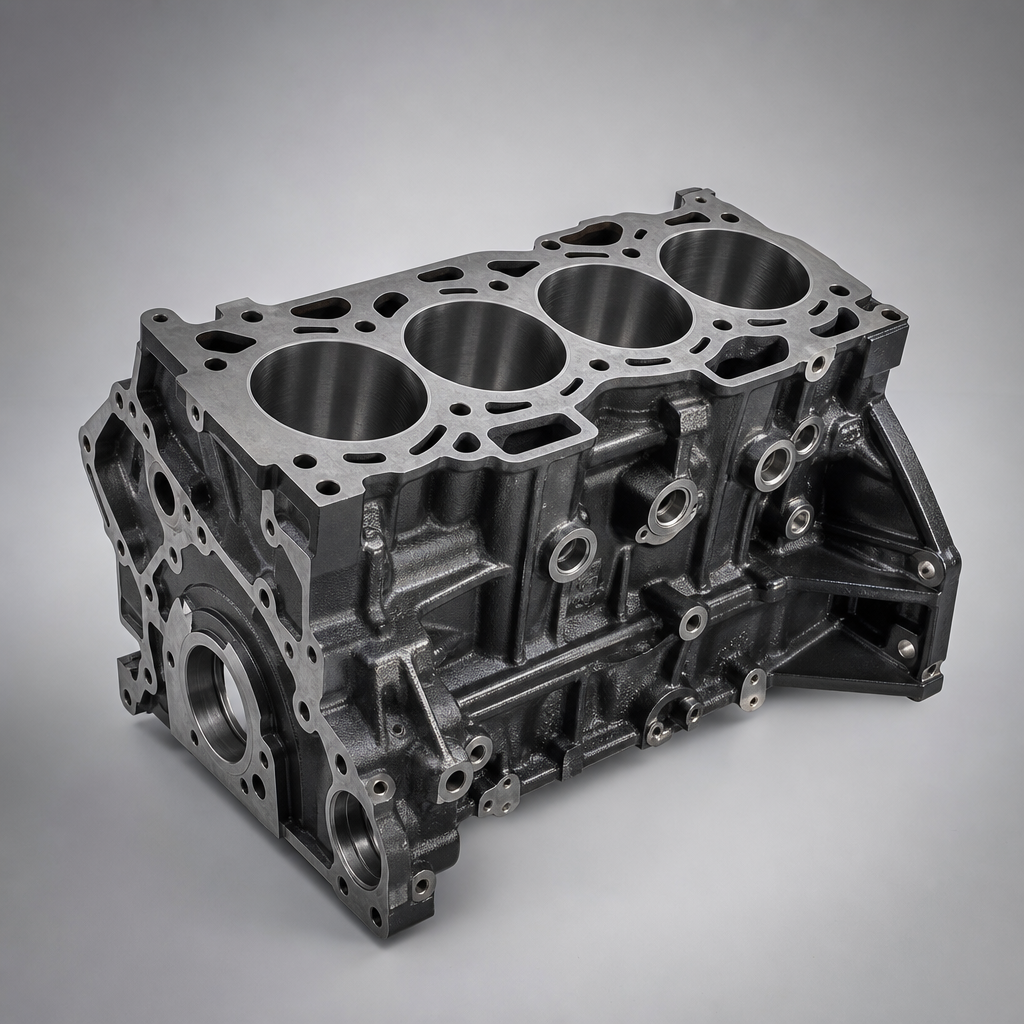
Buying **engine block Renault wholesale** is not mainly a price exercise. It is a risk-screening exercise: can this supplier deliver blocks that arrive clean, dimensionally stable, correctly machined, and repeatable across the next shipment—not just the sample lot?

That is why experienced distributors, rebuilders, remanufacturing firms, and repair-chain buyers look past catalogue fitment claims. They want evidence: bore control, deck flatness, main tunnel alignment, traceability by lot, washing release, packaging validation, and a realistic lead-time story tied to actual production status. A cheap block that needs rework, slows incoming inspection, or creates warranty claims is rarely cheap in practice.

The most useful way to assess supply is from several angles at once: what can fail, which controls matter most, how the sourcing model affects lead time and MOQ, what an audit should uncover, and which documents prevent customs or quality friction later. This guide follows that logic so buyers can compare suppliers on real execution, not generic promises. Driventus is an independent aftermarket manufacturer; brand names are referenced for fitment only.

Start with the decision that actually matters: what machining state are you buying?

Many sourcing problems begin with a vague assumption: both sides say “engine block,” but one means a raw casting and the other expects a finish-machined unit ready for assembly operations. Before discussing price, lock the supply state.

Buyers should confirm whether the quoted product is:

  • bare casting
  • rough-machined
  • semi-machined
  • finish-machined

That single distinction shapes unit cost, lead time, inspection effort, and downstream risk.

Once the machining state is clear, review the technical checkpoints that decide whether the batch is usable:

  • Material definition: grey cast iron or aluminium alloy grade documented in production records, with chemistry or hardness review where required
  • Critical geometry: bore diameter, deck height, deck flatness, main bearing housing alignment, oil gallery geometry, thread quality, and datum relationships
  • Tolerance band: not just nominal size, but the agreed acceptance range for bores, deck flatness, and main tunnel alignment
  • Casting condition: no cracks, cold shuts, sand inclusion, unacceptable porosity, core shift, or damage on gasket and machined faces
  • Traceability: batch or heat identification tied to inspection, machining, washing, and packing records
  • Leak integrity: coolant and oil passage checks where the drawing, product plan, or customer protocol requires them
  • Export protection: rust preventive treatment, internal blocking, VCI where needed, and packaging designed for sea or road transit

A useful follow-up question is whether boring, honing, line boring, deck surfacing, pressure testing, final washing, and rust prevention are handled in-house or outsourced. Outsourced steps are not automatically a problem, but they do add another place where variation can enter the process.

Commercially, MOQ often follows the machining scope. Standard items may start around 10-30 pieces per part number, while customer-specific machining or private-label supply can move the requirement to 50-100 pieces per SKU. That is why buyers comparing quotes should ask for pricing by process stage rather than one headline number.

If you are building a broader hard-parts programme, our catalog can help verify whether adjacent components can be sourced in the same shipment.

Read the supplier through its failure modes, not its brochure

Engine blocks tend to fail buyers in predictable ways. The supplier that talks clearly about those failure modes is usually easier to trust than the one that only talks about experience and quality commitment.

Failure modes worth checking early

</tr></thead><tbody> </tbody></table>For procurement teams, the practical question is not “Do you inspect quality?” but “How often, with what tool, and what happens when a result drifts?” A supplier should be able to explain:

  • first-off approval at batch or shift start
  • in-process checks on critical features, often every 5-20 pieces depending on capability and lot size
  • 100% visual review of threads, gasket faces, and obvious casting damage
  • marking verification before packing
  • pressure testing on every unit or at a defined sampling rate where applicable

If the answer stays vague, assume the control is weak.

Buyers often ask for at least 5 key dimensions per lot on routine supply, with broader reporting for first article or pilot runs. Suppliers operating under IATF 16949:2016 or ISO 9001:2015 should be able to show how those systems work on the part family being quoted—not just present the certificate.

For export to the EU or UK, material disclosure for preservatives, inks, coatings, and packaging may also matter. That makes REACH (EC) No 1907/2006 part of the qualification conversation in some programmes.

You can review our quality system for the inspection and manufacturing framework used for export supply.

Compare sourcing models before you compare unit price

Two suppliers can quote the same part number and still be offering completely different sourcing models. One is selling from finished stock. The other is quoting from semi-machined inventory or raw casting capacity. If buyers do not separate those cases, lead time comparisons become meaningless.

The two common models

Failure mode What to verify Commercial effect
Bore out of size or geometry driftDiameter, roundness, taper, and finish after final machiningRework, ring sealing problems, blow-by, oil consumption
Main tunnel misalignmentHousing bore size and coaxial alignment across saddlesCrank binding, bearing damage, assembly delay
Deck flatness or finish issueFlatness and surface condition against drawing requirementHead gasket sealing risk and warranty exposure
Dirty oil or coolant passagesChip removal, washing release, and cleanliness checksContamination during build and early-life failure
Thread defectsGo/no-go acceptance, thread depth, burr controlAssembly stoppage and repair time
Casting integrity issueCrack review, porosity review, machined-face inspectionLeakage, scrap, or field claims
Packaging failure in transitSeparation, corrosion prevention, pallet stabilityDamage on arrival and receiving disputes

</tr></thead><tbody> </tbody></table>Use these questions to identify what is really being quoted:

  • Is MOQ defined per part number, per pallet, per release, or per machining configuration?
  • Is lead time based on finished stock, WIP stock, or a new machining slot?
  • Are repeat orders built from the same tooling set and validated route?
  • Can the supplier support rolling forecasts with fixed and flexible windows?
  • Are export documents, labels, and inspection reports standard or extra?

A realistic lead-time breakdown often looks like this:

  • Finished stock: around 7-15 days to dispatch
  • Semi-machined stock with final processing: around 20-35 days
  • New production from raw casting or new slot: around 45-75 days
  • Private-label packaging approval: often adds 7-14 days

This is also why price breaks should be asked for by structure, not only by quantity. Buyers usually want:

  • price by machining state
  • breaks at 25 / 50 / 100 pieces
  • separate visibility for tooling, gauges, labels, or carton changes
  • packaging cost differences for LCL versus full-container shipments

If your programme covers multiple references, combining blocks with related items from /products/engine-components.html may improve container utilisation and lower inbound handling cost.

For customer-specific machining stages or mixed-part programmes, custom manufacturing is usually more sustainable than repeated spot buying.

Audit the process in sequence: from casting source to packed pallet

A good supplier audit follows the block through the plant. It should feel like tracing a production story, not reading a slide deck.

Recommended audit flow:

1. Process route — confirm casting source, rough machining, finish machining, washing, inspection, preservation, and packing against actual route cards or traveller samples 2. Equipment fit — review boring, honing, line boring, deck milling, CMM or equivalent measurement capability, and pressure-test rigs where required 3. Gauge discipline — check calibration status, storage, identification, gauge R&R coverage, and response to out-of-calibration findings 4. Nonconformance handling — verify segregation, disposition authority, rework approval, scrap logic, containment timing, and CAPA flow 5. Traceability depth — confirm that shipped lots can be linked back to material batch, machining record, operator or machine data, washing status, and inspection history 6. Packaging validation — assess corrosion protection, pallet stability, part separation, and transit protection for sea and road freight

What separates a useful audit from a superficial one is the follow-up. Ask for specifics such as:

  • which machine or station performs bore and main tunnel operations
  • how fixtures are referenced and how often they are checked
  • which dimensions are checked 100% and which are sampled
  • whether Cp/Cpk or other capability data exists for critical features
  • how chips are removed after machining and how cleanliness is released
  • how long inspection and calibration records are retained, for example 12-36 months or per contract

For export programmes, communication control matters too. Drawing revision discipline, response time to NCRs, pre-shipment photo confirmation, and PPAP-style documentation can be just as important as the machining itself.

A capable supplier should be able to issue an initial technical response to a quality complaint within 24-48 hours and a formal corrective action report within roughly 7-10 working days. If they cannot explain tolerances, capability, and reaction plans in plain language, the audit has already told you something important.

Treat documentation as part of product quality, not admin

International procurement breaks down surprisingly often on paperwork, not metal. A batch can be dimensionally acceptable and still cause receiving delays, customs queries, or internal quarantine if the document set is thin or inconsistent.

Typical documents to request are:

  • commercial invoice and packing list
  • certificate of origin where applicable
  • material or conformity declaration for agreed items
  • dimensional report on critical characteristics
  • batch or lot traceability records
  • packaging specification or pack-out confirmation
  • corrective action history for reviewed references where relevant

First orders usually need more support than repeat orders. Depending on the programme, buyers may also ask for:

  • approved drawing or buyer specification sign-off
  • first article inspection report
  • sample label approval
  • carton or pallet pattern confirmation
  • pressure-test or leak-test record where applicable
  • retained sample agreement for first lot

If an RFQ includes a cross-reference such as OE 11251…, send it exactly as received. Informal fitment descriptions are not enough when several engine variants share similar naming or when interchange records differ across markets.

Also confirm the logistics details before dispatch:

  • harmonised code support
  • net and gross weight by pallet
  • pallet dimensions
  • carton count
  • label format and barcode structure

These points look administrative, but they affect warehouse receiving speed, customs clearance, and claim handling when a mixed or urgent lot arrives.

Driventus does not claim vehicle manufacturer approval. Driventus is an independent aftermarket manufacturer; brand names are referenced for fitment only.

A simple landed-value test for final supplier selection

When the shortlist is down to two or three sources, stop reading sales language and score what actually changes cost after purchase.

A practical landed-value view includes:

  • Unit cost: ex-works or FOB price by casting or machining state
  • Quality cost: incoming inspection time, rejection risk, rework probability, and warranty exposure
  • Logistics cost: pallet density, corrosion protection, transit damage rate, and container utilisation
  • Supply risk: lead-time stability, raw material continuity, tooling control, and backup capacity
  • Commercial flexibility: MOQ, mixed-SKU support, labelling options, and private-brand capability

This matters because a quote that is 3-5% cheaper can still be the worse buy if it brings more sorting, slower replenishment, higher defect allowance, or weaker packaging.

Common hidden costs in block sourcing include:

  • extra incoming inspection labour
  • re-honing, thread chasing, or deck correction at destination
  • blocked capital from high MOQ requirements
  • poor container fill on low-density shipments
  • claim handling and replacement delay after assembly schedules are already committed

For many buyers, the best partner is not the one with the lowest first quote. It is the supplier that delivers stable product, consistent documentation, and adjacent engine components through one export programme. That reduces supplier sprawl, simplifies receiving control, and makes planning less fragile.

If you are evaluating engine block Renault wholesale supply, build the RFQ around application data, machining scope, tolerance priorities, expected annual demand, first order quantity, destination market, preferred incoterm, and packaging format. Add whether first article data or routine lot reports are required. That usually produces better first-round quotations and fewer resets later.

To discuss a sourcing project, you can request a quote with part scope, annual demand, and destination market.

Frequently asked questions

Send the application list, known cross-references, required machining status, annual volume, first order quantity, destination country, packaging requirements, and target incoterm. If available, include drawings, OE references, nominal dimensions, tolerance priorities, or sample photos. That reduces quotation error and speeds up technical review.

Yes. Carton design, pallet format, labels, barcode content, and brand-specific presentation can usually be defined during RFQ review, subject to MOQ, artwork approval, and lead-time planning. Confirm early whether custom packaging changes MOQ, adds artwork or tooling cost, or extends dispatch by roughly 7-14 days.

Traceability links each lot to material batches, machining records, inspections, washing status, and packing data. That makes claim analysis faster, supports targeted containment, and improves warranty handling if a field issue appears. It also helps buyers isolate one suspect lot instead of freezing all stock from the same supplier.

If you are reviewing supply options for engine blocks or related powertrain parts, send your application list, machining scope, target quantity, and destination market for a technical-commercial review. Contact the Driventus team here: /contact.html

Request a Quote
Sourcing model Best fit Trade-off
Stocked standard itemFaster dispatch, lower planning burden, easier for repeat replenishmentLess flexibility on branding, custom machining stage, or pack-out
Build-to-order programmeBetter for private label, controlled releases, and fixed annual planningLonger lead time and more coordination on setup, fixtures, and packaging