Engine Block Peugeot OEM Supplier: Sourcing Guide
Sourcing an engine block for Peugeot applications is a technical buying decision, not a catalogue click. The part sits at the centre of the engine, so small errors in casting, machining or cleanliness can create downstream losses that are far more expensive than the block itself. A qualified engine block Peugeot OEM supplier should demonstrate repeatable geometry, controlled metallurgy, reliable machining, protective packing and shipment-level traceability, while avoiding any claim of vehicle-maker approval unless formally authorised. This guide is built for procurement teams that need to separate marketing claims from manufacturing evidence. It covers what to check first, where failures usually appear, how to compare suppliers on equal terms, and which documents matter when the part moves across borders. Driventus manufactures engine and powertrain components in Taizhou, Zhejiang, and supplies B2B customers in more than 60 countries. Driventus is an independent aftermarket manufacturer; brand names are referenced for fitment only.
Start with the risks that actually break the programme
For Peugeot engine block sourcing, the first question is not whether the casting resembles the original part. The real question is whether the supplier can hold the same standard across repeat orders, mixed lots and changing production schedules. Engine blocks are heavy, tolerance-sensitive castings. A small shift in main bearing bore alignment, deck height, cylinder geometry or coolant passage position can derail assembly long after the purchase order has been placed.
Before price discussions, ask for evidence in four areas:
- Manufacturing scope: casting, rough machining, finish machining, honing where required, pressure testing and final inspection.
- Quality certification: valid IATF 16949:2016 and ISO 9001:2015 certificates with automotive manufacturing scope, not only trading.
- Traceability: batch number, melt record, machining lot, inspection report and shipment label tied together.
- Fitment discipline: engine code, market region, production range and sample or drawing data used for cross-reference.
A useful RFQ does not ask only for a unit price. It should request the casting route, material grade, tooling status, annual capacity, MOQ per reference, sample timing and the documents included in the quote. If the supplier cannot show a control plan, critical-dimension list or a repeatable inspection format, treat the programme as higher risk. Driventus lists relevant engine and powertrain lines in our catalog, including engine components for B2B supply.
Where engine blocks fail: casting, machining or cleanliness
Most field problems do not begin with one dramatic defect. They begin with small misses that stack up. A block can look correct on arrival and still fail during assembly because a datum shifted, a bore drifted or chips remained inside a gallery.
The common failure modes are predictable:
- Geometry drift: bore size, roundness, taper, deck flatness or main bore alignment moves outside tolerance.
- Machining variation: tool wear, fixture movement or weak datum control changes critical surfaces from batch to batch.
- Porosity and casting defects: shrinkage, inclusions, cracks or internal voids weaken the block or create leak paths.
- Cleanliness misses: sand, chips, cutting oil or burrs remain inside blind holes, galleries or coolant passages.
- Packaging damage: deck faces, machined bores or threaded ports are damaged in transit because the pack design was too weak.
This is why buyers should ask not just for inspection results, but for the process behind them. What is checked 100 percent? What is sampled per lot? What triggers containment? What happens when a bore trend approaches the control limit? A credible engine block Peugeot OEM supplier should be able to show first-off approval, tool-life control, fixture calibration intervals and the reaction plan for nonconforming lots. If the answer is vague, the risk is usually real.
What the supplier must prove about its process
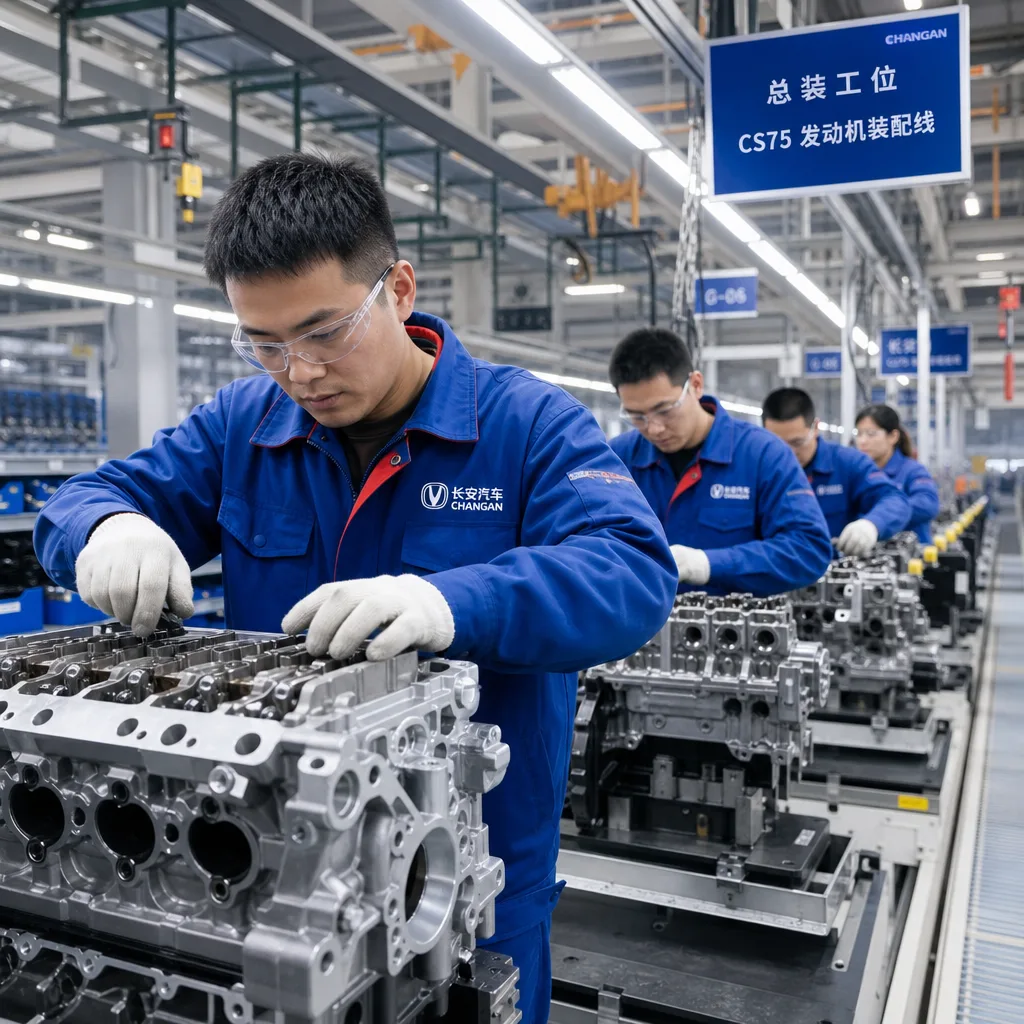
An engine block programme depends on controlled casting and controlled machining, not on generic factory capacity. Buyers should review the whole sequence, from material input to final packing.
Typical process stages include:
1. Pattern, tooling or fixture review against drawings, samples or 3D data. 2. Casting with chemistry checks, temperature control and controlled cooling. 3. Shot blasting, deburring and visual inspection under defined acceptance criteria. 4. Stress relief or heat treatment where required by the material route. 5. Rough machining of datum surfaces with controlled stock remaining for finish cuts. 6. CNC machining of cylinders, main bearing bores, oil galleries, coolant channels, dowel holes and threaded holes. 7. Honing, washing, pressure or leak testing, dimensional inspection and rust-preventive packing.
For aluminium blocks, buyers should ask about alloy control, porosity management and any heat-treatment records. For cast iron blocks, focus shifts to graphite structure, hardness range and dimensional stability during machining. In both cases, the supplier should define how datums are established, how they are protected through the operation, and how worn fixtures are checked or replaced.
Practical audit questions include fixture calibration interval, first-piece approval method, Cpk target for critical bores, tool-life limits and the action taken when a measurement trends toward the control limit. A block can pass a visual check and still fail in assembly if bore alignment, deck parallelism, dowel position or thread location has moved out of spec. Ask for process flow, inspection frequency and examples of corrective action such as tool offset adjustment, fixture re-clamping, 100 percent sorting or lot quarantine.
MOQ, lead time and pricing: the commercial terms that change the technical risk
Commercial terms should be judged alongside manufacturing risk. A low quote is not helpful if the supplier cannot repeat the quality, protect the part in transit or ship on time. For engine blocks, tooling condition, machining scope, inspection level and order mix all affect lead time and cost.
| Sourcing item | Typical B2B requirement | What to request from supplier |
|---|---|---|
| MOQ | 50–200 pieces per reference for existing tooling; 300+ pieces or annual commitment for new tooling | MOQ by part family, mixed-container option and price break at 50/100/200/500 pcs |
| Sample lead time | 30–45 days from existing tooling; 60–90 days if fixture or tooling changes are needed | Prototype schedule, first article inspection and sample approval process |
| Mass-production lead time | 45–75 days after deposit and approved sample for repeat orders; 75–120 days for new programmes | Production slot, capacity, inspection time and shipment date commitment |
| Price logic | Unit price changes with alloy grade, machining scope, leak testing, documents and packing | Quote line items for casting, machining, testing, packaging and private label if needed |
| Payment and Incoterms | FOB Ningbo/Shanghai, CIF destination or FCA factory depending on buyer logistics | Written quotation with packing quantity, net/gross weight and pallet dimensions |
| Quality documentation | Batch inspection, material report and control plan | PPAP-style documents, MTC, CMM report and leak-test record when required |
| Audit support | Remote review or on-site audit before mass production | Certificate copies, process flow, control plan, equipment list and calibration plan |
| Evaluation factor | Strong supplier indication | Procurement risk if missing |
|---|---|---|
| Certification scope | IATF 16949:2016 and ISO 9001:2015 cover automotive component manufacturing | Quality system may not control automotive traceability |
| Machining capability | In-house CNC machining, honing or boring fixtures and CMM access | Dimensional variation and slow problem resolution |
| Material control | Chemistry, hardness and casting records available by lot | Unknown metallurgy and inconsistent machining behaviour |
| Critical tolerances | Written tolerance plan for bores, deck, dowels, threads and galleries | Fitment failures found only during assembly |
| Leak testing | Defined pressure, hold time and allowable pressure drop | Coolant or oil leakage risk after assembly |
| Packaging | Protected deck surfaces, sealed galleries, VCI or rust prevention and export pallet design | Transit damage, corrosion and contamination |
| Communication | Engineering response within 24–48 hours with drawings, photos and inspection data | Delays during sample approval or claim analysis |
| Commercial clarity | MOQ, price breaks, lead time, Incoterms and document cost stated in the quote | Later cost additions or delayed shipment release |