Engine Block GMC Wholesale Sourcing Guide
Engine block GMC wholesale sourcing requires more than comparing unit prices. Importers and programme buyers need confidence in casting integrity, alloy control, machining accuracy, export packaging, documentation, and repeat-order stability. For distributors and repair-chain suppliers, the largest commercial risks often come from bore variation, main bore misalignment, deck flatness issues, damaged threads, internal contamination, or freight damage after long-distance shipping. For OEM, Tier-1, and structured aftermarket procurement teams, the emphasis is on process capability, traceability, audit readiness, and consistent batch records. Driventus manufactures engine and powertrain components in Taizhou, Zhejiang, and exports to more than 60 countries. Engine block programmes are managed under IATF 16949:2016 and ISO 9001:2015 systems, with inspection records available by batch according to the agreed control plan. This guide explains how B2B buyers should evaluate wholesale engine block supply for GMC applications, what technical data to request before ordering, and how to structure supplier audits for long-term purchasing.
Wholesale Sourcing Priorities for GMC Engine Blocks
A wholesale engine block order should be treated as a controlled manufacturing programme, not a one-time casting purchase. Before issuing a purchase order, the buyer should confirm application coverage, casting and machining status, inspection methods, packaging design, export terms, and claim-handling procedures.
Key sourcing questions include:
- Which GMC engine families, displacement ranges, and model-year applications are covered?
- Is the block supplied as rough cast, semi-finished, or fully machined?
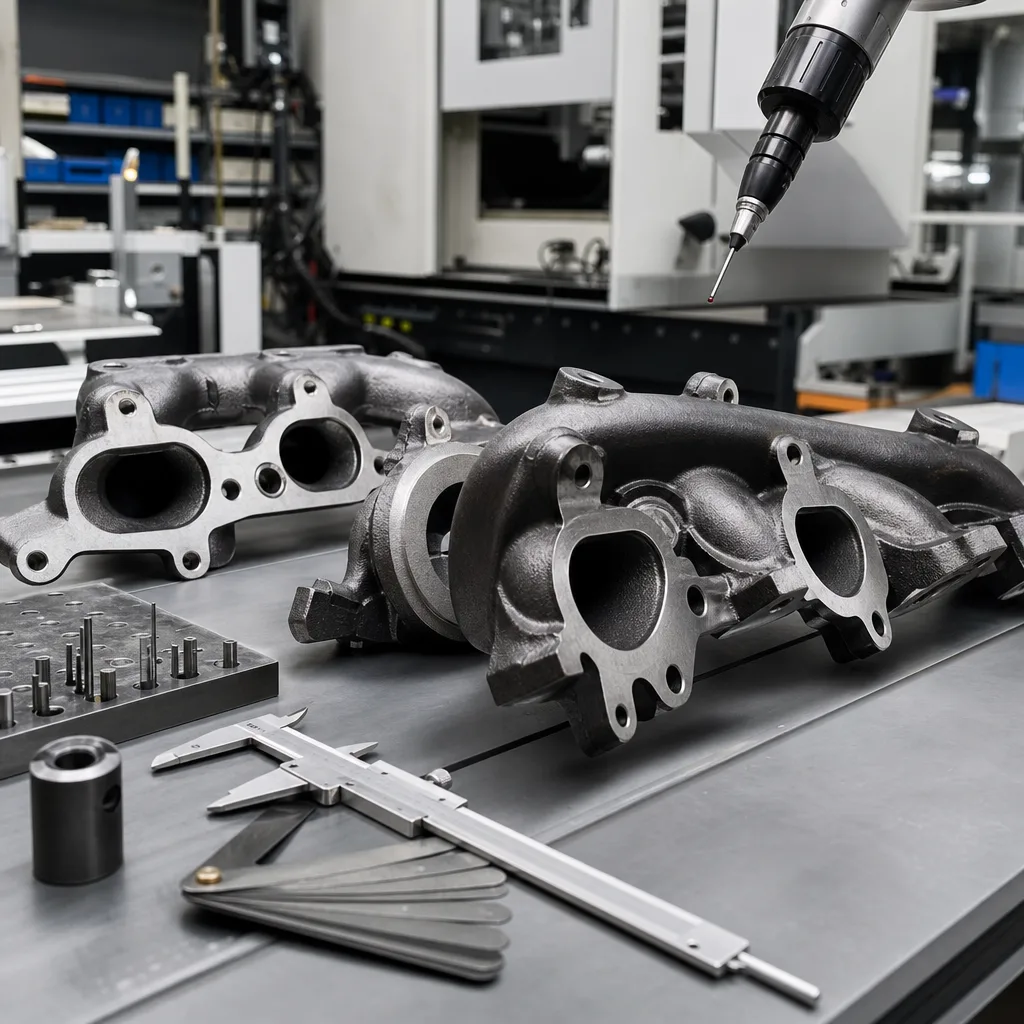
- Are cylinder bores, main bearing bores, deck surfaces, oil galleries, coolant passages, and threaded holes inspected by batch?
- What minimum order quantity applies by casting type, machining level, and packaging configuration?
- What lead time is realistic for samples, first production, and repeat orders?
- Can the supplier provide PPAP-style dimensional reports, control plans, or other buyer-specific documentation where required?
- How are non-conforming parts isolated, reported, and corrected before shipment?
Driventus supports B2B buyers through our catalog, including engine components for aftermarket and programme-based supply. Where a buyer needs a non-standard block variant, modified machining feature, or private-label configuration, custom manufacturing can be reviewed separately.
Driventus is an independent aftermarket manufacturer; brand names are referenced for fitment only.
Specifications Buyers Should Confirm Before Ordering
The engine block is the datum structure for the crankshaft, pistons, cylinder head, lubrication circuit, cooling system, timing components, and many external mounting points. A small machining deviation can create high warranty exposure, especially when blocks are distributed through installer networks, fleet maintenance channels, or multi-location repair chains.
A controlled sourcing specification should include these checks:
| Item | Procurement requirement | Why it matters |
|---|---|---|
| Material | Cast iron or aluminium alloy as specified by application | Controls strength, thermal expansion, corrosion behaviour, and machinability |
| Cylinder bore | Buyer-defined nominal diameter, tolerance, and finish condition | Affects piston-to-wall clearance, compression, oil consumption, and ring seating |
| Main bore alignment | Batch inspection with recorded values | Protects crankshaft bearing life and reduces rotating assembly risk |
| Deck flatness | Measured after final machining | Reduces head gasket sealing and combustion leakage risk |
| Surface roughness | Specified by gasket type and buyer requirement | Supports combustion, oil, and coolant sealing performance |
| Thread quality | Go/no-go gauge checks for critical holes | Prevents assembly failure, bolt pull-out, and field returns |
| Oil and coolant passages | Cleanliness, blockage checks, and pressure/leak verification where required | Reduces lubrication loss, overheating, and early engine failure risk |
| Core plugs and plugs | Fitment, sealing, and corrosion protection requirements | Prevents leakage during storage, testing, and operation |
| Packaging | Anti-corrosion treatment, bore protection, edge protection, and crate strength | Limits impact damage and rust during export shipping |
| Comparison point | Lower-risk offer | Higher-risk offer |
|---|---|---|
| Quotation detail | Includes application data, machining level, inspection scope, MOQ, lead time, and packaging | Lists only product name and unit price |
| Quality records | Provides batch inspection, dimensional data, and traceability | Provides photos without measured data |
| Packaging | Uses reinforced crate design with corrosion, bore, and edge protection | Uses general pallet or carton without a defined protection plan |
| Audit access | Supports factory audit, process review, and documentation checks | Avoids process questions or limits documentation access |
| Claim handling | Defines evidence required, response timing, containment, and corrective action process | Handles claims case by case without structure |
| Supply continuity | Confirms repeat-order capacity, tooling control, and forecast planning | Depends on spot-market availability or unverified subcontracting |
| Export readiness | Provides consistent documents, marks, packing lists, and shipment coordination | Leaves customs and receiving details unresolved |