Engine Block Citroen Manufacturer China: How B2B Buyers Actually Screen Suppliers
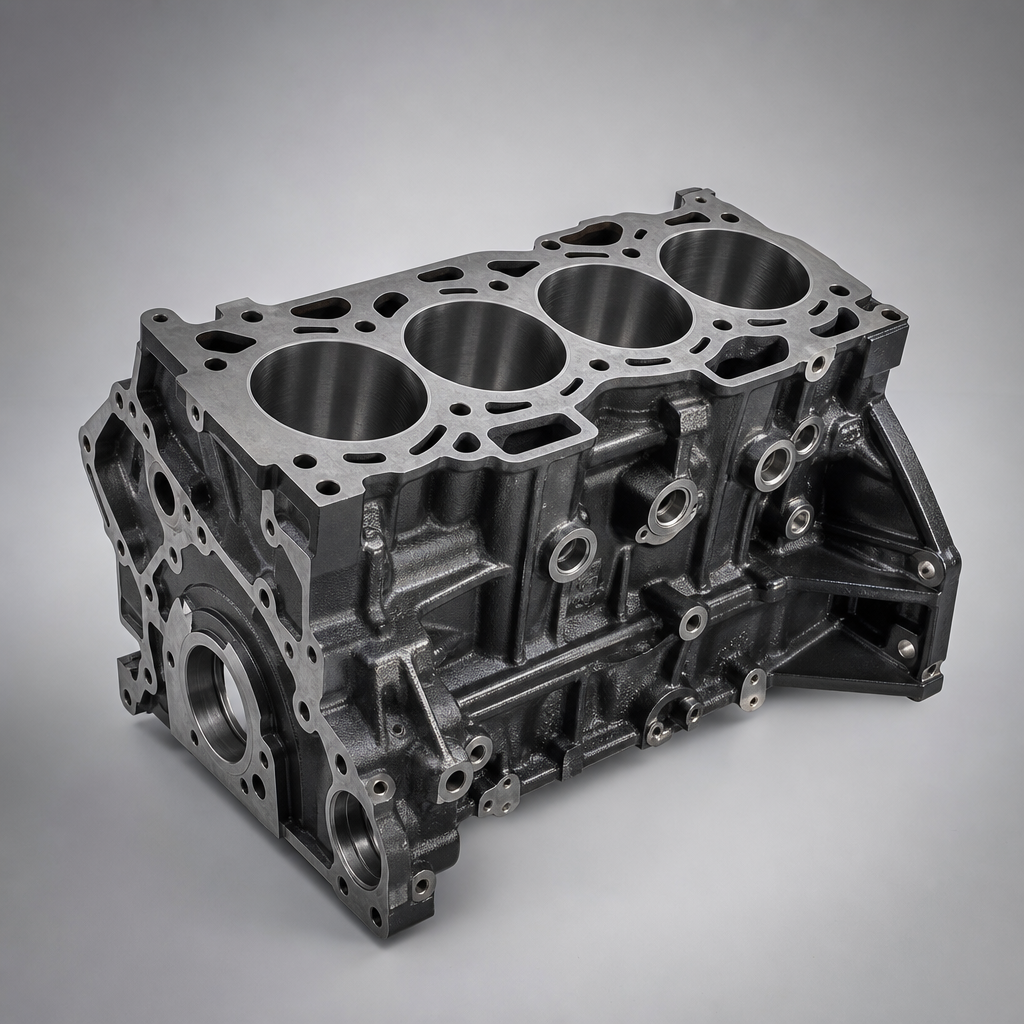
For importers, sourcing managers, and aftermarket category buyers, choosing an **engine block Citroen manufacturer China** partner is rarely a price exercise alone. The hard part is judging whether a supplier can keep casting quality, bore geometry, deck flatness, material traceability, and machining tolerances stable across repeat batches.
That is where most programmes succeed or fail. A polished catalogue means little if the block arrives with line-bore variation, porosity, poor cleaning, or weak traceability. For aftermarket distribution, wholesale supply, and private-label projects, buyers also need practical answers on MOQ, sample approval, packaging, export readiness, and claim response.
This guide is written for professional B2B buyers comparing China-based sources for Citroen-compatible engine block applications. It focuses on what to verify, what usually goes wrong, and how to compare suppliers on evidence rather than sales language. Driventus is an independent aftermarket manufacturer; any brand names mentioned are for fitment reference only.
In real sourcing discussions, capable suppliers should be comfortable talking in measurable terms: bore diameter control commonly within ±0.01 to ±0.02 mm after finish machining, deck flatness typically within 0.03 to 0.05 mm across the gasket face depending on block size, and line-bore alignment held to the approved print. Commercially, most stable programmes follow a simple path: sample order -> pilot lot -> mass production, with MOQs often driven by casting pattern use, machining setup time, and pallet efficiency rather than by a simple sales rule.
Start with a go/no-go screen, not the supplier brochure
When reviewing a Chinese source for Citroen-compatible engine blocks, the first question is not how many references they list. It is whether they can produce the block consistently.
Use an early go/no-go screen built around process evidence:
- Material control: Is the block produced in grey cast iron or aluminium alloy as required, with heat or lot traceability maintained through production? For grey iron, buyers often ask for HT250 / GG25 equivalent or a buyer-approved alternative, with hardness commonly controlled in a range such as 180-240 HB depending on design.
- Casting stability: Does the supplier control melt chemistry, hardness, porosity risk, and core positioning well enough to protect downstream machining? Ask whether core location is checked by fixture or CMM datum strategy and whether casting weight is monitored by lot, for example within ±1.5% to ±3.0% as a quick stability signal.
- Machining capability: Can the factory hold bore diameter, main bearing housing bore, deck flatness, and related geometry to drawing requirements in serial production? On critical machined features, many buyers want evidence in the 0.01-0.03 mm range, not vague pass/fail language.
- Leak-tightness validation: Are water jacket and oil gallery pressure checks performed and recorded by batch? Typical requests include air or hydro tests at 2-5 bar with a 30-120 second hold, depending on the programme.
- Documentation discipline: Can the supplier provide dimensional reports, material certificates, inspection records, and traceability data per lot? A practical minimum is a first-off report, patrol inspection report, and final release report for each batch.
- Certification: Is the site managed under IATF 16949:2016 and ISO 9001:2015, or at least under a documented quality framework suited to engine components?
- Export readiness: Can the supplier provide pallet standards, corrosion protection, barcode labels, and loading plans for international distribution? Ask for carton gross weight, pallet footprint, stack height, and estimated pieces per 20GP / 40HQ before pricing logistics.
For buyers comparing several suppliers, it may also help to review the broader engine component offering through our catalog or within /products/engine-components.html if supplier consolidation is part of the strategy.
A useful first-screen request is simple: 1) process flow chart, 2) recent dimensional report, 3) material certificate, 4) leak-test record, and 5) export packing photos. If a supplier struggles to send these within a few working days, that tells you something before any audit begins.
Where engine block programmes usually fail: the manufacturing risk points
Engine blocks are high-risk cast-and-machined parts. Small variation in casting density, datum transfer, or finish machining can become coolant leakage, oil pressure loss, crankshaft misalignment, abnormal wear, or assembly trouble at the customer site.
Audit the process where failure starts
1. Casting process control Confirm how the supplier manages moulding consistency, core placement, melt chemistry, pouring control, and porosity prevention. For cast iron blocks, hardness consistency around the deck and main saddle areas affects both machining stability and service life. Ask how many spectrometer checks are run per furnace or per melt, how inoculation is controlled, and whether castings are normalized or stress-relieved before machining when required.
2. CNC machining sequence Buyers should understand the route used for critical features, especially: - cylinder bores - deck face - main bearing line bore - cam bore or housing features where applicable - threaded holes - sealing faces and mounting interfaces
A strong route usually includes rough machining, semi-finish machining, finish boring or honing where specified, line-bore control, thread verification, deburring, washing, leak test, and final inspection. Ask whether critical datums are maintained within one fixture family or transferred across multiple fixtures. Every re-clamp increases alignment risk.
3. In-process gauging Bore size, roundness, taper, perpendicularity, centre distance, and alignment should be measured with calibrated gauges, air gauges, or CMM checks under a defined sampling plan. Final inspection alone is not enough. A realistic plan may include 100% check for leak test and key thread go/no-go, first-piece approval at each setup, patrol checks every 30-50 pcs, and full dimensional layout on one piece per batch or shift.
4. Cleaning and contamination control Residual sand, chips, and machining debris create avoidable warranty claims. Washed and dried blocks should be checked before protective oiling, bagging, and packing. Buyers should confirm wash media, drying method, and cleanliness verification, such as borescope checks of oil galleries or white-wipe inspection on selected surfaces.
5. Pressure and crack inspection Depending on programme requirements, suppliers may use air-pressure leak testing, hydrostatic testing, magnetic particle inspection on ferrous areas, or dye penetrant inspection on selected surfaces. Confirm what is standard and what is optional. For higher-risk programmes, ask whether inspection is 100%, by cavity, or by sampling, and what the reject or repair rules are for porosity, cold shut, or crack indications.
The process details that separate strong suppliers from weak ones
- Datum strategy: which surfaces are used as primary, secondary, and tertiary datums through machining
- Tool-life control: whether inserts and boring tools are changed by counter, wear limit, or operator judgement
- Gauge calibration: whether bore gauges, air gauges, torque tools, and CMMs are calibrated monthly, quarterly, or by usage cycle
- SPC evidence: Cp/Cpk or at least trend charts for bore diameter, line bore, and deck flatness on recent runs
- Repair policy: whether weld repair is prohibited, limited, or customer-approved only
A dependable supplier should explain these controls clearly in a remote review or on-site audit, then back the explanation with records. Driventus maintains documented process controls under our quality system for engine and powertrain components.
Commercial terms only make sense after the technical release path is clear
MOQ, lead time, and price matter. But on engine blocks, they should be reviewed only after you know how the part will be approved.
| Sourcing item | What buyers should request | Typical B2B expectation |
|---|---|---|
| MOQ | Per part number, per casting type, and per packaging specification | Confirmed before tooling, sampling, or commercial release |
| Lead time | Sample timing and mass-production timing | Separate schedules for first order and repeat orders |
| Drawings | Customer drawing or supplier-controlled print | Revision-controlled documents only |
| Sample approval | Dimensional report, material report, leak-test data | Pre-production sample sign-off before mass supply |
| Audit | Process audit, quality audit, capacity review | Remote review plus on-site audit where needed |
| Packaging | VCI, rust preventive oil, partitioning, pallet standard | Export carton and pallet validation before shipment |
| Traceability | Heat number, batch number, machining lot | Marking retained through shipment and receipt |