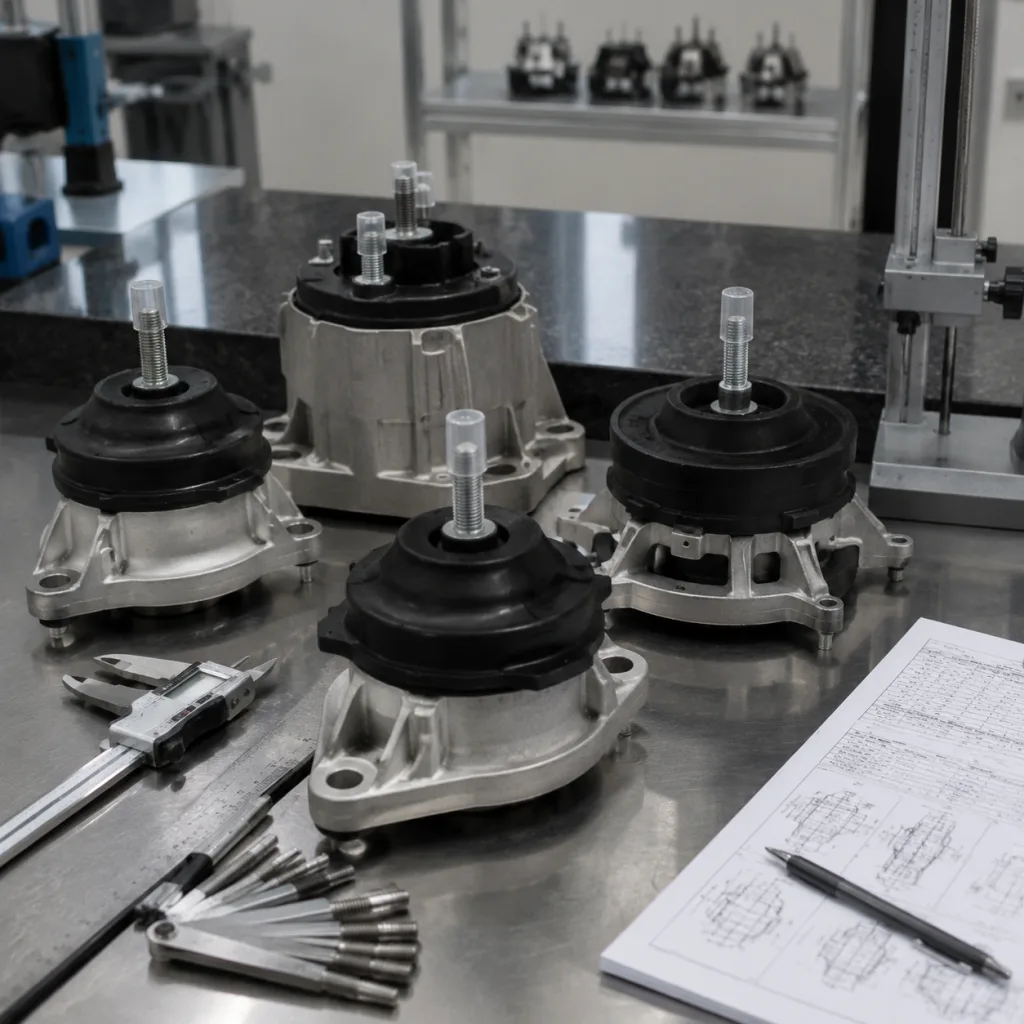
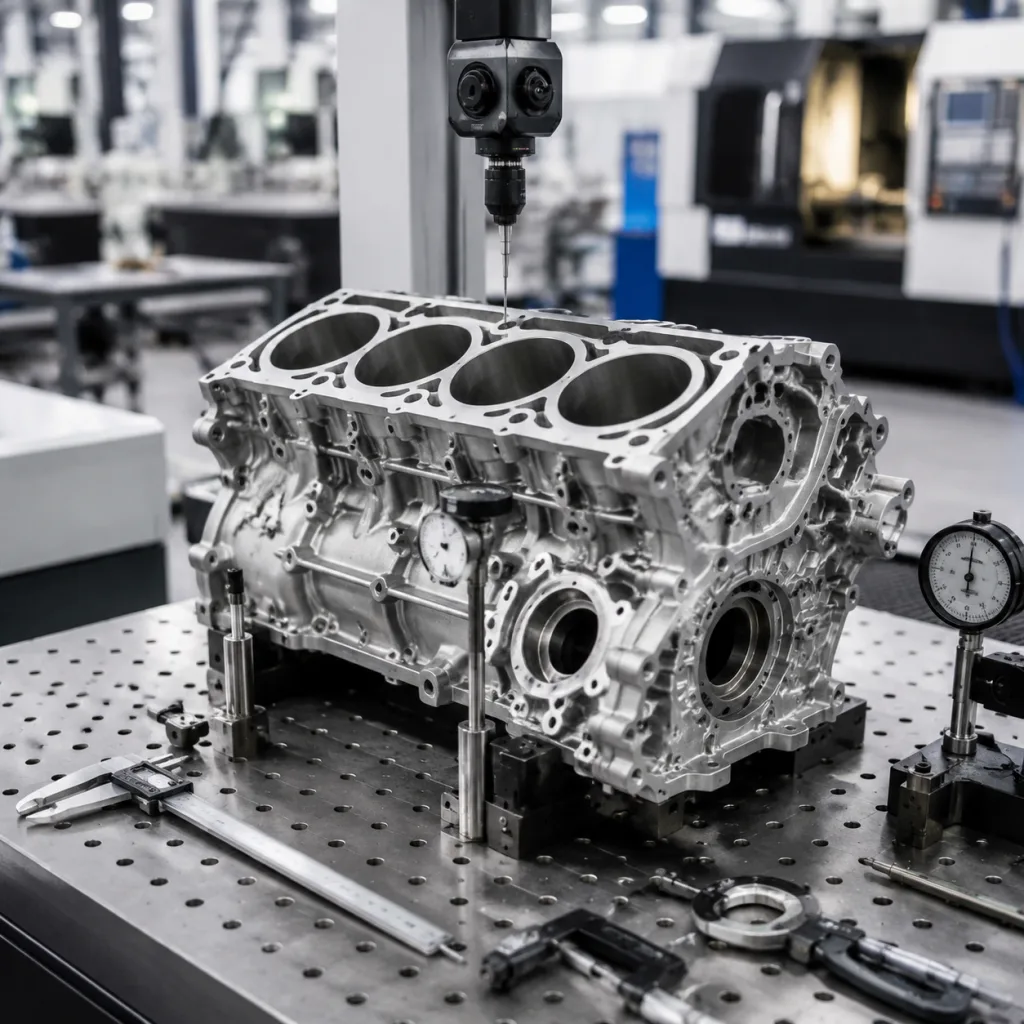
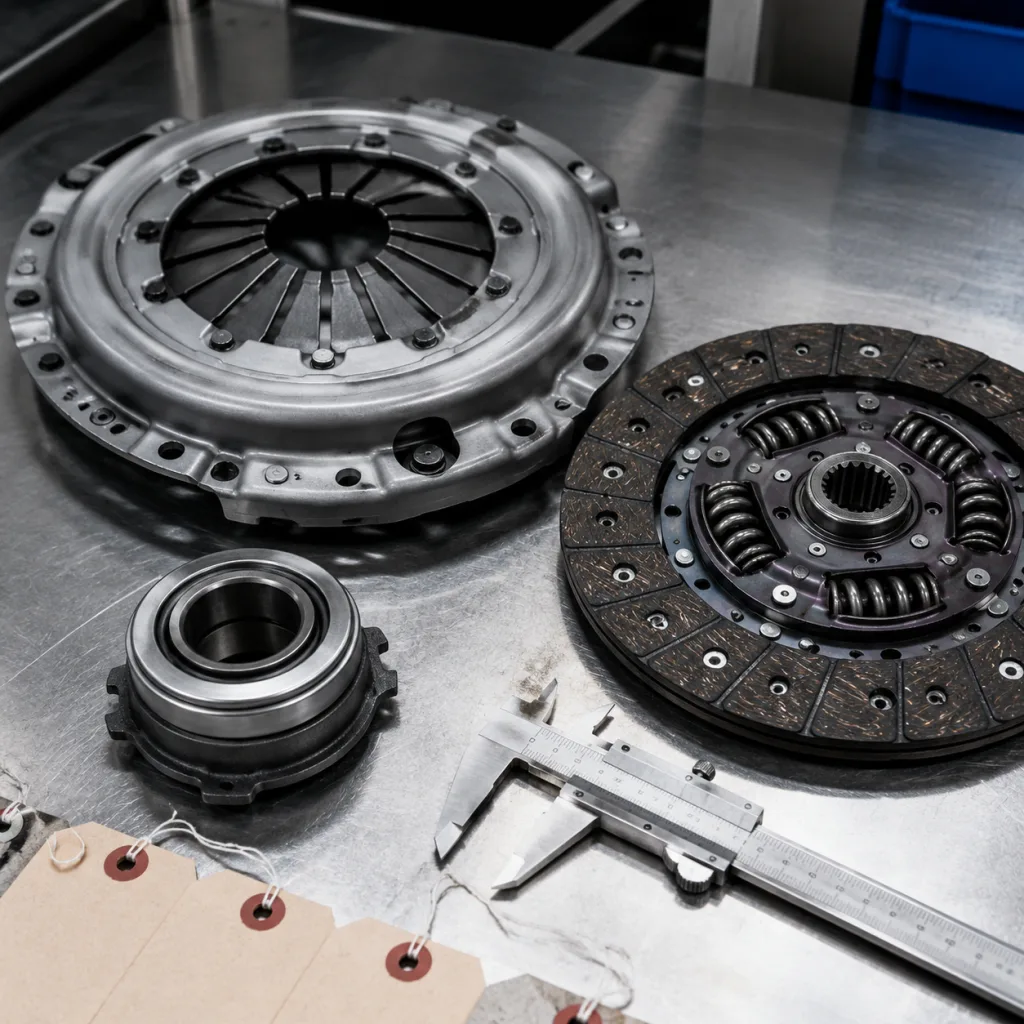
Engine Block Acura OEM Supplier Sourcing Guide
Choosing an engine block Acura OEM supplier is a risk decision before it is a price decision. The block controls bore geometry, crank alignment, coolant sealing, oil galleries and mounting interfaces; one weak process can turn a low unit price into warranty exposure. Procurement teams should therefore qualify casting capability, machining repeatability, alloy traceability, inspection discipline and export readiness before releasing repeat orders.
Driventus manufactures engine and powertrain components in Taizhou, Zhejiang, including engine blocks and related engine components for aftermarket and B2B supply. We export to more than 60 countries and operate under IATF 16949:2016 and ISO 9001:2015. Driventus is an independent aftermarket manufacturer; brand names are referenced for fitment only.
Use this guide to structure supplier qualification, document requests, sampling, MOQ planning, tolerance review, pricing comparisons and quality approval for Acura-fit engine block programmes.
Start With the Three Decisions That Change the RFQ
Do not begin with a catalogue match alone. First, establish which sourcing route the programme needs: an existing casting, modified machining from an existing casting, or new tooling. That answer drives cost, sampling time, inspection depth and forecast commitment.
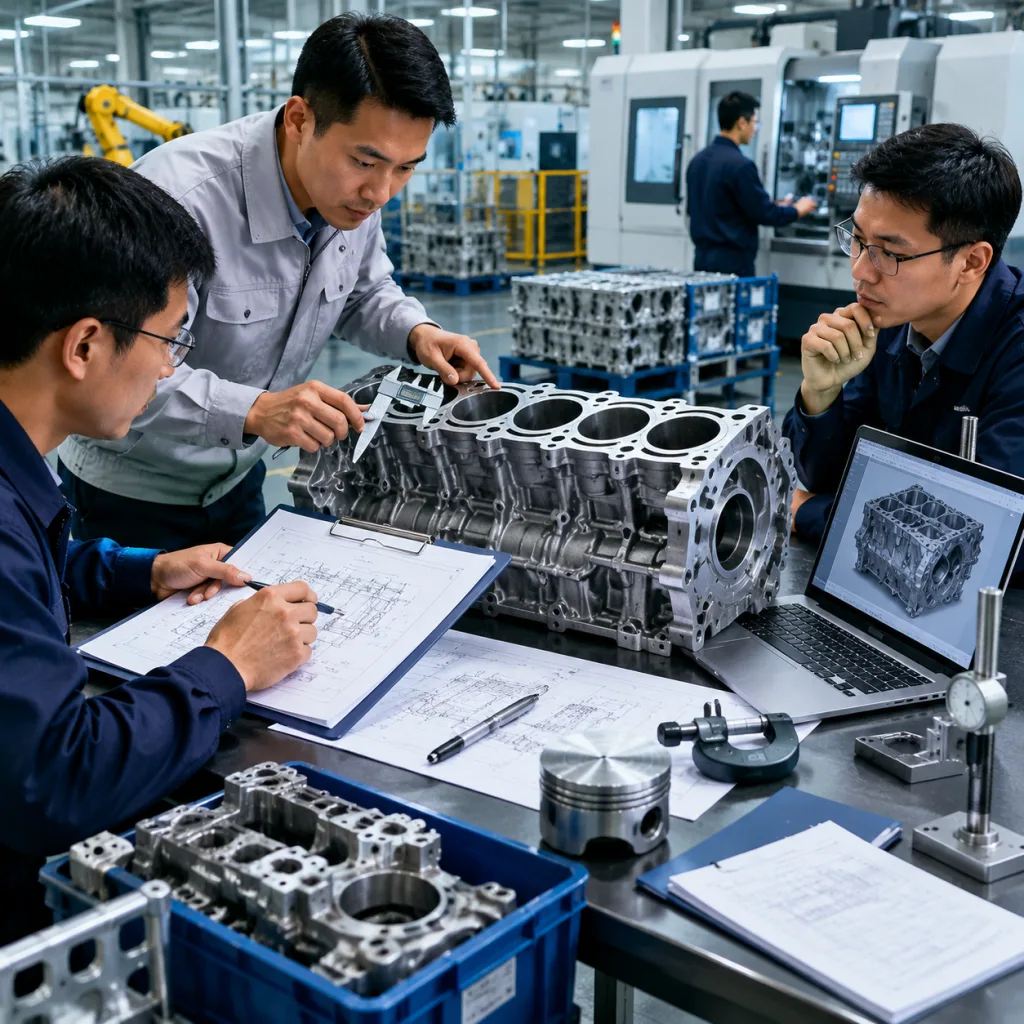
A first audit should verify control across casting, heat treatment where required, CNC machining, washing, pressure testing and final inspection. If any operation is outsourced, the control plan should identify the subcontractor, inspection point, transfer document and traceability method from melt batch to packed crate.
For Acura-fit applications, treat informal “OE approval” language as a red flag unless it is backed by a buyer-controlled legal and technical file. The practical question is whether the supplier can manufacture to agreed drawings, samples, technical files or part-number cross-references where legally and commercially appropriate. Catalogue fitment is not vehicle manufacturer approval.
Use this decision screen before requesting pricing:
| Decision | Why it matters | Buyer action | |
|---|---|---|---|
| Existing programme | Fastest route, lower tooling risk | Request recent CMM, pressure-test and packaging records | |
| Modified machining | Same casting, different critical features | Confirm machining allowance, datum scheme and fixture changes | |
| New tooling | Highest cost and longest validation path | Require feasibility review, tooling plan and forecast commitment |
| Failure mode | Procurement check | Typical evidence | |
|---|---|---|---|
| Wrong material properties | Chemical composition and mechanical properties by heat | Spectrometer record, mill certificate, tensile bar where required | |
| Bore or deck drift | Repeatability over sample and pilot lots | CMM report, roundness data, Ra/Rz surface finish readings | |
| Main tunnel instability | Crankshaft tunnel geometry and line-bore control | Line-bore inspection record, air gauge or dial gauge report | |
| Hidden leakage or blockage | Coolant, oil passage and residual contamination control | Pressure-test log, endoscope check, cleaning inspection record | |
| Thread failure | Pull-out, depth and positional accuracy | Thread plug gauge record, depth report, torque check where specified | |
| Weak containment | Field issue isolation by heat, shift and fixture | Lot code, furnace batch, machining shift record, operator ID | |
| Export damage | Crate and corrosion protection performance | Drop-test record, stacking limit, approved packaging photo set |
| Gate | What to prove | Practical planning number | Risk if skipped |
|---|---|---|---|
| Feasibility review | Drawing, sample or cross-reference confirmation | 3–7 working days after complete file | Wrong application or machining layout |
| First article | Dimensional match and leakage control | 2–4 weeks for existing programme | Costly rejection after import |
| Pilot lot | Process stability under real batch conditions | 20–100 pcs, 4–6 weeks typical | Sample passes but batch varies |
| Volume order | MOQ, lead time and packaging density | 100–300 pcs per part or mixed container | Stock-out or freight cost escalation |
| Replenishment | Forecast and safety stock | 6–10 weeks production plus freight | Long gaps between production slots |