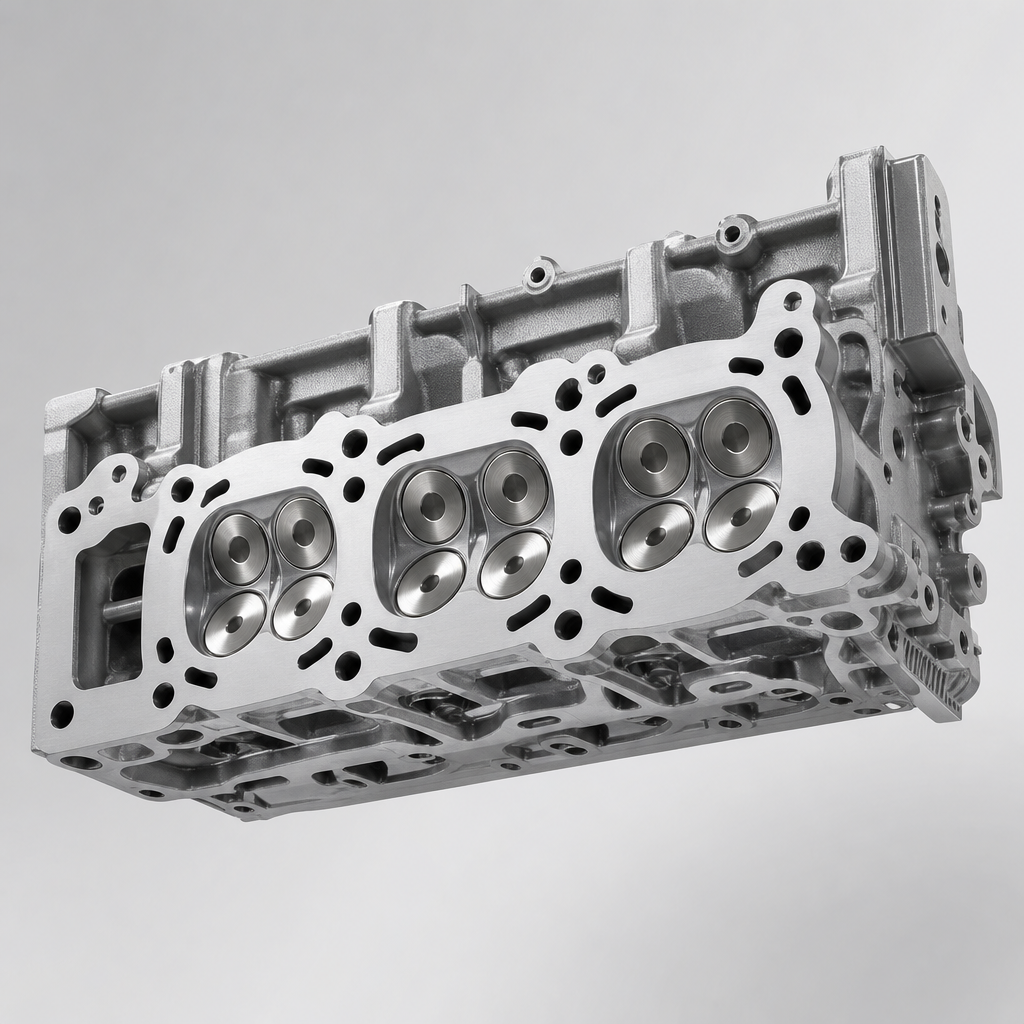
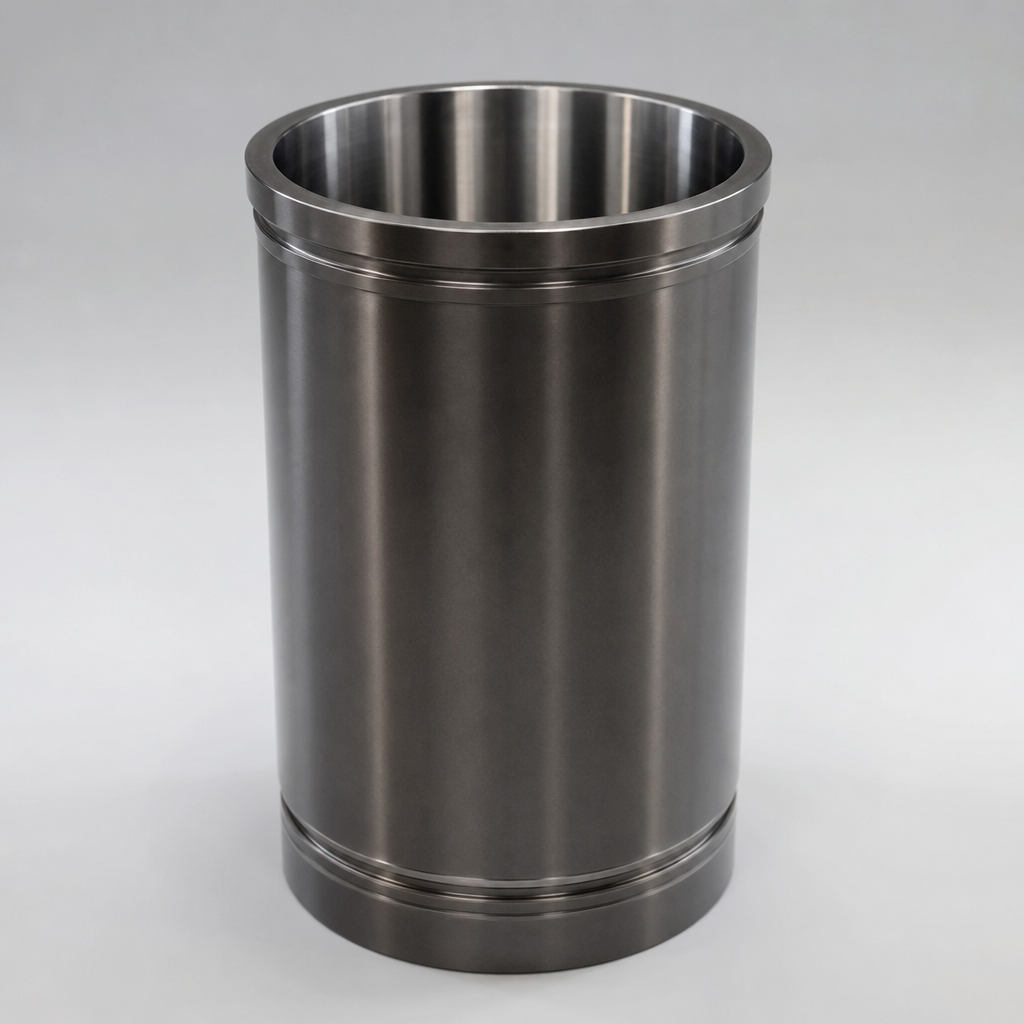
Engine Bearing Porsche Wholesale: How Buyers Actually Screen Risk
Buying **engine bearing Porsche wholesale** is not a routine catalogue exercise. The real issue is not finding a low quoted price. It is finding a supplier that can hold metallurgy, shell geometry, layer consistency, packaging accuracy, and traceability across repeat lots.
That matters more with Porsche-fitment engine parts because the margin for error is narrow. Small variation in wall thickness, crush, overlay, or oil-hole position can change oil clearance, wear behaviour, installation results, and eventually field claims across an entire batch.
This guide is built for distributors, importers, and repair-group buyers comparing suppliers for crankshaft and connecting-rod bearing sets. It focuses on the questions that separate a workable source from a costly one: what to verify first, where claims usually start, how to compare quotations properly, what MOQ and lead time figures really mean, and what documentation should be on the table before PO release. Driventus is an independent aftermarket manufacturer; brand names are referenced for fitment only.
For most buyers, the target is straightforward: lot-to-lot dimensional stability, predictable oil-clearance performance after installation, and commercial terms that still work after freight, duties, inspection cost, and claim reserve are included. That requires actual numbers, not general quality language.
Decision framework: what to check before price enters the conversation
When screening engine bearing Porsche wholesale suppliers, the first pass should be technical and operational. Price comes after that.
A credible supplier should be able to explain, in practical terms:
- Bearing type supplied: main bearings, con-rod bearings, thrust washers, or full engine sets
- Base material system: aluminium alloy or copper/lead-based multilayer design, depending on application
- Wall-thickness control: measured against drawing tolerance and supported by batch records
- Surface finish and overlay consistency: important for start-up lubrication and wear behaviour
- Traceability: heat, press, machining, coating, and packing lot traceability
- Packaging control: pair matching, shell orientation, barcode or label verification
- Quality documentation: PPAP-style records where required, plus routine inspection reports
For international buyers, management-system certification is the starting line. IATF 16949:2016 and ISO 9001:2015 do not prove field performance on their own, but they do indicate that calibration, corrective action, traceability, document control, and nonconformance handling are being managed through a formal system. You can review our broader quality system and manufacturing scope before opening a sourcing discussion.
At RFQ stage, ask for control values, not pass/fail language. Useful examples include shell wall-thickness tolerance in the low-micron range, bore-size consistency after crush, oil-hole position tolerance, thrust-face flatness, and overlay thickness window. A supplier who can state inspection frequency, SPC use on critical dimensions, and 100% appearance plus pair-matching checks is easier to qualify than one relying on catalogue claims.
Commercial context also belongs in the first screen. Clarify whether the quote is based on stock-backed standard packaging or made-to-order production. A low ex-works price can move quickly once you add custom inner boxes, barcode labels, pallet rules, and low-volume mixed-SKU packing. Buyers should request MOQ per SKU, standard pack quantity, and price breaks at trial, mid-volume, and annual programme level.
If you are planning a wider engine-parts range rather than one SKU, it also helps to review our catalog and the engine range under /products/engine-components.html.
Failure modes: the technical misses that usually become warranty claims
Engine bearings are a high-consequence product. Fitment is only the beginning. The shell has to maintain crush, conformity, embeddability, and fatigue resistance under oil-film load, temperature cycling, and repeated stress.
Key technical checks
Ask for these data points during supplier qualification:
- Housing bore fit and crush height control
- Wall thickness variation across each shell
- Back steel hardness and bonding integrity
- Overlay or running layer thickness consistency
- Oil-hole and groove geometry accuracy
- Bore eccentricity profile where design requires it
- Packaging separation for upper/lower shells and thrust elements
In most engine bearing Porsche wholesale programmes, acceptance is built on dimensional repeatability, not visual inspection alone. Buyers commonly require 100% appearance checks backed by defined sampling plans for critical dimensions. Measuring equipment should be calibrated, recorded, and controlled under the supplier's management system.
Material discussion also needs precision. Different engine applications may require different bearing constructions depending on load, lubrication conditions, and service expectation. A supplier should be able to explain the stated material family and how layer construction, bonding, and finish are controlled in production.
From a buyer's side, the useful discussion is always around ranges. Wall-thickness variation is often controlled in microns across each shell half. Overlay thickness may need to stay within a tight band to protect start-up wear behaviour. Oil-hole diameter and position must follow drawing tolerance because even a small offset can affect lubrication alignment. For multilayer bearings, ask how steel back, intermediate layer, and overlay bond integrity are checked after forming and final machining. For thrust washers, request flatness and thickness control data, not just nominal size.
Process detail matters here. A stable supplier should be able to walk through the route from strip or back steel preparation through stamping, forming, sintering or bonding where applicable, finish machining, oil-groove and hole processing, deburring, cleaning, coating, inspection, rust prevention, and final packing. If they cannot identify where critical dimensions are controlled, that usually shows up later as claims.
Where chemical compliance matters for EU and UK import channels, confirm substance management in line with REACH (EC) No 1907/2006. This is particularly relevant when coatings, preservatives, inks, and packaging materials are part of the delivered set.
A reliable supplier should also define how bearing sets are revalidated after tool changes, material-lot changes, or process adjustments. That step reduces the chance of unstable batches entering warehouse stock. Buyers with repeat monthly demand often require first-off approval after tooling maintenance, retained samples by lot, and a documented reaction plan if any critical dimension trends toward the tolerance limit.
Comparison table: how to tell a usable supplier from a cheap quote
Not every supplier is built for the same account type. Some can handle low-mix spot buys. Others are set up for repeat container programmes, private packaging, and multi-SKU planning.
When comparing engine bearing Porsche wholesale sources, use a framework that goes beyond quotation price:
| Sourcing factor | What to ask | Why it matters to buyers |
|---|---|---|
| MOQ | MOQ per SKU and per mixed order | Impacts stock turns and launch risk |
| Lead time | Standard production lead time, replenishment cycle, rush capacity | Affects service level and warehouse planning |
| Tooling control | Whether drawings and gauges are version-controlled | Reduces repeatability issues |
| Traceability | Carton, inner box, and batch-level traceability | Supports claim containment |
| Compliance | IATF 16949:2016, ISO 9001:2015, REACH declarations | Needed for vendor approval |
| Audit access | Factory audit, process review, sample inspection availability | Important for importer due diligence |
| Packaging options | Neutral, private label, barcode, kit packing | Supports channel-specific selling |
| Range depth | Main, rod, and thrust coverage across engine families | Lowers supplier fragmentation |