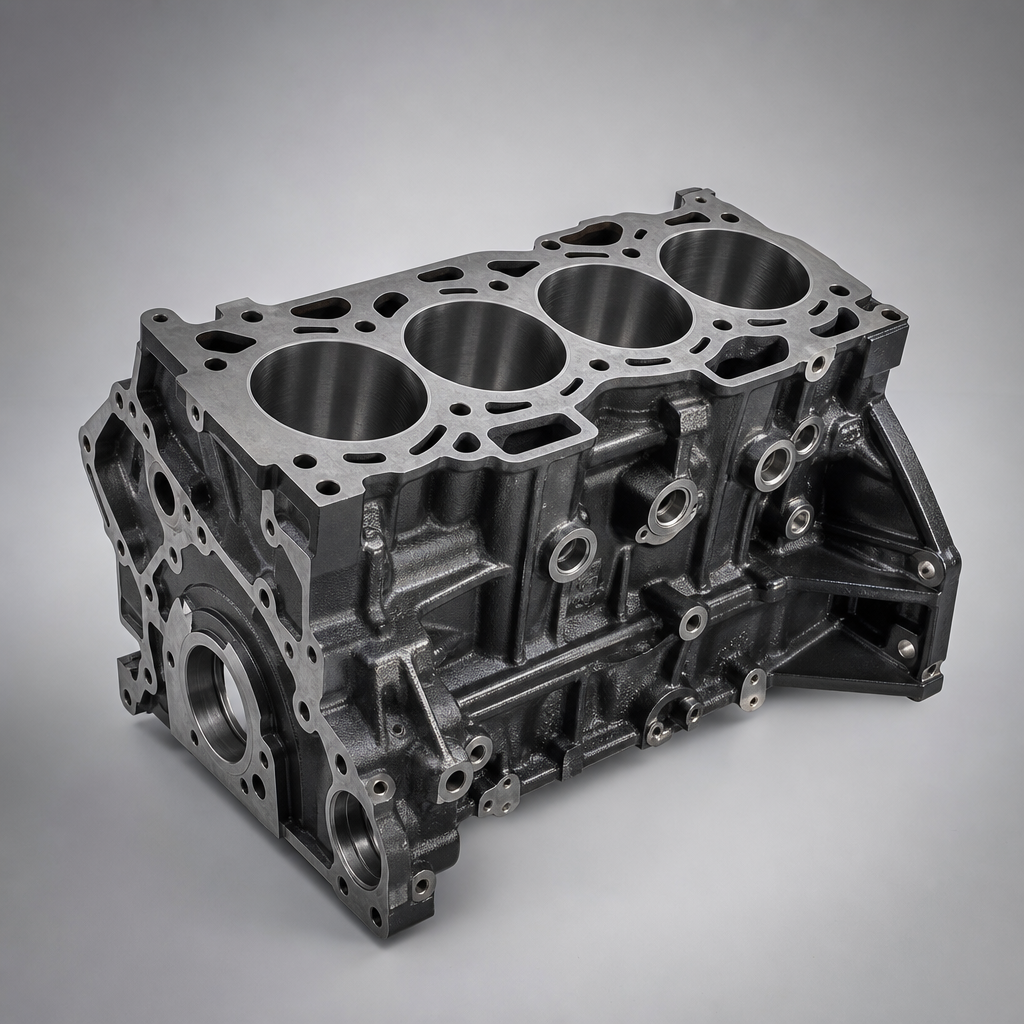
Engine Bearing Peugeot Wholesale Sourcing Guide
Buying Peugeot engine bearings at wholesale level is not mainly about finding the lowest unit price. The harder question is whether a supplier can keep dimensions, material quality, labeling, and shipment performance stable across repeated lots. A small price gap disappears quickly when one bad batch creates warranty claims, workshop downtime, or returns caused by catalog mismatch.
For distributors, rebuild-part importers, and private-label programs, the job is to turn a quote into an operating decision. That means checking tolerances, alloy system, application coverage, traceability, MOQ structure, lead time by order type, and the inspection documents that will ship with each lot. This guide breaks that work into practical sourcing angles: what to decide first, where programs fail, how to compare suppliers, what to verify in the spec, and how to stage a lower-risk rollout.
Driventus supplies engine components for international aftermarket programs and works to documented process controls under IATF 16949:2016 and ISO 9001:2015. Driventus is an independent aftermarket manufacturer; brand names are referenced for fitment only.
Decision Framework: what to lock down before you compare quotes
In an engine bearing Peugeot wholesale purchase, the first pass should sort technical fit, process control, and catalog accuracy before price discussions get serious. If those three are weak, the quote is not really comparable.
Start with application coverage. Confirm whether the supplier supports standard sizes plus 0.25 mm and 0.50 mm undersize repair options for the Peugeot engine families you actually sell. Some markets also ask for 0.75 mm, but that should come from real service demand, not assumption.
A useful RFQ should ask for:
- Bearing type: main bearing set, conrod bearing set, thrust washer
- Engine family and displacement coverage
- OE or cross-reference numbers used for catalog matching
- Journal diameter range and installed housing bore reference
- Base material and overlay structure
- Shell wall thickness tolerance and housing crush control
- Oil groove design and oil hole alignment confirmation
- Standard, 0.25 mm undersize, and 0.50 mm undersize availability
- Batch traceability to raw material and production date
- Standard export packing and private-label options
- MOQ by SKU and by mixed order
- Sample order cost, trial order MOQ, and repeat-order price breaks
- Normal production lead time and repeat-order lead time
- Inspection reports supplied with shipment
Then test the supplier's application-data discipline. Peugeot fitments can cross engine families, regional catalogs, and rebuild practices. A supplier with poor cross-reference control may ship a physically acceptable bearing under the wrong listing. That still becomes your return, your claim, and your customer problem.
Commercially, ask how the price is built. There is a big difference between 200 sets of one SKU, 1,000 sets split over 10 SKUs, and a mixed engine-parts order sharing freight space. Sample lots often cost more because setup, inspection, and packing are spread across fewer pieces. Repeat programs usually price better once annual demand by reference and packaging format is fixed.
If you are expanding beyond bearings, it makes sense to review our catalog and the engine range in /products/engine-components.html alongside the enquiry.
Spec Deep-Dive: the bearing details that actually decide field performance
Engine bearings are layered components. Nominal size alone tells very little. In engine bearing Peugeot wholesale sourcing, buyers should push the supplier to explain both material stack and dimensional control in usable terms.
Typical checks include shell back material, intermediate layer composition, overlay thickness, and installed bore geometry. Depending on the application, you may see aluminium-based bi-metal designs or copper-lead and lead-free tri-metal constructions. The right choice depends on load, surface speed, contamination tolerance, service conditions, and any chemical compliance requirements in the destination market.
Key acceptance points
- Wall thickness consistency: helps maintain stable oil clearance across the set
- Surface finish: no scoring, pitting, raised edges, embedded debris, or plating defects
- Tang, groove, and oil hole accuracy: errors here create immediate lubrication and assembly risk
- Crush height: needed for seating and heat transfer into the housing bore
- Edge form: controlled chamfers reduce local contact risk at journal fillets
Ask for actual control ranges, not generic statements. The quote or technical sheet should state shell wall thickness tolerance in microns, overlay thickness range, width tolerance, free spread, crush value, and bore eccentricity after assembly where measured.
Good buyers also ask how those numbers are measured. Which gauge is used? How often is it calibrated? What is the sampling frequency during production? What happens when readings drift out of tolerance? A credible supplier should be able to answer that without hesitation.
Many aftermarket importers run their own incoming checks with micrometer readings at fixed clock positions, visual inspection under strong light, and random confirmation of oil-hole and groove location against a drawing or approved sample. That is sensible. It also exposes suppliers that talk about quality in broad terms but cannot support the details.
Where oil clearance is critical, request the full dimensional basis: crank journal size, housing bore, installed bearing bore, and intended clearance band. Otherwise, the buyer can end up comparing parts measured to one standard against engine housings built to another.
For EU and UK shipments, importers commonly ask for material declarations aligned with REACH (EC) No 1907/2006. That is routine importer due diligence, even though it does not replace fitment or durability validation.
Comparison View: how procurement teams separate real manufacturers from trading offers
A structured comparison matrix is useful because many offers look similar at quote stage. They are not similar once claims begin. In engine bearing Peugeot wholesale purchasing, controlled production matters more than catalog breadth.
| Procurement factor | What to ask | Why it matters |
|---|---|---|
| Certification | Evidence of IATF 16949:2016 and ISO 9001:2015 scope | Indicates formal process control and corrective action discipline |
| MOQ | MOQ per part number and MOQ for mixed container orders | Affects stock turns and cash tied up in slower SKUs |
| Lead time | Tooling, pilot sample, and mass production timing | Needed for launch planning and service fill rate |
| Inspection | Incoming material checks, in-process SPC, final audit records | Reduces dimensional drift and packaging errors |
| Traceability | Batch code format and retention period | Supports warranty investigation and recall containment |
| Private label | Box design, barcode, label data, carton marks | Important for distributor brand programs |
| Application data | Cross-reference management and revision control | Reduces catalog mismatch and returns |
| Logistics | Port, pallet standard, export carton strength, HS code support | Helps import planning and warehouse handling |