Engine Bearing Dodge Supplier: Sourcing, Specs, and QC
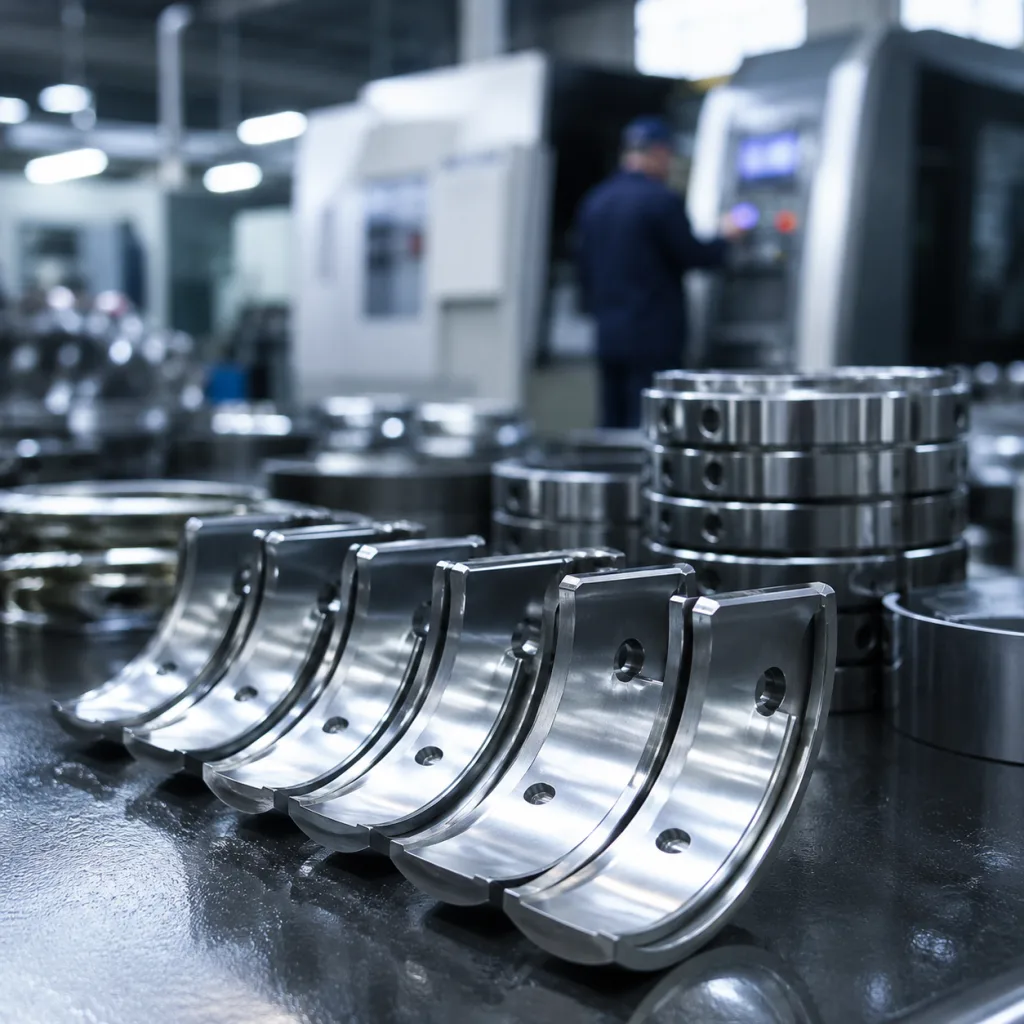
An engine bearing Dodge supplier has to do more than ship shells in a carton. Buyers need stable metallurgy, controlled wall thickness, repeatable crush, and documentation that supports incoming inspection across multiple plants. Driventus supplies engine bearings for B2B programs built around OE-style dimensions, drawing control, and export packaging for distributors, OEM/Tier-1 teams, and repair network buyers. We work to IATF 16949:2016 and ISO 9001:2015, with material and compliance support for REACH (EC) No 1907/2006 where applicable. If your RFQ includes an OE cross-reference such as OE 06A107065, we can map it to the submitted sample, print, or target journal size without claiming vehicle-maker approval. Driventus is an independent aftermarket manufacturer; brand names are referenced for fitment only. The sections below explain how we source, verify, and ship engine bearings for Dodge applications.
What buyers should verify first
The first sourcing question is not price. It is fitment control and repeatability.
For Dodge applications, the buyer should verify the following before release:
- Journal diameter, roundness, and surface condition from the customer drawing or sample
- Housing bore, installed crush, and the assembled fit in the target engine family
- Wall thickness by shell half and by production lot
- Oil clearance target, especially after reman machining, polishing, or line honing
- Surface finish, overlay type, and any coating requirement for cold-start or boundary-lube protection
- Package format for line-side use, warehouse picking, or kitted distribution
If you need a wider range of engine components, start with our catalog or the engine-bearing section in engine components. We can work from sample, drawing, or an OE cross-reference file, then confirm whether the part is a standard catalogue item or a controlled custom build.
Procurement teams should also confirm how the supplier handles change control. A bearing can match on paper and still fail a program if the alloy, coating thickness, or box labeling changes without notice. For a multi-plant supply program, the useful question is simple: can the supplier hold the same dimensional and material outcome across repeated lots, with traceable records to prove it?
Bearing grades and trade-offs
Different engine programs call for different bearing constructions. The right choice depends on load, oil quality, service interval, thermal profile, and remanufacturing tolerance stack.
| Bearing type | Typical structure | Main advantage | Main trade-off |
|---|---|---|---|
| Bi-metal | Steel backing with aluminium-based lining | Cost-effective, stable for many passenger and light-duty applications | Lower seizure margin under severe load |
| Tri-metal | Steel backing, copper-lead or copper alloy intermediate layer, thin overlay | Better load capacity and fatigue resistance | Higher cost and tighter process control |
| Coated bearing | Standard base bearing with a dry-film or polymer coating | Helps with start-up protection and boundary-lubrication events | Coating adds process steps and must be validated |
| Commercial item | What to confirm |
|---|---|
| MOQ | Per part number, per grade, or per mixed kit |
| Lead time | Stock item, replenishment batch, or custom run |
| Packaging | Single-set box, bulk pack, or barcode-ready retail carton |
| Export detail | Carton marks, pallet standard, gross/net weight, and HS support |
| Delivery plan | Air sample, sea freight production, or phased release |