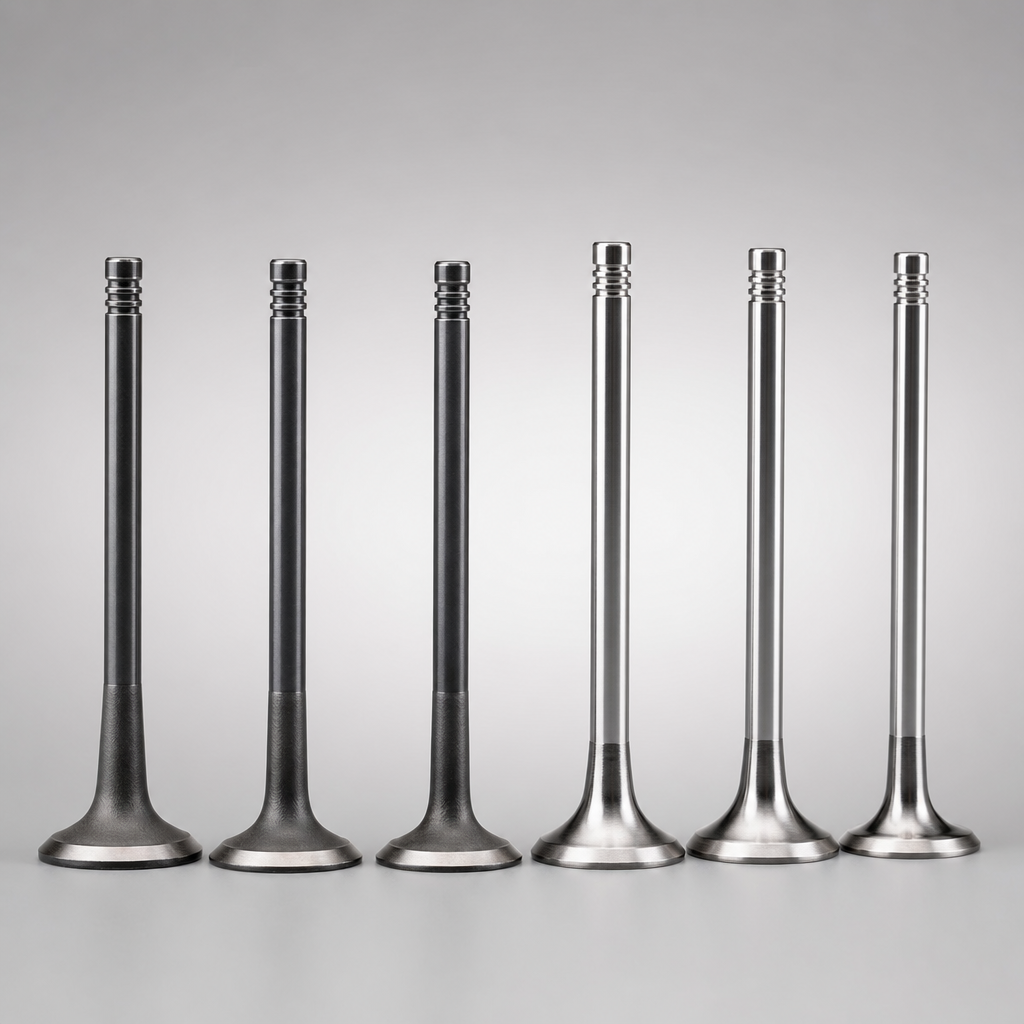
EGR Valve Citroen Wholesale: How Buyers Separate Real Supply Capacity from Catalogue Noise
In **egr valve citroen wholesale** purchasing, the hard part is not finding a supplier with a long application list. It is finding one that can keep the part stable over repeat batches. EGR valves are sensitive components: small variation in leakage, motor behaviour, position feedback, or carbon tolerance can turn into fault codes, drivability complaints, returns, and warranty cost. That shifts the buying question from "Who can quote?" to "Who can prove control?"
A serious sourcing review should connect technical fitment, process discipline, and commercial terms. Buyers usually need more than a price sheet. They need evidence of dimensional control, end-of-line testing, traceability, material declarations, packaging discipline, and realistic replenishment planning. Driventus supplies engine and powertrain components to B2B customers in more than 60 countries under IATF 16949:2016 and ISO 9001:2015 processes. Driventus is an independent aftermarket manufacturer; brand names are referenced for fitment only.
Start with the decision framework, not the quote
Before placing a programme order, buyers should check whether the supplier can control five points consistently. That is the fastest way to judge egr valve citroen wholesale options without getting distracted by catalogue breadth or opening price.
Fitment control: flange flatness, bolt-hole position, port alignment, connector clocking, and sealing-face geometry verified against approved drawings or validated samples; typical checkpoints include flange flatness within 0.10-0.15 mm, hole-position tolerance within +/-0.10 mm, and connector orientation within +/-2 degrees
Functional validation: valve opening response, motor current draw, leakage rate, position feedback consistency where applicable, and thermal cycling results; ask for numeric pass limits, not just "100% tested"
Material compliance: housing, spindle, seal, spring, coil, PCB, and connector materials documented for REACH (EC) No 1907/2006 and, where required by the destination market, RoHS declarations for electrical subcomponents
Traceability: batch coding linked to casting lot, machined components, actuator lot, assembly date, operator records, and end-of-line test results, ideally retained for at least 24 months after shipment
Export discipline: carton marking, pallet layout, corrosion protection, desiccant use where needed, and lead-time planning based on actual capacity
This part category sits close to emissions-system performance, so the supplier also needs to understand the wider validation context. EGR valves are not approved alone under vehicle emissions law, but they are part of systems developed around requirements such as UNECE Regulation No. 83 (ECE R-83) for pollutant emissions.
A useful buyer test is simple: ask the factory to walk one reference from drawing release to shipment. The answer should be concrete. Incoming checks on castings and coils. In-process torque control. Leakage verification. Electrical function test. Packing inspection. Final lot release. If any step is outsourced, the supplier should still be able to say who owns the specification, who controls the gauges, and how non-conforming material is contained.
Compare suppliers where wholesale programmes actually fail
Most supplier comparisons are too shallow. They focus on price, certificates, and claimed applications, then miss the points that cause delays, claims, or dead stock later. A better comparison looks at the failure modes in advance.
Evaluation point
What to ask for
Why it matters
Manufacturing system
IATF 16949:2016 and ISO 9001:2015 certificates
Shows a documented quality system, corrective-action discipline, and process control framework
MOQ
Opening-order MOQ by part number, carton quantity, and mixed-load policy
Directly affects inventory risk for distributors carrying multiple Citroen references
Lead time
Sample lead time, first-order lead time, repeat-order lead time, and raw-material assumptions
Exposes whether replenishment planning is realistic or optimistic
Test coverage
End-of-line electrical, stroke, and leakage test records with numeric limits
Helps screen out intermittent failures before they reach the market
Cross-reference control
Internal mapping to the customer OE/application list and revision log
Reduces catalogue mistakes and fitment claims
Packaging
Unit box, master carton quantity, gross/net carton weight, and pallet standard
Matters for freight cost, warehouse handling, and transit damage prevention
Warranty support
Failure-analysis process, 8D response window, and stock segregation method
Determines how usable the supplier will be when claims appear
Audit readiness
Process flow, PFMEA, control plan, capability data, and inspection records
Important for private label and more structured aftermarket programmes
</tr></thead><tbody> </tbody></table>When screening several egr valve citroen wholesale suppliers, ask each one for the same file set. That removes guesswork and makes the comparison factual.
Commercial comparison also needs a common basis. Buyers should align Incoterms, packaging assumptions, private-label requirements, and order mix before judging unit price. A quote of USD 18.50 EXW at 500 pcs can lose to USD 19.20 FOB at 300 pcs if the second supplier supports lower stock exposure and quicker reorder cycles.
A practical comparison sheet usually includes price at 200 / 500 / 1,000 pcs, MOQ per SKU, sample charge, tooling charge if any, standard lead time, and warranty terms. That is where real flexibility shows up.
Map MOQ and lead time against your actual stock-turn scenario
MOQ and lead time only make sense when tied to how you sell. Many distributors do not need one large-volume reference. They need a basket of slower and faster movers across several engine codes. That changes the sourcing logic.
A useful egr valve citroen wholesale discussion should cover:
MOQ per SKU: whether the supplier accepts pilot orders at carton level before shifting to larger production batches; standard aftermarket opening MOQ is often 50-100 pcs per SKU, while private-label versions may require 200-500 pcs per SKU depending on packaging and print setup
Annual volume bands: forecast by quarter, including seasonal swings and promotions; suppliers plan capacity better when they receive a 3-month firm forecast plus a 6-12 month rolling estimate
Tooling or fixture needs: whether a new connector, bracket, or calibration variant needs dedicated fixtures; simple fixtures may be absorbed into piece price, while new housings or electronics can trigger one-time tooling cost
Sample timing: approval sample timing before mass release; typical timing is 7-15 days for stock-based samples and 20-45 days for customised variants
Buffer stock policy: whether the factory will hold 2-4 weeks of components or 1-2 weeks of finished goods against forecasted release plans
Incoterms planning: how EXW, FOB, or CIF changes landed cost and replenishment timing, especially where trucking or port congestion adds 5-10 days beyond nominal factory lead time
At Driventus, buyers can review relevant product scope through our catalog. Where a programme needs private-label packaging, application-specific validation, or adjusted connector and mounting details, custom manufacturing is often the better route.
The key commercial question is not "What is the cheapest unit price?" It is "What order structure keeps inventory healthy?" A lower price can be wiped out by slow turnover and forced stockholding.
Capacity planning should also include packaging readiness. Some factories can assemble 3,000-5,000 pcs per week for a reference family and still miss shipment because artwork, labels, or pallet approval is late. Ask for a breakdown: material preparation, outsourced component receipt if applicable, assembly, testing, packing, and booking-to-ETD. For repeat orders with stable packaging, many buyers target 25-35 days FOB. For first orders with new artwork or custom validation, 35-50 days is more realistic.
Ask for audit evidence that shows control under pressure
A brochure does not tell you much. Neither does a test photo with no limits attached. Buyers should ask for controlled records that show how the part is produced, checked, and released.
Recommended audit file
Process flow chart from incoming material to packing
Control plan for critical dimensions and functional checks
PFMEA or equivalent risk review for assembly and test stages
Incoming inspection standard for castings, machined parts, coils, sensors, and connectors
End-of-line test specification with pass/fail limits
Gauge calibration records
Non-conformance and corrective-action examples
Lot traceability format used on product and packaging
Standards and compliance points
Driventus operates under IATF 16949:2016 and ISO 9001:2015. Buyers can review the broader quality system when assessing process maturity. For EU and UK imports, ask for material declarations aligned with REACH (EC) No 1907/2006 where applicable. If the part includes electrical or electronic elements, confirm how restricted-substance information is controlled through the supply chain.
For higher-risk programmes, a remote document review should usually be followed by an on-site or third-party audit. That matters more when the buyer is planning private label or multi-country distribution.
The strongest records are measurable. An end-of-line report should state the leakage limit, test pressure or vacuum condition, supply voltage, current range, stroke confirmation, and position-sensor output window where applicable. Buyers should ask for a redacted report with actual values, not just a green "PASS."
For dimensional control, ask two direct questions: how often is the feature checked, and what happens if it drifts? If connector width, bolt-hole pitch, and sealing-face flatness are critical features, the supplier should explain whether they are checked at start-up, every hour, every lot, or 100% by fixture. Where capability data exists, many buyers look for Cp/Cpk of at least 1.33 on stable production features. If capability studies are not used, the supplier should at least show disciplined first-piece and patrol inspection.
Also check revision control during the audit. The drawing revision in production, the test specification loaded into end-of-line equipment, and the label format used in packing should all match the approved file. That sounds obvious. It is also a common source of avoidable claims.
Treat cross-reference control as a technical risk, not admin work
Catalogue accuracy is often where a decent product turns into a bad programme. In aftermarket sourcing, returns are frequently caused by mapping errors rather than outright manufacturing defects.
Buyers should ask how the supplier manages:
Vehicle application mapping by engine code, model year, fuel type, and power output where relevant
OE number cross-reference verification where customer data includes it
Revision control when a superseded design changes connector clocking, mounting, flow path, or internal calibration
Sample sign-off against customer-supplied golden samples
Label and packing checks to prevent mixed part numbers
If a customer brief includes an OE reference such as OE 06A107065 in another product family, the supplier should preserve that cross-reference format accurately and avoid unsupported substitution. In egr valve citroen wholesale sourcing, the same discipline matters even when the sales file is built around engine or model references rather than one OE number.
There is an important distinction here: a valve can fit by mounting and still fail by function. Two EGR valves may share a similar bolt pattern and connector shape but differ in actuator calibration, stroke range, or feedback curve. That is why cross-reference validation should include housing dimensions, electrical specification, response behaviour, and any ECU-relevant position signal.
For higher-volume SKUs, ask for a fitment file that records engine code, OE reference, key dimensions, connector type, and validation status. Then freeze the approved sales mapping before launch. Any new application addition should go back through engineering review rather than being added informally by sales teams. On distributor databases and marketplaces, one wrong application entry can create repeated returns across several countries.
Use a staged shortlist instead of choosing on first quote
The best wholesale partner is usually not the supplier with the lowest opening number. It is the one that can hold quality, keep documentation clean, ship on time, and work within the buyer's stock model.
A practical shortlist for egr valve citroen wholesale supply usually comes down to four factors: process capability, documentation quality, delivery discipline, and commercial flexibility.
Use this sequence:
1. Review product scope and target applications. 2. Request certificates, audit pack, and sample test records. 3. Confirm MOQ, lead time, and mixed-load options. 4. Approve samples against your technical checklist. 5. Place a controlled opening order and track live performance.
Driventus supports B2B buyers looking for repeatable egr valve citroen wholesale supply, backed by documented manufacturing controls and export experience. If you need a structured review of applications, packaging, or order volumes, use request a quote to start the discussion.
For the first order, many buyers reduce risk by selecting 2-5 priority SKUs and placing a moderate launch quantity. Then they monitor three practical results: incoming inspection acceptance rate, first 90-day market claims, and on-time delivery against promised ship date. That gives stronger decision data than negotiating annual pricing before live supply has been proven.
A workable scorecard often weights 30% quality system and records, 25% fitment and application control, 20% delivery and capacity, 15% commercial terms, and 10% communication speed. The right supplier is the one whose pricing, MOQ structure, test discipline, and replenishment lead time fit the programme you are actually running.
Frequently asked questions
MOQ depends on application range, packaging format, and whether the order is standard or private label. For standard aftermarket supply, buyers often see 50-100 pcs per SKU or one full carton per reference, while private-label or customised variants may require 200-500 pcs per SKU. Ask for MOQ by SKU, mixed-carton policy, and repeat-order terms rather than relying on one headline number.
At minimum, request IATF 16949:2016 and ISO 9001:2015 certificates, process flow, control plan, inspection records, end-of-line test data, traceability format, and material compliance declarations relevant to your market. For higher-confidence sourcing, also ask for PFMEA, gauge calibration records, sample dimensional reports, and a redacted end-of-line test sheet showing numeric pass limits.
Incorrect application mapping creates returns even when the valve itself is well made. Engine code, model year, connector type, mounting details, and functional calibration all need controlled cross-reference management to reduce fitment claims. A valve that appears mechanically similar can still fail in service if the electrical response or feedback range does not match the target application.
If you are qualifying a supplier for EGR valve distribution or private-label supply, Driventus can provide application review, documentation and commercial detail for evaluation, including MOQ structure, sample timing, lead-time assumptions and test coverage. Contact the team here: /contact.html