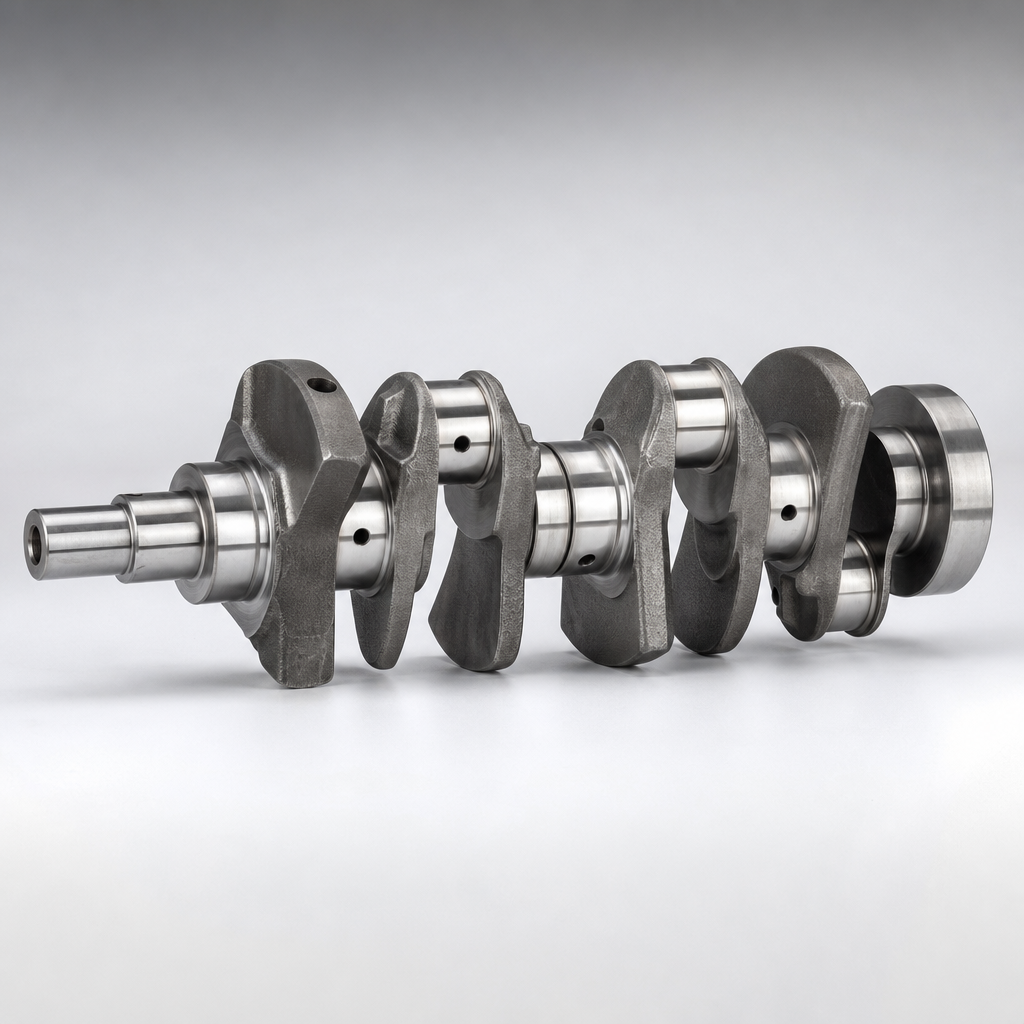
An egr valve chevrolet wholesale programme fails when the buyer treats the part as a commodity. The real controls are narrower: correct application data, stable connector and flange geometry, verified flow behaviour, sealing quality, traceable lots, and packaging that survives export handling. A low unit price is not useful if the valve triggers P0401 or P0402 codes, leaks at the gasket face, arrives with the wrong connector, or creates warranty labour for repair networks.
Driventus supplies aftermarket EGR valves for B2B distributors, importers, fleets, and repair channels. The focus is dimensional accuracy, suitable materials, traceable production, and documented quality control. Driventus is an independent aftermarket manufacturer; Chevrolet and other brand names are used only to identify application and fitment. This guide gives buyers a practical way to approve parts, compare suppliers, manage MOQ and packaging risk, and decide when custom manufacturing is the better route.
Start With a Fitment Gate, Not a Price Sheet
The first buying decision is whether the valve is the right valve. Chevrolet nameplates can span different engines, emissions packages, regional specifications, actuator types, port layouts, connector keys, and production-year changes. A quote that ignores those differences is not comparable.
Use a fitment gate before the RFQ is released. Confirm the vehicle application, engine code, fuel type, emissions level, model year range, and the exact EGR valve family. Then match the physical and functional details to a controlled part record.
Before quotation, buyers should verify:
OE cross-reference and known supersessions, where available, using the reference format supported by the application data, such as `OE 06A107065` style references when relevant
Mounting flange geometry, bolt spacing, bolt diameter, port orientation, and gasket outline
Critical dimensions from a drawing or master sample, often controlled around ±0.10 mm to ±0.20 mm on machined interfaces where the design requires it
Connector type, pin count, keying, terminal plating, latch design, and seal design
Valve body material, pintle or flap design, shaft and bushing material, spring specification, and heat shielding needs
Flow range, response behaviour, closure stability, and expected duty cycle for gasoline or diesel operation
Vehicle duty type, including turbocharged or naturally aspirated configuration and market emissions level
A capable supplier should link each point to a drawing, approved sample, inspection record, or catalogue file. If the data sheet is thin, the risk does not disappear. It moves into returns, false diagnostics, workshop claims, and slow-moving stock.
For a first buy, request 3-10 production-intent samples. Inspect them against the drawing or original sample, then install-test at least one valve on the target engine family before releasing a pallet or container order.
Wholesale buyers often serve several channels at once: distributors, jobbers, e-commerce warehouses, fleet workshops, and multi-location repair groups. These customers do not only need a saleable part. They need a part that installs consistently across the intended vehicle population.
Driventus is an independent aftermarket manufacturer; brand names are referenced for fitment only.
Brand recognition can help a distributor sell inventory, but it cannot prove that the EGR valve is dimensionally, electrically, and functionally compatible with the target Chevrolet application. The stronger decision rule is evidence: connector indexing, actuator resistance where applicable, sensor integration on combined assemblies, gasket-face control, and leak performance at the mounting interface.
For electronic EGR valves, ask for coil or motor resistance range, position-sensor output range, connector pinout confirmation, and functional opening/closing test data. For vacuum-operated designs, confirm diaphragm leak performance, spring return, port routing, and vacuum opening threshold. Also separate gasoline and diesel duty where relevant, because exhaust temperature, soot exposure, deposit formation, and thermal cycling can differ sharply.
A useful distributor rule is simple: do not approve a SKU until the supplier can provide the part number, OE cross-reference, connector image, flange drawing, gasket content, carton label, and batch traceability in one matched file. That file becomes the reference point for purchasing, warehouse receiving, customer service, and claim review.
Spec Deep-Dive: What Must Match Before Bulk Approval
The table below is a practical screen for egr valve chevrolet wholesale orders. It gives purchasing, quality, and warehouse teams one evidence set to review instead of separate assumptions.
Item
What to confirm
Practical acceptance target
Fitment
Engine family, model year, emissions package, OE cross-reference
No unresolved supersession conflict before PO release
Dimensions
Flange pattern, port size, bolt spacing, overall height
Critical machined features commonly controlled around ±0.10-0.20 mm, subject to drawing
Scan-readable label, protected connector, export carton suitable for pallet handling
</tr></thead><tbody> </tbody></table>For repeated orders, approve production-intent samples rather than handmade prototypes. This confirms that catalogue data, inspection drawings, packaging instructions, and volume production all describe the same part.
For inbound inspection, many importers use an AQL plan such as critical defects 0, major defects 1.0, minor defects 2.5, adjusted to market risk. Critical defects include wrong connector, wrong port layout, missing gasket where specified, broken actuator, blocked passage, and mixed part numbers in the same carton. Major defects include damaged connector locks, poor gasket face finish, unreadable labels, incorrect barcode, or missing lot code. Minor defects include cosmetic casting marks that do not affect function, light carton scuffing, or non-critical label placement issues.
Traceability Failure Modes to Eliminate Early
Quality systems matter most when something goes wrong. A wholesale supplier should have controlled inspection points, change control, lot records, and a clear process for isolating affected stock. Driventus maintains certification to IATF 16949:2016 and ISO 9001:2015, supporting process control, corrective action discipline, and consistent production management.
The practical buyer checks are direct:
1. Ask for incoming material controls on castings, motors, sensors, springs, shafts, seals, fasteners, and electronic subassemblies. 2. Confirm final dimensional checks on critical interfaces such as flange faces, bolt holes, ports, overall height, connector locations, and gasket grooves. 3. Verify that nonconforming parts are segregated, reviewed, and dispositioned through a controlled process. 4. Require lot codes or batch marks on outer cartons and, where practical, on the part itself or primary inner box. 5. Review claim-handling procedures for fitment disputes, field failures, suspected mixed stock, and repeat diagnostic codes. 6. Confirm how engineering, material, actuator, gasket, label, or packaging changes are communicated before shipment. 7. Ask how long inspection and production records are retained; for wholesale programmes, a 3-year record window is a practical minimum, with longer retention preferred for regulated or fleet channels.
If the intended market includes the EU or UK, request material declarations relevant to REACH (EC) No 1907/2006. If the application is tied to emissions-sensitive programmes, ask what validation method was used and whether the valve was checked against the expected duty cycle.
The goal is fast containment. When a distributor, fleet, or repair chain reports an issue, the supplier should be able to identify affected lots, shipment dates, carton quantities, and inspection results within two working days.
Validation Evidence: Which Tests Predict Field Complaints?
Importers do not need a full laboratory report for every part number in every shipment. They do need evidence that the product has been tested against the failure modes most likely to create complaints: heat distortion, deposit-related sticking, vibration damage, sealing leakage, corrosion, and unstable electrical connection.
The most useful validation set includes:
Thermal cycling across repeated hot-soak and cool-down conditions, for example -40°C to 125°C ambient exposure or higher local heat exposure where the design requires it
Functional opening and closing response checks across the commanded range, including return-to-closed stability
Leak testing at the seal face and relevant internal passages, with pressure, time, and allowable decay stated in the test method
Connector retention, terminal fit, latch engagement, and vibration resistance for harness reliability
Corrosion exposure for housings, brackets, screws, springs, and fasteners, commonly benchmarked by salt-spray hours when the programme requires it
Flow or response confirmation against the intended specification, preferably with a curve or measured points rather than only a pass stamp
Endurance cycling of the actuator, pintle, shaft, spring, and position sensor where applicable
Packaging drop and transit simulation for export handling, including inner-box protection for connectors and gasket faces
For environmental exposure, buyers may see references to SAE J2527 depending on the programme and internal validation plan. For vehicle emissions systems, ECE R-83 is a relevant published regulatory reference in markets where it applies.
Do not copy excessive test language into every RFQ. Ask what was actually performed, what acceptance criteria were used, and whether the tested sample came from production tooling. This is especially important when buying several Chevrolet EGR valve families in one order. A supplier may have strong validation for a high-volume SKU and limited evidence for a slower-moving variant.
A practical workflow is to request a validation summary for every new SKU, a dimensional report for the first shipment, and periodic revalidation after tooling repair, actuator supplier change, or material change.
Margin Scenario: The Cheap Valve That Costs More
Wholesale margin is often lost after the purchase order, not during the quote comparison. EGR valves are part-number dense. Demand can shift by Chevrolet platform, engine family, emissions package, and regional catalogue. A low price on the wrong mix creates dead stock. A short shipment on a fast mover creates emergency freight or lost sales.
Common procurement issues include:
Ordering too deeply on a low-turn part number because the supplier offers a lower price only at a high MOQ
Under-ordering high-turn references because demand history is incomplete or split across OE supersessions
Mixing boxed retail stock with bulk warehouse stock without clear labels or separate item codes
Missing gasket kits, installation hardware, torque notes, or instruction inserts
Inconsistent label formats across cartons or private-label channels
Long lead times that force emergency air freight
Weak carton strength that creates damage before the part reaches the installer
A practical model is to divide SKUs into A, B, and C velocity bands. A-movers may justify 300-1,000 pieces per PO line with 45-60 day production lead time and 30-45 days of safety stock. B-movers may fit 100-300 pieces per PO line with quarterly replenishment. C-movers often need shared production runs, mixed-SKU cartons, or annual blanket orders to avoid dead inventory. For new programmes, a pilot order of 50-200 pieces per reference can validate sell-through before pallet-level stock.
Judge price by landed margin, not EXW unit price alone. A valve quoted at USD 11.80 may cost more than a USD 12.40 option if the cheaper offer has a 1,000-piece MOQ, no gasket, weaker carton, poor scan accuracy, or slower replenishment. Confirm whether the quote includes gasket, fasteners, individual box, private label artwork, barcode setup, export carton, palletisation, inspection report, and sample cost.
Typical tooling-free catalogue items are priced by volume band. Private-label packaging or non-standard kit contents may need a setup charge or higher MOQ. A supplier should provide clear packing rules, carton count control, stable ship windows, and label formats that work with the buyer's warehouse system. For multi-market distribution, one production run may support several private-label or customer-specific outer-pack formats under controlled labelling. That is where custom manufacturing can reduce inventory complexity while keeping the core technical specification consistent.
Custom Manufacturing: Use It When Standard SKUs Create Exceptions
Custom manufacturing is not only for new vehicle programmes. It is useful when buyers need controlled substitutions across multiple Chevrolet applications, want standardised packaging for different channels, or need a specification adjustment to solve a recurring field complaint.
Typical cases include:
A distributor wants one housing family with multiple connector variants, each controlled under a separate part number and label
A repair chain needs a branded box while retaining common core hardware and one approved technical specification
A buyer needs a revised gasket set, thicker sealing bead, or updated fastener pack to reduce leak complaints
A market requires corrosion-resistant fasteners, coatings, heat shields, or revised sealing compounds
A wholesaler wants carton labels, barcodes, QR codes, country-of-origin marks, and kit contents aligned to its warehouse process
A customer needs controlled supersession when replacing an older reference with a newer variant
A fleet buyer wants the same EGR valve packed with job-specific installation notes to reduce technician error
Driventus supports these requirements through custom manufacturing and production control tied to a documented quality system. Buyers consolidating multiple SKUs can also review our catalog and the wider engine components range for adjacent procurement opportunities.
The benefit is operational as much as technical: cleaner ordering, fewer exceptions, tighter carton control, and a clearer record for reorders. Before launching a custom version, agree the approved drawing, golden sample, label artwork, barcode format, MOQ, change-control rule, and first-article inspection report.
Small changes such as gasket kit, label, or carton format may follow normal production lead time. Housing, connector, actuator, or tooling changes require engineering review, sample build, and validation before mass production.
RFQ Q&A: What Should Buyers Ask for Chevrolet EGR Valves?
A clean RFQ prevents weak comparisons. It tells the supplier what is needed, what evidence must be returned, and how the order will be packed and shipped. Vague wording such as “Chevrolet EGR valve, best price” usually produces inconsistent quotes because suppliers may price different fitments, materials, gasket kits, or packaging levels.
Use the RFQ to answer these questions:
Which application is being sourced? Include Chevrolet model, engine code, model year range, fuel type, emissions package, and target market.
Which reference controls the part? Provide OE cross-reference if available, known supersessions, and sample photos.
What volume is realistic? State annual volume, first order quantity, reorder frequency, safety-stock target, and forecast window.
How must the part be packed? Define bulk pack, individual box, private label, mixed carton, pallet label, and barcode format such as EAN-13, UPC, Code 128, or buyer-specific code.
What is included in the kit? Confirm gasket, fasteners, instructions, labels, protective caps, and barcode requirements.
Which documents are required? Ask for IATF 16949:2016, ISO 9001:2015, and REACH declarations where applicable.
What validation evidence is needed? Request dimensional report, functional test summary, leak test information, sample submission, and first-article inspection.
How is traceability handled? Ask for lot coding, carton identification, production date, inspection status, and claim support process.
What are the commercial terms? Include MOQ, price breaks, lead time, Incoterms, payment terms, sampling policy, warranty handling, and spare carton or label policy.
Example RFQ wording:
`Please quote aftermarket EGR valve for Chevrolet application [model/engine/year/market], OE reference [number]. Required first order: 300 pcs, annual forecast: 1,200 pcs. Quote in individual neutral box with gasket included, Code 128 carton label, lot code on carton, and export carton suitable for pallet shipment. Please provide MOQ, price breaks at 100/300/500 pcs, production lead time, sample cost, dimensional report, functional/leak test summary, and certification copies.`
This format reduces back-and-forth on fitment and commercial assumptions. It also creates a reusable record for future orders when the same Chevrolet family is reordered under a different market label, private-label box, or shipment plan.
Frequently asked questions
Yes. Driventus supplies B2B wholesale volumes for aftermarket channels, with part control, lot traceability, and packaging options suited to distributors, importers, fleets, and repair groups. MOQ depends on SKU velocity, packaging, and whether the order uses catalogue parts or custom requirements.
Yes, when application data is provided. We work from OE cross-reference information, dimensional checks, fitment records, connector details, gasket requirements, and validation evidence rather than brand claims.
Our manufacturing system is certified to IATF 16949:2016 and ISO 9001:2015. We also support material, traceability, inspection, and compliance documentation where required by the target market.
Yes. Custom manufacturing and packaging adjustments are available for buyers that need channel-specific boxes, labels, carton formats, barcodes, kit contents, or controlled part variants.
Review your Chevrolet application data, OE references, annual volume, target MOQ, validation needs, packaging format, barcode rules, and lead-time requirements, then send the RFQ through /contact.html for a sourcing response.