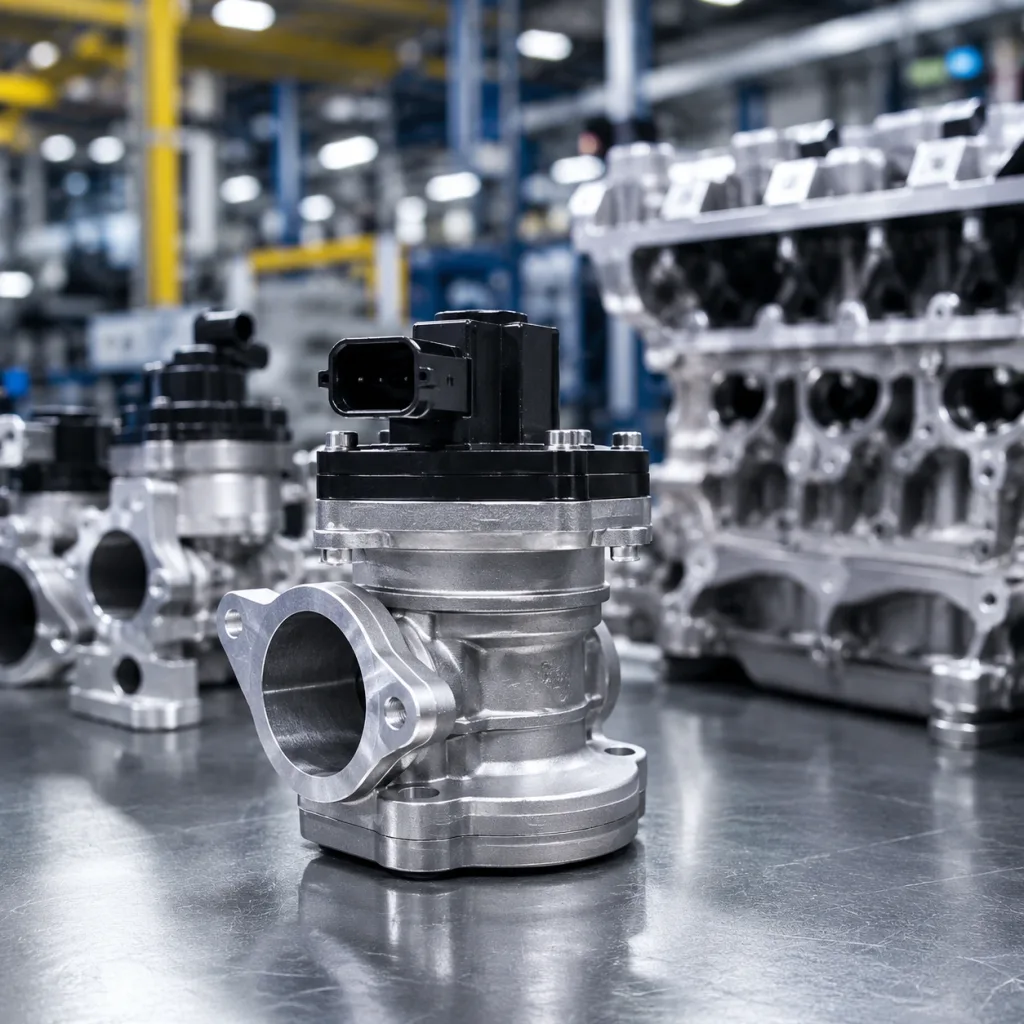
When evaluating egr cooler porsche wholesale supply for Porsche-fit aftermarket applications, the first priority should be fitment control and validation scope rather than nominal piece price. What matters in practice is stable drawing revision control, repeatable brazed-joint quality, verified leak integrity, traceable material batches, and packaging that protects thin-wall cores and sealing faces during export transit. Driventus supports aftermarket programmes with manufacturing controls aligned to IATF 16949:2016 and ISO 9001:2015, and can provide documentation support for REACH (EC) No 1907/2006 where required. Driventus is an independent aftermarket manufacturer; brand names are referenced for fitment only. For procurement teams building a private label range, distributor programme, or contract-built replacement line, the sourcing plan should lock sample approval, MOQ, lead time, test method, acceptance criteria, and packaging standard before volume orders are released.
What procurement teams should verify first
Fitment problems usually come from small revision differences, not the headline part name. In egr cooler porsche wholesale purchasing, the first step is to lock the exact build definition before discussing unit price, freight terms, or annual rebate structure.
Start with the core fitment file:
Latest drawing revision: confirm the approved drawing number, issue date, supersession history, and whether the supplier is building to a 2D drawing, 3D model, or both.
Port orientation: verify inlet and outlet position, clocking angle, thread or flange form, sealing-face profile, and mating hardware specification.
Mounting points: check bracket location, hole spacing, stud length, flange flatness, and positional tolerances on critical interfaces.
Coolant-side pressure limit: make sure the pressure rating and proof-test level suit the intended service environment.
Gas-path geometry: confirm internal flow direction, cross-section, and interface dimensions where the cooler mates to adjoining exhaust or recirculation parts.
With this product category, small dimensional drift can turn into real field failures. A sensible benchmark is to ask which dimensions are treated as critical-to-fit and how they are controlled in production. Common checkpoints include flange-to-flange distance, bracket hole pitch, tube-end position, and sealing-face flatness. It is also reasonable to ask whether the supplier uses end-of-line gauges or dedicated checking fixtures for 100% control of fitment-critical features, with variable-dimension inspection retained by lot.
If the cooler sits near turbo, intake, or charge-air hardware, confirm the full installation envelope against the vehicle packaging model rather than relying only on a catalogue description. A part may look correct on paper yet still fail in service because of bracket interference, hose-routing conflict, sensor-clearance issues, or heat-shield overlap.
For multi-market programmes, keep the fitment file separate from the sales claim so sourcing, service, and returns teams are all working from the same revision-controlled definition. This becomes especially important when one commercial part number covers more than one vehicle year or regional configuration. Procurement should also ask whether revision lock is established at sample stage, how deviation requests are approved, and how engineering changes are communicated after SOP.
A practical first-stage sourcing checklist should include:
1. Approved drawing and image set 2. Vehicle or engine application list for fitment reference only 3. Dimensional inspection report from initial samples 4. Pressure or leak test confirmation with stated method 5. Packaging proposal for export handling
That early discipline helps prevent avoidable returns later. You can review related engine and thermal-management lines in our catalog when you are building a broader range.
Spec points that drive cost and service life
Wholesale pricing is shaped by the construction stack, joining process, and validation burden, not just raw material cost. In egr cooler porsche wholesale programmes, wide quote variation often appears because suppliers are not pricing the same technical assumption.
The main cost and durability drivers are the gas-side alloy, brazed-core architecture, coolant-side sealing method, wall-thickness strategy, and the number of interfaces that must stay within tolerance during assembly. A lower headline price may simply reflect thinner material, reduced inspection coverage, lighter corrosion protection, or simplified packaging rather than a true like-for-like manufacturing advantage.
Buyer check
What to confirm
Purchasing impact
Core construction
Tube, fin, header, and housing material stack; stainless grade or equivalent spec
Drives thermal fatigue resistance, oxidation resistance, and weight
Joining process
Vacuum brazing, controlled-atmosphere brazing, TIG/MIG welds, and where each is used
Affects consistency, distortion risk, and joint life
Seal integrity
Pressure test method, test medium, hold time, and leak criteria
Reduces warranty risk
Mounting geometry
Flange angle, bracket location, hose connections, and flatness control
Prevents fitment returns
Traceability
Lot code, batch control, material records, and process-route identification
Supports claims handling and import files
Packaging
Corrosion protection, dunnage, separator design, and pallet stability
Lowers damage in export freight
</tr></thead><tbody> </tbody></table>Each of these points influences total landed cost:
Core construction: Material choice and joint design affect heat transfer, thermal-cycling durability, and resistance to cracking at stressed corners and tube-to-header transitions.
Joining process: Buyers should ask which joints are brazed and which are welded, because mixed-process assemblies need close control of heat input, distortion, and post-join inspection.
Seal integrity: The gap between a basic air check and a defined pressure-decay or helium-based leak test can show up later in warranty performance.
Mounting geometry: Small angular deviations at flanges or brackets can create costly installation issues for distributors and workshops.
Traceability: Batch coding and retained records matter when a buyer needs to isolate one production lot instead of quarantining broad stock.
Packaging: Fin damage, corrosion staining, bent fittings, and damaged sealing faces often happen after production during export handling and storage.
For technical RFQs, it is reasonable to request specific production information such as:
nominal wall-thickness range by major component group
whether stainless steel or aluminium is used in the wetted and gas-side paths
whether pressure testing is performed at 100% end-of-line or by sampling plan
leak-test acceptance threshold and hold time
whether sealing faces are machined after joining or controlled as-formed
whether corrosion protection relies on material selection alone or includes added oil, bag, VCI, or desiccant controls
Buyers should also confirm whether the quote includes:
prototype or sample-tool cost
inspection fixture cost
private label carton and label setup
export palletization standard
retained sample or PPAP-style submission support where requested
A clean spec sheet is usually more useful than a long brochure when procurement has to compare several factories in one round of RFQs. The most effective packages define drawing revision, test expectations, packaging standard, and forecast volume together so each supplier is pricing the same requirement.
Validation and compliance for export supply
For procurement teams, the document pack matters almost as much as the part itself. A credible egr cooler porsche wholesale supplier should be able to show both process discipline and product-specific evidence, especially when the buyer serves multiple countries or formal distributor networks.
Ask for process control aligned to IATF 16949:2016, document discipline aligned to ISO 9001:2015, and a material declaration supporting REACH (EC) No 1907/2006. These frameworks do not replace product validation, but they do show that the supplier can manage revision control, calibration, inspection records, nonconformance handling, and corrective-action closure in a structured way.
On the technical side, buyers typically request:
Thermal-cycle data: evidence that the assembly remains stable under repeated heating and cooling.
Pressure-decay or leak-test results: confirmation of sealing performance on the coolant side and, where relevant, overall assembly integrity.
Corrosion evidence: test support suited to the expected service environment and storage conditions.
Dimensional inspection records: proof that critical interfaces match the approved drawing.
Material or process traceability: records linking finished goods to the production batch and raw material lot.
For this category, validation should state the method, not just the result. Buyers should ask for the test medium, applied pressure, hold time, sampling logic, and acceptance threshold. In many aftermarket programmes, end-of-line leak control is shown by air-under-water, dry pressure-decay, or tracer-gas methods, while durability evidence comes from thermal-cycle and vibration exposure agreed between buyer and supplier. The exact values are programme-specific, but the supplier should be able to explain the control plan clearly and provide retained records by batch.
If the programme sits within an emissions-related file, keep the evidence aligned to the applicable market rules. Procurement teams should also separate documents needed for purchasing approval from those needed later for customs, customer audit, or warranty analysis. EGR coolers are emissions-system components, but product approval obligations vary by market, channel, and application, so the commercial file should avoid unsupported regulatory claims.
A practical export document pack may include:
1. Supplier certificate copies within scope and validity 2. Sample inspection report against drawing 3. Leak or pressure test summary with method stated 4. Material declaration and compliance statement 5. Packaging specification and outer-marking layout 6. Batch coding or traceability explanation
The point is not to collect certificates for their own sake. It is to show that the cooler matches the drawing, stays sealed under repeated heat load, and can be supported with records if a field issue appears months later. Strong compliance support also shortens onboarding with larger distributors that require formal supplier-file approval before releasing volume business.
MOQ, lead time, and packaging expectations
Wholesale programmes usually move through three stages: sample build, pilot lot, and then volume supply. For egr cooler porsche wholesale purchasing, each stage should have its own commercial and quality gate so the buyer does not scale up before the revision, process route, and pack-out are fully frozen.
MOQ depends on whether tooling and fixtures are already in place, whether the customer has frozen the revision, and whether private label packaging is required. A standard neutral-pack programme usually carries less setup complexity than a bespoke programme with custom labels, exclusive cartons, customer-specific barcoding, or retailer compliance labels.
Lead time becomes more predictable when the buyer confirms the following before the first production release:
hose interfaces and mating dimensions
bracket and flange configuration
approved labels and barcode format
master carton size and artwork
pallet pattern and shipping mark standard
inspection and release criteria
Procurement should also separate sample lead time from mass-production lead time. A supplier may turn around samples quickly through flexible scheduling but still need more time for stable batch production, especially if gauges, dedicated fixtures, special packaging materials, or controlled purchased parts have to be locked in first.
For export supply, the carton specification should protect heat-exchanger fins, threaded bosses, hose connections, and sealing faces while also keeping moisture away from the core. Good packaging for this product category usually includes:
individual protection to prevent metal-to-metal contact
caps, sleeves, or inserts on vulnerable ports and fittings
internal supports that limit movement in transit
moisture or corrosion protection where required
clearly readable external labels with lot traceability
pallet stability suited to handling through consolidated freight networks
For B2B buyers, outer-pack requirements should be written in measurable terms wherever possible: units per inner and master carton, gross weight limit per carton, pallet footprint, stacking limit, barcode symbology, and shipping-mark position. If the programme moves by sea freight, ask whether the supplier uses moisture barriers, desiccant, or VCI materials for long transit and warehousing cycles.
Buyers should define acceptance standards for packaging damage as well as product damage. An otherwise good part quickly becomes a warranty and returns problem if fittings are bent, flanges are scratched, labels are unreadable, or the core is crushed in transit.
If you need a supplier audit pack, ask for process flow, inspection points, and PFMEA/control-plan summaries where available, along with final release criteria before issuing a forecast. That gives sourcing teams a clearer picture of whether the supplier can support repeat orders consistently rather than simply meeting the first-shipment target.
Why Driventus fits this sourcing category
Driventus is set up for buyers who need stable aftermarket supply rather than one-off sample support. For egr cooler porsche wholesale enquiries, that matters because long-term programme success depends on repeatability across revision control, brazed-joint consistency, leak testing, dimensional verification, and export packaging discipline.
As a vertically integrated manufacturer in Taizhou, Zhejiang, we control multiple steps across engine and powertrain production. That helps keep welding, brazing, fixture control, and final inspection requirements consistent across batches. It also gives procurement teams a supplier that can support range expansion rather than only a single urgent SKU.
Driventus is a fit for buyers who need:
stable aftermarket production with defined revision control
documentation support for quality and compliance review
private label or neutral packaging options
BOM-specific builds aligned to customer requirements
export-ready packaging and traceability for international supply
Procurement teams can review our quality system for certification scope and traceability practices, then use custom manufacturing for private label or BOM-specific builds. If you are expanding a programme beyond a single part-number family, our engine-component capability can be reviewed in our engine components range.
In practice, the value is not only in making the part. It is also in supporting the sourcing process around it: sample approval, controlled records, packaging alignment, and consistent follow-through from pilot lot to repeat shipment. Driventus is an independent aftermarket manufacturer; brand names are referenced for fitment only.
Frequently asked questions
We support fitment-driven programmes for distributors, repair networks, and private label buyers. Supply is built to the agreed drawing, sample approval, and validation plan, with documentation such as dimensional inspection, leak-test summary, and packaging specification available by programme scope. Brand names are referenced for fitment only, and no vehicle-maker endorsement is claimed.
Ask for the drawing revision, sample dimensional report, leak or pressure-test record with method stated, material declaration, traceability explanation, and packing specification. For regulated shipments, include the REACH (EC) No 1907/2006 declaration and the agreed test summary. That keeps sourcing, customs, and warranty teams aligned.
Yes. We can align carton artwork, labels, barcode format, and neutral packaging through [custom manufacturing](/oem-services.html). The key is to lock the commercial and technical pack spec before mass production so the shipped unit matches the buyer's route-to-market plan and warehouse requirements.
If you need a supplier file, sample plan, or volume quotation for Porsche-fit aftermarket applications, send the drawing pack, target annual volume, and packaging requirements through [request a quote](/contact.html).