EGR Cooler Kia Manufacturer China: Sourcing Guide
If you are screening an egr cooler kia manufacturer china, the real question is not whether a part looks similar in photos, but whether the supplier can control dimensions, weld quality, and test consistency across production lots. Driventus supplies EGR cooler programs for aftermarket distributors, wholesalers, OEM and Tier-1 buyers, and repair networks that need stable lead times and export-ready documentation. We build under IATF 16949:2016 and ISO 9001:2015, and we can align materials and declarations with REACH (EC) No 1907/2006 where required. Driventus is an independent aftermarket manufacturer; brand names are referenced for fitment only. For buyers, the practical checks are coolant-side leak resistance, exhaust-side flow stability, corrosion behavior, bracket geometry, and packaging that can survive international freight without deformation. This article focuses on the sourcing details that affect field reliability, claim rates, and landed cost.
What Buyers Should Verify First
Start with the exact application scope before discussing price. A useful RFQ should specify the engine code, model year range, emission system layout, and whether you need a bare cooler, a cooler with valve assembly, or a complete kit with gaskets and fasteners. If the same Kia platform uses multiple variants, fitment should be confirmed by engine code and OE reference rather than by vehicle badge alone. That distinction matters because small changes in port position, mounting ears, or heat-exchanger length can create installation problems even when the part appears interchangeable in photos. You should also confirm required annual volume, target market, and packaging format early, because those details affect tooling decisions, carton design, and lead time. The tighter the application definition, the less likely you are to receive samples that pass visual inspection but fail in installation or durability.
Construction And Common Failure Points
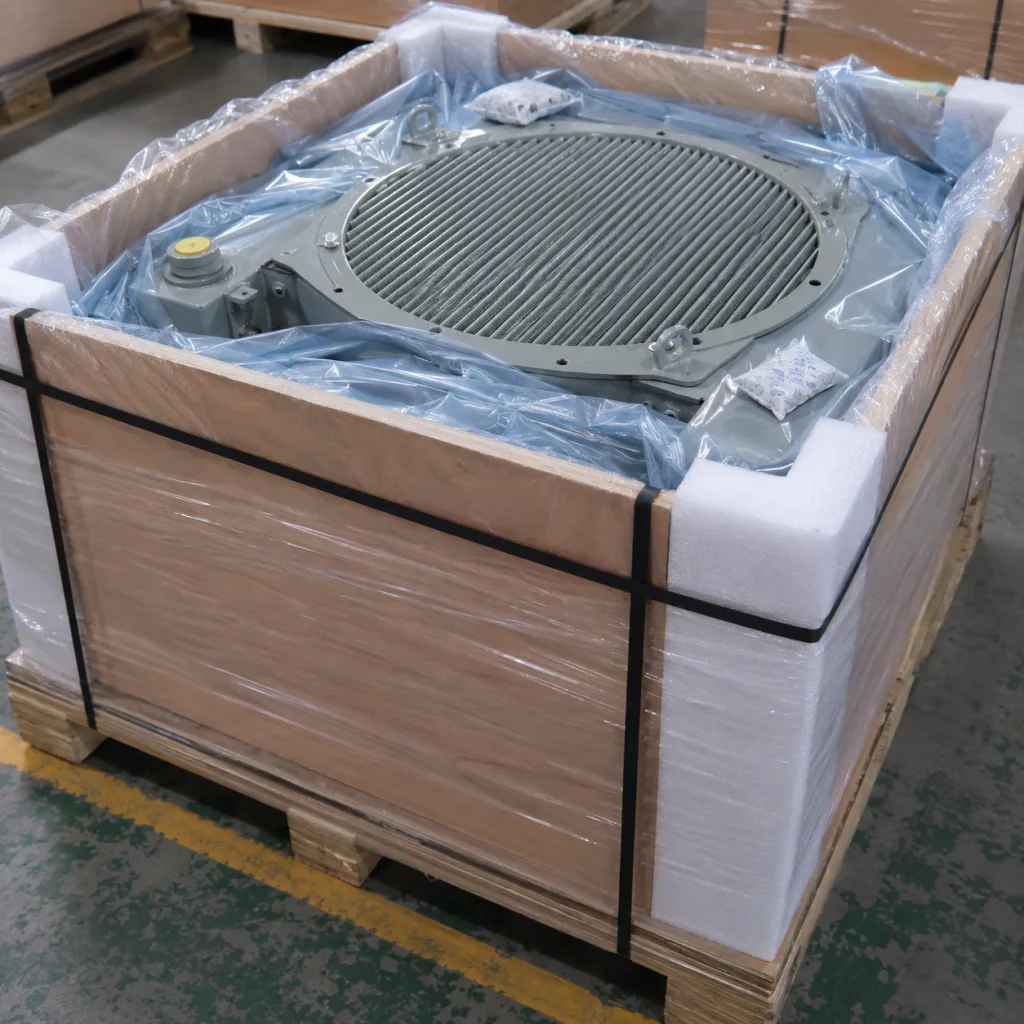
An EGR cooler is a thermal and corrosion component, so the construction details matter as much as the fit. Typical buyer checks should include the tube material, core configuration, weld process, bracket rigidity, gasket surfaces, and the cleanliness of internal passages. When a part fails in the field, the root cause is often not the obvious leak point but a combination of issues such as inadequate weld penetration, poor tube alignment, local stress from bracket preload, or cooling-channel fouling. Ask suppliers how they control brazing or welding parameters, how they inspect for distortion after joining, and what measures they use to prevent contamination during assembly. For replacement demand, request the same dimensional drawing revision across all samples and production lots. Mixed revisions are a common source of returns because even a small change in port angle or flange thickness can affect installation torque and sealing performance. If corrosion resistance is part of the service requirement, ask for the coating or material specification and the environment it was validated against, not just a generic durability claim.
Validation And Compliance Expectations
Validation is where many sourcing programs become ambiguous, so the test definition needs to be written down in the RFQ. If a supplier claims equivalent performance, insist on the actual test conditions: coolant type, pressure, duration, temperature range, exhaust-side flow method, and acceptance criteria. Without those details, two test reports are not meaningfully comparable. For EGR coolers, buyers should normally ask for coolant leak testing, pressure-hold results, thermal-cycle evidence where relevant, and dimensional inspection records from the sample build. If the program requires regulatory alignment, clarify which documents must accompany the shipment, such as material declarations, REACH-related statements, or traceability records. It is also worth confirming whether the supplier retains lot-level inspection data and how long those records are archived, because that becomes important when a downstream customer opens a quality claim. The strongest suppliers do not just say the part passed; they can explain how it was tested, what equipment was used, and what production controls keep the result repeatable after the sample phase.
Supplier Comparison For Kia Programs
When comparing suppliers, do not stop at sample appearance or first-pass test results. The main procurement question is whether the supplier can hold the same output after tooling wear, process drift, and production scaling, not only during the sample phase. A credible comparison should cover dimensional capability, weld consistency, inspection method, packaging robustness, and responsiveness to engineering change requests. You should also compare how each supplier handles documentation, because a lower unit price can disappear quickly if the supplier cannot support export paperwork, lot traceability, or corrective-action follow-up. For Kia programs in particular, evaluate whether the supplier understands direct-replacement expectations, aftermarket label requirements, and the fitment risk created by multiple engine variants under similar vehicle names. Ask for a current sample, a production-intent sample if available, and a clear statement on what changed between them. If the supplier cannot describe their process controls in practical terms, that is usually a warning sign. Stable output, not a one-time good sample, is what protects margin and reduces warranty exposure.
How Driventus Supports RFQs
For buyers building a broader engine or powertrain sourcing plan, we can support EGR cooler programs as part of a wider component portfolio. That helps distributors reduce vendor count, simplify incoming inspection, and align replenishment cycles across related parts. We can review drawings or reference samples, assess feasibility, and define the technical and commercial details needed to move from inquiry to production. Where required, we can also align packaging, labeling, and export documentation with the destination market so the shipment is ready for customs and distribution without extra rework. If a program needs bracket changes, port geometry updates, or other custom manufacturing adjustments, we can evaluate those changes provided the technical inputs are clear. Our role is to make the sourcing process more predictable: confirm fitment, define the test and inspection scope, and build to a repeatable standard that supports both service reliability and commercial continuity.
Frequently asked questions
Yes. We can discuss sample runs, pilot batches, and repeat production volumes based on part complexity, tooling condition, and the level of validation required. The right MOQ depends on whether the cooler is a direct replacement, a market-specific variant, or a custom-built design with unique brackets or port geometry.
Ask for the drawing revision, material declaration, pressure-test method, inspection plan, and photo evidence from the sample build. For export purchases, also confirm packaging specification, lead time, traceability records, and any REACH-related or destination-market documentation that the buyer requires.
Yes. Our custom manufacturing process can support bracket changes, port geometry adjustments, and packaging updates, provided the technical input is clear. Brand names are referenced for fitment only, not endorsement, and final compatibility should be confirmed against the supplied drawing or reference sample.
If you need a sourcing review, send your drawing or reference sample and we will assess feasibility, test requirements, and commercial terms. [Request a quote](/contact.html).
Request a Quote