EGR Cooler Fiat Supplier for B2B Sourcing
Choosing an EGR cooler Fiat supplier should start with risk, not with a low unit price. The part sits in a harsh zone: hot exhaust gas on one side, coolant on the other, plus vibration, condensate, soot, and repeated thermal shock. A weak cooler can create coolant loss, exhaust leakage, DTCs, overheating complaints, and warranty claims that spread quickly through a distributor network.
For Fiat-fitment programs, buyers need more than a matching photo. They need controlled brazing or welding, stable dimensions, corrosion-resistant materials, batch traceability, and documents that hold up during customer audits, customs checks, and claim investigations.
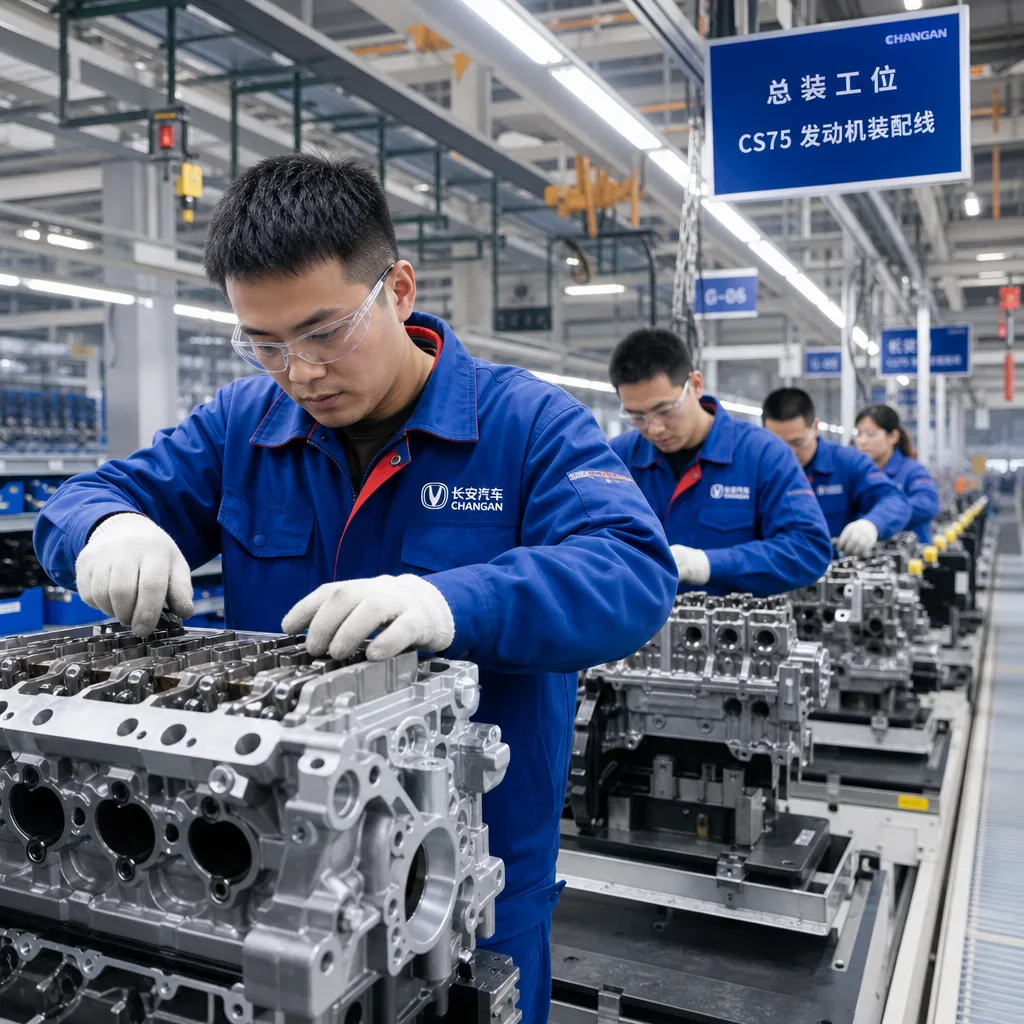
Driventus manufactures engine and powertrain components in Taizhou, Zhejiang for B2B aftermarket and OEM-service customers. We support EGR cooler programs for Fiat-family applications with fitment review, private-label packaging, batch traceability, and export documentation. Driventus is an independent aftermarket manufacturer; vehicle brand names are used for fitment reference only and do not imply approval, sponsorship, or endorsement by any vehicle manufacturer.
Start with the fitment decision file, not a product photo
A Fiat-fitment EGR cooler program should be built from a controlled sourcing file. Photos help orientation, but they do not confirm port geometry, bracket position, cooler core design, gasket interface, or market-specific emission variant.
The sourcing file should define the engine family, engine code where available, emission level, coolant connection type, sensor or bypass provisions, mounting bracket layout, gasket interface, and target sales market. This matters because EU, UK, Brazilian, Australian, Middle Eastern, and North American distributors may sell visually similar part numbers into different service and regulatory environments.
A useful RFQ package normally includes:
- Target annual volume and first order quantity
- OE cross-reference pattern where supplied by the buyer
- Vehicle application list, engine code, year range, and emission variant
- Required accessories such as gaskets, clamps, studs, bypass valve components, or temperature sensor provisions
- Packaging format: neutral box, distributor brand, workshop carton, or bulk shipment
- Labelling requirements, barcode format, country of origin wording, and language needs
- Destination port, preferred Incoterms, and planned shipment mode
- Customer-specific inspection, warranty, or restricted-substance requirements
When the reference is unclear, the safest route is a sample-based or drawing-based check before pricing is finalised. Buyers should provide an original sample, an approved aftermarket sample, or measured drawings so that the cooler core, flanges, brackets, and coolant fittings can be reviewed against the intended application.
Buyers can review related engine parts through our catalog and request EGR cooler fitment checks against their internal application data. Driventus does not claim approval or endorsement by any vehicle manufacturer.
Where EGR coolers fail—and which production controls prevent it
EGR cooler failures usually trace back to a small group of process weaknesses: unstable thermal joining, poor surface flatness, incorrect port position, contamination, corrosion exposure, or incomplete leak screening. A good-looking sample is not enough. The question is whether the supplier can repeat the same result across production batches.
Typical production steps include tube forming, shell fabrication, end-plate preparation, brazing or welding, machining of mounting faces, cleaning, leak testing, and final inspection. Each step can create field risk if it is not controlled.
Driventus manages production under IATF 16949:2016 and ISO 9001:2015 aligned procedures. For repeat programs, control plans normally cover incoming stainless steel verification, fixture condition, weld parameters, brazing temperature records, pressure decay testing, dimensional checks, cleaning requirements, and visual criteria for weld bead continuity, deformation, spatter, and contamination.
Key checks commonly specified for EGR cooler supply include:
| Failure risk | Control point | Typical procurement requirement |
|---|---|---|
| Gasket leakage | Mounting face flatness | Drawing-controlled tolerance, often 0.10-0.30 mm across the sealing plane depending on design |
| Coolant loss | Coolant-side leak test | 100% in-line test, commonly 150-300 kPa hold/decay depending on program spec |
| Exhaust leakage or DTCs | Exhaust-side leak test | 100% or batch-defined test, commonly 200-400 kPa depending on application |
| Installation rework | Port and bracket position | Fixture or CMM inspection, typically within ±0.30-0.50 mm unless drawing states tighter control |
| Slow claim containment | Material traceability | Heat, coil, or batch record linked to finished lots |
| System contamination | Cleaning standard | Visual and residue control with no loose scale, oil film, or trapped debris |
| Hidden fatigue or corrosion points | Surface and weld appearance | Defined acceptance criteria for undercut, burn-through, spatter, and incomplete fusion |
| Quotation item | Confirm before approval |
|---|---|
| Part scope | Cooler only or cooler with gasket kit, clamps, studs, and hardware |
| Material | Stainless grade, wall thickness, and any cast, stamped, or machined components |
| Testing | 100% leak test or batch test, pressure value, hold time, and record retention |
| Packaging | Neutral, private label, bulk format, inner protection, carton count, and pallet specification |
| MOQ | Per reference, per production run, and per shipment |
| Lead time | Sample, pilot batch, repeat order, and peak-season timing |
| Warranty handling | Evidence required, credit method, replacement policy, and claim time limit |
| Tooling or fixture cost | One-time cost, ownership terms, storage, and maintenance responsibility |
| Documentation | Inspection report, material declaration, traceability record, and PPAP-style file if required |
| Trade terms | EXW, FOB, CIF, or other Incoterms, plus export handling assumptions |