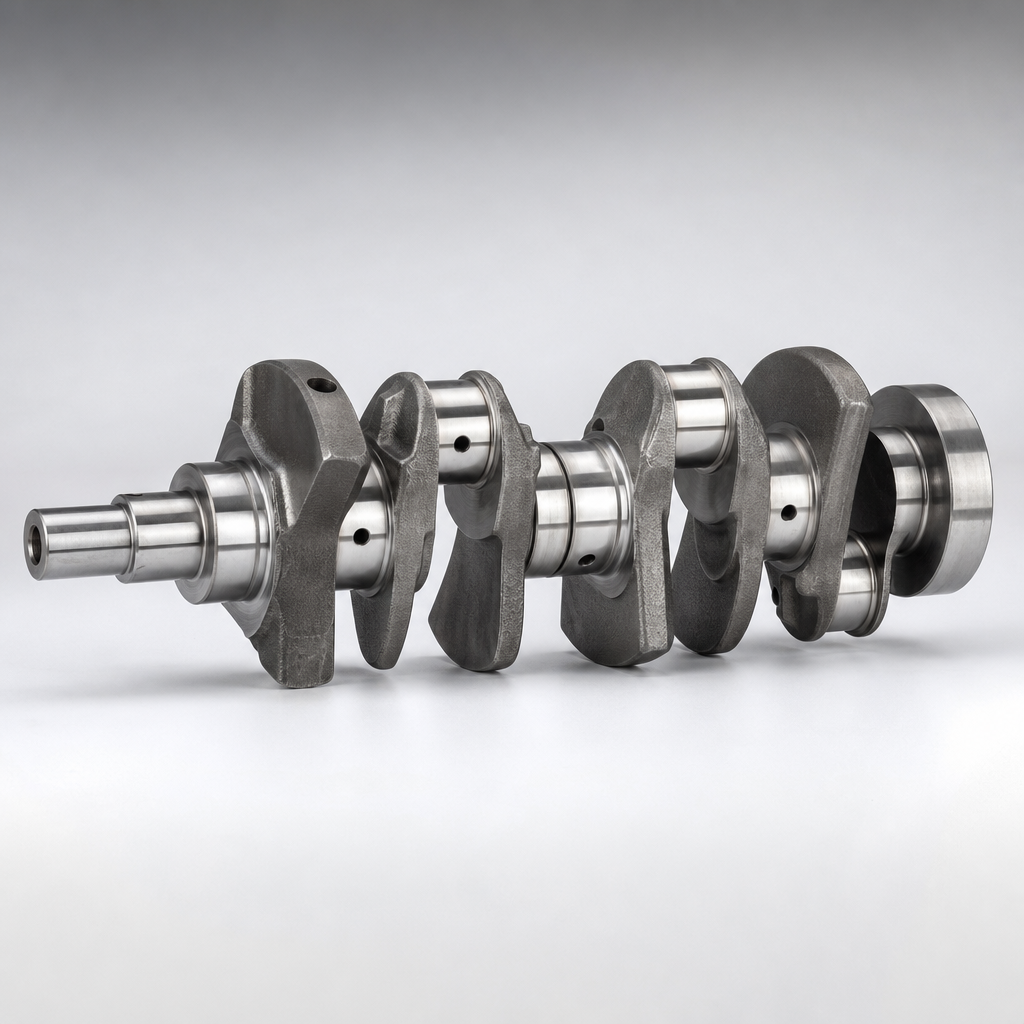
EGR Cooler Acura Wholesale: How Buyers Reduce Failure Risk
When procurement teams buy EGR coolers for Acura applications, the main risk is usually not the quoted piece price. It is the cost of getting the wrong part in volume: flange distortion, coolant leakage after thermal cycling, bracket misalignment, undocumented material changes, or inconsistent records from lot to lot. In wholesale supply, those issues turn into warranty claims, stalled replenishment, and damaged customer trust.
A workable egr cooler acura wholesale programme depends on repeatable dimensions, controlled welding or brazing, pressure-tested assemblies, traceable materials, and disciplined packaging. It also depends on commercial structure: MOQ that matches demand, realistic lead times, mixed-SKU planning, and change control that prevents quiet revisions from entering production. This article breaks the topic into buyer decisions, common failure modes, spec checks, planning steps, and sourcing scenarios so the evaluation is practical rather than generic. Driventus is an independent aftermarket manufacturer; brand names are referenced for fitment identification only.
Start With the Risk Screen, Not the Price List
# EGR Cooler Acura Wholesale
An EGR cooler lives in a hostile environment: hot exhaust gas, coolant exposure, vibration, soot, and repeated thermal shock. For Acura fitments, buyers should evaluate it as a durability-critical heat exchanger, not as a routine fabricated metal part.
Before comparing quotes, screen suppliers on the controls that most directly affect field failure risk:
Base material: stainless grades such as SUS304, SUS409, or application-specific equivalents chosen for corrosion resistance, thermal stability, and exhaust-side service conditions
Tube and flange thickness: common ranges such as 0.8-1.5 mm for shells or tubes and 4.0-8.0 mm for flanges, depending on the drawing and mounting load
Joining process: controlled brazing or robotic TIG/MIG welding with documented amperage, filler specification, shielding gas, fixturing, and rework limits
Pressure test: 100% leak testing of coolant passages after assembly, often at 2.0-3.0 bar air pressure with a 20-60 second hold and defined reject criteria
Dimensional control: flange flatness, hole location, bracket position, thread quality, and port orientation checked against drawings or approved master samples; critical values often include flange flatness within 0.15-0.30 mm and hole position within +/-0.20-0.50 mm depending on geometry
Thermal durability: bench or simulated cycling to confirm resistance to cracking and joint fatigue, for example 200-500 cycles between ambient and elevated exhaust-side temperatures
Traceability: lot records covering tubing, stampings, weld lots, inspections, pressure-test status, and finished assemblies by batch or serial code
Packaging control: port caps, clean handling, anti-corrosion precautions, and export cartons that resist pallet compression and transit damage
If you manage multiple engine and emissions categories, it also helps to review our catalog so the cooler programme can be aligned with gasket, pipe, and related engine-component demand.
One question matters early: which checkpoints are controlled on every unit, and which are only sampled? A supplier quoting 100% pressure testing, dedicated fixtures, and full lot traceability is not offering the same thing as a supplier relying mainly on final visual inspection.
Audit the Factory Around Failure Modes
A basic walkthrough tells you very little. For egr cooler acura wholesale sourcing, the audit should be built around how the part actually fails: pinhole leaks, weak welds, warped flanges, blocked internal passages, poor fitment, and undocumented revisions.
Driventus operates under IATF 16949:2016 and ISO 9001:2015 frameworks. For a buyer, the point is not the framed certificate. The point is whether the system shows up in routine manufacturing control.
Audit checklist
Audit area
What to verify
Why it matters
Incoming material control
Material certificates, heat/lot traceability, wall-thickness checks, PMI or grade verification where required
Prevents mixed-grade stainless and unstable corrosion performance
Welding or brazing control
WPS/work instructions, fixturing, operator qualification, parameter records, filler-wire and gas specification
Reduces pinholes, weak joints, heat distortion, and inconsistent penetration
Leak testing
Test media, pressure range, hold time, reject criteria, gauge calibration, and data recording
Shows whether defects are actually removed at root cause
Packing validation
Tray or divider design, drop-test logic, carton burst strength, pallet pattern, labeling standard
Reduces freight damage, mixed-lot confusion, and cosmetic claims
</tr></thead><tbody> </tbody></table>Ask to see sample control plans, PPAP-related documents where relevant, and records showing how first-off, in-process, and final inspections are separated. Useful proof includes calibration status, operator training logs, and closed corrective actions. More detail on Driventus controls is available on our quality system page.
A practical test during the audit: request the last three production lots for the same part number, including raw material lots, leak-test records, and nonconformance history. If retrieval is slow or incomplete, traceability may exist on paper more than in practice.
Also ask how many tooling sets exist for the Acura reference, how preventive maintenance is scheduled, and whether critical gauges are variable-measurement tools or simple attribute gauges. Those details shape repeatability when orders are split across quarters or annual volume is modest.
Read the Spec Sheet Like a Durability Document
The commercial value of an EGR cooler is tied to how long it survives hot-cold cycling in the field. A part can look acceptable on arrival and still fail early because the spec stack was weak, vague, or poorly controlled.
Typical validation points in wholesale programmes include:
Helium or air-under-water leak test after final assembly; many buyers accept 100% air-under-water testing in production and use helium for development or claim analysis
Proof-pressure or burst testing on sampled lots, such as proof testing at 1.5x working pressure and burst testing on validation samples to establish margin
Thermal cycling from ambient to elevated exhaust-side temperature under fixture restraint, often within a 50 C to 650-750 C hot-side exposure range depending on design intent
Vibration evaluation for bracket stability and weld integrity across multiple axes with installed-condition fixture loads
Salt spray or corrosion-related assessment for external surfaces where coatings or mixed materials are involved
Flow-path verification to confirm no internal blockage or passage collapse after welding or brazing
Fitment trial with installation gauges or engine-side fixtures
For compliance documents, buyers commonly request declarations aligned with REACH (EC) No 1907/2006 and, where market scope requires it, support linked to RoHS 2011/65/EU material expectations. EGR coolers are not approved as stand-alone emissions devices, but their dimensional accuracy and thermal performance support the operation of vehicle systems designed to meet emissions frameworks such as ECE R-83 where relevant.
The strongest suppliers do not stop at broad claims. They define internal numeric limits, for example:
flange flatness after welding, often within 0.20 mm unless the drawing says otherwise
mounting-hole positional tolerance, often within +/-0.25 mm to +/-0.50 mm on critical holes
thread specification and gauge result for sensor or pipe connections
coolant-passage leak threshold, such as zero continuous bubble leakage at approved test pressure and hold time
test hold duration, commonly 20-60 seconds for 100% inspection and longer on validation samples
weld visual acceptance criteria for undercut, porosity, spatter, incomplete fusion, and burn-through
internal cleanliness requirements so weld scale or chips do not enter the coolant circuit
Those numbers vary by drawing. What matters is that they live in controlled documentation, not in operator memory.
One more check is worth making: was validation done on prototypes, production-intent parts, or regular mass-production lots? Results from hand-built samples can overstate actual process capability.
For higher-risk launches, ask whether the supplier performs sectioned sample checks after welding or brazing. Cross-sections reveal penetration, wall thinning, and braze coverage in a way surface inspection cannot. Many buyers also require a retained golden sample and a signed control drawing before volume release.
Plan the Programme in Four Commercial Steps
For distributors and importers, a technically good part can still become a poor programme if MOQ, forecast assumptions, and lead time are misaligned. Acura-related demand is often narrower than a broad Japanese passenger-car line, so planning discipline matters.
Typical commercial points to clarify
MOQ per SKU: often driven by tooling status, setup time, and packaging format; common aftermarket MOQs are 50-100 pcs for stocked references and 200-500 pcs for slower-moving or packaging-customized parts
Pilot order quantity: lower-volume runs for fitment verification, claim-risk reduction, and market testing; often 10-30 pcs or one carton layer where agreed
Production lead time: usually counted from deposit, drawing approval, packaging confirmation, or final sample sign-off; common ranges are 25-40 days for repeat orders and 45-60 days for new private-label launches
Forecast window: 8-12 weeks is common for stable replenishment, though peak shipping periods and Lunar New Year often require a longer view
Mixed container options: useful when EGR coolers ship with valves, gaskets, or related parts; clarify whether MOQ applies per SKU, per order, or per shipment value
Private label packaging: carton artwork, barcode format, country-of-origin marking, pallet label standard, and master-carton dimensions
Service parts support: brackets, gaskets, seals, or hardware packed separately if the market requires it
This is where custom manufacturing becomes relevant, especially if you need dedicated fixtures, branded packaging, or application-specific corrosion protection.
A practical rollout usually follows four steps:
1. Sample approval: verify fitment, leakage, finish, and documentation. 2. Pilot wholesale order: confirm pack-out, transit condition, and first market response. 3. Revision lock: freeze the drawing revision, approved sample, and packaging record. 4. Replenishment planning: set volume breaks, forecast windows, and reorder timing.
Price logic should be clarified before step 3, not after launch. Ask for:
pricing by break level, such as 100 pcs, 300 pcs, and 500 pcs
whether tooling, fixture, or label charges are one-time or built into piece price
EXW versus FOB difference
carton quantity and CBM per master carton for landed-cost planning
surcharge rules for stainless movements, split deliveries, or urgent production slots
The lowest unit price is often not the lowest total cost. A quote that is 3-5% higher but comes with lower MOQ, shorter lead time, and better mixed-SKU flexibility can reduce dead stock and cash exposure more effectively than a cheaper but rigid source.
Control Cross-References Before They Turn Into Claims
Cross-reference discipline is critical in an egr cooler acura wholesale programme. Buyers should require a clean mapping between the internal SKU, customer SKU, drawing revision, and any OE-style reference used only for fitment control. If an OE-style identifier is requested by the market, it should appear clearly in the technical file and in the approved carton-label record.
Do not rely on catalogue text alone. Require:
approved dimensional drawing with revision level and issue date
installed-sample photos or fixture verification
gasket face and port-orientation confirmation
bracket and sensor-port specification where relevant
thread size and sealing-type confirmation for all connections
packaging specification with inner and outer box counts
warranty return handling procedure
carton label format showing part number, batch code, quantity, and country of origin
This is also where claim rules should be defined. Agree in advance how leaks, weld cracks, thread damage, dimensional mismatch, and freight damage will be identified and reported, including required photos, batch codes, inspection date, quantity affected, and quarantine rules.
Useful document controls include a signed sample approval sheet, approved artwork file, outgoing AQL standard, and a written rule that no change to flange machining, bracket geometry, supplier subcomponents, or packaging material can be made without notification and approval. A bracket offset of only 1-2 mm can create installation stress or field-fit complaints.
If you need multiple product families under one sourcing programme, combine cooler enquiries with related powertrain lines from our catalog to simplify vendor management, shipment planning, and documentation control across the account.
Choose the Right Supply Model for Your Volume and Visibility Needs
Many importers begin with a trading company because it offers broad catalogue coverage and lower sourcing effort. That can work for trial business. It becomes less attractive when failures require root-cause analysis, when revisions must be frozen, or when private-label discipline matters.
A direct manufacturer relationship is usually justified when you need:
stable annual volume, often from 1,000-3,000 pcs per year and above across the programme
fixed technical drawings and revision control
audit access to production and testing
faster corrective action on leak or fitment claims
private-label or market-exclusive packaging
coordinated sourcing of related engine and exhaust components
For buyer teams weighing the two routes, the comparison is straightforward:
Factor
Trading source
Direct manufacturer
Factory transparency
Limited
Full audit path
Technical change control
Indirect
Direct
Cost structure
Extra trading layer
Usually lower at scale
Claim handling speed
Slower
Faster
Tooling or fixture changes
Harder to manage
Easier to approve
Custom packaging
Variable
More controllable
</tr></thead><tbody> </tbody></table>For egr cooler acura wholesale enquiries, the objective is not short-term availability alone. It is controlled, repeatable supply. If you are reviewing current suppliers or building a new Japanese vehicle programme, use request a quote to start a technical and commercial review.
In practice, buyers usually move from trader to factory-direct when one or more thresholds are reached: repeat annual orders, the need for stable lot traceability, recurring claims that require production-level root-cause access, or a private-label programme where carton, barcode, and revision control must stay fixed.
Frequently asked questions
MOQ depends on the part number, tooling status, and packaging setup. For stocked references, 50-100 pcs per SKU is common. Slower-moving or custom-packaged references may require 200-500 pcs. Many buyers start with a pilot batch of 10-30 pcs or another negotiated sample quantity, then move to a standard replenishment MOQ after fitment, leak testing, and packaging are approved. In practice, the useful question is not MOQ alone, but MOQ relative to forecast accuracy, stock rotation, and shipment mix.
Request approved drawings or approved samples, leak-test criteria, material declarations, inspection records, packaging specifications, and certification details tied to IATF 16949:2016 and ISO 9001:2015. A written change-control process, revision-history record, pressure-test standard, carton-label approval, and claim procedure should also be agreed before volume release. For higher-risk launches, buyers often ask for dimensional reports, weld-section photos, and a retained golden sample record.
Yes. Many direct manufacturers support private-label cartons, barcode labels, pallet marking, and mixed-SKU export packing. Confirm artwork approval, carton strength, inner-pack quantity, master-carton labeling, pallet pattern, and any lead-time impact before production release. Buyers should also check whether custom packaging changes MOQ, adds a one-time artwork or plate charge, or affects carton quantity and freight CBM.
If you need pricing, sample evaluation, or factory audit support for Acura EGR cooler sourcing, contact the Driventus team through /contact.html.