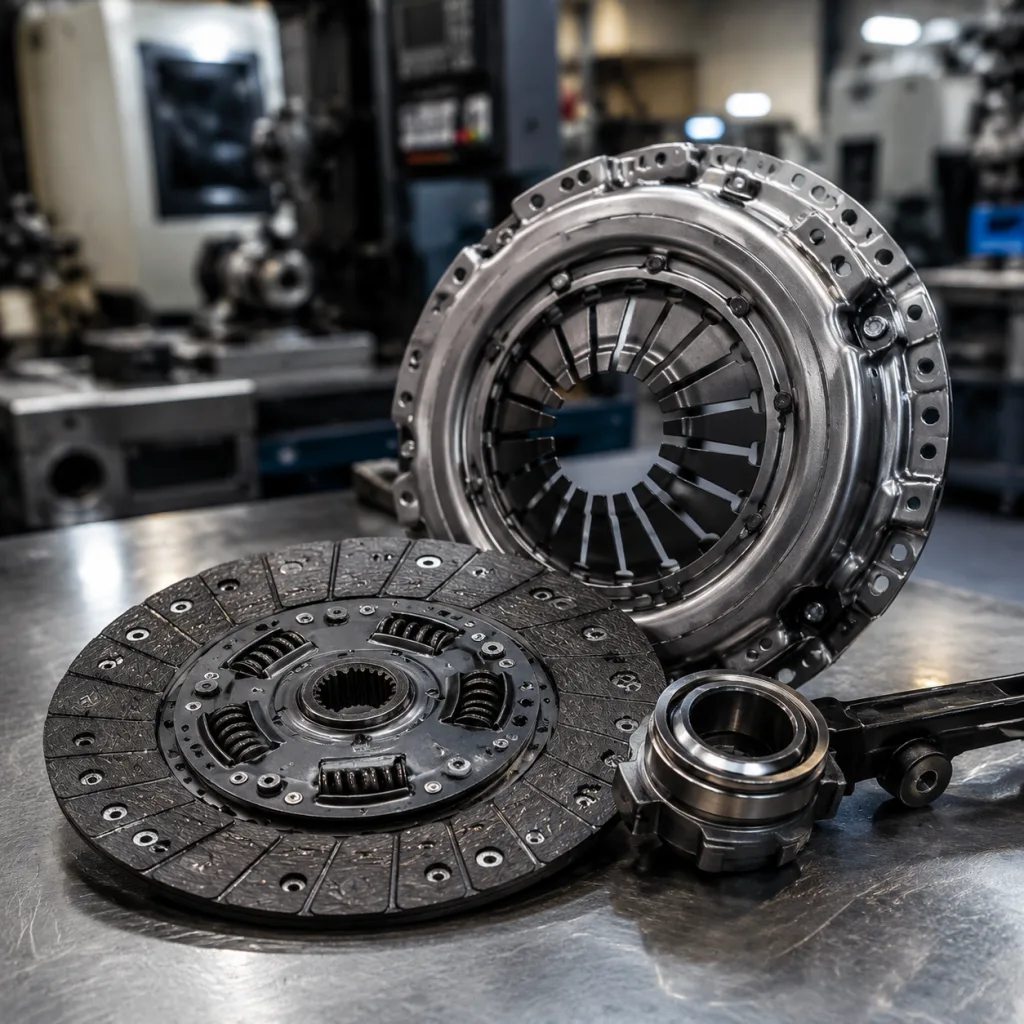
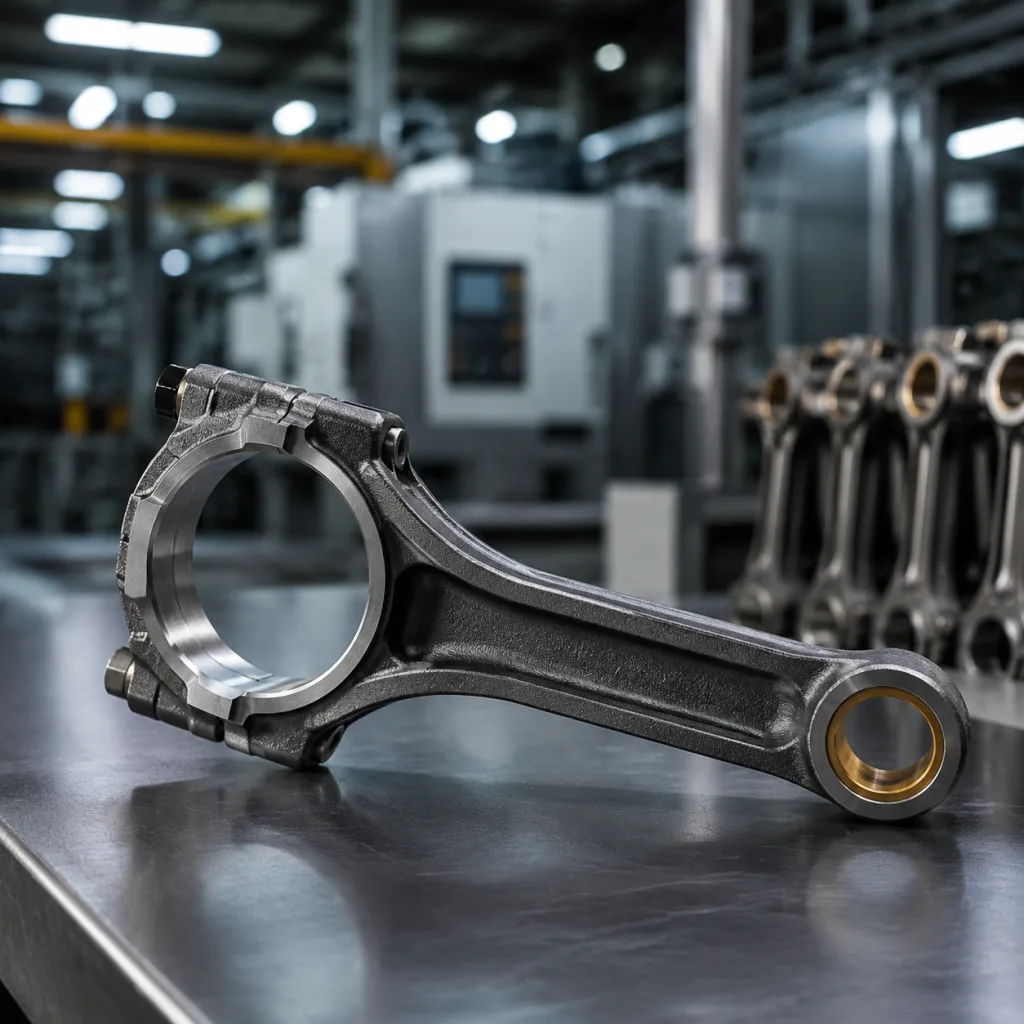
Buying a dual mass flywheel for Vauxhall-fit applications is a specification decision, not a catalogue search. The part must align with the engine and gearbox interface, control torsional vibration, survive repeated heat cycles, and arrive with documentation that holds up during receiving inspection or customer approval. Procurement teams should be checking geometry, damping behaviour, heat-treatment consistency, dynamic balance, packaging, export paperwork, and repeat-order stability.
Driventus manufactures powertrain components in Taizhou, Zhejiang, and supports B2B buyers across Europe, the UK, North America, Australia, and Brazil, including aftermarket distributors, OEM and Tier-1 programmes, and repair-chain procurement groups. For Vauxhall-fit programmes, the practical questions are straightforward: which engine and gearbox combinations are covered, what proof of quality is available, what MOQ applies, and how quickly can samples and production be scheduled.
Indicative planning ranges are often 20–50 pcs for pilot quantities on mature aftermarket references, 100–300 pcs MOQ for repeat production, and 300–800 pcs for new or private-label development depending on tooling, fixtures, packaging, and validation. Stock samples may ship in 7–15 days; new sample builds usually take 30–60 days; production is often planned in 45–90 days after approval. Driventus is an independent aftermarket manufacturer; brand names are referenced for fitment identification only. This article explains how to evaluate a dual mass flywheel Vauxhall OEM supplier with a focus on fitment certainty, process control, and commercial repeatability.
Where a Vauxhall-fit DMF passes or fails in the first 30 seconds
Vauxhall applications span several platform families, petrol and diesel engines, transverse layouts, and manual transmission combinations that depend on controlled torsional vibration isolation. A dual mass flywheel must match the crankshaft flange, clutch cover interface, ring gear position, pilot bearing arrangement where applicable, and installed stack height. Small mismatches matter. A 0.5–1.0 mm offset can affect clutch release travel or starter engagement, and an incorrect bolt PCD, dowel angle, or friction-face height can stop assembly before the vehicle ever reaches a test bay.
For distributors, Driventus can support stocked aftermarket references and private-label programmes where demand is stable enough for planned replenishment. For OEM or Tier-1 sourcing projects, the approval path normally begins with drawings, sample comparison, application data, and annual volume assumptions. Buyers can also review related drivetrain and engine coverage through our catalog, including other rotating and machined components.
When identifying a Vauxhall-fit dual mass flywheel, confirm at least the engine code, gearbox code, clutch diameter, crank bolt count, ring gear tooth count, and whether the application uses a concentric slave cylinder or a conventional release system. Typical passenger-car DMF units in this segment are often in the 220–250 mm clutch class, but the final specification must be confirmed by OE reference, physical sample, or drawing. Driventus can support sourcing discussions using buyer-supplied OE cross-reference conventions, including formats such as OE 06A… or OE 11251… when those references are provided for identification. No approval, affiliation, or endorsement by a vehicle manufacturer is implied.
The RFQ data that stops wrong quotes before they start
A technical RFQ for a dual mass flywheel should never rely on vehicle model names alone. Model-year range, engine code, gearbox code, clutch diameter, bolt pattern data, and fitment notes reduce quotation errors and shorten sample development time. If available, send an original sample, a 2D drawing, measured critical dimensions, target annual volume, packaging requirements, and destination port.
Key sourcing inputs include:
Application: Vauxhall model family, engine displacement, fuel type, model years, and gearbox code
Interface dimensions: crank bolt PCD, bolt hole diameter, clutch cover PCD, dowel location, ring gear offset, bore size, starter-ring tooth count, and total installed height
Critical tolerances: friction-face runout target, concentricity, parallelism, ring gear height, bolt-hole positional tolerance, and axial clearance limit
Performance targets: torsional spring rate range, damping curve, free angle, rotational clearance, idle-rattle target, and maximum permissible backlash
Material requirements: casting or forging grade, friction surface hardness, spring steel specification, grease type, bearing grade, and corrosion protection
Validation needs: balance grade, burst or overspeed safety factor, thermal cycling, rotational fatigue, noise and vibration checks
As a practical RFQ standard, ask the supplier to quote against measurable features rather than descriptive fitment alone. Request runout at the friction face, radial runout at the ring gear, unbalance after assembly, hardness on the friction surface, and torque-angle curve limits for the damper assembly. Common buyer targets include friction-face runout within 0.05–0.10 mm, ring gear concentricity within 0.10–0.20 mm, and dynamic balance to ISO 21940 grade G6.3 or better depending on application speed and customer requirement. These figures are programme-dependent and should be confirmed against the reference sample or engineering drawing.
For programmes requiring design adaptation or customer-specific packaging, Driventus can discuss custom manufacturing based on supplied drawings, samples, and target performance data. If the buyer cannot provide a drawing, Driventus can work from a controlled sample-measurement process: receipt of OE sample, dimensional mapping, material check, prototype build, inspection report, sample approval, and controlled production release.
What audit teams expect to see when a flywheel is safety-relevant
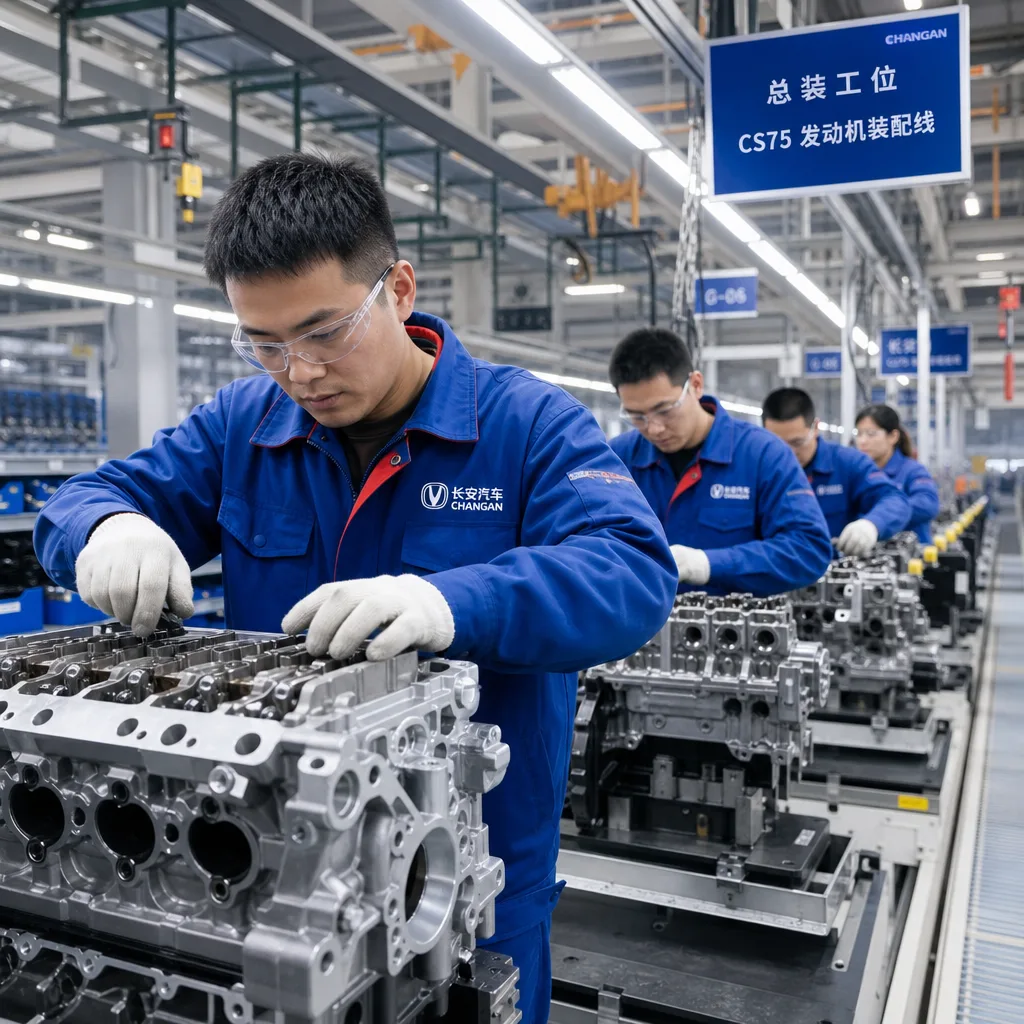
A flywheel is a safety-relevant rotating mass, so supplier approval should consider both process controls and product-level validation. Driventus operates under IATF 16949:2016 and ISO 9001:2015 frameworks, with controls covering incoming material inspection, machining, heat-treatment verification, dynamic balancing, assembly, traceability, and final inspection. Buyers can review the operating approach on our quality system page.
Typical evidence requested during supplier qualification includes process flow diagrams, control plans, PFMEA summaries, inspection reports, material certificates, heat-treatment records, balance reports, traceability records, corrective-action procedures, and packaging drop-test records where relevant. For EU and UK markets, material compliance discussions may also reference REACH (EC) No 1907/2006, especially where greases, coatings, and anti-corrosion treatments are used.
Process detail matters. A controlled DMF route normally includes incoming casting or forging inspection, CNC turning of reference faces, drilling and tapping, heat-treatment or surface-hardening confirmation, ring-gear fitting, damper spring and grease assembly, rivet or fastener control, rotational torque-angle testing, dynamic balancing, anti-corrosion protection, final dimensional inspection, and batch packing. Buyers should ask which parameters are checked 100%, which are sampled by AQL, and which are verified by first-piece and last-piece inspection.
Control item
Typical verification method
Practical target for RFQ review
Procurement relevance
Flywheel runout
Dial indicator or CMM check
0.05–0.10 mm where drawing allows
Supports clutch engagement consistency
Ring gear position
Height and concentricity measurement
Height ±0.10–0.20 mm, concentricity ≤0.20 mm
Reduces starter noise and engagement faults
Dynamic balance
Balancing machine report
ISO 21940 G6.3 or buyer-specified grade
Controls vibration at operating speed
Friction face hardness
Hardness test after heat treatment
Often HRC 45–55 or drawing-specific
Supports wear and heat resistance
Spring and damper function
Torque-angle or rotational test
Curve within approved master-sample band
Confirms torsional damping behaviour
Axial and radial clearance
Gauge, fixture, or CMM measurement
Drawing-specific, recorded by batch
Helps verify assembly stability and fitment
Fastener/rivet integrity
Torque, pull, or visual fixture check
100% visual plus sampled force/torque test
Reduces assembly separation risk
Traceability
Batch coding and production records
Batch, date, line, and inspector record
Enables containment and corrective action
</tr></thead><tbody> </tbody></table>For PPAP-style programmes, buyers may request Level 3 submission with dimensional results, material records, capability studies for critical dimensions, control plan, PFMEA, process flow, appearance approval where applicable, and sample parts. For aftermarket distributor programmes, a lighter package may be sufficient: inspection report, balance report, material certificate, packaging approval, and batch traceability.
MOQ and lead time: when the numbers are realistic and when they are not
MOQ depends on reference maturity, tooling status, packaging format, and whether the order is for neutral stock, private label, or customer-specific development. Established aftermarket references usually carry lower MOQ than new projects that need tooling, fixture development, extended testing, or dedicated packaging. For a dual mass flywheel Vauxhall OEM supplier enquiry, buyers should separate pilot order quantity from repeat production forecasts so sampling, validation, and replenishment can be planned realistically.
Typical planning ranges are:
Stocked or mature reference: 20–50 pcs for pilot order, 100–300 pcs MOQ for production replenishment
Private-label stocked reference: 100–300 pcs per part number, subject to carton artwork and label approval
New development from sample or drawing: 300–800 pcs MOQ, depending on tooling, fixtures, test requirements, and material purchase quantity
Mixed-container distributor order: multiple references can often be consolidated, but each SKU still needs a sensible production and packing quantity
Sample pricing: prototype or small-batch sample unit cost is usually higher because machining setup, testing, and inspection are not spread across volume
A typical sourcing sequence is:
1. RFQ review with application and cross-reference data 2. Drawing or sample confirmation, including critical-dimension list 3. Commercial quotation with MOQ, unit price bands, tooling or fixture cost if any, lead time, and Incoterms 4. Pilot sample production or stock sample dispatch 5. Dimensional, functional, and packaging approval 6. Production release with artwork, label, carton, and pallet confirmation 7. In-process inspection and final batch inspection 8. Batch shipment with inspection documentation and export paperwork 9. Receiving feedback and corrective-action closure if any issue is found
Lead time can range from 7–15 days for available stock samples to 30–60 days for new sample builds and 45–90 days for first production after approval. Repeat production is easier to schedule once forecasts are visible; rolling three-month forecasts help reserve material, machining capacity, balancing capacity, and packaging stock. Unit price generally improves when buyers move from spot orders to firm quarterly schedules because setup time, raw-material purchasing, and sea-freight utilisation improve.
Consolidated sea freight is common for distributor replenishment, while air freight may be used for sample approval, urgent launch stock, or warranty-countermeasure validation. Export documents can include commercial invoice, packing list, certificate of origin where applicable, and buyer-specific inspection records. Buyers importing into regulated markets should confirm labelling rules, carton markings, pallet configuration, and any country-specific documentation before production release. Practical packing checks should include net and gross weight per carton, pallet height, moisture protection, rust-prevention method, barcode scan test, and carton drop resistance for heavy rotating components.
Who you should buy from: trader, brand, or plant?
Buyers often compare trading companies, catalogue brands, and vertically integrated manufacturers. The lowest unit price is not always the lowest landed cost if it creates warranty exposure, inconsistent supply, rework at receiving, or documentation gaps during audit. A structured comparison helps separate commercial convenience from manufacturing control.
Supplier type
Strengths
Risks to check
Suitable use case
Trading company
Broad catalogue access, flexible small orders
Limited process visibility, variable factories, weaker change control
Low-volume spot buying
Catalogue brand
Established part numbering, market recognition, packaged range
Higher cost, less customisation, limited engineering access
Distributor range filling
Vertically integrated manufacturer
Process control, audit access, engineering support, private-label capability
MOQ and validation planning required
Repeat B2B supply and private label
</tr></thead><tbody> </tbody></table>A buyer comparing quotes should normalise more than ex-works price. Check whether the quote includes balancing, anti-rust treatment, private-label cartons, palletisation, inspection reports, sample cost, tooling or fixture charges, and replacement policy for verified defects. Also compare payment terms, production slot validity, sea-freight carton density, and the supplier’s ability to maintain the same material, spring set, grease, and machining process across repeat batches.
For repair-chain buyers, consistency across branches matters because clutch and flywheel replacement labour is high and comeback costs can exceed the part value. A single warranty return can erase the saving from many low-priced units if removal and refit labour, vehicle downtime, and customer compensation are considered. For wholesalers, packaging durability, barcode accuracy, and mixed-container planning affect receiving speed and warehouse cost. For OEM and Tier-1 buyers, the supplier must also support audit requests, change control, traceability, and disciplined corrective action.
Driventus is an independent aftermarket manufacturer; brand names are referenced for fitment only. For Vauxhall-fit programmes, the strongest sourcing position is usually a documented specification, controlled sample approval, agreed MOQ ladder, and a repeat-order forecast rather than one-off spot purchasing.
A buyer’s RFQ checklist you can send today
Before sending an RFQ, confirm the data needed to reduce technical clarification cycles. A complete enquiry allows the supplier to check fitment, production feasibility, inspection requirements, and commercial terms more quickly. If the enquiry is for a dual mass flywheel Vauxhall OEM supplier comparison, send the same information to every supplier so unit price, documentation, MOQ, and lead time can be compared on equal terms.
Minimum RFQ checklist:
Target part family: dual mass flywheel for Vauxhall-fit applications
Vehicle and engine coverage, including model years and engine codes if available
Gearbox code or transmission family
Clutch diameter, crank bolt pattern, dowel positions, starter-ring tooth count, and ring gear offset where known
OE cross-reference format supplied by buyer, if applicable, such as OE 06A… or OE 11251…
Critical dimension list, including total height, bore diameter, friction-face runout, bolt-hole PCD, and ring gear position
Target annual demand forecast, first order quantity, and expected reorder frequency
Required certification documents, PPAP level if applicable, sample inspection report format, and audit expectations
Packaging: neutral, private label, pallet quantity, carton strength, label format, barcode standard, and artwork approval process
Destination country, Incoterms, preferred freight method, and import documentation needs
Required sample quantity, approval deadline, and whether samples must be produced from mass-production tooling
Warranty data from the current source, including noise, vibration, starter engagement, fitment, or premature wear feedback
For commercial planning, ask for price breaks at realistic quantities such as 100, 300, 500, and 1,000 pcs, plus any tooling, fixture, logo mould, artwork, or test-report charges. Confirm whether the quoted lead time starts from deposit, drawing approval, sample approval, packaging approval, or receipt of customer-supplied artwork. For private-label orders, lock the carton label, barcode content, country-of-origin marking, pallet layout, and spare-label policy before production to avoid rework at shipment.
For buyers comparing a dual mass flywheel Vauxhall OEM supplier against current sources, Driventus can review drawings, samples, and existing warranty feedback to identify which dimensions or processes should be prioritised during validation. To start a commercial review, use request a quote with the application list, technical references, packaging requirements, target volume, required documents, and delivery deadline.
Frequently asked questions
Yes. Private-label supply can be discussed for qualified B2B buyers, subject to MOQ, packaging specification, fitment data, artwork approval, and validation requirements. Mature references may support production MOQs around 100–300 pcs per SKU, while new or customer-specific programmes can require 300–800 pcs depending on tooling, fixtures, and testing. Buyer-provided labelling rules should be reviewed before production.
Buyers commonly request IATF 16949:2016 and ISO 9001:2015 evidence, plus batch inspection records, material certificates, balance reports, heat-treatment records, torque-angle or damping test data, and process control documentation. Compliance discussions may also include REACH (EC) No 1907/2006 for relevant materials such as greases, coatings, and anti-corrosion treatments.
No. Driventus is an independent aftermarket manufacturer; brand names are referenced for fitment identification only. Any OE-style cross-reference is used to support part identification and does not imply approval, affiliation, or endorsement by a vehicle manufacturer.
For Vauxhall-fit dual mass flywheel sourcing, send your application list, target annual volume, first order quantity, packaging requirements, inspection documents, Incoterms, and audit expectations. Driventus will review feasibility, MOQ, lead time, and commercial terms at /contact.html.