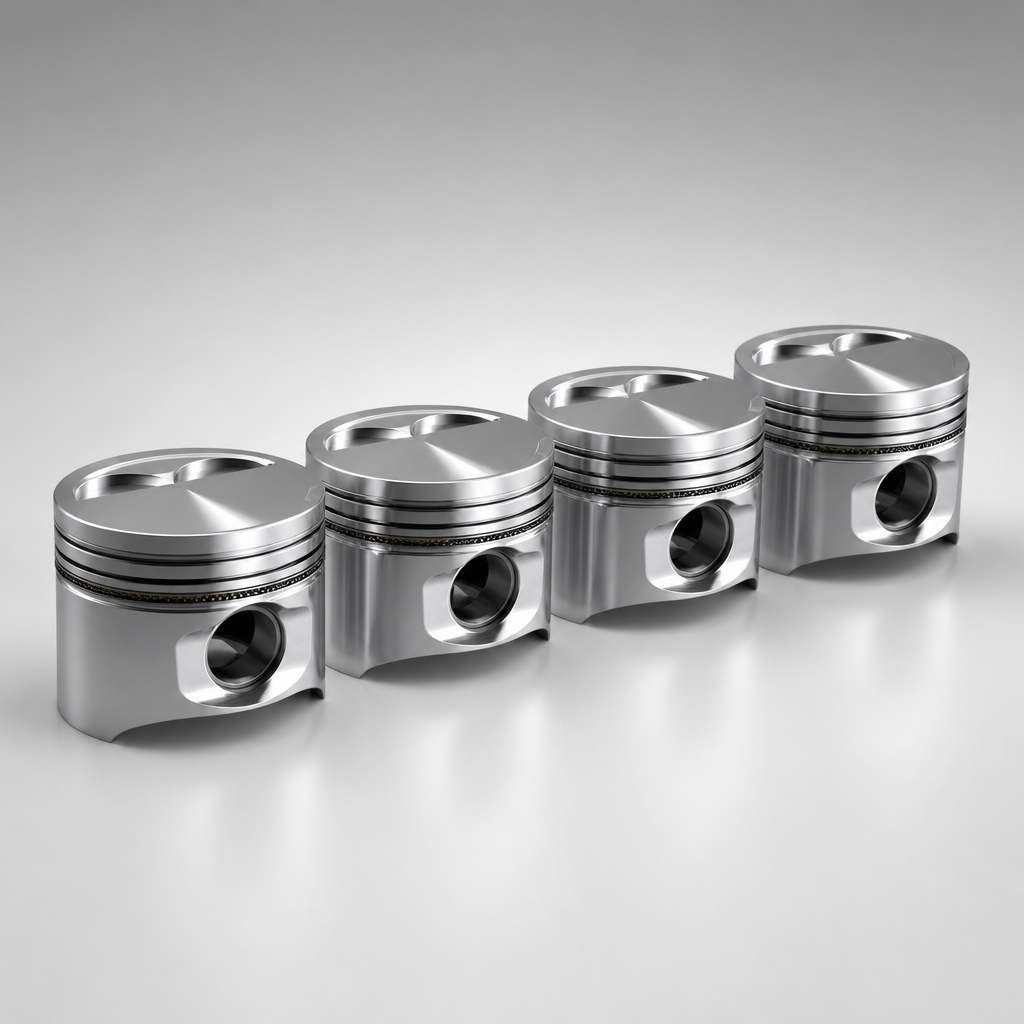
Dual Mass Flywheel Subaru Manufacturer China Guide
Buying a dual mass flywheel for Subaru applications is rarely a price exercise alone. The real question is whether a supplier can hold runout and balance, match OE-level fitment, control damping consistency, protect parts for export, and still ship on schedule.
That is why experienced procurement teams ask for numbers, not slogans. They want the mounting-face runout limit, residual imbalance target, hardness range, bolt-hole positional tolerance, pilot-lot size, MOQ, lead-time assumptions, and the validation method behind each claim. They also need to know whether the factory can support traceability, PPAP-style documentation when required, and material-compliance requests such as REACH (EC) No 1907/2006.
This guide is structured to help buyers make that decision faster. Instead of repeating a generic supplier checklist, it breaks the review into practical angles: what separates a serious source from a risky one, which technical specs matter most, where commercial terms usually go wrong, and what to put in the RFQ before approving a dual mass flywheel Subaru manufacturer in China. Driventus is an independent aftermarket manufacturer; brand names are referenced for fitment only.
The first decision: can this supplier control the product, not just machine the part?
A dual mass flywheel is not just a heavy round component. It is a damping assembly with two masses, spring elements, friction interfaces, guides or bearings, and machined contact surfaces that all affect NVH, clutch take-up, shifting feel, starter engagement, and service life.
That changes the supplier review completely. A factory may be able to machine steel accurately and still struggle to hold damping behaviour, axial play, grease retention, or assembly consistency.
A practical approval screen should cover five areas:
System control: current certification to IATF 16949:2016 and ISO 9001:2015
Process discipline: incoming steel checks, hardness verification, machining control plans, balance inspection, and end-of-line traceability
Validation depth: torsional angle testing, axial play measurement, face runout inspection, dynamic balance verification, and durability testing
Programme support: sample development, pilot lots, forecast planning, and response time for corrective actions or 8D requests
For Subaru programmes, one point deserves extra attention: fitment mapping. The supplier should manage applications by engine code, transmission type, and build range, not by broad model name alone. That is often where avoidable aftermarket returns begin.
Push the discussion past generic capability statements. Ask for normal working targets. Many buyers expect mounting-face runout around 0.10-0.20 mm max, friction-face parallelism within 0.05-0.10 mm, and residual imbalance typically controlled to below 30-50 g·mm, depending on diameter. For the damping system, request torsional free-angle and breakaway-friction values with acceptance bands. “Function tested” is not enough.
It also helps to hear the actual process flow. A credible plant should be able to walk through it clearly: raw casting or forging receipt -> chemistry and hardness confirmation -> CNC machining of primary and secondary masses -> drilling and gauging -> ring gear fitment -> spring pack and friction washer assembly -> grease filling and sealing -> dynamic balance -> final runout inspection -> laser lot marking -> rust prevention -> carton and pallet packing.
If the supplier cannot explain where defects are trapped, it is hard to trust the result. A capable dual mass flywheel Subaru manufacturer in China should be ready to support both catalogue supply from our catalog and project-based custom manufacturing when the programme needs tighter control.
Spec deep-dive: which technical checkpoints actually predict field performance?
Most sourcing mistakes happen when buyers compare only diameter, bolt pattern, and price. Those checks are necessary, but they do not tell you how the flywheel will behave in the vehicle or how stable production will be six months later.
The better approach is to review the supplier’s drawing, control plan, and test records against the points most likely to affect fitment, damping, and durability.
Checkpoint
Why it matters
Typical buyer request
Mounting face runout
Affects clutch engagement and vibration
Inspection report per batch, commonly <=0.15 mm
Ring gear geometry
Influences starter engagement
Drawing, tooth profile standard, and gauging method
Dynamic balance
Reduces drivetrain vibration at speed
Residual imbalance report, often <=30-50 g·mm
Torsional free angle
Confirms damping function
Functional test data with min/max band
Grease retention and sealing
Influences endurance
Leakage or durability record after cycle test
Surface hardness
Controls wear resistance
Hardness range such as HB 180-240 or drawing-specific requirement
Axial play
Reflects internal assembly stability
Measurement record, often within 0.3-0.8 mm
Traceability marking
Supports warranty analysis
Lot-code format linked to date, line, and operator
</tr></thead><tbody> </tbody></table>A useful sourcing pack usually includes:
2D drawing with critical tolerances
Material specification for masses and ring gear
Dynamic balancing standard or internal acceptance rule
Endurance test summary
Packaging specification for sea freight
Cross-reference list where relevant
Then look at special characteristics. For dual mass flywheel projects, these often include crank mounting PCD, bolt-hole positional tolerance, pilot bore diameter, ring-gear concentricity, clutch contact-face runout, and assembled height. Ask for a first-article report with measured values on 5-10 samples. Pass/fail language alone hides too much.
For performance validation, request the test conditions, not just the conclusion. Useful records show torsional angle under defined torque, hysteresis or friction torque band, endurance cycles, temperature condition, and post-test wear result. On export aftermarket programmes, buyers often want durability evidence around 100,000-300,000 simulated cycles or a bench method the supplier can explain in plain terms.
If the programme is private label, ask for retained samples, first-article approval, and packaging sign-off before release to volume. If the destination market has compliance expectations, material declarations should also be available to support REACH (EC) No 1907/2006 review.
These controls should sit inside a formal quality system, not depend on informal workshop checks or verbal promises.
Where sourcing programmes fail: MOQ, lead time, and audit gaps
Commercial terms do not usually cause trouble on day one. Problems show up later, when a supplier quoted aggressively without enough process margin, raw-material planning, or packaging discipline.
That is why MOQ and lead time should be treated as risk indicators, not just commercial details.
Typical sourcing parameters
MOQ for stocked references: often 50-100 units per item
MOQ for private-label production: commonly 100-300 units per item after sample approval
Sample lead time: around 30-45 days if tooling or gauges are required
Mass-production lead time: typically 45-60 days after deposit, artwork approval, and material allocation
Container planning: mixed-reference loading should be agreed early to avoid shipment delays
The pricing logic usually comes down to four drivers: raw steel or forging cost, spring and friction-component specification, machining time, and packaging method. Buyers often receive breaks at 100 / 300 / 500 / 1,000 pcs per reference, but the lowest MOQ is rarely the best total-value option. Small runs mean more changeovers, shorter machining batches, and less efficient balance and packing time.
A realistic pattern is familiar. Pilot orders below 50 pcs often carry a higher unit price. Repeat orders at 200-500 pcs are usually where the process becomes economically stable. Lead time follows the same pattern: semi-finished stock may allow shipment in 30-40 days; fresh forging or casting purchase usually pushes it to 45-60 days; new gauges, fixtures, or printed packaging can stretch a first order to 60-75 days.
This is also where factory audits matter. On site, buyers should inspect:
Machining capability for mounting and friction surfaces
Calibration records for balance-test equipment
Heat-treatment or hardness-control documentation
Incoming inspection for castings, forgings, springs, and fasteners
Finished-goods segregation by lot and revision
Nonconformance handling and corrective-action flow
Export packing strength and anti-rust protection
Ask to see evidence, not only the process chart. Good audit trails include CMM or dedicated-gauge records for critical bolt patterns, valid balance-machine calibration stickers, hardness results by lot, and preserved inspection data for at least 12-24 months. Packaging should be checked physically as well: VCI bag or oil protection, internal support, carton strength, pallet wrapping, and stack stability for 30-45 days of sea transit and warehouse handling.
For larger annual demand, the supply agreement should also cover safety stock, capacity reservation, and steel-price review periods. Common structures include safety stock equal to 2-4 weeks of average demand and forecast lock windows of 30-60 days.
In short, if a supplier offers unusually low MOQ or very short lead time but cannot explain how stability is maintained, that is usually a warning sign rather than a benefit.
How Driventus fits into a buyer’s approval process
Some buyers need a broad catalogue source. Others need a manufacturer that can work through fitment details, inspection records, packaging approval, and repeat-order discipline without friction. The support model matters as much as the product itself.
Driventus supplies engine and powertrain components to importers, distributors, and manufacturing customers in more than 60 countries. For dual mass flywheel programmes, the emphasis is on repeatability, documentation, and clear communication.
Support commonly includes:
Application review against customer reference lists
Sample submission before container orders
Private packaging and barcode implementation
Batch traceability by production date and lot code
Dimensional inspection reports for critical features
Material compliance statements where contractually required
A typical project starts with fitment review by engine code, transmission type, reference number, and target market. Then it moves through drawing confirmation, quantity-tier quotation, sample or pilot production, inspection report release, packaging approval, and volume scheduling.
That sequence matters for Subaru references because demand is usually uneven. Fast-moving applications and slower lines often need different MOQ and stocking logic. Treating them the same creates inventory distortion or delayed replenishment.
Where required, Driventus can align documentation to standard buyer checkpoints such as first-article inspection, lot traceability format, barcode content, pallet marking, and corrective-action timing. For repeat programmes, buyers usually care most about what remains stable from lot to lot: material source, damping specification, machining route, balancing criteria, carton count, and lead-time window.
For customers consolidating drivetrain sourcing, related product groups can also be reviewed through our catalog or developed under broader custom manufacturing arrangements.
Driventus operates under certified systems including IATF 16949:2016 and ISO 9001:2015. For procurement teams, that matters because document control, traceability, corrective action, and supplier management are structured in a way that can be audited.
Driventus is an independent aftermarket manufacturer; brand names are referenced for fitment only.
RFQ step-by-step: what to ask before you compare quotes
If the RFQ is vague, the quotation will be vague too. Then buyers end up comparing prices that were built on different assumptions about fitment, testing, packaging, or approval scope.
A good RFQ for a dual mass flywheel Subaru programme should include:
RFQ checklist
Vehicle platform, engine code, and transmission type
Required cross-reference numbers and target market
Annual volume forecast and first-order quantity
Packaging specification, label format, and pallet standard
Requested documents: drawing, inspection report, balance report, material declaration
Sample timing and approval sequence
Warranty policy and claim-feedback expectation
Incoterm, destination port, and shipment frequency
To make supplier responses comparable, ask for the same commercial structure from each factory: MOQ, price at 100 / 300 / 500 / 1,000 pcs, sample charge, tooling or gauge cost if any, sample lead time, repeat-order lead time, payment term, warranty period, and key technical limits such as runout, imbalance, hardness, and traceability method.
If your ERP or catalogue already uses an OE-style reference format, send that exact reference. It reduces mapping errors early.
It also helps to define the approval path before sampling starts. A practical sequence might be: drawing and packing proposal within 3-5 working days, sample supply in 30-45 days, first-article report with measured dimensions, then mass production only after written approval.
If warranty control is important, ask how claims are contained. Useful questions include response time, sample-return requirement, lot quarantine method, and whether an 8D report is issued within a fixed window such as 7-10 working days.
When comparing multiple Chinese suppliers, focus on landed risk, not ex-works price alone. A cheaper quote loses value quickly if the programme suffers from fitment errors, weak packaging, inconsistent damping performance, or poor traceability.
For most procurement teams, the next move is simple: issue a structured RFQ, compare the data line by line, and shortlist only the suppliers willing to answer with evidence. If needed, Driventus can review project details and respond through request a quote.
Frequently asked questions
At minimum, request the drawing or dimensional summary, inspection report for critical features, balance data, packaging specification, traceability format, and certification details for **IATF 16949:2016** and **ISO 9001:2015**. For a usable sourcing decision, also ask for actual limits such as mounting-face runout, residual imbalance, hardness range, axial play, and the sampling plan used to verify them. For some markets, it is also advisable to request material compliance statements related to **REACH (EC) No 1907/2006**.
For many programmes, private-label MOQ starts around 100-300 units per reference after sample approval. The actual requirement depends on machining status, packaging format, annual volume, and whether dedicated tooling, gauges, or artwork are needed. If the buyer requests low-volume mixed references, expect either a higher unit price, longer consolidation time, or both.
Dynamic balance directly affects vibration behaviour, drivetrain refinement, and service performance. A qualified supplier should be able to explain the balancing method, acceptance criteria, sampling frequency, and how each result is linked to batch traceability. In practice, buyers should ask for the residual imbalance limit in numeric form, commonly expressed in **g·mm**, and whether verification is done 100% or by defined sampling.
If you are qualifying a new supply source or comparing current vendors, Driventus can review your application list, volume plan, tolerance requirements, and documentation checklist. Send your RFQ or audit request here: /contact.html