Dual Mass Flywheel Opel Wholesale Sourcing Guide
Wholesale buyers sourcing a dual mass flywheel for Opel applications need fitment control, batch consistency, and documented validation before they place volume orders. Opel platforms vary by engine family, gearbox code, starter ring tooth count, spline profile, and release system, so a price-only comparison is not enough. Driventus is an independent aftermarket manufacturer; brand names are referenced for fitment only. We supply distributors, wholesalers, repair networks, and procurement teams that need stable lead times, export-ready packing, and traceable quality records. For each application, buyers should verify dimensional match, torsional damping range, flange pattern, mass inertia, and balancing data against the target vehicle platform. This page explains what to check, what documentation to request, and how our supply model supports recurring wholesale orders without depending on a vehicle manufacturer. If you are comparing samples or replacing an existing catalogue line, the goal is the same: repeatable fitment, controlled noise behaviour, and predictable supply.
What to verify before you buy
The purchase file should start with the vehicle application, but that is only the first filter. For Opel fitment work, record the engine code, gearbox family, starter engagement, flywheel diameter, bolt circle, offset, and release system type. If the sample came from a removed assembly, keep the application record from the label or catalogue entry in your ERP rather than relying on a visual match. A correct wholesale order also needs the packaging plan, because mixed cartons and weak labels create avoidable warehouse errors.
Before release to order, confirm:
- vehicle platform and model year range
- transmission family and starter ring tooth count
- bolt pattern, offset, and pilot interface
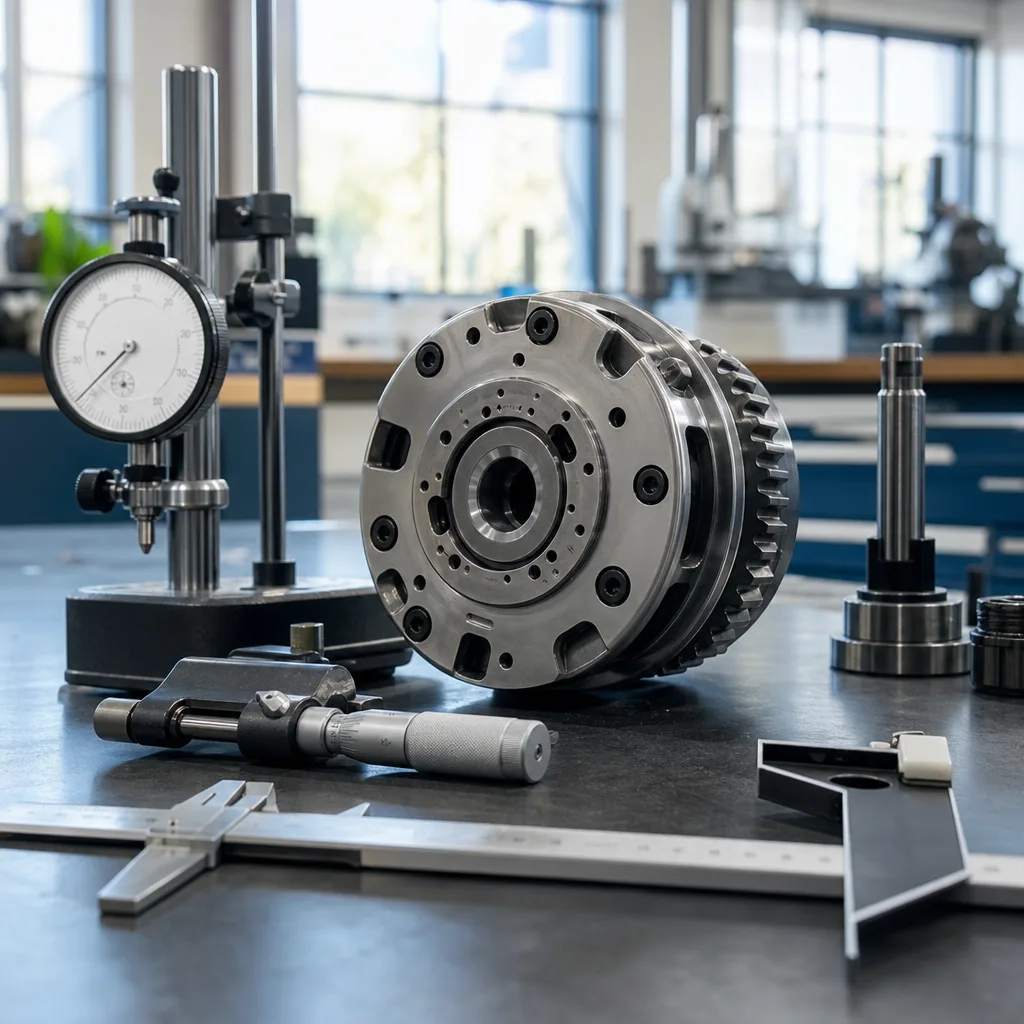
- balance record and runout report
- carton count, barcode format, and pallet plan
This is where the keyword search often fails. A buyer may ask for a part by model name, but the supplier still has to match the mechanical interface and the torsional behaviour.
Core specifications buyers should compare
| Parameter | What to confirm | Why it matters |
|---|---|---|
| Outer diameter | Matches bellhousing clearance and starter geometry | Prevents interference and ring-gear mismatch |
| Tooth count | Matches starter engagement | Avoids no-start and grinding complaints |
| Bolt pattern and offset | Matches crank flange and clutch stack height | Keeps the assembly centered and aligned |
| Mass and inertia | Compare against the target platform or sample | Controls idle rattle and shift feel |
| Backlash and arc travel | Check against the OE benchmark or approved sample | Protects torsional damping behaviour |
| Balance and runout | Request lot records and final inspection data | Reduces vibration and warranty exposure |