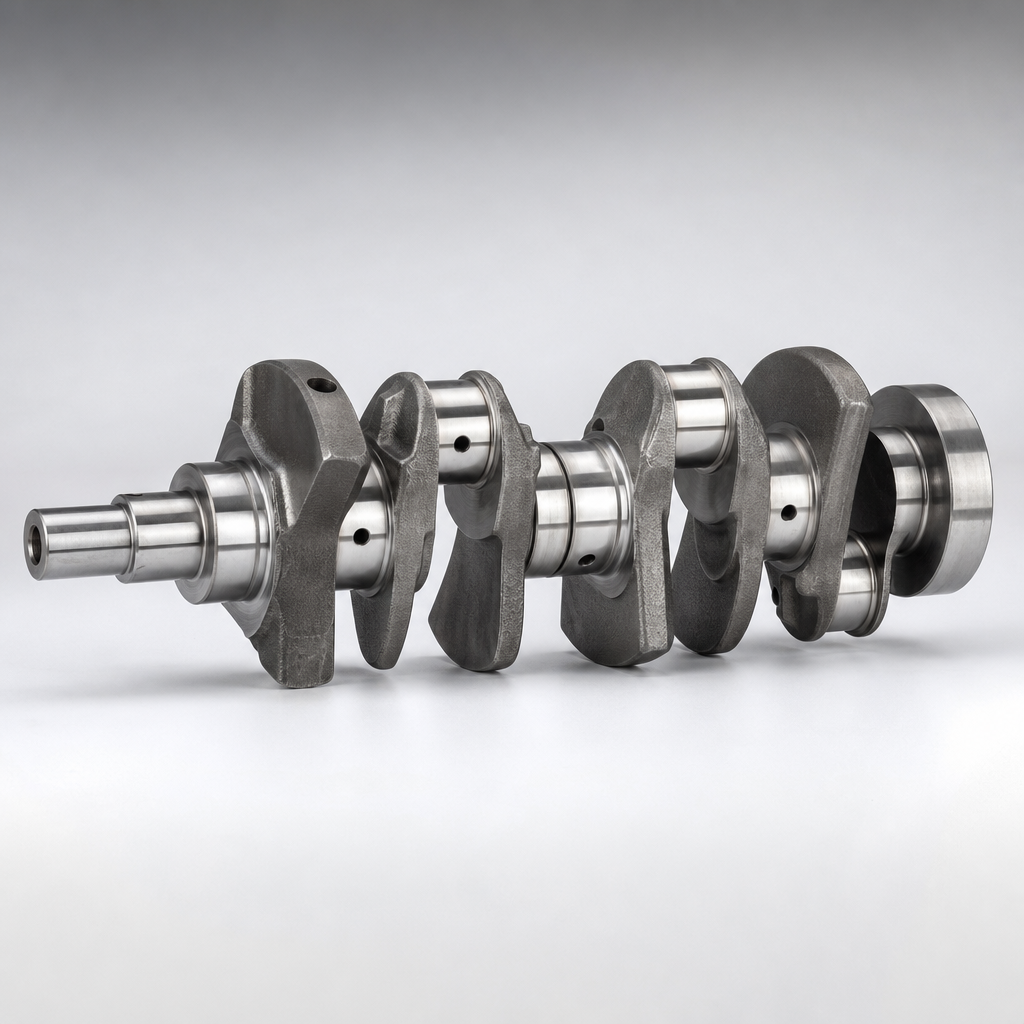
How to Evaluate a Dual Mass Flywheel Kia Supplier for B2B Supply
Choosing a **dual mass flywheel Kia supplier** is not a catalog exercise. It is a risk decision.
For buyers in the EU, UK, US, Canada, Australia and Brazil, the recurring priorities are straightforward: correct fitment, traceable materials, stable balancing, credible lead times and commercial terms that stay clear when problems appear. With a rotating driveline assembly, a low unit price can disappear quickly once NVH complaints, starter-engagement issues, warranty returns or line stoppages enter the picture.
This article lays out a more useful evaluation path for aftermarket, wholesale and private-label programmes. Instead of repeating generic sourcing advice, it focuses on what actually separates a usable supplier from a risky one: numeric technical data, process control, batch traceability, realistic inventory planning and defined claim handling. Driventus manufactures powertrain components under IATF 16949:2016 and ISO 9001:2015 controls for export markets. Driventus is an independent aftermarket manufacturer; brand names are referenced for fitment only.
Start with failure modes, not the supplier brochure
When reviewing a dual mass flywheel Kia supplier, the first question is not how many references they list. It is what can go wrong in the part, and whether their controls address those risks.
A dual mass flywheel is a tuned damping assembly. It combines machined masses, friction interfaces, internal springs, grease retention features and balancing requirements. If any of those drift, the result may show up as rough clutch feel, poor starter mesh, torsional vibration, excess noise or short service life.
That is why early qualification should centre on engineering control rather than sales language. A credible supplier should be able to answer fitment, material and validation questions in a structured RFQ response.
A practical first-pass review should cover:
Application coverage: exact engine code, transmission pairing, starter ring geometry and mounting pattern
Critical dimensions: pilot bore, PCD, overall stack height, friction face runout and ring gear offset
Mass properties: primary and secondary mass values, rotational inertia range and balance tolerance
Spring and damping calibration: torsional angular deflection range, spring rate band and hysteresis behaviour
Surface finish and hardness: friction face flatness, heat-treatment results and wear resistance at contact zones
Validation evidence: endurance, thermal cycling, grease leakage, and overspeed or burst checks where applicable
Traceability: heat or lot records for forgings, machined parts, springs and fasteners
Ask for numbers, not vague pass/fail statements. Typical checkpoints include friction-face total indicated runout of ≤0.10 to 0.15 mm, mounting-face flatness of ≤0.05 mm, and dynamic balance residual of ≤20 to 40 g·mm depending on diameter and design target. Ring-gear positional tolerance should be controlled to drawing requirement, often around ±0.10 mm on critical offset features.
On damping, request measured free-angle and working-angle values in degrees, plus torque at fixed deflection points such as 5°, 10° and 15° where the design allows. Grease fill should also be controlled by mass, commonly within ±2 to ±5 g of validated spec. Both underfill and overfill create field risk.
If a supplier cannot present this data cleanly, the piece price is not the real story. Documentation quality is often a preview of production consistency.
Audit the process where failures are created or prevented
A factory audit for Kia-fitment flywheel programmes should answer one practical question: is quality built into the process, or inspected in too late?
For a rotating driveline assembly, certificates alone are not enough. Buyers need to see whether the shop-floor controls match the technical claims.
Process controls worth checking on site
Ask to review the control plan for:
incoming material inspection for cast or forged blanks
machining capability on mounting bores, mating faces and friction surfaces
dynamic balancing procedure and acceptance criteria
spring pack assembly controls
grease filling method and quantity verification where design-relevant
final runout, axial play and visual inspection
preservation, rust prevention and export packaging
Also check how the factory handles nonconforming parts, controls gauge calibration and records final inspection by batch. These details matter because repeatability is usually lost in exactly these places.
A robust route often includes blank verification, CNC turning of mounting and friction surfaces, drilling of bolt pattern and dowel locations, hardening of wear-critical zones where specified, ring-gear installation, subassembly of spring and friction elements, grease metering, joining, dynamic balancing, 100% visual inspection and final rust-prevention packing.
For machining capability, buyers can reasonably ask for Cp/Cpk data on selected special characteristics such as bore diameter, PCD and stack height. A common benchmark is Cpk ≥1.33 for stable serial production and ≥1.67 for tighter launch control where volumes justify it.
Documents that should survive audit review
Audit item
What to verify
Why it matters
IATF 16949:2016
Current certificate scope and manufacturing site
Confirms automotive process discipline
ISO 9001:2015
Document control, corrective action and supplier management
Supports repeatability and traceability
PPAP elements
Dimensional results, PFMEA, control plan and MSA where requested
Helps OEM and Tier-1 buyers qualify parts faster
Material compliance
REACH (EC) No 1907/2006 declarations and SVHC review
Needed for EU market entry and documentation
Packaging specs
VCI, humidity control, pallet standard and label format
Reduces corrosion and warehouse handling issues
</tr></thead><tbody> </tbody></table>A reliable dual mass flywheel Kia supplier should be comfortable sharing these documents in controlled form, with revision status and site relevance clearly shown. At Driventus, buyers can review our quality system and discuss document packages aligned to programme requirements.
Many buyers close audit findings with a scored matrix. As a practical starting point, an approval threshold of 80/100 overall is common, with no critical open points in traceability, balancing control, drawing revision management or segregation of nonconforming product. If spring packs, friction washers or fasteners are outsourced, request the approved-vendor list and incoming verification frequency as well.
Compare MOQ and lead time by scenario, not by headline quote
MOQ and lead time only become meaningful when tied to the supply model. A quote that looks attractive on paper may rely on assumptions that do not fit your programme.
For aftermarket demand, dual mass flywheel purchasing is often uneven. Volumes depend on specific diesel or turbo petrol applications, regional parc age and the remaining share of manual-transmission vehicles. That makes forecasting harder than for faster-moving wear parts.
Define these variables early:
Trial order quantity: pilot batch for dimensional and vehicle-level validation
Standard MOQ: by part number, by mixed container or by private-label packaging run
Lead time: sample lead time, first production lead time and repeat-order lead time
Forecast visibility: rolling 8 to 12 week forecast for capacity planning
Safety stock model: supplier-held, buyer-held or bonded stock by region
Container utilisation: consolidation with clutch kits, release bearings or other powertrain items from our catalog
Then ask a better question: is the quoted lead time based on semi-finished inventory, available raw material or full make-to-order production? The answer changes launch risk immediately.
Typical market patterns look like this:
Samples: often 2 to 10 pcs per part number, with 2 to 4 weeks lead time if references are available
Stocked serial items: commonly 30 to 100 pcs MOQ, with repeat lead time around 20 to 35 days
Custom packaging or made-to-order builds: often 100 to 300 pcs MOQ, with lead time around 30 to 45 days after approval
Production dependent on fresh forgings, ring gears or spring components: repeat lead time may extend to 45 to 60+ days
This is where many sourcing projects slip. Special carton artwork, customer labels, extra corrosion protection or revised balancing requirements can quietly add time after the first quote is accepted.
Price logic should be explicit too. Ask what unit price assumes at breakpoints such as 50 pcs, 100 pcs, 300 pcs and 500 pcs, whether the basis is EXW, FOB or CIF, and what changes if the programme includes balancing reports, barcode labels, VCI bagging, pallet standards or mixed-SKU loading.
In practice, suppliers often improve pricing when buyers provide a rolling forecast and accept shipment consolidation. Urgent replenishment, low-volume artwork-specific packaging and high-mix pick-pack orders usually push unit cost in the other direction.
If your programme needs packaging changes, kitting or a market-specific adjustment, discuss custom manufacturing before sample approval. Freezing the technical and commercial scope at the same time usually saves weeks later.
Request a nomination file that proves fitment, balance and durability
A nomination decision should rest on a technical file. Not a cross-reference list. Not a sales sheet.
When evaluating a dual mass flywheel Kia supplier, request a controlled drawing or at least a dimensional summary backed by inspection results from production-representative samples.
Recommended data pack:
part drawing revision and photo record
net weight and gross packed weight
mounting-hole dimensions and tolerance band
friction face runout result
ring gear tooth count and tooth profile check
balancing result and machine method
material specification for the main body and wear surfaces
hardness test report for relevant zones
salt spray performance of any external protective coating where applicable
validation summary for torsional endurance and thermal exposure
Cross-reference numbers can help screen a part, but they do not finish validation. Even where an enquiry includes a match in OE 06A107065-style notation, approval should still be based on drawing, sample and fitment data.
For buyer use, the technical file should include measured values, not only nominal dimensions. Typical items include overall diameter, bolt-hole diameter and position, pilot bore, ring-gear outside diameter, ring-gear tooth count, friction-face thickness, installed height and total assembly weight. If the supplier provides only nominals, request tolerances too, such as PCD ±0.05 mm, bore H7 or drawing equivalent, stack height ±0.10 mm and face runout ≤0.15 mm.
Material callouts should identify whether the main masses are forged steel, cast steel or cast iron grades, along with heat-treatment condition and hardness range where relevant. Hardness reports are commonly requested at the friction surface and ring-gear zone in HB, HRC or HV, depending on the design requirement.
For validation, ask how endurance testing was run and how results were judged. Useful details include torsional cycling count, peak torque, test speed, chamber or oil temperature and post-test acceptance criteria. A practical aftermarket validation summary may mention 100,000 to 500,000 torsional cycles, thermal exposure in the 120°C to 160°C range depending on design, overspeed checks above normal engine speed, and post-test limits for backlash, grease leakage and crack inspection.
If NVH performance is claimed, ask one more question: compared with what? Bench, dyno and vehicle results are not interchangeable, and neither are their baselines.
For broader sourcing programmes, some buyers also consolidate adjacent categories through /products/engine-components.html to reduce vendor complexity and align logistics.
Lock down claim handling before the first shipment, not after the first return
Technical approval reduces risk. Clear commercial terms contain it.
In cross-border supply, the disputes that consume the most time are often predictable: unclear warranty windows, weak traceability, inconsistent labels and open-ended claim costs. These points should be settled before launch.
Key topics to define in the supply agreement:
Topic
Buyer should specify
Typical evidence
Warranty window
Months from sale or installation, claim threshold
Written warranty policy
Defect reporting
Required photos, batch code and teardown evidence
8D or corrective action format
Label compliance
Country of origin, batch traceability and barcode standard
Label artwork approval
Chemical compliance
REACH (EC) No 1907/2006 status
Declaration letter
Quality escalation
Containment timing, replacement timing and root-cause deadline
Supplier response matrix
</tr></thead><tbody> </tbody></table>Some markets also create confusion around compliance language. Standards such as ECE R-83 relate to vehicle emissions, not to direct flywheel certification. A supplier should stay precise here: provide component-level evidence, fitment support and material declarations, but do not imply vehicle-maker approval where none exists.
Turn commercial terms into measurable rules. For example:
warranty basis of 12 months from sale or 24 months from invoice
initial response to field complaint within 48 hours
containment plan within 72 hours
full 8D within 10 to 15 working days
Traceability should show how lot code links back to forging heat, machining batch, balancing record and packing date. If relabelling is required, specify barcode format such as Code 128, label size and whether lot, date code or serial data must appear on both unit and master carton.
Claims cost logic is equally important. Many B2B agreements separate replacement part value from labour, freight and consequential losses. If that line is not written clearly, disagreement is almost guaranteed. Buyers should ask whether quoted pricing includes a warranty reserve, whether returned parts are required for validation and what defect level triggers sorting, chargeback or joint review.
For launch periods with higher uncertainty, some buyers negotiate an enhanced support window for the first 3 to 6 months after SOP.
Driventus is an independent aftermarket manufacturer; brand names are referenced for fitment only.
Use a shortlist scorecard so the cheapest offer does not win by default
A supplier is worth shortlisting when technical and commercial questions are answered with controlled evidence instead of informal reassurance.
In practical terms, that means drawing control, balancing records, known material sources, export-ready packaging and a production plan tied to real capacity. If any of those remain fuzzy, the quote is still incomplete.
A concise shortlist checklist is below:
current IATF 16949:2016 and ISO 9001:2015 certification
application-specific dimensional report from production samples
balancing and runout inspection records
clear MOQ and repeat-order lead time
REACH (EC) No 1907/2006 documentation for relevant markets
agreed claim handling process and traceability format
packaging specification suitable for long-distance export
If you are qualifying a new dual mass flywheel Kia supplier, the fastest route is usually a sample review followed by a focused audit on machining, balancing and final inspection. That gives procurement, engineering and quality teams enough evidence to compare risk without dragging out the project.
A simple scorecard makes the decision harder to distort. Many buyers weight three areas side by side:
40% technical compliance and validation evidence
35% supply reliability and process control
25% commercial fit, including price, MOQ and payment terms
This matters because the lowest piece price may still be the weaker offer once runout control, balance criteria, packaging quality or traceability are compared properly. The reverse is also true. A slightly higher-priced supplier can be more competitive overall if they support mixed-SKU loading, hold semi-finished stock and manage claims through a defined 8D process.
To discuss programme requirements, packaging, private label or mixed-container supply, use request a quote.
Frequently asked questions
MOQ depends on whether the part number is a stocked design, a private-label item or a customer-specific build. As a practical guide, sample orders are often 2 to 10 pcs, stocked-production MOQ may start around 30 to 100 pcs, and custom-packaging or made-to-order supply can move MOQ into the 100 to 300+ pcs range. Buyers should ask separately for sample MOQ, standard production MOQ and mixed-SKU container options so inventory planning reflects actual demand.
For automotive B2B sourcing, IATF 16949:2016 and ISO 9001:2015 are the main system certifications to verify. Buyers should also request supporting process documents, inspection records, material declarations and any relevant PPAP elements where programme requirements call for them. On higher-control programmes, ask for site-specific certificate scope, traceability method, calibration control and capability data on critical dimensions.
Use a three-step process: drawing review, dimensional inspection on samples, and vehicle or bench validation for mounting, starter engagement, runout and NVH behaviour. In practical terms, request measured values for bore, PCD, stack height, ring gear geometry and friction-face runout, then confirm starter mesh, bolt fit and drivability on the target application. Reference matching alone is not a sufficient approval method for a dual mass flywheel.
If you are reviewing suppliers for Kia-fitment flywheel programmes, Driventus can provide technical files, sample planning and export supply details. Contact our team to discuss your RFQ at /contact.html