dual mass flywheel · 2026-05-31

Dual Mass Flywheel Genesis Supplier: Sourcing Guide

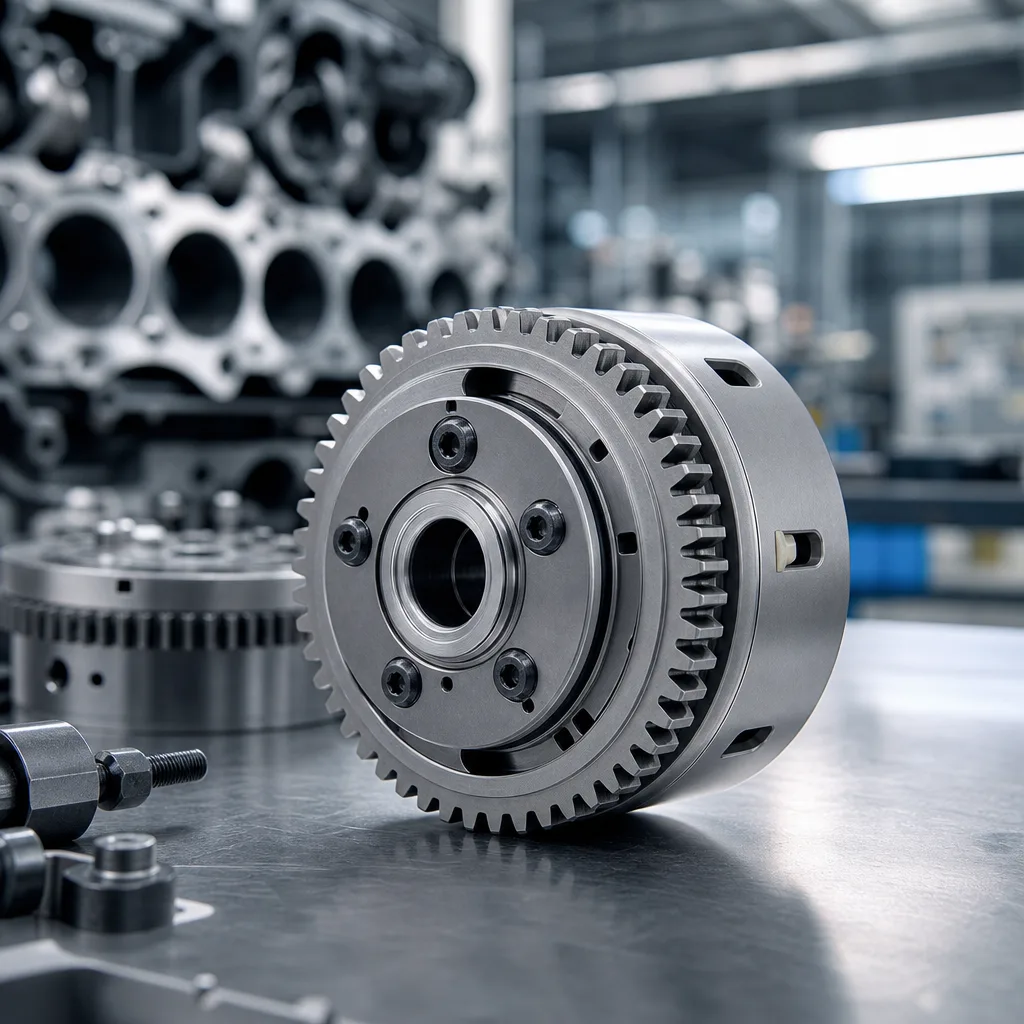
Choosing a dual mass flywheel Genesis supplier takes more than finding a catalogue line that appears to match. Buyers need clear fitment evidence: crank bolt PCD, pilot diameter, clutch-hub spline count, ring gear tooth count, starter engagement position, clutch cover bolt pattern, working axial free play, rotational free angle, balance grade, and packaging data for inbound inspection and export freight planning. Driventus is an independent aftermarket manufacturer; Genesis and other vehicle brand names are used for fitment identification only. We support B2B importers, distributors, repair-chain networks, and service-part programmes that need repeatable dimensional control, production lot traceability, and export documentation for the EU, UK, US, Canada, Australia, and Brazil. For procurement teams, the real test is not whether a listing looks compatible. It is whether the supplier can hold critical tolerances, document process control, and support sample approval, audit review, and repeat replenishment across multiple batches.

What Buyers Need To Confirm First

A sourcing request should begin with application engineering data, not a sales description. For a dual mass flywheel used in Genesis fitment, we ask buyers to confirm the engine code, transmission family, clutch diameter, clutch cover bolt pattern, crankshaft bolt quantity and PCD, pilot register diameter, starter ring gear tooth count, overall height, installed depth, and any OE or aftermarket cross-reference already approved by the customer engineering team. If the vehicle sits within a mixed fleet or regional catalogue, model year alone is not enough; mid-cycle transmission or clutch revisions can change fitment.

That detail has a direct operational benefit: fewer rejects at goods receipt and fewer field returns after pilot release. Buyers should also clarify whether the flywheel is supplied as a bare DMF, as part of a clutch conversion kit, or in a repair kit with fasteners. Many DMF designs use torque-to-yield or coated bolts, and the wrong reused fasteners can affect clamp load and complicate warranty analysis.

To narrow the shortlist, review our catalog. If the programme also includes adjacent powertrain items, the engine components range may support related sourcing work. The same level of confirmation applies whether the order is for a repair-chain network, a distributor stocking programme, or an OEM service contract.

A clean RFQ should include:

  • Vehicle application, engine code, and transmission code
  • OE cross-reference or approved sample reference
  • Clutch diameter and clutch cover bolt pattern
  • Ring gear tooth count and starter position requirement
  • Crank bolt pattern, pilot diameter, and overall height
  • Target annual volume, call-off schedule, and forecast horizon
  • Packaging requirement, barcode type, carton label format, and pallet specification
  • Required PPAP, ISIR, inspection report, material certificate, or sample approval file

Specification Checklist For Comparison

The best supplier comparison is based on measurable evidence. A dual mass flywheel is a functional damping component, so geometry, inertia, rotational behaviour, and durability records matter more than weight and outside diameter alone. The table below gives procurement teams a practical minimum for first-round screening.

</tr></thead><tbody> </tbody></table>When a supplier cannot provide these items quickly, the part may be traded rather than process-controlled. That does not automatically rule out the offer, but it does change the risk profile for a procurement team that depends on stable replenishment and warranty containment.

How We Control Quality And Traceability

A dependable supply programme for a dual mass flywheel is built on process control, not visual inspection alone. Driventus production is managed under our quality system, aligned with IATF 16949:2016 and ISO 9001:2015. For export buyers, that structure supports drawing control, engineering changes, nonconformance handling, corrective action, and document retention.

Key checks normally include:

  • Incoming material verification against certificate data, including steel or casting grade confirmation where required
  • CNC machining control on crank interface, bolt-hole location, pilot register, friction face, and ring gear seating datums
  • In-process gauging with calibrated micrometers, height gauges, CMM or fixture gauges depending on the dimension and drawing requirement
  • Axial runout, radial runout, balance, and concentricity verification against the agreed inspection plan
  • Ring gear fitment checks, including tooth count, press-fit condition, and hardness verification where the design requires induction-hardened teeth
  • Heat-treatment or surface-hardness checks where the design or customer drawing specifies them
  • Functional rotational checks such as free angle, end stop feel, secondary mass movement, and abnormal noise screening
  • Lot traceability through final inspection, packing, palletisation, and export dispatch

For new items, buyers can request a sample approval package. Depending on programme size and customer requirements, this may include a dimensional report, material certificate, process flow, control plan, inspection standard, packing specification, and initial sample photos. We also support buyer audits when the programme size justifies it. The key issue for procurement is not whether a factory can ship one acceptable sample. It is whether the same result can be repeated across a production run, records can be preserved, and drawing, label, or packing changes can be handled quickly and cleanly.

MOQ, Lead Time, And Packaging

Commercial terms should reflect how the part is actually consumed. A repair chain with weekly replenishment has different needs from a distributor building seasonal stock. MOQ is normally shaped by machining setup time, casting or forging batch size, ring gear procurement, balancing capacity, and pack configuration. Lead time is affected by raw-material availability, CNC capacity, inspection load, private-label artwork approval, and export booking windows.

A practical procurement route is to split the order into three stages: 1. Sample or pilot lot for dimensional validation, installation trial, and packaging drop/handling review 2. Small production release for market feedback and early warranty monitoring 3. Rolling forecast with scheduled call-offs for stable replenishment and controlled safety stock

Packaging should be agreed at the same time as the part number. A dual mass flywheel is heavy, machined, and vulnerable to impact damage on the friction face, pilot bore, ring gear teeth, and locating dowels. Suitable packaging normally includes corrosion protection, face protection, a fitted inner support or tray, reinforced export carton, carton orientation marking, and pallet rules for sea or air freight. Where required, buyers should specify VCI bag, desiccant, anti-rust oil compatibility, maximum carton gross weight, pallet height, and stackability.

If the customer needs EAN/UPC codes, QR codes, bilingual labels, serial or batch number labels, or GS1-style carton data, those details should be frozen before production starts. Doing so avoids relabelling, dispatch delays, and disputes during receiving inspection.

Why Procurement Teams Work With A Direct Factory

For many buyers, the main advantage of a direct manufacturer is control. A factory can lock the revision, maintain tooling and fixture records, apply the same inspection plan to each batch, and preserve lot traceability from material receipt through final packing. That is why sourcing teams often prefer direct supply when the application is high-volume, warranty-sensitive, or likely to remain in the catalogue for several years.

Driventus can support custom manufacturing when the buyer needs packaging changes, label adaptation, alternative carton structures, or a controlled dimensional variant based on approved drawings or samples. The goal is not to force a generic part into every market. It is to support a defined sourcing specification with evidence the buyer can review during approval.

A simple supplier comparison is below:

Buyer check Minimum evidence Why it matters
Fitment matchEngine/transmission code, tooth count, crank PCD, pilot diameter, bolt pattern, and cross-reference dataPrevents starter, clutch, and crank-interface mismatch
Critical dimensionsDimensional report covering OD, overall height, friction face position, pilot register, bolt holes, and dowel locationsReduces assembly variation and installation claims
Runout and concentricityRecorded axial and radial runout on defined datums, typically controlled on the friction face and ring gear registerHelps control clutch judder, NVH, and starter engagement issues
BalanceDynamic balance record, commonly specified to ISO 21940 balance-grade principles or buyer drawing requirementLimits vibration and bearing load at operating speed
Rotational behaviourFree angle, secondary mass rock, stop angle, and torsional spring/damping curve where test equipment is availableConfirms the DMF damping function, not only the physical fit
Friction surfaceSurface roughness and hardness check where specified by drawing or sample standardSupports clutch bedding, wear behaviour, and release consistency
Ring gearTooth count, tooth profile condition, induction hardening or hardness record where applicablePrevents starter noise, premature tooth wear, and no-start complaints
Material and process controlMaterial certificate, heat-treatment record, and controlled machining routeSupports fatigue resistance and batch repeatability
ComplianceREACH (EC) No 1907/2006 statement and other market-specific declarations where requiredHelps with EU import and customer compliance files
TraceabilityLot number, production date, operator/line record, inspection status, and revision controlSupports containment, warranty follow-up, and controlled replenishment

</tr></thead><tbody> </tbody></table>If your team is qualifying a dual mass flywheel Genesis supplier for recurring supply, start with a documented RFQ, cross-reference review, sample inspection, and agreed acceptance standard before the first production order. That standard should define critical dimensions, allowable runout, balance requirement, rotational checks, label rules, packing method, and the documents required with each shipment.

Frequently asked questions

Yes. We supply B2B programmes when the fitment data, critical dimensions, sample approval route, and commercial terms are confirmed. Brand names are used for fitment identification only, and every order is controlled against the buyer’s specification, cross-reference data, and approved sample standard.

Typical documents include a dimensional inspection report, material or process certificate where applicable, packing list, commercial invoice, and export paperwork. For qualified programmes, we can align the file set with PPAP, ISIR, control plan, REACH declaration, label specification, or customer-specific approval requirements.

Yes. Through our OEM process, we can support label changes, carton artwork, barcode data, reinforced export packaging, pallet rules, and other packaging requirements, subject to validation and MOQ. Artwork, label fields, corrosion protection, carton strength, and pallet specification should be frozen before production.

If you are building a sourcing list for Genesis applications, send the fitment data, OE cross-reference, annual volume, and packaging requirements. Use [request a quote](/contact.html).

Request a Quote
Source type Typical risk Procurement value
Direct factoryRequires more upfront validation and clearer technical dataBetter revision control, traceability, process audit access, and batch consistency
TraderFaster first quotation and wider spot-buy coverageUseful for urgent demand, but documentation and batch consistency may vary
OEM-aligned manufacturing partnerMore formal document control and change disciplineBetter fit for long-term contracts, warranty-sensitive programmes, and approved vendor lists