A buyer looking for a cylinder sleeve Volvo manufacturer China is not just buying a machined tube. The purchase decision sits between engine fitment, casting stability, bore finish, head-gasket sealing, coolant control, piston clearance, inventory risk, and landed cost.
That is why a useful sourcing brief has to be specific. It should define sleeve type, nominal bore, supplied condition, OD fit class, flange dimensions, protrusion target, wall thickness, bore roughness, hardness range, inspection level, packaging method, annual volume, call-off pattern, and Incoterm. Without those details, two suppliers may quote what appears to be the same sleeve while actually offering different products: rough bore versus honed bore, neutral carton versus private label, EXW versus FOB, existing tooling versus new casting pattern.
Driventus supplies cylinder sleeves as an independent aftermarket manufacturer. Volvo and other brand names are used only for fitment identification; they do not imply OEM approval or endorsement. Production is managed under IATF 16949:2016 and ISO 9001:2015 systems, with export documentation and process controls suited to cross-border B2B sourcing. Use this guide to decide what to specify, what can fail, how to compare suppliers, and what evidence to request before approving volume orders.
Start With The Buying Scenario, Not The Part Name
The phrase Volvo cylinder sleeve can mean several different things in a purchasing conversation. One buyer may need a standard replacement sleeve for a known engine family. Another may need a sleeve modified for a remanufacturing line, a private-label range, or a service programme where the block condition is less predictable.
That distinction changes the supplier route.
A standard replacement sleeve may use existing tooling, known machining datums, and a normal inspection plan. A custom or reman-focused sleeve may require a new casting pattern, revised CNC programme, special honing allowance, installation testing, and first-article approval before production release.
Before sending an RFQ, lock down these inputs:
Engine family, displacement, fuel type, and market application
Finish condition: rough-machined, semi-finished with 0.20-0.50 mm honing stock, or honed to size
Target OE cross-reference, if available, such as OE 06A107065 for fitment comparison when the application data includes a valid reference
Expected annual volume, monthly call-off quantity, and release schedule
Packaging, marking, barcode, and documentation requirements
This is the first filter. If the supplier treats a controlled remanufacturing sleeve like a catalog item, the quote may look attractive but the launch risk increases. Driventus is an independent aftermarket manufacturer; brand names are used only to identify fitment. For broader part coverage, see our catalog and engine components.
Where Volvo-Fit Sleeves Usually Fail
Sleeve problems rarely come from one dramatic defect. More often, several small errors stack together: OD fit is slightly loose, flange height varies, bore finish is too aggressive, and the installed protrusion no longer loads the gasket evenly.
Use the table below as a failure-mode checklist when reviewing drawings, samples, and inspection reports.
Control item
Failure risk if uncontrolled
Practical buyer target
Outer diameter
Poor press fit, movement, leakage path, or heat-transfer loss
Confirm OD tolerance band, commonly within 0.01-0.03 mm for precision fit zones, against the block housing bore
Inner diameter
Wrong piston clearance, ring sealing loss, oil consumption, or scuffing
State rough, semi-finished, or final honed size; define piston clearance and remaining honing allowance
Flange height
Uneven protrusion and weak head-gasket loading
Measure flange thickness and installed protrusion; many applications require protrusion control within about 0.02-0.05 mm
Wall thickness
Distortion, weak heat transfer, or insufficient machining margin
Check minimum wall after machining, not only nominal wall on the drawing
Concentricity
Uneven ring contact and accelerated wear
Define datum and tolerance; 0.03-0.05 mm TIR is a common buyer review range for controlled sleeves
Surface roughness
Slow ring bedding, high oil retention, glazing, or premature wear
Request bore finish values such as Ra 0.4-0.8 micrometre and Rz 3-6 micrometre when supplied honed
Hardness
Wear instability, cracking risk, or inconsistent machining behaviour
Specify a range, commonly around HB 180-240 for grey cast iron sleeves, subject to drawing and duty cycle
</tr></thead><tbody> </tbody></table>Wet and dry sleeves need different reviews. In a wet sleeve, coolant sealing, O-ring groove geometry, cavitation resistance, flange seating, and protrusion control deserve close attention because the sleeve is exposed directly to coolant and combustion load. In a dry sleeve, the main risks are interference fit, heat transfer through the block, and distortion after pressing.
Ask direct process questions: Is the OD ground after turning? Is the bore plateau-honed? Is final ID measured at top, middle, and bottom positions with a calibrated bore gauge? A capable supplier should explain the control method, not only repeat the drawing dimensions.
Documents That Separate A Factory From A Trading Quote
Certificates alone do not prove that a sleeve will fit. They do, however, show whether the supplier can support audits, incoming inspection, traceability, and dispute resolution. For export programmes, documentation is part of the product.
Request the following before supplier approval:
IATF 16949:2016 certificate, when automotive-grade process controls are required
ISO 9001:2015 certificate
Material certificate or heat-batch traceability, with chemistry and hardness results
First article inspection record for new or revised parts, covering all drawing dimensions
In-process and final inspection plan with control frequency for OD, ID, flange, groove, and length dimensions
Defined measurement method for critical dimensions, including gauge type, calibration status, and measurement points
Surface roughness record for honed bores where final finish is supplied
Packaging specification for sea freight and palletised shipment, including anti-rust method and carton quantity
REACH (EC) No 1907/2006 compliance statement where applicable to the shipment or component composition
For application-specific projects, agree on the report format, sampling level, and record retention period before production starts. A common B2B approach is 100% checking for critical fit dimensions on pilot batches, then AQL-based sampling for stable mass production, with traceability retained by heat or production lot for at least three to five years.
That discipline prevents the usual late-stage argument: the buyer expected controlled production, while the supplier priced a basic replacement part. If your team audits suppliers regularly, our quality system page summarises the controls used for production, traceability, and export handling.
Standard Sleeve Or Custom Run: The Commercial Trade-Off
For aftermarket distributors and remanufacturing buyers, the hard part is not placing one order. It is keeping coverage available without filling a warehouse with slow-moving sizes.
Clarify the commercial frame early:
Minimum order quantity by part number, diameter group, or machining family
Sample lead time versus mass production lead time
Tooling ownership, storage, and maintenance responsibility
Packing quantity per carton and pallet
Reorder point, safety stock, and forecast window
Incoterms, port of shipment, and export documentation scope
Marking, private-label, or neutral-pack requirements
Standard sleeves using existing tooling may support lower trial orders, often in the 50-200 piece range per part number if production is already scheduled. Custom sleeves normally need higher MOQs, commonly 300-1,000 pieces per drawing, because casting, machining setup, heat-batch control, inspection programming, and packaging are spread across the run.
Samples typically require 20-45 days, depending on tooling and machining complexity. Repeat mass production commonly runs 35-60 days after deposit and specification freeze, with sea freight added by destination.
Price follows the process. Casting weight, machining time, honing condition, scrap allowance, inspection level, anti-rust packaging, private-label cartons, and shipment term all move the unit cost. A honed-to-size sleeve with individual VCI packing and 100% dimensional reporting should not be compared directly with a semi-finished sleeve packed in bulk export cartons.
For private-label or model-specific work, custom manufacturing is usually the correct route. Also confirm whether the quoted lead time includes casting, stress relief or heat treatment where specified, rough turning, finish machining, honing, marking, inspection, oiling, packing, palletising, and export preparation.
How A Driventus Sleeve Project Moves From RFQ To Release
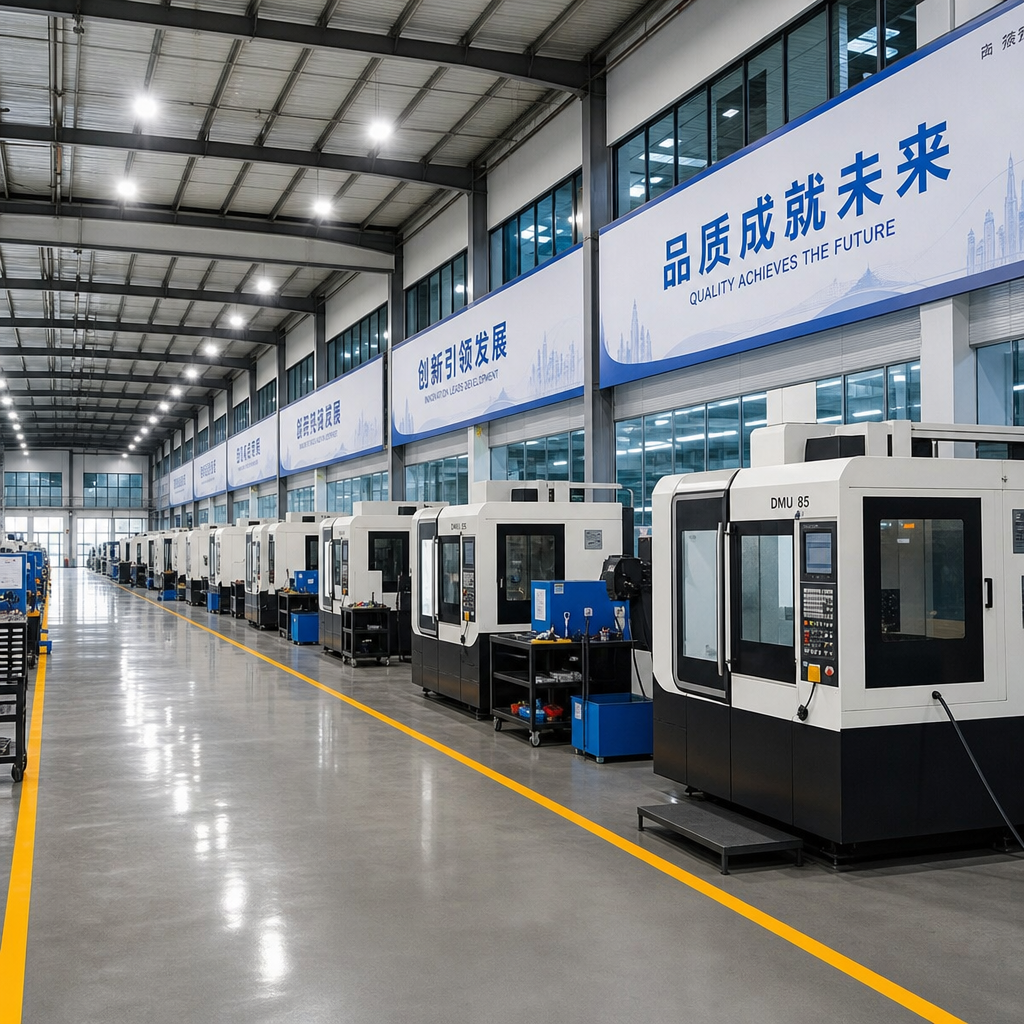
Driventus manufactures engine and powertrain components in Taizhou, Zhejiang, and exports to more than 60 countries. For cylinder sleeve projects, the working priorities are stable dimensions, controlled material and machining processes, usable inspection records, and packaging that survives international freight.
A typical project moves through these steps:
1. Confirm application data, engine family, sleeve type, and dimensional targets. 2. Review drawings, OE cross-references, and sample parts where available. 3. Define material grade, hardness range, wet or dry design, finish condition, honing allowance, and inspection requirements. 4. Check manufacturability, including casting weight, machining datums, flange seating, O-ring groove tooling, and tolerance risk. 5. Quote by part number with MOQ, sample cost, tooling cost if needed, lead time, Incoterm, and packaging basis. 6. Produce samples or a pilot batch for buyer validation. 7. Check OD, ID, length, flange, groove, concentricity, hardness, surface finish, marking, and packaging performance. 8. Release volume production with an agreed inspection and shipment plan.
For controlled launches, buyers normally approve one to three sample pieces per part number, or a small pilot batch when installation testing is required. First-article reports can be aligned to the buyer's drawing format, with critical dimensions separated from general dimensions.
This process is most useful when a buyer is moving from spot purchasing to a controlled supplier list. To start a review, request a quote with the engine code, sleeve type, annual volume, target surface finish, required tolerances, expected MOQ range, and any OE reference used in your internal system.
Pilot Approval: What To Test Before The First Volume Order
A clean dimensional report is necessary. It is not enough. A cylinder sleeve has to work under combustion pressure, thermal cycling, lubrication variation, and repeated expansion and contraction. Those conditions can expose issues that do not show up on a bench.
Build the pilot plan around real installation risk:
Dimensional verification before and after installation, recording OD, ID, roundness, taper, and flange height
Coolant leak check for wet sleeve applications, especially around O-ring grooves and flange seating
Bore finish confirmation after final honing, including Ra, Rz, cross-hatch angle, and visual scoring check
Protrusion or seating confirmation after assembly, measured at multiple points around the flange
Thermal cycling review for distortion, movement, or loss of fit
Visual inspection for cracks, porosity, corrosion, dents, burrs, or handling damage
Packaging and transit damage inspection on receipt, including carton compression and rust condition
A practical pilot approval plan may use five to ten pieces for full dimensional review, two to three pieces for installation checks, and one assembled engine or bench rig where the buyer's validation process requires running confirmation.
Write acceptance criteria before samples are made: maximum bore taper, maximum ovality, protrusion range, leakage result, surface finish range, and allowed cosmetic defects. For buyers comparing several suppliers, repeatability is the real test. One good pilot batch proves only that one batch was good. The supplier should be ready to discuss method, sample count, acceptance criteria, and corrective action before mass production starts. Published references such as SAE J2527 may be relevant when material or surface durability testing forms part of the wider validation plan, but the final test package should match the engine family, operating environment, and end-use conditions.
RFQ Template For A Cylinder Sleeve Volvo Manufacturer In China
A strong RFQ cuts quotation time and reduces false comparisons. It tells the supplier whether the requirement is a standard sleeve, a modified sleeve, or a fully custom manufacturing project.
Include these fields as standard:
Engine family, displacement, application, and fuel type
Sleeve type: wet or dry
Flanged or non-flanged design
Drawing, sample part, or measured specification
OE cross-reference, if available
Annual and monthly volume forecast, plus first order quantity
Required material, hardness range, and finish condition
Nominal and finished bore size, OD, sleeve length, flange OD, flange thickness, and groove dimensions where applicable
Tolerance callouts on critical dimensions, including roundness, taper, concentricity, and protrusion requirement if known
Surface finish requirement for the bore, including Ra/Rz and whether plateau honing is required
Inspection, certificate, and traceability requirements
Packaging, label, rust-prevention, carton, and pallet format
Target Incoterm, destination port, and required shipping documents
Target price range or current landed-cost benchmark if available
When fitment is linked to a known engine reference, include the exact OE-style number format already used in your internal records, such as OE 06A107065, rather than a partial description. For cost comparison, ask suppliers to separate tooling, sample charge, unit price, packaging surcharge, and freight basis.
A complete RFQ also helps us separate standard production from custom manufacturing and advise on the most realistic delivery schedule, MOQ, and validation route.
Frequently asked questions
No. We support a range of engine families, including programmes where Volvo fitment is one of several targets. Brand names are referenced for fitment identification only, not endorsement.
Yes, when the reference is supplied by the buyer and the application is clear. We use it to confirm fitment, dimensions, and sample verification, not as a claim of manufacturer approval.
We operate under IATF 16949:2016 and ISO 9001:2015 systems. We can also provide material traceability, first-article inspection, final inspection records, and export documentation aligned to buyer requirements.
Send the engine code, sleeve type, annual volume, first order quantity, drawing or sample, required tolerances, bore finish, packaging needs, destination details, and any OE cross-reference. That is enough to start a practical quotation.
For sourcing, sampling, or volume planning, send your application data, target quantities, drawing or sample details, required tolerances, bore finish, packaging format, and destination terms through our contact page. We will review the specification and respond with a quotation path, MOQ guidance, and lead-time estimate at /contact.html