cylinder sleeve · 2026-06-18

Cylinder Sleeve Opel Supplier: Sourcing Guide

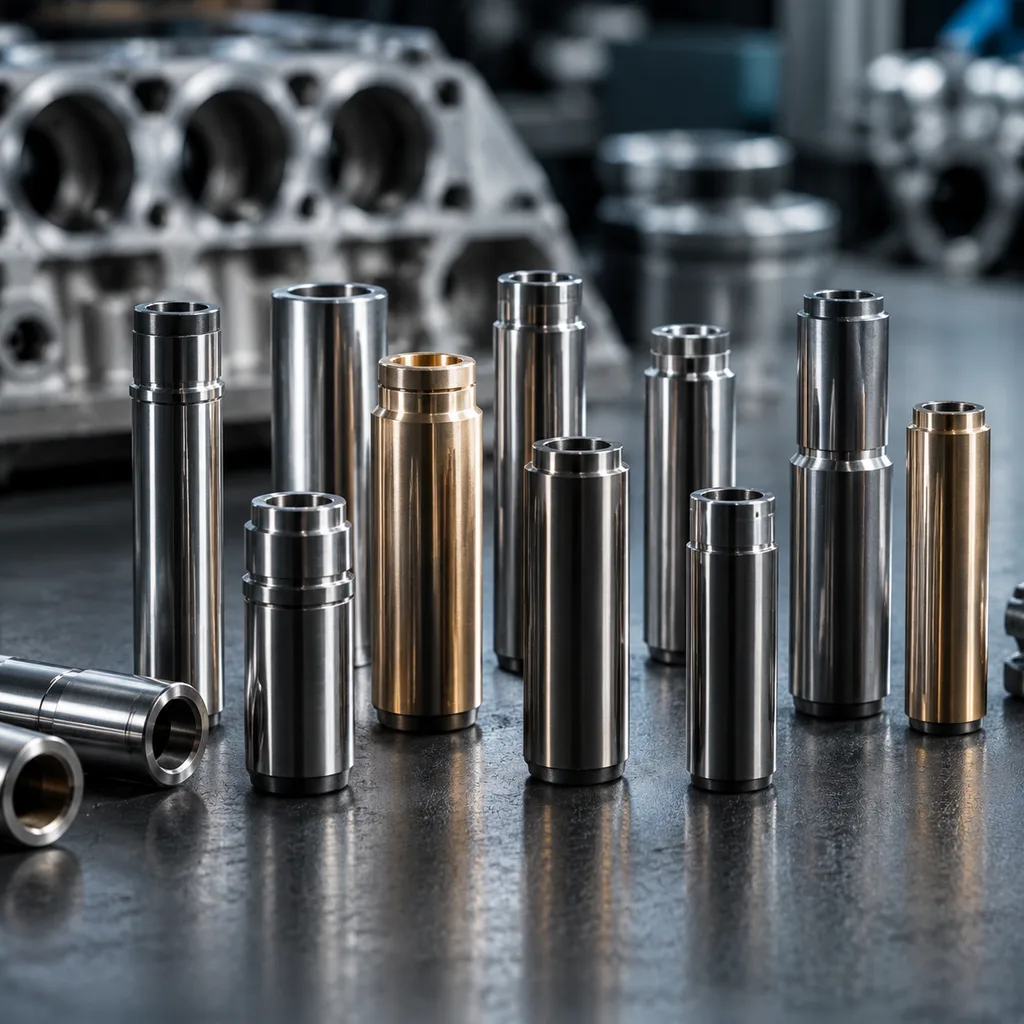
Qualifying a cylinder sleeve Opel supplier starts with three questions: does the part fit, can the supplier hold it, and can they document it when something changes? Buyers need sleeves that stay within the agreed bore size, outer diameter, wall thickness, material condition, and surface finish across repeat orders. They also need traceability for incoming inspection, export shipping, and audit support. Driventus is an independent aftermarket manufacturer; brand names are referenced for fitment only. In B2B sourcing, the real test is whether the supplier can control tolerances, manage minimum order quantities, and keep engineering aligned when an OE cross-reference such as OE 06A107065 is involved. The guide below focuses on the checks that prevent costly rework, rejected lots, and avoidable delays.

What makes a sleeve source low-risk?

A low-risk sourcing decision is usually visible before the first PO is issued. The strongest suppliers do not rely on broad fitment claims; they give you the dimensional data, process controls, and batch records needed to make an approval decision.

Start with the basics:

  • Part designation, engine code, and OE cross-reference where available
  • Bore diameter, outer diameter, length, flange geometry, and wall thickness
  • Material specification, heat-treatment route, and hardness range
  • Surface finish, roundness, taper, and concentricity limits
  • Packing method, rust prevention, and label traceability
  • Annual volume, MOQ, reorder trigger, and replenishment cadence

If the sleeve is meant to replace an OE part, ask for the tolerance band in writing. A drawing without a defined inspection method is not enough. Confirm whether the supplier uses 100% visual inspection, AQL sampling, or another control plan, and ask for recent inspection examples tied to the same revision. That is the fastest way to separate a real manufacturing source from a catalogue reseller.

Compare the commercial terms before you compare price

Price is only useful once the supply terms are clear. For a cylinder sleeve Opel supplier, the commercial structure often matters more than the headline unit cost because it determines inventory risk, cash flow, and replenishment speed.

</tr></thead><tbody> </tbody></table>For distributors and repair-chain buyers, the most valuable quote is the one that shows repeatability. For OEM and Tier-1 programs, ask whether the factory can hold change control on material source, tooling, gauges, and inspection method. Compare sample pricing, pilot pricing, and volume pricing separately. A supplier with a higher sample cost can still be the lower-risk option over several reorder cycles if it ships consistently and documents changes properly.

Quality checks that expose weak suppliers

Strong quality systems reduce surprises, but only if the supplier can show the records. Driventus works under `IATF 16949:2016` and `ISO 9001:2015`, which support repeatability, corrective action, and process discipline.

Check for:

  • Incoming material inspection records
  • In-process dimension checks on critical diameters
  • Final inspection with calibrated gauges
  • Heat-treatment and hardness verification where applicable
  • Non-conformance handling and containment procedure
  • Export compliance documentation, including `REACH (EC) No 1907/2006` where material declarations are needed

If the sleeve is used in an emissions-related engine application, ask for the basis behind the part specification instead of accepting broad compliance language. Standards such as `ECE R-83` and durability methods such as `SAE J2527` may appear in related programme files, but the supplier should only claim what it can substantiate. Request the actual inspection format: first article inspection, incoming batch report, in-process gauge log, final dimensional report, and hardness certificate if the material route requires it. A supplier that cannot identify the revision level tied to the drawing is usually a supplier that will create problems later.

When custom manufacturing beats catalogue stock

Catalogue inventory works best when the application is stable and the part moves in volume. Custom manufacturing makes more sense when the engine variant is limited, the sleeve needs a non-standard flange, or the replacement programme needs a tighter dimensional match.

Consider `custom manufacturing` when:

  • The OE reference has multiple revisions
  • The sleeve must match a specific rebore strategy
  • The customer needs private-label packaging
  • The programme requires controlled coating, surface finish, or oversize options
  • The order size is large enough to justify dedicated tooling

The practical path is straightforward: review the drawing, confirm manufacturability, approve samples, then move to a pilot batch before annual volume. That sequence reduces risk and gives procurement a clearer cost model. You can review our catalog and, where relevant, the broader engine components range before issuing an RFQ.

A simple award process that avoids bad assumptions

The easiest way to misread a supplier is to treat a sales quote as proof of capability. Use a short award process that forces each bidder to answer the same questions.

1. Ask for a dimensional drawing with tolerances. 2. Request sample photos and inspection data. 3. Compare lead time for samples and bulk orders. 4. Confirm packaging, corrosion control, and traceability. 5. Check whether change control is documented. 6. Verify export experience in the EU, UK, US, Canada, Australia, or Brazil.

Once the technical side is clear, compare payment terms, sample charge treatment, tooling ownership if custom work is required, and whether reorders can remain on the same revision without re-approval. Those items often decide whether a source is practical over the long term. For repair networks and export programs, the supplier that can repeat the same build, not just quote it once, is usually the better choice.

Frequently asked questions

Yes, where a valid OE reference is provided, we can review fitment and confirm whether a production match is available. Brand names are referenced for fitment only.

Typical documents include packing list, commercial invoice, and inspection records. We can also support material declarations, batch traceability, and export paperwork when required.

Yes. Custom manufacturing is available for drawings, samples, and programme-specific requirements, subject to technical review, target tolerance confirmation, and order volume.

If you are qualifying a new source or consolidating supply, send your drawing, OE reference, target volume, and required tolerance band. Use our request a quote form at /contact.html.

Request a Quote
Procurement item What to confirm Why it matters
MOQPer part number, per batch, and per shipmentAffects inventory risk and landed cost
Lead timeSample, pilot, and mass production in calendar daysSupports release planning
PackagingVCI, bulk, or tray packing with edge protectionPrevents corrosion and damage
DocumentationCOA, inspection report, packing list, carton labelsSpeeds receiving and customs
TraceabilityBatch, heat number, or lot code controlHelps with claims handling
IncotermsEXW, FOB, CIF, or DDP if offeredClarifies landed cost