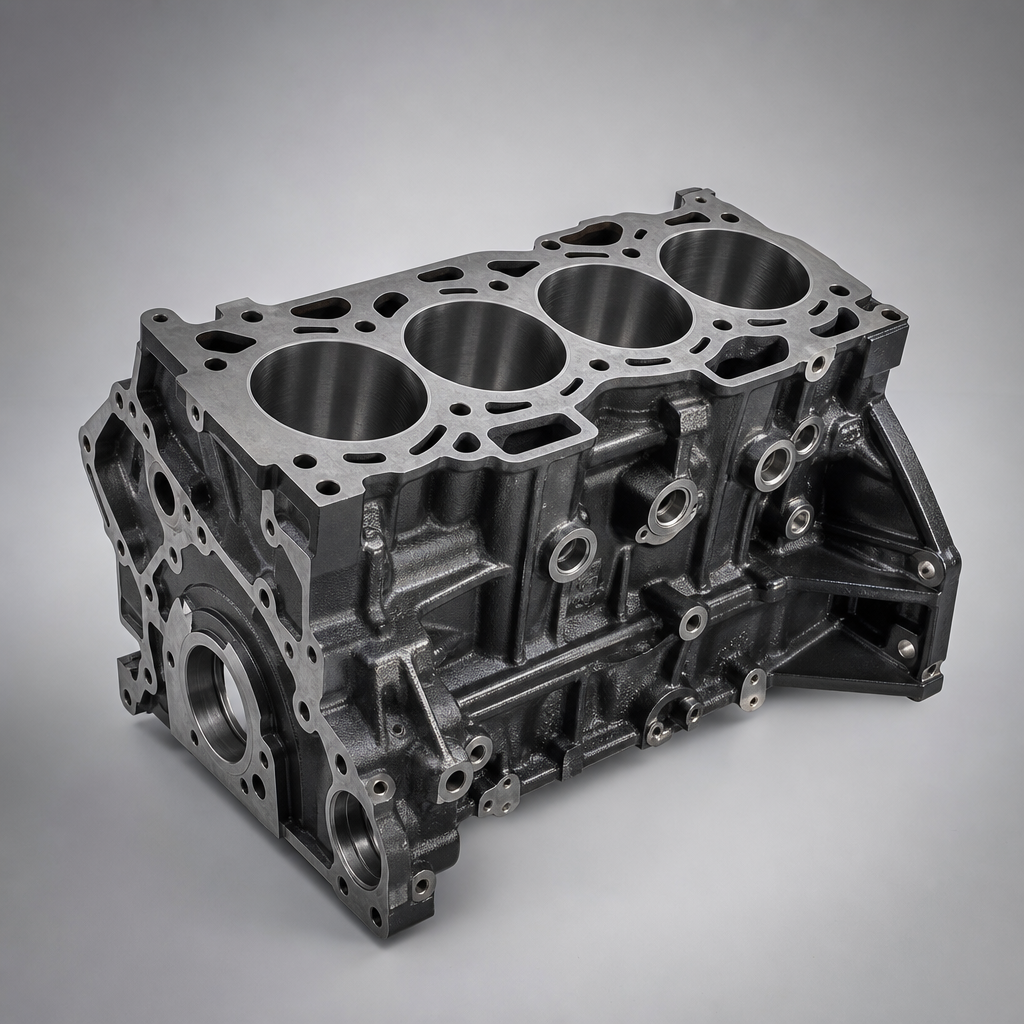
cylinder sleeve · 2026-07-02

Cylinder Sleeve Lexus OEM Supplier: How B2B Buyers Should Qualify Supply

Choosing a **cylinder sleeve Lexus OEM supplier** is not a catalogue exercise. It is a risk decision with direct consequences for machining yield, installation stability, warranty exposure, and repeat purchase cost. A low quote can disappear quickly if bore finish drifts, OD interference is unstable, or packaging failures create corrosion and transit damage.

Serious buyers usually assess the same core variables: manufacturing route, tolerance capability, material consistency, traceability, export execution, and the supplier's response when a lot moves out of control. The useful questions are specific. What bore tolerance is held after honing? What hardness window is normal for the selected iron grade? How is wall-thickness variation checked? Is the sleeve shipped finish-honed or with stock left for post-install machining?

For Lexus-fit engine programmes, sourcing often comes down to controlling heat transfer, wear behaviour, and press-fit reliability in aluminium or cast-iron blocks. That means close attention to bore finish, OD control, flange geometry, and material structure. Driventus supplies engine components to B2B buyers under IATF 16949:2016 and ISO 9001:2015 processes. Driventus is an independent aftermarket manufacturer; brand names are referenced for fitment only.

Start with a go/no-go screen before comparing prices

The fastest way to qualify a potential supplier is to screen for three things first: proven process control, usable documentation, and a commercial model that fits the programme. If one of those fails, there is little value in debating price.

A practical first-pass review should cover:

  • Material specification: grey cast iron, alloy cast iron, or other sleeve-grade material with controlled carbon, silicon, phosphorus, manganese, and hardness range
  • Critical dimensions: inner diameter, outer diameter, flange thickness, total length, concentricity, cylindricity, and flange runout
  • Surface condition: bore finish after honing, outer surface finish for block installation, lead-in chamfer, and edge-break consistency
  • Inspection records: incoming material checks, in-process SPC, final inspection reports, gauge calibration, and lot traceability
  • Export readiness: rust prevention method, VCI bag or oiling standard, carton strength, pallet standard, and barcode or label format
  • Programme support: sample lead time, drawing review, deviation handling, PPAP level if required, and engineering change control

With a cylinder sleeve Lexus OEM supplier, generic claims are not enough. Ask for control windows. A capable factory should be able to say whether finished bore tolerance is typically held within 0.01-0.03 mm, whether OD tolerance is managed to +/-0.01-0.02 mm or to a defined interference-fit band, whether hardness is controlled in a range such as 180-260 HB, and how much honing stock remains if the buyer finishes the bore after installation.

Then check the commercial floor. MOQ may be set by part number, melt batch, machine setup, or carton quantity rather than by a simple piece count. For a standard sleeve, a trial order may begin around 100-300 pcs per size. For a new custom Lexus-fit size, 300-500 pcs is more typical once setup, gauge, and validation cost are included.

Buyers managing multiple engine-component lines should also look at the supplier's broader manufacturing range through our catalog and, where relevant, engine components. That helps determine whether the factory can support related items such as pistons, rings, gaskets, or water pumps under one sourcing programme.

Read the drawing like a failure-prevention checklist

When buyers search for a cylinder sleeve Lexus OEM supplier, the real requirement is usually OE-style fit and durability, not retail interchangeability. The drawing is therefore less a formality than a map of likely failure points.

Typical control points include:

</tr></thead><tbody> </tbody></table>Each line on that table points to a different failure mode. Bore drift affects piston clearance. Poor OD control can create sleeve movement or crack the block during installation. Wall-thickness variation changes heat flow. Weak concentricity shows up later as uneven wear, not necessarily at incoming inspection.

Where an OE-style cross-reference appears in the enquiry, buyers sometimes share internal coding or associated engine-part references in generic formats such as OE 11251... for sealing systems. Production approval should still be based on verified drawings, measured samples, or confirmed buyer data. Catalogue assumption is not technical evidence.

Process detail matters as much as nominal tolerance. Buyers should ask whether the sleeve is produced by centrifugal casting or another route, whether the rough bore is semi-finished before stress relief, how much stock is left for final honing, and whether the OD is ground or finely turned before protection or oiling. For rebuild programmes, a key question is whether sleeves are shipped finish-honed or with an allowance such as 0.03-0.08 mm for final honing after press-in and block stabilization.

For aluminium blocks, the OD surface and interference value deserve extra scrutiny. Many buyers work within a practical band such as 0.03-0.08 mm, but the correct value depends on block material, sleeve wall, operating temperature, and installation method. The supplier should confirm the drawing value rather than relying on a standard press-fit assumption.

Sleeves are not certified separately to vehicle emissions rules, but their quality still affects oil control, wear behaviour, and long-term combustion stability. In some engine programmes, the wider application may need to align with regulations such as ECE R-83 depending on target market and use case.

Audit the factory by following the part through the line

Certificates are useful, but they do not tell you where the process is actually controlled. A better audit method is simple: trace one sleeve from raw material receipt to packed shipment and ask where each critical risk is contained.

Audit checklist

  • Review raw material supplier approval and incoming inspection criteria
  • Check calibration status for bore gauges, air gauges, micrometers, roughness testers, hardness testers, and coordinate measuring equipment where used
  • Confirm that control plans and PFMEA are used for sleeve machining and finishing processes
  • Verify batch identification from raw material receipt to packed finished goods
  • Review non-conformance handling, quarantine procedure, and corrective-action records
  • Inspect storage conditions for corrosion control before shipment
  • Confirm packaging validation for long transit routes to the EU, UK, US, Canada, Australia, and Brazil

A capable factory should be able to explain the routing in operational terms: raw material verification, casting or casting receipt, rough turning, stress relief if specified, semi-finish boring, OD machining, flange machining, finish boring, honing, deburring, washing, 100% visual inspection, sampling-based dimensional inspection, rust prevention, and packing by lot. Then ask the key question: where is final bore size achieved, and what happens if readings trend toward limit?

For critical features, buyers should request real capability data. Many procurement teams use Cpk >= 1.33 as a baseline for stable production characteristics and may ask for higher targets on high-volume or sensitive programmes. If the supplier cannot show recent data for bore size, OD, and concentricity, the quoted tolerance may exist only on paper.

A mature export supplier should also be ready to provide:

  • Material certificates
  • Dimensional reports with actual readings, not only pass/fail marks
  • Initial sample inspection reports
  • PPAP elements when agreed, often Level 3 for OEM-oriented programmes
  • REACH declaration aligned with REACH (EC) No 1907/2006
  • Lot coding that links finished cartons back to melt, machining date, and inspection record

Do not skip packaging review. Confirm whether sleeves are packed with individual separators, VCI protection, desiccant where needed, and export cartons in a realistic weight band such as 15-20 kg per carton. Also define pallet standard, stretch-wrap method, and corner protection before first shipment, especially for LCL cargo.

Driventus maintains a documented quality system for export programmes and buyer audits. For projects requiring drawing-based development, machining adjustment, or private-label supply, buyers can also review our custom manufacturing capabilities.

Map the commercial model before you approve samples

Sample approval does not solve the sourcing problem if MOQ, lead time, or replenishment logic do not fit the programme. Commercial alignment should be checked early, not after technical sign-off.

Typical B2B sourcing questions include:

  • MOQ: Is the minimum order set by part number, batch weight, machine setup, or packaging unit?
  • Tooling: Is there any fixture, pattern, gauge, or honing-tool cost for a new sleeve design?
  • Lead time: What is the timeline for samples, first order, and repeat production?
  • Forecasting: Can the supplier hold safety stock against rolling 3-month or 6-month forecasts?
  • Mix loading: Can multiple sleeve sizes ship in one consolidated container or pallet programme?
  • Incoterms: FOB, CIF, EXW, or other terms based on the buyer's routing model

For many aftermarket and OEM-service programmes, a realistic structure looks like this:

Parameter Typical buyer focus Why it matters
Bore toleranceOften 0.01-0.03 mm after finish honing, or as defined by piston clearance targetControls piston-to-wall clearance
Outer diameter toleranceCommonly +/-0.01-0.02 mm or a specified interference bandPrevents sleeve movement or block cracking
Wall thickness variationFrequently held within 0.02-0.05 mm around circumferenceSupports even heat transfer and structural stability
HardnessTypical sleeve-grade iron range 180-260 HB or per drawingAffects wear resistance and machinability
MicrostructureControlled pearlite percentage and graphite distribution where specifiedInfluences scuffing, seizure resistance, and wear behaviour
Surface roughnessOften Ra 0.4-1.2 um after honing, depending on ring packSupports ring seating and oil control
ConcentricityCommonly controlled within 0.02-0.03 mm between bore and ODReduces uneven wear and installation issues
Total length / flange thicknessOften held within +/-0.02-0.05 mm depending on designMaintains deck height and axial location

</tr></thead><tbody> </tbody></table>Price logic should also be made explicit. Sleeve pricing usually moves with material grade, blank weight, machining cycle time, and annual volume. A flanged sleeve with tighter OD and bore control will not price like a simple dry liner. Buyers comparing offers should verify whether rust prevention, export carton, palletization, and inner protection are included or billed separately.

In many programmes, better pricing appears only once annual demand reaches a stable level such as 1,000-3,000 pcs per size per year. Below that, setup cost, lot segregation, and slower stock rotation tend to push unit cost upward. That is why some factories accept a low pilot MOQ but reserve sharper pricing for blanket orders or confirmed forecasts.

Lead time claims should always be tied to approval status. If fit depends on final block machining data, immediate mass-production promises are a warning sign. The release path should be clear: sample submission, dimensional sign-off, trial installation, then bulk production.

Compare suppliers on total landed risk, not opening quote

Two suppliers can quote the same sleeve and present very different risk profiles. One may have tighter process control, cleaner traceability, and more reliable export execution. The other may simply have the lower opening number.

A more useful comparison framework is total landed risk:

1. Technical risk: process capability, Cpk evidence where relevant, sample consistency, and whether the supplier controls bore, OD, and flange dimensions to the required tolerance band 2. Quality risk: complaint rate, containment response time, 8D discipline, and traceability depth to melt and production lot 3. Supply risk: actual lead time performance, available capacity, shipment consolidation ability, and on-time export execution 4. Commercial risk: payment terms, MOQ rigidity, tooling policy, and cost transparency for packaging and logistics 5. Compliance risk: documented quality certification, substance compliance declarations, and audit readiness

Turn those categories into measurable checkpoints. Compare sample lead time in days, first-pass sample approval rate, bore Cpk, average carton damage rate, MOQ by size, repeat lead time, and response time to non-conformance. Once quantified, the decision becomes less vulnerable to a low quote that is later offset by quality escapes or delivery disruption.

It also helps to challenge irrelevant technical claims. Buyers sometimes hear suppliers reference adjacent standards to sound credible. For example, SAE J2527 applies to brake friction testing, not cylinder sleeves. A reliable supplier should cite standards accurately and stay within the technical scope of the part.

The cost of failure should be part of the comparison sheet. A sleeve that is marginally cheaper can still be more expensive once incoming sorting, machining downtime, installation scrap, claim handling, and premium freight are counted. In most B2B programmes, tolerance stability and response discipline are worth more than a small unit-price difference.

Driventus works with distributors, engine-component importers, and industrial buyers that need repeatable supply rather than catalogue-only trading. In most cases, the next useful step is a drawing review, sample comparison, or packaging specification check tied to the target market.

Use a custom sleeve programme when the standard part creates downstream cost

A custom programme makes sense when the standard sleeve forces extra machining, creates installation variation, or does not match the buyer's packaging and branding model. In other words, customization should remove cost or risk somewhere else in the chain.

Typical triggers include:

  • Modified outer diameter for a specific rebuild process or block interference target
  • Alternative flange geometry or flange thickness
  • Controlled bore finish for a designated ring pack
  • Semi-finished bore with a defined honing allowance for local finishing
  • Private-label packaging for distributor networks
  • Consolidated sourcing with related engine hard parts

In these cases, the supplier should be able to review sample parts, prepare measured drawings, agree inspection points, and issue pre-production samples before mass release. That is especially important for Lexus-fit engine programmes, where block material, thermal load, and rebuild practice can vary by engine family and by market.

A workable development sequence is usually straightforward: confirm application data, review drawing or reverse-engineered dimensions, agree critical tolerances, produce samples, submit dimensional and material reports, complete trial installation, adjust if required, and then release serial production. For custom sleeves, buyers should expect more than a catalogue quote. Ask for a tolerance proposal, process route, sample schedule, and any one-time cost for fixtures or dedicated gauges.

Commercially, custom programmes often become worthwhile once yearly demand is high enough to justify setup and validation effort, or when a revised dimension set reduces local machining time during rebuild. In some cases, a slightly higher sleeve price is acceptable because it cuts finishing time, lowers rejection risk, or improves installation repeatability.

Driventus can support drawing-based and sample-based development under controlled export processes. Buyers evaluating a cylinder sleeve Lexus OEM supplier can begin with technical data, annual volume, target market, and packaging requirements, then move to sample approval and commercial alignment.

Frequently asked questions

The main risk is inconsistency across batches rather than visible cosmetic defects. Material structure, hardness, bore finish, outer diameter tolerance, and concentricity can all drift if process control is weak. That leads to installation problems, oil consumption, abnormal wear, or shortened engine life. Buyers should ask for actual dimensional data, hardness readings, and process-capability evidence rather than relying on a single approved sample.

Yes, many manufacturers can support pilot quantities before full release, but MOQ depends on sleeve size, tooling, and process route. Buyers should confirm whether the MOQ is set per part number, per batch, per setup, or per shipment. In practice, pilot orders often start around 100-300 pcs for standard sizes, while custom programmes may need 300-500 pcs or a tooling charge to move efficiently.

Buyers should normally request dimensional reports with actual readings, material certificates, hardness data, surface-finish data where relevant, sample photos, packaging details, and any agreed PPAP elements. For OEM-oriented programmes, it is also useful to request control-plan excerpts, traceability format, and confirmation of critical tolerances such as bore, OD, flange thickness, and concentricity. For EU supply, a REACH declaration is also commonly requested.

If you are qualifying a supply source for Lexus-fit cylinder sleeves, send the drawing, sample data, target tolerance, annual volume, and packaging requirement for review. You can [request a quote](/contact.html) and discuss technical and commercial requirements.

Request a Quote
Item Typical range
Sample lead time20-45 days depending on drawing maturity, gauge readiness, and whether new tooling is required
First production lead time35-60 days after sample approval, deposit, and packaging confirmation
Repeat production lead timeCommonly 30-50 days for running sizes with stable forecast
MOQOften 100-300 pcs per standard size; 300-500+ pcs for custom sizes or dedicated setups
Tooling / setup costMay be waived for standard sizes; custom programmes can involve one-time gauge, fixture, or pattern charges
Audit supportRemote document review or on-site factory audit by appointment