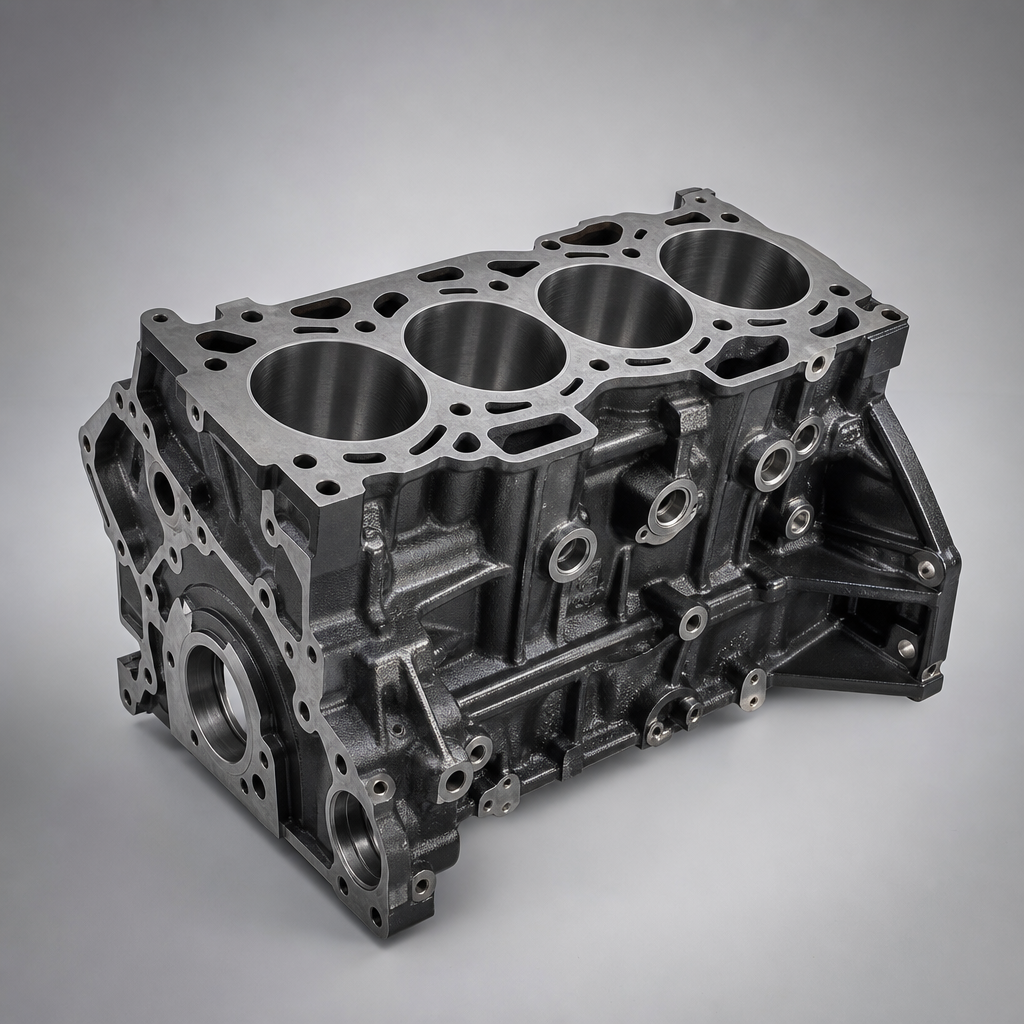
Cylinder Sleeve How to Replace: Workshop Decision Points and B2B Control Checks
Cylinder sleeve replacement is a machining-controlled repair, not a routine parts swap. In commercial rebuild work, the part can be correct on paper and the job can still fail because the housing bore, interference fit, flange height, surface finish, or cleaning standard was wrong. That is why serious programs treat **cylinder sleeve how to replace** as both a workshop procedure and a sourcing decision. The sleeve specification has to match the actual repair route: dry sleeve or wet liner, semi-finished ID or finish-size ID, standard or repair OD, flange tolerance, seal-set inclusion, and packaging level for storage or export. For purchasing teams, those technical choices connect directly to MOQ, lead time, claim risk, and site-to-site repeatability. This article is written for rebuilders, repair groups, and procurement teams that need dimensional control, documented checks, and supply consistency rather than a generic how-to summary. Driventus is an independent aftermarket manufacturer; any brand names are referenced for fitment only. You can review our catalog, quality system, and custom manufacturing capabilities before discussing application requirements.
Start with the decision: does this block need a sleeve at all?
The first mistake in sleeve work is replacing too early or too late. A worn bore is not automatically a sleeve job, and a badly damaged block is not always recoverable just because a sleeve exists for it.
Sleeve replacement is usually the right route when the parent bore or existing liner cannot be brought back by normal honing or approved oversize boring. Typical triggers include:
Bore wear beyond service limit
Deep vertical scoring from ring failure or debris
Cavitation erosion on wet liner applications
Cracks near the fire deck or lower register
Corrosion pitting in coolant-contact zones
Previous machining that has reduced or eliminated the required interference margin
For fleet rebuild or reman programs, visual judgment is not enough. Record bore diameter, taper, out-of-round, deck flatness, counterbore condition, and crack status before deciding. Many shops move to sleeve replacement when taper or ovality exceeds the engine maker's limit, often around 0.03-0.08 mm, or when damage will not clean up within the next approved oversize.
This is also the point where buyers should confirm the liner concept. Dry sleeve, wet liner, and flange-type repair sleeve are different products with different installation risks. If the same engine family is rebuilt across multiple sites, standardizing an approved part list through our catalog reduces wrong-spec purchasing and emergency freight.
A practical purchasing structure is to separate demand into three lanes:
Local stock for fast-moving standard sleeves
Scheduled replenishment for common engine families
Custom sleeves ordered to drawing revision for low-volume or non-standard work
That approach is usually more reliable than treating every sleeve as a spot buy.
Before machining, verify the repair route and the part on the bench
Most replacement problems begin before the old sleeve comes out. The workshop assumes one machining route; the purchased part was made for another.
Check these points before any metal is cut:
Material grade: usually alloy cast iron selected for wear and thermal stability, often in the approximate 180-260 HB range depending on duty
Outside diameter: must match the target housing size and intended interference fit
Inside diameter: confirm whether it is semi-finished, finish-size, or built for a repair oversize
Overall length and flange dimensions: these control deck relationship and seating
Seal groove geometry for wet liners: confirm against the block register and seal design
A disciplined receiving inspection should also cover part marking, lot traceability, and hardness verification where required. In B2B supply, buyers typically align this with IATF 16949:2016 and ISO 9001:2015 process expectations. A common incoming plan is 100% visual and marking inspection, then sampled dimensional checks on OD, flange thickness, and overall length under an agreed control plan.
Here is the practical comparison that matters before release:
Sleeve type
Typical retention method
What usually goes wrong
Key check after install
Dry sleeve
Interference fit in block bore
Wrong press fit, housing distortion, sleeve damage during insertion
Finished bore size, roundness, and wall stability
Wet liner
Flange seating plus seals
Register damage, seal cut, coolant leakage, wrong protrusion
</tr></thead><tbody> </tbody></table>If the sleeve includes preservatives, coatings, or sealing compounds, confirm chemical compliance for the target market. In EU supply chains, REACH (EC) No 1907/2006 is often part of the document review.
Commercial verification belongs here too, not after the PO is released:
MOQ: stock sizes may start around 20-50 pieces; custom sleeves often require 300-500 pieces
Price logic: stable annual volume and standard packaging usually reduce cost; mixed low-volume orders usually do not
Lead time: stock may move in 7-15 days; custom cast-and-machine production is often 30-45 days plus transit
Approval route: new flange, groove, or repair-oversize variants may need sample approval first
Ask one direct question on every first order: is the quote based on a stock drawing, a customer drawing, or a reverse-engineered sample? That answer determines tolerance ownership later.
Cylinder sleeve how to replace: the workshop sequence that actually controls risk
The exact method depends on engine design, but the sequence below reflects the standard professional route for cylinder sleeve how to replace work.
1. Strip, extract, and map the block
Disassemble the block fully. Remove pistons, rods, crankshaft where needed, and any plugs or nozzles that obstruct access. Extract the old sleeve with the proper puller or machining method. Hammering out a liner is a fast way to damage the lower register unless the engine design specifically allows it.
Inspect and record:
Register fretting
Counterbore wear
Cracks near head bolt holes
Coolant passage corrosion
Bore distortion from overheating
Evidence of previous repair oversizes
On older blocks, this step often decides whether a standard sleeve is still usable. Many rebuild shops record 6-8 bore readings per cylinder at multiple depths and clock positions so taper, ovality, and centerline shift are visible before machining starts.
2. Machine the housing to the real target size
Machine the block bore or counterbore to the dimension required by the sleeve drawing. The repair target is the installed fit, not a generic shop number. For many dry sleeve applications, interference is defined by engine design, sleeve OD, and block material. As a rough reference, some shops work around 0.05-0.10 mm on smaller bores and 0.08-0.15 mm on larger heavy-duty bores, but the approved drawing or service data takes priority.
Measure the housing at multiple depths and clock positions after machining. Confirm taper, ovality, and edge condition. A clean entry chamfer and burr-free surface help prevent sleeve shaving or cocking during insertion.
3. Confirm sleeve condition and machining allowance
Recheck the replacement sleeve before installation. Verify OD, length, flange dimensions, and inside-diameter condition. A semi-finished sleeve commonly leaves about 0.20-0.50 mm on the ID for final boring and honing, depending on wall thickness and expected distortion after fitting.
Use chilling or block heating only when the process calls for it. Improvised thermal methods can create condensation, coating damage, or uneven fit. If thermal assist is approved, control the temperature difference and document it.
Wet liners need new seals every time. Confirm elastomer type and coolant compatibility, typically NBR, HNBR, or FKM depending on service temperature and chemistry.
4. Install with axial control, not force alone
Press or seat the sleeve squarely with a controlled fixture so the load stays axial. If the liner enters crooked, the housing can score, the sleeve can distort, and full seating may never happen even if the final depth looks close.
For flange liners, make sure the flange sits fully on a clean counterbore. For wet liners, check that the seals are lubricated correctly, not twisted, and not pinched during entry. Monitoring press force is useful. A sudden force spike usually points to burrs, wrong interference, or sleeve cocking.
5. Finish machine the installed sleeve
If the sleeve is semi-finished, boring and honing happen after installation. Final diameter, crosshatch angle, and surface finish have to match the piston and ring package, not just the sleeve print. Plateau honing may be necessary for modern ring sets where oil control and break-in behavior are critical.
This is where piston-to-wall clearance is set against operating requirement. Many diesel rebuilds control clearance in hundredths of a millimeter. Crosshatch is often held around 35-45 degrees, but the actual target depends on the ring system and service duty.
6. Validate before final assembly
Measure final bore size, taper, out-of-round, and deck relationship. On wet liner engines, check protrusion on every cylinder and pressure-test before build completion. Heavy-duty wet liner designs often run in a narrow protrusion band such as 0.02-0.10 mm, with tight cylinder-to-cylinder variation limits to protect head-gasket loading.
A proper job ends with a dimensional record, not just a fitted part. Useful records include pre-machining bore data, finished housing size, installed sleeve identification, final bore size, honing result, protrusion, and operator/date traceability.
Where sleeve jobs fail: the dimensions and process checks that matter most
Most early sleeve failures after rebuild are dimensional or process failures. Base material matters, but it is rarely the first reason a job comes back.
The main acceptance checks usually include:
Outside diameter before installation
Flange outside diameter and thickness
Sleeve length
Finished bore size after honing
OD-to-ID concentricity
Surface roughness after honing
Liner protrusion above deck on wet liner designs
Seal groove dimensions where applicable
In practice, acceptance criteria must tie back to the engine drawing, service manual, or approved repair standard. A sleeve can be nominally correct and still create field problems if flange thickness varies, machining allowance is unstable, or concentricity is poor.
That is why supplier capability discussions should move past nominal size and into actual control bands. Buyers should expect clear statements on values such as:
OD tolerance, often in the range of +/-0.01 to +/-0.03 mm depending on size and application
Flange thickness tolerance, often around +/-0.02 to +/-0.05 mm
Overall length tolerance, often around +/-0.05 mm
Concentricity or runout limits appropriate to bore size and sleeve wall
The final numbers depend on the engine family. The point is that the supplier should state them clearly and repeatedly hit them.
For higher-control programs, ask whether the supplier can support:
PPAP-style dimensional submission when OEM or Tier-1 customers require it
Material certificates by heat or batch
Export packaging validation for corrosion protection
Lot marking and carton traceability
Where the engine family is recurring, or the job runs under private label, custom manufacturing is often more efficient than adapting open-market stock sizes. That matters even more when flange height, repair oversize, or kit composition differs by site.
Acceptance criteria should also exist in the purchasing file, not only in workshop memory. A solid release package usually includes the approved drawing, inspection frequency, carton quantity, rust-prevention method, pallet standard, and claim window after receipt. Low unit price loses its appeal quickly when damaged flanges, rust staining, or mixed lots force 100% sorting at the warehouse.
After installation, treat validation and sourcing as one workflow
Once the sleeve is installed and the short block is assembled, the job is not finished until validation confirms that the machining route and the purchased part were compatible.
Recommended post-install checks include:
Cooling-system pressure test for wet liner engines
Compression or leak-down test after build
Verification of piston-to-wall clearance
Ring end gap confirmation in the finished bore
Review of the honing pattern across full stroke length
Run-in inspection for abnormal temperature, noise, or blow-by
For procurement teams, the critical lesson is simple: workshop method and purchased specification have to match. A sleeve intended for finish machining on site should not be treated like a near-finished drop-in part. That mismatch creates scrap, delays, and warranty inconsistency.
A capable supplier should be able to discuss more than nominal dimensions. Expect a useful conversation about material structure, machining allowance, dimensional capability, and packaging for sea freight or long storage. In qualification work, request dimensional reports, process documents aligned with IATF 16949:2016 and ISO 9001:2015, and any relevant declarations under REACH (EC) No 1907/2006.
If your program covers multiple engine platforms, including related items in /products/engine-components.html, it is usually smarter to review supply as a system instead of a single SKU. Sleeves, seals, mating parts, packaging, and traceability all interact in the rebuild workflow.
A practical commercial comparison matrix should include:
Piece price by volume tier: for example 50, 100, 300, and 500 pieces
Lead time by supply mode: stock shipment, repeat production, and new custom development
Included content: sleeve only, sleeve plus seals, or full repair kit
For first qualification, a pilot batch is usually the cleanest route. Validate fit, machining behavior, field performance, and logistics at one site. Then release larger monthly schedules after the dimensional record and supply performance are stable.
Frequently asked questions
No. Some sleeves are supplied near-finished, while many are designed to be bored and honed after installation. The right route depends on wall thickness, interference fit, expected distortion after press-in, and the piston-ring package. Before ordering, confirm whether the sleeve ID is finish-size, semi-finished with machining allowance, or intended for a specific repair oversize.
Dimensional error is the most common cause. Incorrect interference fit, poor counterbore condition, wrong liner protrusion, unsuitable bore finish, or incorrect piston-to-wall clearance usually causes failure earlier than a basic material defect. In repeat B2B programs, recorded measurements and tolerance discipline matter more than nominal catalog size.
Request dimensional reports, material certificates, lot-traceability details, process-control information, and substance compliance documents where required. For recurring programs, also ask for capability data, agreed tolerance tables, export packaging specifications, and a commercial schedule covering MOQ, price breaks, sample approval, and standard lead time.
If you are sourcing cylinder sleeves for rebuild programs or private-label supply, Driventus can review drawings, tolerances, and batch requirements with your team. Contact us here: /contact.html