cylinder sleeve · 2026-05-27

Cylinder Sleeve Alfa Romeo Supplier: Sourcing Guide

Procurement teams sourcing a cylinder sleeve Alfa Romeo supplier usually need three things: bore accuracy, repeatable metallurgy, and export documentation that survives an audit. Driventus supplies aftermarket cylinder sleeves for engine rebuild and remanufacturing programmes, with material traceability, dimensional inspection, and packing built for international freight. Driventus is an independent aftermarket manufacturer; brand names are referenced for fitment only. For buyers in the EU, UK, US, Canada, Australia, and Brazil, the real test is not whether a sleeve looks correct, but whether it matches the cylinder block, supports the intended interference fit, and arrives with the certificates your quality team asks for. The notes below explain how to specify the part, what to ask on a supplier audit, and how to reduce mismatch risk when the programme is tied to an OE reference or a dealer-facing cross-reference list.

What buyers should verify before requesting samples

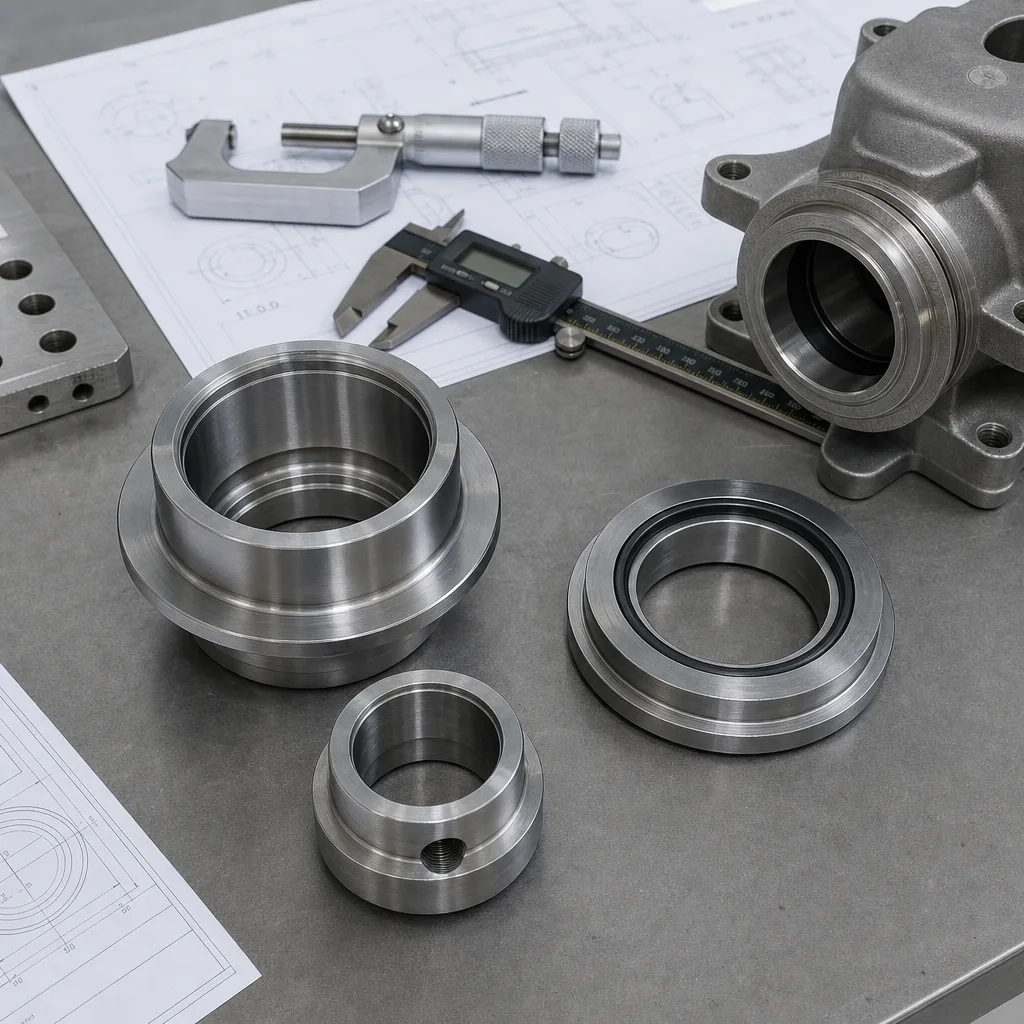
For a sleeve programme, the first purchase order should be built from measurable data, not from a vehicle name alone. Start with the engine family, block material, sleeve type, finished bore, installed height, flange geometry, and any machining allowance required after pressing.

Use the same checklist for every sourcing round:

  • Engine code and block family, not just model name.
  • Finished inner diameter, outer diameter, and installed height.
  • Dry sleeve or wet sleeve construction.
  • Flange thickness, location, and squareness.
  • Surface finish, hardness range, and interference fit target.
  • Coating or corrosion protection, if the part will sit in inventory.
  • Packaging standard for export and warehouse handling.

If the programme references an OE number such as OE 06A107065, confirm the drawing revision, cylinder bank, and block variant before you order. A good supplier should be able to translate that reference into a controlled drawing package rather than rely on verbal fitment claims.

Materials and machining control

Cylinder sleeves fail in service for predictable reasons: poor material selection, weak bore control, or inconsistent press fit. The supplier should state the base material, the heat treatment route if any, the final hardness window, and the inspection method used at each production stage.

</tr></thead><tbody> </tbody></table>For high-volume supply, ask how the process is controlled under IATF 16949:2016 and how incoming material, machining, and final release are handled under ISO 9001:2015 procedures. That matters more than a marketing claim because it tells you whether the sleeve dimensions are repeatable from batch to batch.

Quality system, compliance, and audit evidence

Procurement teams should treat documentation as part of the part number. For export supply, the minimum file set should include the drawing revision, dimensional report, traceability record, and material declaration. If your compliance team needs a formal review, see our quality system for the controls used on inspection, traceability, and release.

The standards and regulations most often requested on sleeve programmes are straightforward:

  • IATF 16949:2016 for automotive quality management.
  • ISO 9001:2015 for documented process control.
  • REACH (EC) No 1907/2006 for chemical disclosure in the EU.
  • ECE R-83 when a customer asks for emissions-related engine programme context.

For coatings, preservatives, and packing materials, buyers should confirm that any chemicals used are declared correctly and that the final export pack does not create a compliance issue at the border. If your internal approval process includes an audit, ask for sample control plans, calibration records, and nonconformance handling before placing volume orders.

MOQ, lead time, and custom manufacturing

A serious cylinder sleeve Alfa Romeo supplier should separate catalogue supply from custom work. Standard sleeves can often move through a shorter approval path, while custom sleeves need drawing review, tooling confirmation, and a sample approval cycle.

Use this decision logic:

  • If the sleeve already exists in the catalogue, start with the published dimensions and packaging format in our catalog.
  • If the block requires a different height, flange, wall thickness, or coating, move the part into custom manufacturing.
  • If your programme needs a staged approval, request sample, pilot, and bulk milestones before you commit the annual forecast.

For sourcing teams, the practical questions are MOQ, monthly capacity, container loading, and whether the plant can support stable reorders after the initial award. A supplier with machining, inspection, and packaging under one roof reduces handoff risk, which is important when a repair network or distributor expects consistent supply over many months.

Fitment control and cross-reference risk

Cross-references are useful, but they are not a substitute for dimensional verification. When a line card points to an OE reference, treat it as a fitment clue and not as proof of equivalence. Brand names may appear in buyer requests, but they should only be used for fitment only; we do not claim approval or endorsement by any vehicle manufacturer.

Before release, confirm the following against the engine build data:

  • Block family and cylinder count.
  • Sleeve outer diameter and interference fit.
  • Installed height relative to deck face.
  • Head gasket stack-up and machining allowance.
  • Final honing target after pressing.

For teams building a broader engine portfolio, our engine components range and our catalog help keep the cross-reference logic aligned across pistons, gaskets, and sleeves. That reduces ordering errors when one reference number is shared across several market variants or model years.

Frequently asked questions

Send the engine code, OE reference if you have one, finished dimensions, sleeve type, and the required quantity. A drawing or sample photo helps, but the quote should be based on measurable data rather than vehicle name alone.

Yes, if the sleeve is already in our production range or if the custom scope is limited. For a new design, we usually separate sample approval from bulk production so the buyer can validate fitment before committing volume.

Ask for the drawing revision, dimensional inspection report, material declaration, traceability record, and packing specification. If your customer requires it, request quality system evidence aligned to IATF 16949:2016 and ISO 9001:2015.

If you need a drawing review, sample sleeve, or export quotation, contact Driventus through /contact.html.

Request a Quote
Checkpoint Buyer requirement Evidence to request
MaterialDeclared alloy or iron grade for the applicationMill cert, heat number, batch record
Bore controlFinished ID and OD within drawing toleranceFirst article report, gauge data
GeometryRoundness, cylindricity, and flange squarenessCMM or dedicated inspection record
FitmentDefined press fit and installed heightDrawing, sample fit report
PackagingCorrosion protection and transit protectionPacking spec, carton photos