cylinder liner · 2026-07-09

Cylinder Liner Seat Supplier Selection for B2B Engine Programmes

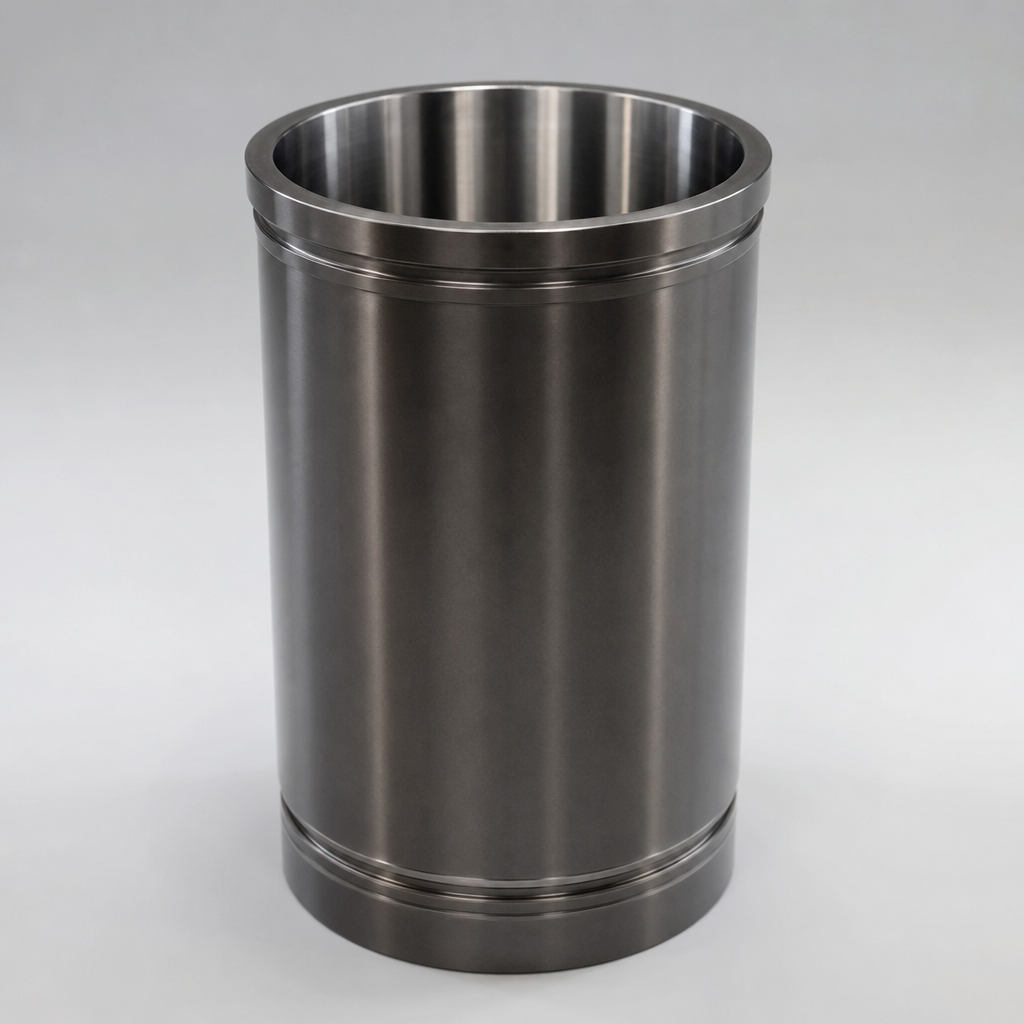
A cylinder liner seat supplier is not being asked to sell a simple ring-shaped part. The supplier is being asked to protect liner location, bore geometry, sealing consistency, and repeatable assembly in an engine block that may be new, repaired, or remanufactured.

That changes the sourcing question. Unit price matters, but only after the supplier has shown control of seat depth, concentricity, flatness, perpendicularity, surface finish, material traceability, and packing. A variation that looks small on paper can shift liner protrusion, create uneven seating, or make a warranty claim hard to investigate months later.

For diesel and heavy-duty applications, buyers commonly need seat depth tolerance in the 0.02-0.05 mm range where the drawing requires tight protrusion control. The actual limits must come from the customer's drawing, engine block condition, liner specification, and repair procedure. A capable supplier should still be able to explain how each critical feature is machined, measured, recorded, and protected before shipment.

Driventus supplies cylinder-liner-related engine components from Taizhou, Zhejiang, for aftermarket and OEM-oriented supply chains. We work within IATF 16949:2016 and ISO 9001:2015 quality systems, and support buyers who need stable replenishment, factory audit access, export documentation, and documented validation before programme release. Driventus is an independent aftermarket manufacturer; brand names and OE references are used only to identify fitment.

Use this guide as a practical framework for procurement, quality, and engineering teams: first screen out weak suppliers, then test technical control, then negotiate commercial terms around a programme that can actually be repeated.

Start With the Decision Gate, Not the Price Sheet

Before price negotiation, a cylinder liner seat supplier should pass three gates: fit, process control, and supply continuity. If one fails, a low quotation only moves cost into inspection, rework, warranty handling, or distributor complaints.

Use these checks at the first sourcing stage:

  • Seat depth, step height, and shoulder width against the drawing or approved sample
  • Critical tolerance bands, such as +/-0.02 mm to +/-0.05 mm where the application requires tight liner protrusion control
  • Concentricity to the bore centreline, verified against a defined datum rather than a visual edge
  • Face flatness and surface finish, with target Ra values stated on the drawing or inspection plan
  • Material grade, hardness range, and heat treatment route, where applicable
  • Incoming material records, heat number or lot number, and final inspection report
  • Gauge type, calibration status, sampling frequency, and reaction plan for out-of-tolerance findings
  • Lot traceability from raw material to finished packing
  • Packaging controls for corrosion, impact, and mixed-part prevention
  • Lead time, MOQ, price-break logic, and replenishment policy

A supplier that cannot describe its measurement method is asking the buyer to accept hidden risk. That risk is larger when parts are installed in high-value engine blocks, used in remanufacturing programmes, or shipped into a distributor network where failures are difficult to isolate after installation.

Where Driventus Fits in the Sourcing Route

Driventus is organised for industrial B2B supply rather than retail shipment. Buyers usually source through a mix of standard catalogue items and programme-based orders, depending on forecast volume, application coverage, and packaging requirements.

For cylinder-liner-related parts, we support cross-reference review, sample approval, production scheduling, batch documentation, and export packing aligned with distributor or workshop network needs.

A typical route looks like this:

1. Enquiry with part number, drawing, sample, OE reference, or application data 2. Drawing or sample review 3. Feasibility check against tooling, machining, inspection, and packing requirements 4. Quotation with MOQ, lead time, price tier, and documentation assumptions 5. Sample production, where required 6. Dimensional report and buyer approval 7. Pilot order for production and receiving validation 8. Replenishment schedule for repeat supply

For existing catalogue coverage, quotation can normally be built around current tooling and batch planning. For custom dimensions, buyers should allow extra time for drawing confirmation, fixture review, first-article inspection, and packaging approval.

Relevant links for procurement review:

For buyers managing broader engine programmes, it is also worth reviewing engine components alongside cylinder liner seat items. Category managers may be able to consolidate sourcing across pistons, gaskets, water pumps, and related powertrain parts when vendor qualification, logistics, and documentation requirements overlap.

Our commercial model is built around repeatable factory supply: workable MOQ levels, stable production slots, export paperwork, consistent carton and label formats, and practical support for purchasing, quality, receiving, and aftersales teams.

Failure Modes Hidden Behind an Acceptable Catalogue Photo

A seat can look correct in a catalogue and still create assembly variation. The problem is usually not the visible shape. It is the control of small features during machining, inspection, tool change, deburring, packing, and replenishment.

</tr></thead><tbody> </tbody></table>The inspection plan should state who measures the part, when measurement occurs, which gauge is used, and what happens when a result trends toward the control limit. For example, a buyer may require 100% checks on seat depth for first articles, then a defined sample rate during production, with full recheck after tool change, fixture adjustment, or machine maintenance.

Published standards and regulatory frameworks may also form part of supplier qualification, depending on the destination market and customer contract. Driventus can align documentation with IATF 16949:2016 and ISO 9001:2015 systems. For cross-border material compliance, buyers may require REACH (EC) No 1907/2006 documentation. For connected engine subsystem programmes, project scopes may also reference ECE R-83 or SAE J2527 when emissions or friction-material validation requirements are part of the wider package.

Supplier Comparison: What to Score Beyond Unit Cost

A useful supplier comparison is closer to a scorecard than a catalogue review. Photos and quoted prices are only starting points. For repeat supply, procurement teams need to compare how each supplier behaves when drawings change, samples are challenged, batches repeat, and documentation is requested under time pressure.

Score each supplier on these points:

1. Engineering response time: how quickly the supplier can answer drawing, tolerance, material, and fitment questions. For active sourcing, a practical target is 24-48 hours for routine technical clarification and 3-5 working days for drawing review or custom feasibility. 2. Sample discipline: whether samples are identified, measured, and shipped with inspection data. A first-article package should include part number, revision, sample quantity, measured dimensions, gauge method, inspector, date, and batch code. 3. Production stability: whether the same machining route, fixture setup, control plan, and tool-change rule can be maintained across replenishment orders. 4. Export readiness: whether cartons, marks, labels, pallet dimensions, HS code support, invoice data, packing list, and certificate requirements are suitable for customs clearance and warehouse intake. 5. Quality escalation: whether the supplier has a defined corrective-action process with containment, analysis, corrective action, preventive action, and response timing. 6. Programme flexibility: whether the supplier can support private label packing, OE cross-reference work, custom manufacturing, mixed-engine coverage, and release schedules by month or quarter.

For cylinder liner seat supply, a lower unit price is not useful if the supplier cannot hold geometry or support a claim with dimensional evidence. Procurement teams should score technical fit, documentation quality, replenishment reliability, landed cost, and cash tied up in MOQ before negotiating final commercial terms.

Plan the Programme in Sample, Pilot, and Repeat Lots

Lead time and MOQ should be treated as programme design variables, not footnotes on a quotation. Many sourcing problems begin when buyers focus on opening price and overlook irregular lead times, unstable batch sizing, inconsistent cartons, or late paperwork.

Driventus usually structures order planning around these questions:

  • What MOQ is practical for the buyer's forecast and warehouse plan?
  • Is the item stocked, scheduled for regular production, or made to order?
  • Can rolling release schedules be supported for 3-month or 6-month forecasts?
  • What is the standard lead time after order confirmation and deposit, where applicable?
  • Are split shipments or mixed pallets available for multi-location distribution?
  • What packing format is required for distributor, workshop, or private label channels?
  • Which price breaks apply at sample, pilot, carton, pallet, and programme-order quantities?

A practical model separates demand into sample lots, pilot lots, and programme lots. Sample lots are used for fitment and measurement approval and may carry a higher unit cost because setup, inspection, and documentation are spread across a small quantity. Pilot lots confirm production repeatability, carton format, label layout, and receiving accuracy. Programme lots should be quoted with clear MOQ, price tier, lead time, and release schedule assumptions.

For standard items, buyers should ask whether MOQ is driven by finished stock, machining batch size, raw material minimums, or packaging print quantity. For custom items, MOQ may be higher because fixtures, gauges, special material, or private label cartons are tied to the programme.

Lead time should be split into engineering review, sample production, buyer approval, mass production, final inspection, and export dispatch. A single headline lead time often hides approval delays.

For export programmes, confirm label consistency, palletisation, carton counts, and document formats for receiving procedures in markets such as the EU, UK, US, Canada, Australia, and Brazil. Warehouse errors often begin with unclear labels, weak separation, or inconsistent packaging, even when the machined component itself is acceptable.

Audit Questions That Reveal Real Process Control

A capable cylinder liner seat supplier should be ready for factory review. The audit should not stop at certificates. It should test whether the shop floor, inspection flow, traceability process, and corrective-action system match the claims made during sourcing discussions.

Ask direct questions during the audit:

  • How is incoming material identified, checked, and linked to purchase records or material certificates?
  • Which in-process checks control depth, concentricity, perpendicularity, flatness, and burrs?
  • What final inspection criteria release a lot for packing?
  • Which gauges are used for critical dimensions, and when are they due for calibration?
  • How are nonconforming parts segregated, contained, reworked, approved, or scrapped?
  • How does lot identification continue from raw material to carton and pallet labels?
  • Which operators and inspectors are trained for critical operations?
  • How is packaging verified for corrosion protection and mixed-part prevention?
  • What corrective-action records show root cause, action owner, due date, verification, and closure?

Before the audit, request example documents: control plan, process flow chart, inspection report, calibration list, material certificate, packing specification, and corrective-action form. For higher-risk programmes, the audit can also review machine capability or process capability data for critical dimensions, such as Cpk targets agreed during project release.

Driventus works within IATF 16949:2016 and ISO 9001:2015 systems, supporting structured process control, traceability, and corrective action. Buyers in regulated or large-account supply chains often request this documentation during onboarding. If the project requires special paperwork for material declarations, packaging compliance, origin statements, or country-specific import rules, define those requirements before sample approval so the production and document package are aligned from the start.

Validation Scenario: From OE Reference to Approved Batch

Cylinder liner seat sourcing often starts with an OE cross-reference, an aftermarket number, a drawing, or a sample removed from the field. None of those should be treated as automatic approval. The buyer still needs to verify the dimensional match against the engine variant, casting revision, liner specification, and repair procedure.

A strong validation sequence is:

  • Confirm application, engine code, operating market, and repair procedure
  • Review drawing, OE reference, or field sample dimensions, including revision level
  • Check seat outside diameter, inside diameter, depth, shoulder width, chamfer, radius, and contact face against block and liner requirements
  • Confirm liner protrusion target and the tolerance stack between block, seat, and liner
  • Evaluate material, hardness, surface finish, heat treatment, coating, or anti-corrosion requirement where relevant
  • Approve sample lots before full production, with measured data attached to the approval record
  • Record inspection basis, acceptance criteria, approved packaging, label format, and batch code rules for replenishment orders

Do not approve only one loose part. Inspect several pieces from the same sample lot, trial-fit them against the intended block and liner condition, and record the results. If the block is repaired or machined during remanufacturing, state the finished block seat condition clearly; the same part can perform differently against worn, reworked, or inconsistent mating surfaces.

Driventus can support custom manufacturing when a standard part does not meet programme needs. This is often relevant when the buyer is consolidating mixed engine families, replacing legacy parts with unstable supply, or building a private label range. The objective is simple: keep the part inside the required dimensional window and maintain repeatability across production lots.

Frequently asked questions

Ask for the drawing or approved sample basis, seat dimensions, tolerance limits, inspection method, material traceability, MOQ, price tiers, lead time, and batch documentation. If the supplier cannot provide inspection data tied to production lots, treat that as a sourcing risk.

Yes. Driventus supports custom manufacturing and private label requirements when the application needs a specific dimension, packing format, cross-reference, or programme control. Drawings, tolerances, sample approval rules, MOQ, and acceptance criteria should be confirmed before production release.

Driventus operates within IATF 16949:2016 and ISO 9001:2015 systems. Where relevant, we can also support documentation connected to REACH (EC) No 1907/2006 and project-specific validation references.

Use a measured sample lot, confirm the engine application, inspect critical dimensions against the block and liner requirements, and record the acceptance criteria. Volume orders should be released only after dimensional results, trial fitment, packaging, label format, and batch traceability are approved.

If you are qualifying a cylinder liner seat supplier or need a technical review against your drawing, start with a short enquiry through /contact.html and include target quantity, tolerance requirements, sample needs, packing format, and required delivery window.

Request a Quote
Failure mode Why it matters What to ask for
Seat depth driftChanges liner protrusion and clamping behaviourNominal value, drawing tolerance such as +/-0.02 mm, and depth gauge or CMM method
Inconsistent step height or shoulder widthWeakens how the liner registers in the blockFirst-article report and in-process check frequency
Poor concentricityCreates alignment variation between seat, liner, and boreDatum definition, runout or CMM method, and sample frequency
Perpendicularity errorCan tilt the liner during installationDatum setup, tolerance limit, and gauge plan
Weak flatness controlReduces uniform contact and stable seatingSurface plate, dial indicator, optical method, or CMM result
Rough or inconsistent surface finishAffects seating consistency and repeatable assemblyRa target in micrometres, tool change rule, and deburring plan
Missing material traceabilityMakes root-cause analysis and warranty review difficultMaterial certificate, heat number, hardness range, or lot code records
Poor packaging disciplineCauses nicks, corrosion, and mixed parts before installationVCI bag or oil protection, separator, carton, pallet, and label specification