Cylinder Liner Porsche Supplier: How Buyers Separate Low Quotes from Low-Risk Supply
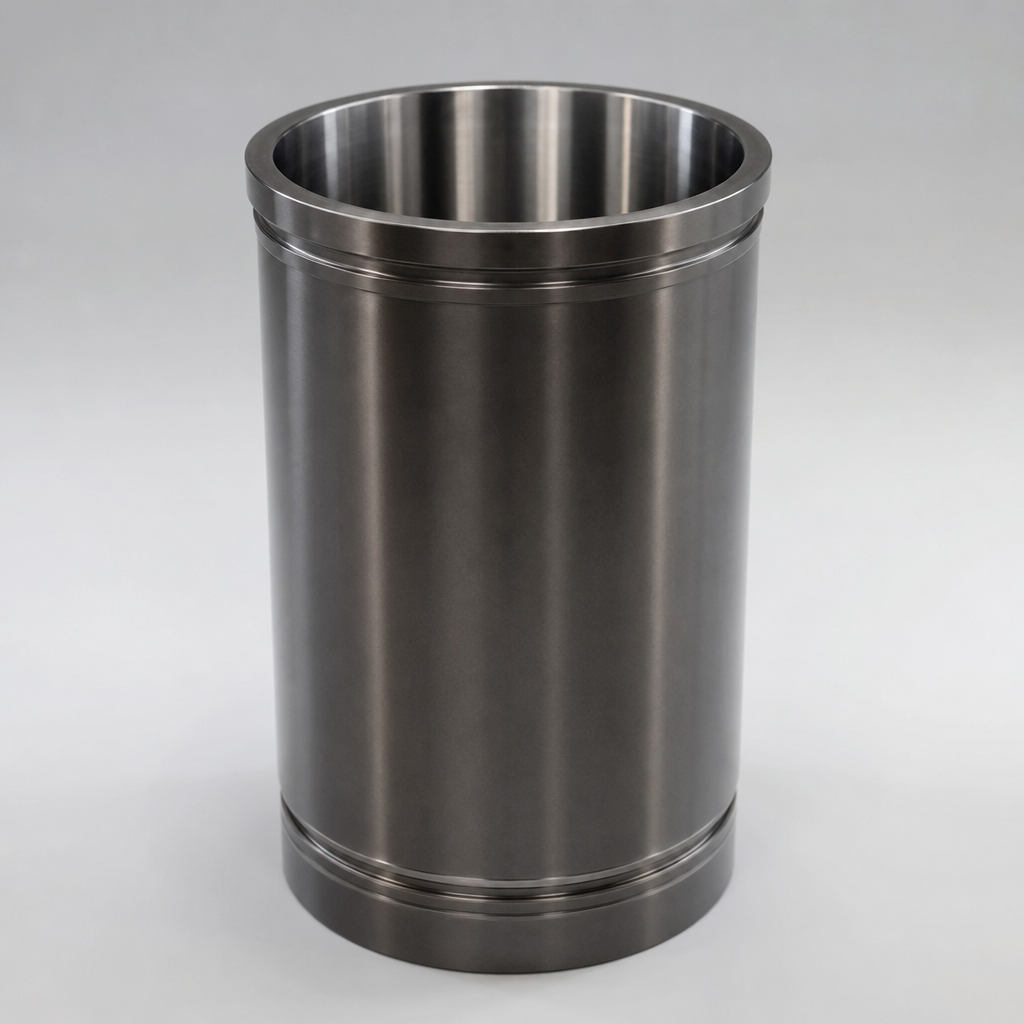
Choosing a **cylinder liner Porsche supplier** is less about finding a catalogue and more about controlling downstream risk. A liner that arrives cheap but varies in bore geometry, hardness, or packaging discipline can create costs far beyond the original quote: rebuild delays, fitment failures, claims handling, urgent resupply, and brand damage in the aftermarket channel.
That is why experienced sourcing teams do not start with price. They start with evidence. They want to know what material is actually used, how bore and flange dimensions are held, what batch traceability looks like, and whether repeat orders ship on the same standard as the samples. They also want the commercial basics clarified early: realistic MOQ, sample timing, repeat lead time, packaging format, and Incoterms.
For Porsche-fit liner programmes, the useful conversation is specific. Ask for nominal dimensions with tolerance bands, hardness windows such as HB 180-240 or an agreed equivalent, bore finish targets such as Ra 0.2-0.6 μm after final honing, and defined inspection frequency by batch. Clarify whether MOQ begins around 50-100 pcs per SKU for standard items or moves to 200-500 pcs for dedicated setups, and whether samples can ship in 2-4 weeks with repeat orders in 30-45 days.
Driventus manufactures engine components for B2B customers within an audited quality framework. The sections below are built to help buyers compare suppliers in a more practical way: what to verify first, where supply programmes usually fail, what an audit should uncover, and when a specialist manufacturer is worth the premium. Driventus is an independent aftermarket manufacturer; brand names are referenced for fitment only.
Start with a go/no-go screen, not a long checklist
Before you compare five suppliers in detail, narrow the field fast. In cylinder liner sourcing, weak candidates usually reveal themselves early through incomplete technical replies, vague material descriptions, or inconsistent document control.
A serious supplier should be able to provide the following without friction:
- Quality certification: current IATF 16949:2016 and ISO 9001:2015 status, plus calibration control for bore gauges, air gauges, micrometers, and roughness testers
- Material disclosure: cast iron grade, alloy composition range, hardness window, and microstructure requirements; buyers often ask for pearlitic alloy cast iron with controlled C, Si, Mn, P, S limits
- Dimensional control: bore diameter, outer diameter, flange thickness, overall length, roundness, cylindricity, and surface-finish limits, with declared tolerances such as OD ±0.01-0.03 mm, flange thickness ±0.02 mm, and roundness within 0.005-0.01 mm where applicable
- Traceability: lot coding from raw material through machining, inspection, and packing, ideally linked to melt number, machining date, machine cell, and final release record
- Compliance support: ability to issue documents such as COO, packing list, commercial invoice data, and REACH (EC) No 1907/2006 declarations where required
- Packaging standard: corrosion prevention, separator method, carton grade, and pallet format for export; practical details often include VCI bagging, anti-rust oil, cell partitions, and 5-ply to 7-ply export cartons
- Supply terms: MOQ, pilot quantity, and availability of PPAP-style or customer-requested sample documentation
The real test is not whether a supplier says yes to everything. It is whether the replies are precise. Good factories confirm drawing revision, fitment scope, critical dimensions, and inspection method before quoting. If they cannot explain which features are 100% checked, which are sampled under AQL or an internal control plan, and which bores are managed to Cp/Cpk ≥ 1.33, the sourcing risk rises quickly.
This is also the point where buyers should separate stock-supply vendors from engineering-capable manufacturers. If your programme may require private-label control or drawing-based changes, confirm that the supplier can support custom manufacturing rather than standard aftermarket supply only.
Compare suppliers by failure mode, not by brochure claims
Cylinder liners fail in predictable ways. They distort, wear too quickly, lose fit, or arrive with batch variation that makes installation inconsistent. A better sourcing comparison asks: which supplier is most likely to prevent those failures?
Match each risk to a control point
- Premature bore wear: review base material, hardness stability, and microstructure control rather than accepting a generic cast-iron label
- Distortion after installation: check wall-thickness stability, stress-relief sequence if used, and consistency of outer-diameter control
- Poor heat transfer or loose retention: examine interference-fit tolerance, typically in the approximate 0.03-0.08 mm range depending on the actual engine design
- Ring-seating or oil-consumption issues: verify final bore finish, plateau honing practice, cross-hatch consistency, and targets such as Ra 0.2-0.6 μm by agreement
- Batch-to-batch inconsistency: request dimensional reports, hardness data, roughness measurements, and metallographic records from more than one lot
- Installation confusion: confirm whether the programme is for dry or wet liner variants, including sealing geometry, corrosion protection, and coolant-side requirements where relevant
That framework changes the conversation. Instead of asking whether a supplier is “experienced,” ask how it prevents a specific problem from occurring.
Useful technical points to collect from every candidate include nominal liner material, hardness range, OD tolerance, ID pre-hone and final-hone tolerance, flange thickness tolerance, cylindricity limit, roughness limit, inspection sampling plan, and any heat-treatment or stress-relief sequence. Once each supplier fills in the same matrix, vague RFQs become comparable.
Measurement method matters too. Bore size checked at multiple clock positions and depths with an air gauge is more credible than a single reported value. The same applies to roundness, OD, and surface finish. A supplier that only offers averages is telling you less than you need to know.
A capable cylinder liner Porsche supplier should be comfortable discussing these controls in practical terms, not marketing language.
Audit the process where problems actually start
A desktop review can qualify a supplier on paper. It cannot tell you how the process behaves on a normal production day. That is why an on-site audit, or at least a disciplined remote audit, matters before volume nomination.
| Audit area | What to check | Why it matters |
|---|---|---|
| Raw material control | Approved foundry sources, incoming verification, heat/lot records, spectrometer or third-party chemistry verification | Reduces metallurgy variation |
| Machining capability | Bore machining equipment, in-process gauging, tool-life control, fixture repeatability, coolant management | Supports dimensional repeatability |
| Final inspection | Air gauges, bore gauges, roundness checks, roughness measurement, hardness test records, FAI format | Confirms release criteria |
| Nonconforming control | Segregation area, disposition records, corrective-action workflow, rework identification | Prevents mixed-stock shipment |
| Traceability | Batch code on part or pack, record-retention period, link from pack label to inspection lot | Essential for claims and recalls |
| Packaging | VCI protection, oiling method, carton drop resistance, pallet wrap, moisture barrier for sea shipment | Lowers transit-damage risk |
| Export readiness | HS code familiarity, packing-list accuracy, certificate support, pallet dimensions and gross-weight control | Avoids customs delay |