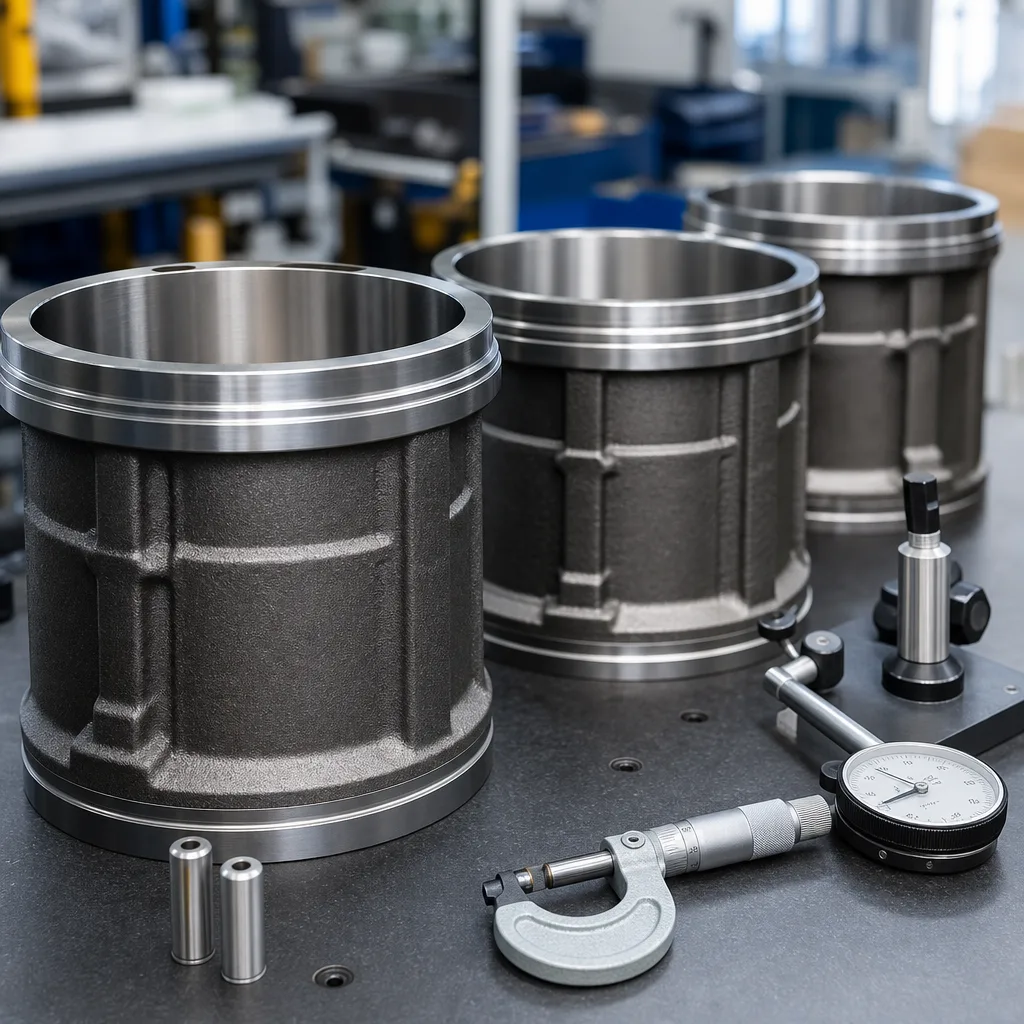
Procurement teams sourcing a cylinder liner Nissan OEM supplier usually need three things at the same time: dimensional fit, repeatable quality, and dependable delivery. For engine rebuild programmes and aftermarket distribution, the liner must match the bore design, material grade, heat treatment, and surface finish expected by the application. It also needs stable supply terms, clear inspection records, and packaging that protects against corrosion and transit damage. Driventus supplies engine and powertrain parts from Taizhou, Zhejiang, with export experience in more than 60 countries and quality control aligned to IATF 16949:2016 and ISO 9001:2015. Driventus is an independent aftermarket manufacturer; brand names are referenced for fitment only. Buyers can use OE references where available, compare technical data against the original sample, and validate the production process before placing volume orders.
What buyers should verify before sourcing
When evaluating a cylinder liner Nissan OEM supplier, start with the engineering data, not the commercial offer. Ask for the liner type, nominal bore, outer diameter, flange geometry, liner protrusion range, and recommended honing finish. For wet liners, confirm coolant-side corrosion control and seal compatibility. For dry liners, confirm interference fit and block material requirements.
A procurement file should include:
Material specification and metallurgical report
Heat treatment condition and hardness range
Dimensional inspection report with batch traceability
Packaging method and anti-rust protection
Test method for roundness, taper, and surface roughness
OE cross-reference where the keyword already identifies one, for example OE 06A107065
If the application is tied to a known engine family, request a sample part before commitment. Driventus can support our catalog review and part-family matching for engine blocks, pistons, gaskets, and related components.
Technical specifications procurement teams usually request
Cylinder liner specifications vary by engine design, but buyers normally compare the following parameters before approving a supplier. The values below are examples of what should be documented on a controlled drawing or inspection sheet.
Item
What to confirm
Why it matters
Material
Alloy cast iron, centrifugally cast iron, or specified grade
Wear resistance and machinability
Hardness
Controlled range per drawing
Bore durability and ring seating
Bore tolerance
Match to piston and honing target
Oil control and compression
Outer diameter
Interference fit or sealing fit
Block retention and heat transfer
Liner protrusion
Measured after installation
Head gasket sealing
Surface roughness
Honed finish per engine requirement
Ring break-in and oil retention
Coating / protection
Phosphate, oil, or VCI pack
Corrosion prevention in transit
</tr></thead><tbody> </tbody></table>For engine rebuild parts, the supplier should state whether the liner is finish-machined or semi-finished. Buyers should also confirm whether the part supports dry fit, wet fit, or flanged fit applications. When a drawing is available, Driventus can build to controlled dimensions under custom manufacturing.
Quality controls that matter in export sourcing
For international buyers, the commercial risk is often not the unit price. It is inconsistency across lots. A factory should operate under documented incoming inspection, in-process checks, and final release criteria. Driventus maintains a quality system aligned to IATF 16949:2016 and ISO 9001:2015, with batch traceability for export programmes.
Key controls to review during supplier qualification:
1. Raw material verification by heat number or batch number 2. Dimensional checks on critical bore and outer diameter features 3. Surface finish measurement on machined contact areas 4. Visual inspection for porosity, cracking, and casting defects 5. Corrosion-prevention packing before shipment 6. Retention of inspection records for audit review
If the application falls under regulated markets, ask whether the production route supports REACH (EC) No 1907/2006 compliance for relevant substances and packaging materials. For durability validation, buyers may also request thermal cycling, leak testing for wet liners, or customer-specific endurance checks.
MOQ, lead time, and audit expectations
A cylinder liner purchase is usually planned around forecast, not spot demand. Buyers should ask for minimum order quantity, standard lead time, and whether the plant can support container consolidation with other engine components. For low-volume programmes, tooling and setup cost matter; for recurring programmes, process stability and replenishment speed matter more.
A practical supplier review normally covers:
MOQ by part number and by drawing revision
Standard production lead time
Sample lead time for first article approval
Packing configuration per carton and pallet
Incoterms offered for export shipments
Audit access for quality, process, and traceability review
For purchasing teams that need one source across pistons, gaskets, water pumps, and liners, a broader engine-component portfolio can reduce supplier count. See our catalog and the engine range at engine components.
How Driventus supports private-label and OE-reference programmes
Driventus works as a manufacturing partner for aftermarket distributors, wholesalers, OEM and Tier-1 supply chains, and multi-location repair networks. The process is straightforward: share the sample, OE reference where available, drawing, or application data; confirm critical dimensions; approve the sample; then move to pilot and volume production.
What procurement teams typically receive:
Technical review against sample or drawing
Feasibility feedback on material and machining
Controlled sample submission for approval
Batch-based quality documentation
Export packing suitable for long-haul freight
Optional custom branding and label control
Driventus is an independent aftermarket manufacturer; brand names are referenced for fitment only. We do not claim manufacturer endorsement. If the programme requires a special liner profile, coating, or packaging standard, custom manufacturing can be used to align the part to your specification while keeping procurement data consistent across replenishment cycles.
Commercial checklist before you place a volume order
Before issuing a purchase order, buyers should close the technical and commercial gaps in writing. This helps avoid disputes at receiving inspection and reduces the risk of mixed revisions.
Use this checklist:
Confirm OE reference, application, and engine code
Approve drawing revision and sample comparison photos
Lock the inspection standard and acceptable tolerance bands
Agree on packaging, labelling, and corrosion protection
Define batch traceability and document retention
Set the replacement policy for non-conforming freight
If you are building a regional supply base, ask for a forecast-based replenishment plan and a clear re-order trigger. For a first discussion, you can request a quote with the part number, quantity, target market, and any required test reports.
Frequently asked questions
Yes, if the reference is clear and the application can be verified. We still recommend confirming the sample, dimensions, and engine code before production release.
Our quality management system is aligned to IATF 16949:2016 and ISO 9001:2015. We can provide batch-level inspection records for buyer review.
Yes. We support drawing-based manufacture, controlled packaging, and private-label programmes through our OEM service process.
If you need a repeatable source for liner supply, share your OE reference, drawing, or sample data and we will review feasibility, timing, and pricing. Start here: /contact.html