A cylinder liner manufacturer in China should be evaluated like a process-control partner, not a line item on a cost sheet. The part is small compared with the engine, but its failure modes are expensive: bore distortion, poor oil retention, coolant leakage, ring scuffing, corrosion during storage, warranty claims and urgent replenishment freight.
For B2B buyers, the sourcing question is simple: can the supplier repeat the same metallurgy, bore geometry, honing finish, sealing dimensions, rust prevention and documentation across batches? A useful RFQ therefore needs more than a part number. It should define liner type, bore size, wall thickness, flange and groove dimensions, material grade, hardness range, finish condition, inspection level, MOQ target, Incoterms, annual forecast and approval documents.
This guide is written for importers, aftermarket distributors, repair networks, OEM buyers and Tier-1 sourcing teams comparing China-based cylinder liner suppliers. It moves from early screening to specification control, audit evidence, programme planning, shipment documentation and supplier support. Driventus manufactures engine and powertrain components in Taizhou, Zhejiang, and exports to more than 60 countries under an IATF 16949:2016 and ISO 9001:2015 quality framework. Driventus is an independent aftermarket manufacturer; brand names and OE-style references are used for fitment identification only.
First decision: does the supplier control the failure points?
Do not start with the cheapest quotation. Start with the functions that make the liner survive in service: stable bore shape, heat transfer, ring sealing, oil film retention and corrosion resistance before installation. A qualified China cylinder liner supplier should be able to show how those functions are controlled and recorded.
Use this as the first screen:
Casting source and melt chemistry control, with batch number, heat number or furnace record linkage
Centrifugal or static casting route matched to the liner design, with enough wall allowance before machining
Heat treatment or stress relief where required, plus a defined hardness window such as 180–240 HB or the drawing-specific range
CNC turning, boring, honing, flange machining and groove machining, with fixture and datum control
Bore finish measurement, including Ra/Rz/Rk family values when plateau honing is specified
Dimensional inspection for ID, OD, flange thickness, collar diameter, sealing grooves, total length and chamfers
Rust prevention and packaging suitable for 30–45 days at sea plus humid warehouse storage
Traceability from casting or material batch to finished carton, pallet and invoice
Export experience for the target market, such as the EU, UK, US, Canada, Australia or Brazil
Ability to provide inspection reports, application data and shipment documents before balance payment or release
A serious supplier can provide drawings, inspection reports and sample approval records before bulk production. If the programme is aftermarket, ask how cross-reference data, fitment notes and application coverage are controlled. For a wider view of engine component categories, procurement teams can review our catalog.
The price trap is predictable. A liner with weak bore geometry, uncontrolled hardness or poor anti-rust protection may pass a quick visual check and still fail in the field. Saving USD 0.30–1.00 per part is irrelevant if 1–2% of a shipment creates returns, labour claims, emergency air freight and customer downtime.
Choose the liner format before you compare quotes
Different liner types create different risks. If the RFQ only says “cylinder liner,” suppliers may quote different supply conditions and the prices will not be comparable. State whether the part is dry, wet, flanged, semi-finished or fully finished.
Liner type
Typical application
Sourcing focus
Common risk if not controlled
Dry liner
Passenger car and light commercial engines
OD fit, bore geometry, wall thickness, surface finish
Poor press fit, heat transfer loss, bore distortion
Wet liner
Heavy-duty diesel and commercial engines
Sealing grooves, cavitation resistance, flange height, corrosion control
Coolant leakage, liner pitting, head gasket failure
Machining allowance, concentricity, material consistency
Insufficient allowance or excessive machining time
Fully finished liner
Aftermarket distribution and repair chains
Final bore size, honing pattern, ready-to-install packaging
Fitment claims or high return rate
</tr></thead><tbody> </tbody></table>“Finished” should never be treated as self-explanatory. Define final bore size, bore tolerance, surface finish, chamfer condition, cleaning level and protection method. Finished bores may require ID tolerance in the 0.01–0.03 mm range where the application demands it. Wet liners need groove width and depth controlled around the seal design. Flanged liners need flange height and landing surface geometry checked against the block and clamp load requirement. The buyer drawing or approved sample prevails over any catalogue wording.
Semi-finished liners are often better for rebuilders because the installer can finish-hone after block machining. In that case, specify machining allowance, such as 0.20–0.50 mm stock on ID or OD, or another agreed value. Fully finished liners are better for repair chains and fast-moving distribution, but they need tighter outgoing inspection, final cleaning, oiling or VCI protection and stronger separation inside cartons.
When contacting a cylinder liner manufacturer China search result, include annual volume, first order quantity, destination country, Incoterms preference, packaging language, drawing status, sample availability and whether PPAP-style documentation is required. That information lets suppliers separate existing catalogue parts from new development items that need tooling, gauges, fixtures or casting pattern work.
Spec deep-dive: material, hardness, bore and finish
Most cylinder liners use grey cast iron or alloy cast iron because the material must balance wear resistance, heat transfer, damping and machinability. Heavy-duty diesel, turbocharged, industrial and wet-liner applications usually need tighter control of hardness, microstructure and cavitation resistance than lower-load petrol applications.
A workable purchasing specification should cover the following points:
Material: grey cast iron or alloy cast iron, with chemistry defined by drawing or agreed standard; carbon, silicon, manganese, phosphorus, sulphur and alloying elements such as chromium, molybdenum, copper or nickel may need limits
Hardness: Brinell range by part family or application, with test location and sampling frequency stated; 180–240 HB is common for some grey iron liners, but the drawing rules
Microstructure: graphite form, pearlite content, carbide control and matrix structure, especially for heavy-duty or wet liner programmes
Bore geometry: roundness, cylindricity, taper and straightness; finished liners should normally be checked at top, middle and bottom positions and in two directions
Surface finish: honed or plateau-honed bore with Ra, Rz, Rpk, Rk or equivalent values agreed before production; a range such as Ra 0.2–0.8 µm may be relevant, but it must match the ring pack and engine requirement
Machining references: flange face, OD, ID, grooves and locating datums, including perpendicularity and runout requirements for flanged designs
Cleanliness: protection from abrasive dust, chips, moisture, corrosion and mixed-part packing; cleaning should happen before oiling or VCI packing
Marking and traceability: part number, batch code, carton label, barcode and language requirements where needed
Do not accept verbal substitution for a drawing requirement. If no drawing exists, samples and application data can be used to build a controlled specification. That means reverse measurement of ID, OD, flange height, total length, groove dimensions, chamfers, wall thickness and bore finish, followed by buyer approval before production. OE-style references such as OE 06A… or OE 11251… may be used in databases for fitment identification only; they do not imply vehicle manufacturer approval.
Management certificates such as IATF 16949:2016 and ISO 9001:2015 are useful, but they are not product validation. Ask for liner-family inspection data: bore measurements, hardness results, finish records and, for critical parts, a short capability run. Cp/Cpk on finished bore, flange height and groove depth is ideal. If that is not practical for the first stage, request at least a 30-piece dimensional study from pilot production.
Audit the factory by following one liner through the process
A good audit is not a showroom tour. Follow one part family from incoming material to packing and ask what happens when the data moves toward the tolerance limit. The answer reveals more than a list of machines.
1. Incoming material control Check chemical composition records, raw casting traceability, heat numbers or batch identification and supplier evaluation files. Ask whether spectrometer testing, hardness checks and visual inspection are used to detect blowholes, cracks, shrinkage or inclusions.
2. Machining capability Review CNC lathes, boring equipment, honing machines, groove machining, tool change records and fixture maintenance. Ask how datum shift is prevented after tool wear, fixture adjustment or machine restart. First-piece approval should repeat after tool changes, shift changes and setup changes.
3. Measurement equipment Confirm the availability and condition of bore gauges, CMM or roundness equipment where applicable, surface roughness testers, hardness testers, height gauges and calibrated hand tools. Calibration labels should be current. Master gauges should not be treated like shop-floor scrap.
4. In-process inspection Review inspection frequency, first-piece approval, patrol inspection, control charts and reaction plans. A factory might check bore and flange dimensions every 10–30 pieces and perform 100% visual inspection before packing, but the required level should match the programme risk.
5. Final inspection Outgoing inspection should cover critical-to-function dimensions and link results to batch numbers, cartons or pallet labels. For export lots, buyers can specify AQL sampling such as general inspection level II, tightened checks for critical dimensions, or 100% measurement of selected pilot-order features.
6. Nonconforming product control Verify segregation, rework approval, scrap records and re-inspection. Reworked liners should not disappear into bulk stock. Rework limits must protect wall thickness, hardness and surface integrity.
7. Packaging and export handling Inspect oiling or VCI protection, plastic sleeves, dividers, carton strength, pallet wrapping, moisture control and loading practice. For sea freight, liners should not rub metal-to-metal inside weak cartons. Double-wall export board, edge protection and stable palletisation are often worth specifying.
8. Change management Confirm whether the supplier notifies buyers before changing material source, casting method, heat treatment, machining route, inspection method or packing design. Drawings, control plans and packaging specifications need revision history.
Driventus operates under a documented quality system aligned with IATF 16949:2016 and ISO 9001:2015. Depending on destination and product composition, importers may also need declarations related to REACH (EC) No 1907/2006 or other compliance requirements.
Plan MOQ and lead time as a staged programme
MOQ is not one number. It changes with liner size, casting route, machining complexity, existing tooling, packaging format and production status. Separate the discussion into sample quantity, pilot quantity, first commercial order and repeat-order forecast.
For established aftermarket references, MOQ may depend mainly on carton quantity, batch scheduling, pallet efficiency and export handling cost. If raw castings or semi-finished stock exists, 50–200 pieces per reference may be practical. Slow-moving or large heavy-duty liners may require higher quantities because setup time, machine occupancy and packing cost are heavier. For new parts, tooling, sampling, gauges, fixtures and validation may push the first order toward 300–1,000 pieces, or require a separate tooling charge.
Lead time should also be broken into stages. Existing samples may be available in 7–15 days. New sample machining from available blanks may take 20–35 days. If a casting pattern, centrifugal tooling or special gauge is needed, sample timing may extend to 45–75 days. After approval, normal mass production often takes 30–60 days, plus sea freight of roughly 25–45 days depending on ports and season.
Material, tooling, machining route, special gauges
Sample order
First article review
Quantity, inspection report, surface finish data
Approval
Buyer confirms fit and dimensions
Signed sample approval or written acceptance
Pilot order
Packaging and logistics check
Carton labels, pallet plan, inspection level
Mass production
Regular supply
Lead time, safety stock, change notification rules
</tr></thead><tbody> </tbody></table>Ask suppliers to show what the price includes: tooling, samples, special inspection, private-label cartons, pallets, fumigation, domestic freight to port and export documents. A fully finished wet liner with several sealing grooves, tight flange height and VCI packing will not cost the same as a simple semi-finished dry sleeve.
Build approval time into the calendar. Drawing review, sample production, dimensional inspection, metallurgical checks, courier transit, buyer testing and internal sign-off all take time. Without that buffer, teams are pushed into releasing mass production before the part is properly reviewed.
If multiple engine component groups are being sourced together, consolidation with a capable manufacturing partner can reduce supplier-management work. Driventus can discuss custom manufacturing for cylinder liners and related powertrain components when drawings, samples or technical targets are available.
Pre-shipment documents: ask before production, not after
Documentation only works if the supplier captures the data at the right process stage. Add document requirements to the PO before production starts. Separate what is needed for sample approval, what is mandatory before shipment and what is only needed for annual revalidation.
A practical cylinder liner documentation pack may include:
Commercial invoice and packing list with part number, quantity, net weight, gross weight and carton count matching labels
Product drawing or approved specification sheet, including revision level and critical dimensions
First article inspection report for new items, usually covering all drawing dimensions on 3–5 sample pieces or a buyer-defined quantity
Final inspection report with critical dimensions, sampling quantity and actual measured values, not only “OK” marks
Material certificate or chemical composition summary linked to casting batch or heat number where applicable
Hardness test record with method, location, sample quantity and HB values
Surface roughness record for honed bores, with Ra/Rz or plateau parameters where specified
Metallographic report if required by drawing or customer standard, including graphite and matrix observations
Traceability code explanation for cartons, labels or pallets
Certificate copies for ISO 9001:2015 and IATF 16949:2016 where relevant
REACH (EC) No 1907/2006 declaration if required by the importer
Photos of finished goods, rust prevention, carton labels, packing and palletisation before shipment
OEM and Tier-1 projects may require more: control plans, process flow diagrams, PFMEA, measurement system analysis, capability studies and production part approval records. Define the PPAP level, language, dimensional sample quantity, material validation scope and annual layout requirements in the supplier quality agreement. Do not negotiate these after goods are packed.
Aftermarket distributors should request cross-reference and application files in a controlled format. Clean fitment data reduces catalogue errors, warehouse returns and customer disputes. For private-label supply, approve label artwork, barcode type, country-of-origin wording, carton strength, pallet height and packing layout before packing starts.
Where Driventus fits in a China sourcing shortlist
Driventus manufactures engine and powertrain components in Taizhou, Zhejiang, and supplies international B2B buyers in more than 60 countries. For cylinder liner programmes, support is built around technical review, sample development, batch inspection and export packing rather than spot trading.
Procurement support can include:
Review of drawings, samples or OE-style cross-reference lists
Material and process feasibility assessment, including liner type, casting route, hardness target and machining risk
Sample machining and inspection reporting, with key dimensions and bore finish data when required
Batch production under controlled process instructions, inspection plans and traceability codes
Private-label or neutral export packaging by agreement, including carton label format and pallet plan
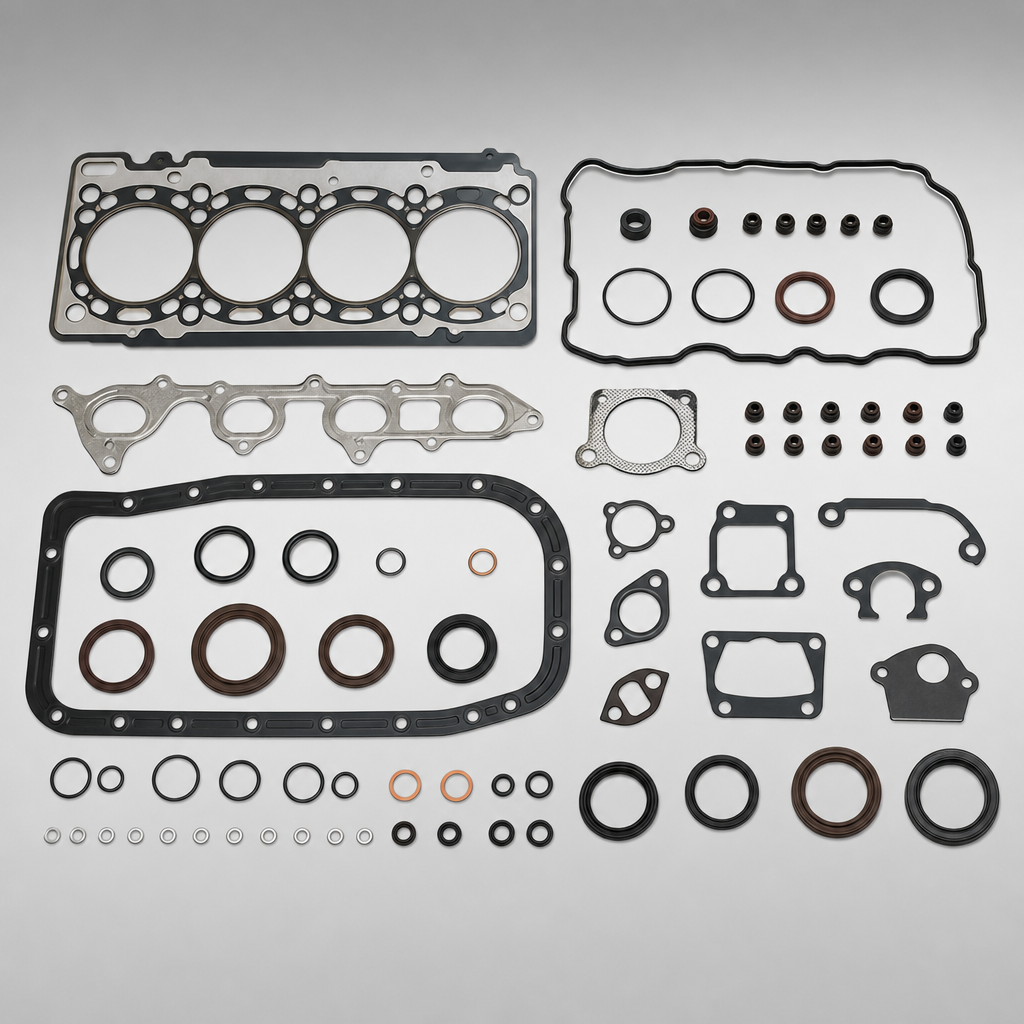
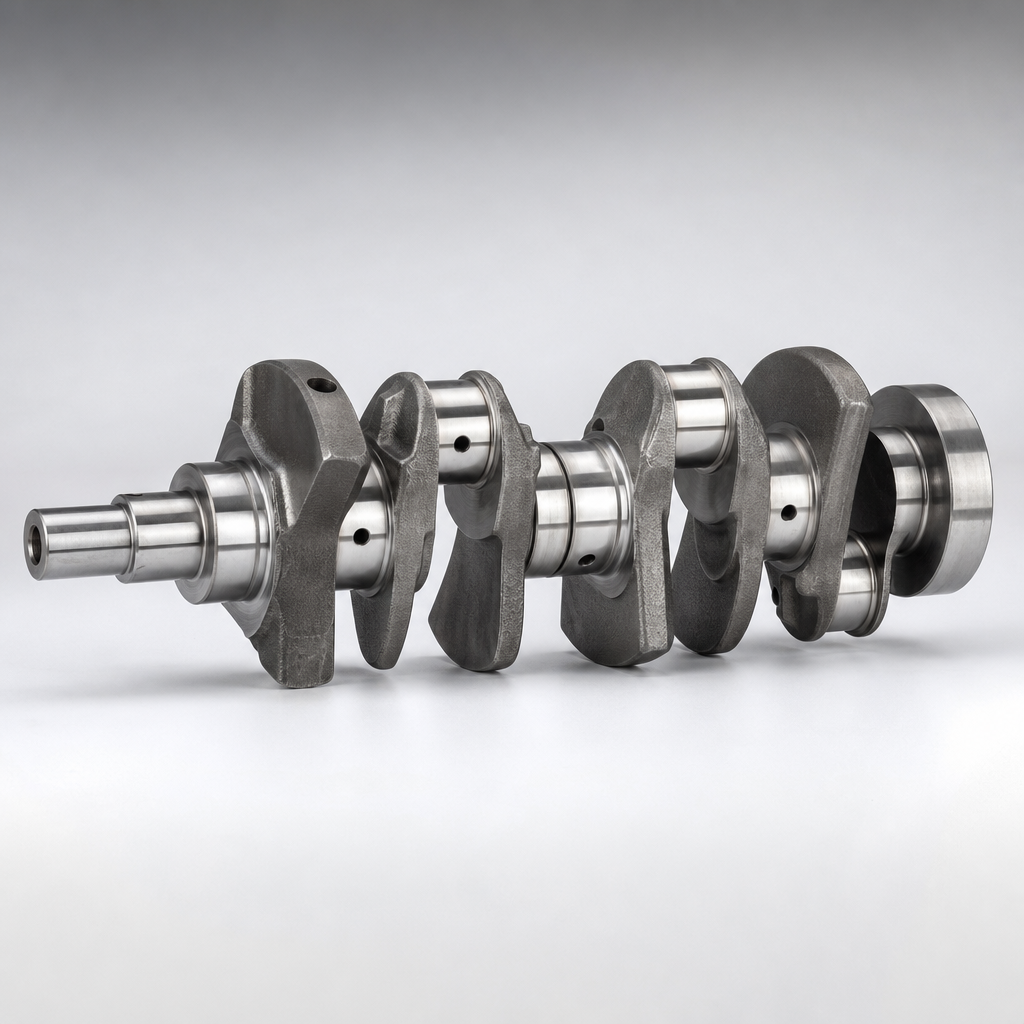
Consolidation with pistons, gaskets, water pumps, crankshafts and other engine components to improve container utilisation
Pre-shipment photo records and packing verification, including rust prevention and carton marking checks
Commercial documentation for import clearance, including invoice, packing list and origin-related information where applicable
Communication on lead time, packing, labelling and shipment readiness, with early notice of material or production constraints
When comparing China-based suppliers, the question is not only “Can they quote it?” It is whether they can hold bore size, flange height, surface finish, rust prevention and traceability after the first shipment. Long-term category performance depends on batch discipline, change control, accurate documents and fast communication when problems occur.
A workable supplier relationship should define MOQ, sample approval rules, inspection data format, complaint response time, replacement or credit process and the events that require buyer approval before process changes. Driventus is an independent aftermarket manufacturer; brand names and OE-style numbers are used only to identify fitment and dimensional requirements, not to claim endorsement by a vehicle manufacturer.
Buyers can request a quote with drawings, samples or target references for feasibility review. To speed quotation, include bore ID, OD, total length, flange dimensions, groove details, material or hardness target, finish condition, annual volume, first order quantity, destination port and preferred Incoterms.
Frequently asked questions
Send the drawing if available, or a physical sample with application data, required quantity, annual forecast, destination country, packing requirements and any inspection documentation needed. If using OE-style references, provide them only for fitment identification. For faster pricing, include liner type, finished or semi-finished condition, material, hardness target, bore tolerance, packaging format and Incoterms.
Yes. Semi-finished liners are common for engine rebuilders that finish-hone after block machining. Fully finished liners are suitable for distribution and repair operations when bore size, honing pattern, cleaning standard and final inspection requirements are clearly agreed. The RFQ should state machining allowance for semi-finished parts and final ID, roughness and protection method for finished parts.
ISO 9001:2015 and IATF 16949:2016 are relevant management system standards for automotive production control. Buyers should still review product-specific inspection reports, material records, hardness data and surface finish records before approval. Certification confirms the management framework, not the actual conformity of a specific liner batch.
Use a staged process: feasibility review, sample order, first article inspection, pilot shipment and then mass production. Confirm change notification, packaging, traceability and documentation requirements before the purchase order is released. For critical programmes, add pilot-run capability data, defined AQL or 100% checks on key dimensions, and pre-shipment photo verification.
If you are evaluating cylinder liner supply from China, Driventus can review drawings, samples and forecast volumes before quotation. Send your sourcing requirements through /contact.html