Cylinder Liner Hyundai Manufacturer China: How Buyers Screen Real Suppliers
For procurement teams sourcing Hyundai-fit engine components, cylinder liners are one of the quickest categories to expose the difference between a usable supplier and a risky one. The quote may look simple. The failure modes are not. Bore geometry, metallurgy, honing, preservation, and lot traceability all show up later as oil consumption, ring seating issues, fit complaints, or repeat-order drift.
That is why serious supplier evaluation goes past unit price. Buyers usually need confirmed data on liner type, base material, bore tolerance, outer diameter tolerance, wall thickness range, hardness window, honing profile, anti-corrosion packaging, MOQ, lead time, and export documentation. Distributors tend to care most about interchange stability, low claims, and batch-to-batch consistency six months later. OEM and Tier buyers usually push harder on process capability, control plans, MSA, and change control. Repair chains often decide on repeatability alone: if geometry drifts, the complaints follow.
This article takes a more practical route. Instead of repeating a generic sourcing checklist, it breaks down how to judge a China-based cylinder liner manufacturer for Hyundai applications by decision points, audit signals, spec details, commercial fit, and supplier response quality. Driventus is an independent aftermarket manufacturer; brand names are referenced for fitment only.
Start with a sourcing decision framework, not the RFQ template
When assessing a supplier for Hyundai-fit liners, begin with three questions: does the factory actually cover the application, does it control the process that matters, and can it document what it claims? If any one of those is weak, the rest of the RFQ usually becomes noise.
At first contact, a credible manufacturer should state whether the part is a dry liner, wet liner, or repair sleeve, then connect that to material grade, machining route, and inspection method. If the answer stays broad, the risk is already visible.
Request these points early:
Engine family and fitment range, including displacement and block code where available
Liner type: dry, wet, or service sleeve
Material: typically alloy cast iron with controlled graphite structure, often pearlitic iron for wear resistance
Finished bore tolerance and outer diameter tolerance, with actual drawing values in mm
Surface finish after honing, such as defined Ra or Rvk targets matched to the ring pack
Wall thickness consistency and minimum section after machining
Hardness range, preferably as a controlled HB band
Packaging for ocean freight and storage, including VCI, oiling, or desiccant use
Batch traceability from melt or casting lot to final packing
Export documentation and labeling format
Standard lead time for first and repeat orders
Sample quantity, sample charge policy, and approval process
One useful test is part-number discipline. A supplier should explain exactly how it cross-references OE or market references internally. If a buyer sends an OE reference, it should be treated as a fitment reference only, for example OE 06A107065 where relevant to the inquiry. Claims like "same as OE" mean little unless they are backed by drawings, measured values, or inspection records.
Before commercial discussions go too far, ask what the factory checks on every batch. For liners, buyer-facing control points usually include bore, OD, flange dimensions where relevant, wall thickness, roundness, cylindricity, hardness, surface finish, and visual limits for porosity, chips, rust, and handling damage. If the supplier cannot turn those into a clean RFQ table, later stages usually get slower and less reliable.
Audit for failure modes: where liner supply usually breaks down
Cylinder liner sourcing fails in predictable places. Not only at machining. Problems often start upstream in casting control, then pass quietly through rough machining, heat control where used, finish boring, honing, cleaning, preservation, and packing.
A practical audit checklist includes:
Audit area
What to verify
Why it matters
Quality management
IATF 16949:2016 and ISO 9001:2015 certification scope
Confirms a formal framework for process control, corrective action, and record retention
Incoming material control
Chemical composition checks, hardness records, supplier approval
Reduces risk of wear variation, cracking, or porosity-related defects
Machining capability
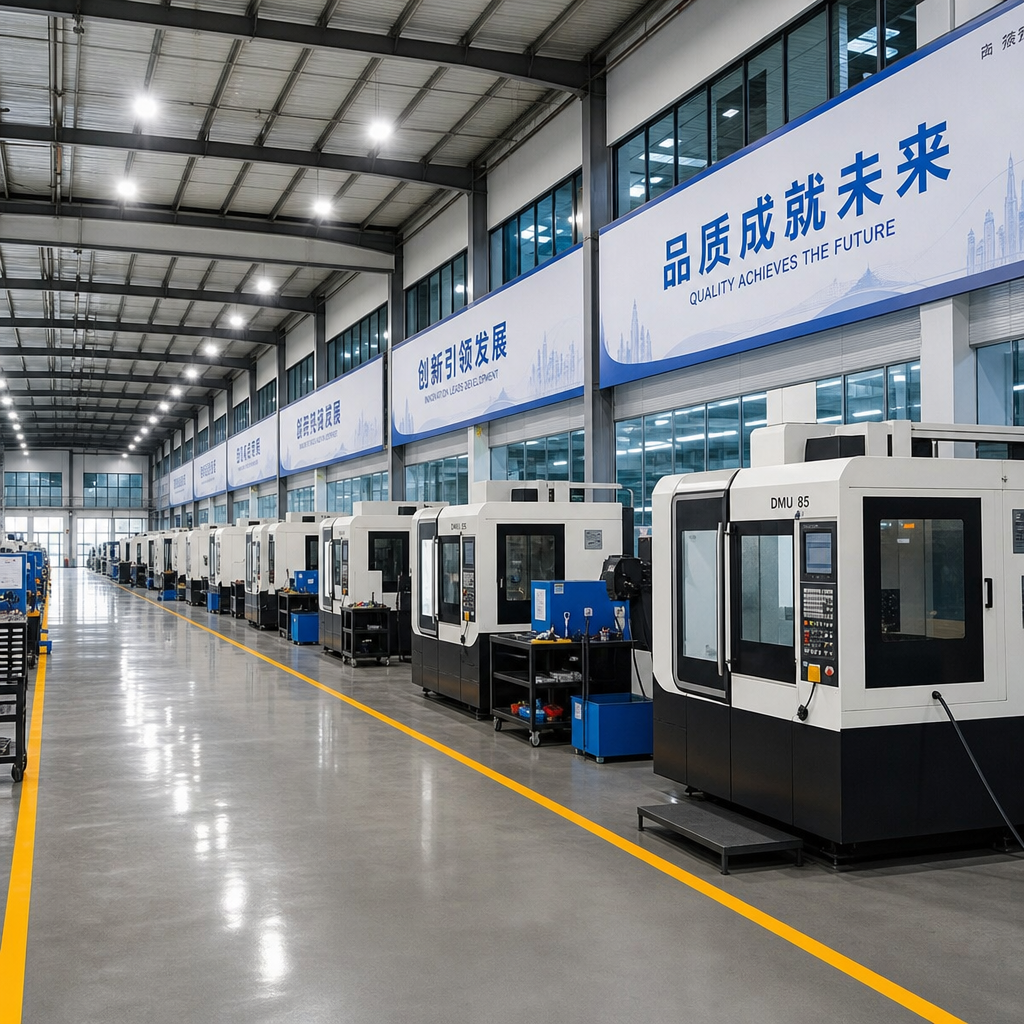
Bore gauges, CMM use, honing equipment, calibration status
Supports dimensional repeatability and consistent bore geometry
Traceability
Lot code on box and part, production record retention
Enables claim analysis, containment, and faster root-cause review
Change control
Procedure for drawing revision, tooling change, source change
Prevents unapproved drift in fit, material, or surface condition
Cleanliness and rust prevention
Washing, drying, oiling, or VCI packing
Important for sea shipment, warehouse storage, and shelf-life stability
Final inspection
Sampling plan, air gauges, roundness/cylindricity records
Confirms shipping quality against agreed specifications
</tr></thead><tbody> </tbody></table>Published standards such as IATF 16949:2016 and ISO 9001:2015 matter because many B2B buyers need a documented system for CAPA, calibration, training, and traceability. For EU and UK substance compliance, buyers may also request declarations aligned with REACH (EC) No 1907/2006.
At Driventus, buyers can review the quality system before arranging a deeper technical discussion.
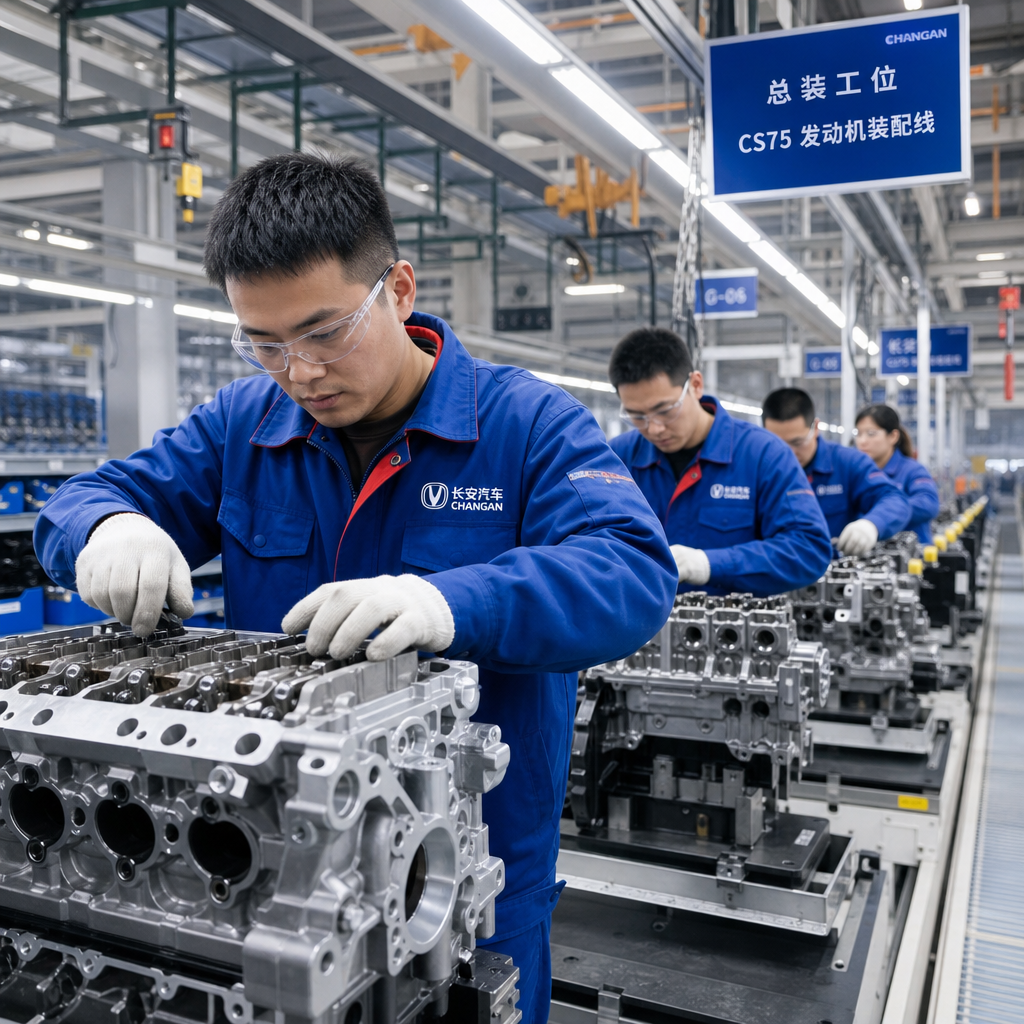
During the audit, ask the factory to walk the actual process flow step by step: raw casting receipt, spectrometer or mill-cert review, rough turning, stress relief or controlled cooling where applicable, semi-finish boring, OD turning, finish boring, plateau honing, deburring, washing, rust prevention, 100% visual inspection, and final packing. This matters because each handoff is a place where variation enters.
Then push on the dimensions that drive fit and wear. For stable serial parts, buyers often expect CpK or at least trend charts on bore and OD. If the drawing tolerance on bore is 0.03 mm, the factory should be able to explain its normal process spread and the gauge system used to verify it. "Within tolerance" is not enough.
Finally, inspect preservation like it is part of the product, because in export supply it is. A common field complaint is flash rust after 30 to 45 days in transit, not machining error. Ask how long corrosion protection is validated under warehouse storage, whether liners are individually sleeved or compartment packed, and whether palletized cartons use moisture-barrier protection for sea freight.
Spec deep-dive: the numbers that decide field performance
Two liners can share the same nominal bore and still behave very differently in service. The gap usually comes from microstructure, wall distribution, bore geometry, honing quality, or hardness consistency.
Critical specification points
Base material: commonly pearlitic alloy cast iron selected for wear resistance and machinability
Bore size tolerance: should be declared by drawing requirement, not nominal size alone
Outer diameter tolerance: affects interference fit and heat transfer into the block
Roundness and cylindricity: important for sealing, ring contact, and wear uniformity
Surface roughness: final honing profile should match ring package requirements
Hardness range: must remain consistent by batch to avoid abnormal wear rates
Wall thickness: uneven walls can distort under thermal load and reduce service life
Corrosion protection: export packaging should prevent flash rust during long transit and storage
Where a customer has its own print, the supplier should work to that document rather than rely only on catalog dimensions. For private-label or project business, custom manufacturing is often the better route because packaging, inspection frequency, marking, preservation, and special characteristics can be defined from the start.
For regulated markets, the supplier should also avoid unsupported emissions claims. Cylinder liners affect engine durability and sealing, but compliance with vehicle-level rules such as ECE R-83 depends on the complete engine and vehicle system, not on one component in isolation.
When comparing Chinese suppliers, ask for numbers, not adjectives. In many liner programs, the real discussion centers on values such as bore tolerance within 0.01 to 0.03 mm, OD tolerance within 0.02 to 0.05 mm, cylindricity within 0.01 to 0.03 mm, and surface finish after honing in a defined low-micron range. Exact targets depend on engine family and ring set, but a supplier should be comfortable discussing the tolerance stack in metric terms and relating those values to assembly fit and wear behavior.
Hardness also needs to be framed as a range. Buyers often review Brinell hardness as a controlled band around the factory's material standard rather than accept a vague statement like "hard enough." A narrow, repeatable hardness window usually correlates with more stable wear behavior across batches.
Ask for the honing spec in practical language: roughness value, cross-hatch angle, plateau requirement where applicable, and whether finish is verified with a profilometer or inferred from machine settings. If the liner is intended to run with a specific ring coating, the supplier should explain how the surface finish is matched to ring seating.
Wall thickness should be checked at multiple clock positions, not one nominal point. This is especially important for thinner repair sleeves, where uneven wall distribution can distort during press-fit or under temperature. On higher-risk projects, buyers often request section checks from first articles and retained samples from the approved batch.
Compare commercial models the same way you compare tolerances
Once technical approval is close, commercial fit usually decides whether the supplier works in practice. A good liner source should match your inventory model and approval cycle, not force every project into one standard MOQ and lead-time structure.
Typical points to clarify:
MOQ: may vary by diameter, tooling status, and packaging type
Sample policy: prototype or approval samples before mass order
Lead time: separate timing for first order, repeat order, and tooling-related orders
Forecast planning: monthly or quarterly visibility for material reservation
Packaging: neutral, private label, or customer-specific carton and label
Incoterms: EXW, FOB, CIF, or DDP depending on route and importer setup
Payment terms: opening terms often differ from repeat-business terms
Claim handling: required evidence, response time, and containment process
Ask whether the factory holds common semi-finished stock or only produces against confirmed orders. Semi-finished inventory can shorten lead times on stable dimensions, but it should not weaken traceability or blur lot separation.
For aftermarket distributors, another useful comparison point is shipment consolidation. If the supplier can combine liners with pistons, rings, gaskets, water pumps, or other engine parts, freight cost and customs handling may improve across multiple SKUs.
In practice, many China-based liner suppliers set MOQ by SKU rather than by total order value. Common aftermarket patterns are sample quantities of 2 to 10 pieces, trial orders of 50 to 200 pieces per item, and serial MOQs in the 200 to 1,000 piece range depending on tooling status and packaging format. Custom cartons, laser marking, or special preservation usually push MOQ upward because labels and packing materials are ordered in batches.
Lead time also needs to be separated into clear cases. A workable framework is often 7 to 15 days for stocked or semi-finished repeat items, 25 to 40 days for regular production orders, and 45 to 60 days where new tooling, pattern work, or first-article approval is required. Sea transit from China then adds roughly 20 to 40 days port to port depending on route. Buyers should compare landed timeline, not only factory days.
Price logic should be explicit. Unit cost usually moves with four variables: material weight, machining time, order quantity, and packaging complexity. Ask where the breakpoints are. A supplier may quote one band at 100 pieces, a lower band at 300, and a lower band again at 1,000 because setup and packing costs are spread differently. Without those quantity breaks, quote comparisons are often misleading.
On claims, define the process before the first shipment. A workable B2B rule is 24 to 72 hours for initial response after evidence receipt, lot containment within an agreed period, and a documented 8D or equivalent corrective action on confirmed defects. Many disputes come from commercial process gaps, not technical disagreement.
What a strong supplier response looks like in a real Hyundai-fit program
Driventus supplies engine and powertrain components for global B2B customers and supports sourcing reviews with structured technical and commercial data. For cylinder liner inquiries, the goal is simple: give buyers enough verified information to judge fitment, process stability, and supply risk before volume orders begin.
Support can include:
Drawing or sample review
Fitment cross-reference management
Material and dimensional inspection records
Batch traceability discussion
Packaging options for distributor or OEM service requirements
Factory audit coordination
Combined shipments with related engine components
Because importers, repair groups, and OEM suppliers follow different approval paths, the documentation package should match the project. Some buyers need standard inspection records and packing details. Others require a more formal development flow with agreed characteristics, retained samples, and documented revision control.
If you are comparing suppliers in China for Hyundai-fit liner programs, the practical next step is to send the current drawing, target annual volume, destination market, and required commercial terms. You can then request a quote with the key information needed for a technical review.
Driventus is an independent aftermarket manufacturer; brand names are referenced for fitment only.
A productive sourcing review usually starts with five buyer inputs: part number or drawing, required annual volume, destination market, target Incoterm, and approval deadline. With that information, the supplier can quickly judge whether the inquiry matches existing tooling, whether samples can come from current production, and whether neutral or private-label packaging is commercially viable.
For more controlled projects, Driventus can align the approval pack to the buyer's process. In practice this may include dimensional reports on first samples, material confirmation, photos of marking and packaging, lot traceability format, and agreement on which characteristics will be monitored batch by batch. That reduces RFQ friction because the technical and commercial assumptions are set before volume orders start.
Where the buyer wants consolidated purchasing, liner supply can be coordinated with other engine components so container space, labeling, and inspection release are managed together. This is especially useful when buyers want to balance MOQ across multiple SKUs rather than overstock one liner size just to reach a freight threshold.
Frequently asked questions
Ask for certification scope, material specification, dimensional inspection records, packing specification, traceability method, REACH declaration where needed, and standard lead-time and MOQ terms. For custom parts, request drawing control, revision history, and change-management procedures. For first approval, it is also practical to request a sample dimensional report showing bore, OD, wall thickness, hardness, roundness or cylindricity where specified, plus photos of marking and export packaging.
Not always, but lower pricing should trigger a closer review of material control, machining capability, honing consistency, corrosion protection, and the supplier's claim process. Total cost includes field returns, stockouts, reinspection, and customs issues, not just piece price. Ask how the price changes at different quantity breaks and whether the quote assumes neutral packing, standard preservation, or existing tooling, because those details often explain large quote gaps.
Yes, if the manufacturer has the right production scope or integrated supply management. Consolidating liners with pistons, gaskets, or water pumps can reduce freight complexity, but each product line still needs its own quality controls, validation checks, and approval review. Buyers should confirm whether combined shipments keep separate lot traceability and whether mixed-SKU packing affects MOQ or lead time.
If you are qualifying a China source for Hyundai-fit cylinder liners, send your drawing, volume and destination market for review. Contact Driventus to discuss supply options at /contact.html