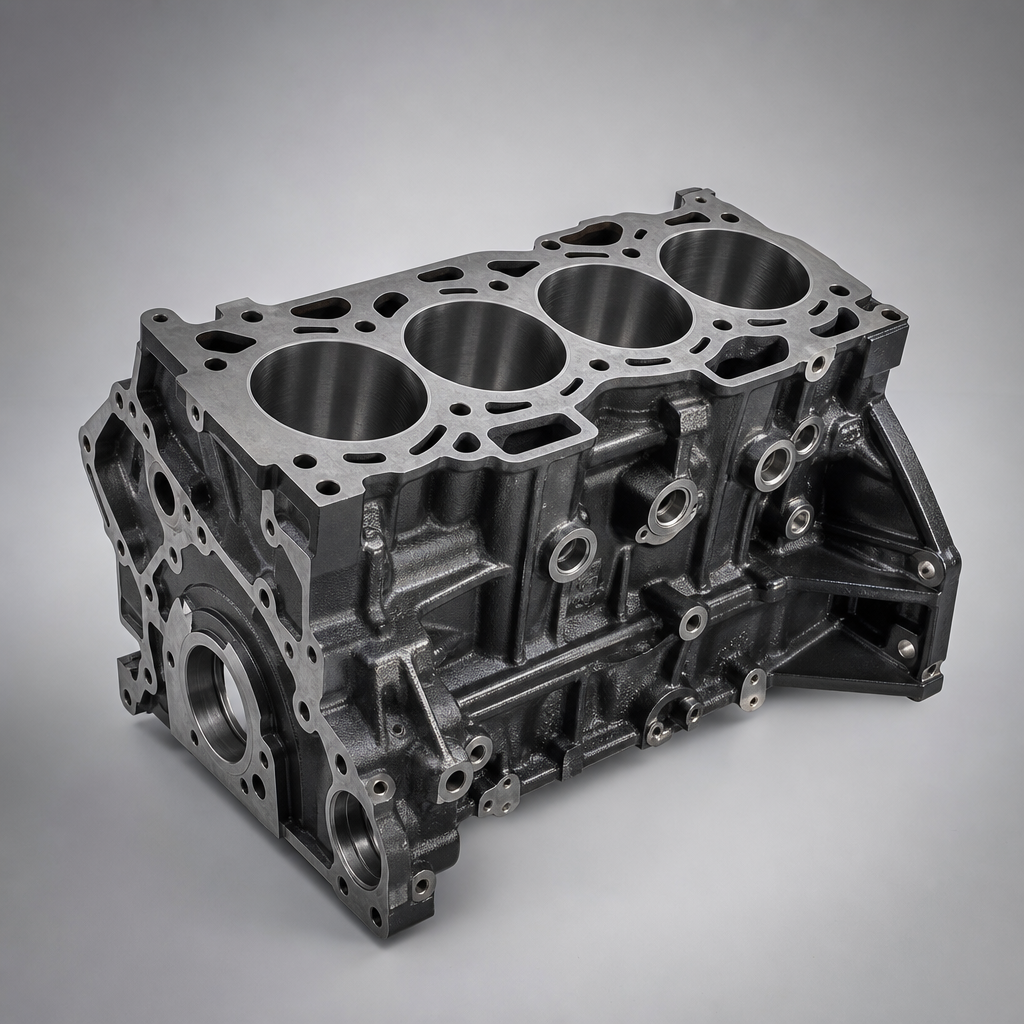
For buyers sourcing engine hard parts, cylinder liner supply is usually judged on three linked factors: dimensional stability, batch consistency, and fulfilment reliability. In the Alfa Romeo aftermarket, that goes well beyond checking nominal bore size. Importers and programme managers need to verify liner material grade, wall thickness control, honing capability, corrosion protection, packing method, and lot-level traceability. They also need clear answers on MOQ, tooling ownership, PPAP support where required, and export documentation.
When reviewing a cylinder liner Alfa Romeo wholesale supplier, procurement teams should look at both technical control and commercial discipline. Dry and wet liner programmes can differ in fit, sealing, cooling behaviour, and inspection priorities, so the supplier should be able to explain the requirements by application rather than offer a generic specification sheet. Buyers evaluating cylinder liner Alfa Romeo wholesale supply should ask for actual bore, OD, hardness, roughness, and stand-proud controls in numbers, plus a clear explanation of what is delivered as-machined, semi-finished, or finish-honed. This article covers the main sourcing checks for aftermarket and private-label buyers, including liner type, inspection data, factory controls, compliance references, and practical order terms for distributors, engine rebuild specialists, and OEM service channels. Driventus is an independent aftermarket manufacturer; brand names are referenced for fitment only.
Start with the buying model, not the catalog
Most enquiries for cylinder liner Alfa Romeo wholesale supply fall into three distinct buying models. The mistake is treating them as interchangeable.
</tr></thead><tbody> </tbody></table>That first distinction changes the entire RFQ. A rebuilder buying semi-finished liners for local honing is solving a different problem than a distributor that wants ready-to-shelf stock with barcode labels and stable carton presentation.
Before samples or pricing, most buyers still need the same core data:
Base material and metallurgical report, typically pearlitic grey cast iron or alloyed cast iron with controlled phosphorus and sulfur limits
Bore and outer diameter tolerance range, preferably reported at 20 C reference temperature
Honing pattern, cross-hatch angle, and final surface roughness data such as Ra and Rz
Hardness range and microstructure confirmation, often expressed as HB or HRC equivalent by agreed method
Corrosion protection for sea freight storage, such as VCI bag plus oil film for 60 to 90 days transit exposure
Lot traceability and retention sample policy, for example one retained sample per batch or per heat
Standard export packing and private-label options, including carton print, barcode, and pallet label format
The finish state matters more than many buyers expect. A semi-finished liner may intentionally leave 0.20 to 0.50 mm on bore for local final honing. A finished liner may arrive within a final bore tolerance such as +/-0.01 to +/-0.02 mm, depending on diameter and application. That one distinction affects incoming inspection, local machining cost, installation flow, and claim handling.
Where the application mix includes older petrol and diesel engines, also confirm whether the supplier supports both centrifugally cast grey iron liners and specialised alloy iron variants. Diesel-oriented programmes often need tighter hardness consistency and stronger documentation on graphite distribution because field life is more sensitive to abrasive wear and thermal loading.
Failure modes first: the checks that prevent expensive liner claims
Cylinder liners do not usually fail because a supplier missed the nominal bore on a brochure. They fail because small deviations stack up during machining, press-fit installation, or early service life.
Core inspection points
A sourcing review should cover these measurable items:
Material: commonly high-grade pearlitic cast iron or alloy cast iron, selected for wear resistance, heat transfer, and structural stability. Typical buyer requests include a chemistry range for C, Si, Mn, P, and S plus metallographic confirmation of graphite form and pearlite ratio.
Bore tolerance: agreed per drawing and finish condition; buyers often request incoming inspection data for each lot. For a finished liner, a typical request may be bore tolerance within 0.01 to 0.02 mm, measured at top, middle, and bottom in two axes.
Outer diameter tolerance: critical for interference fit, block contact, and heat dissipation into the parent bore. Depending on liner size and installation method, buyers may target OD tolerance within 0.015 to 0.03 mm to hold stable press-fit conditions.
Wall thickness variation: affects local distortion after installation and during thermal cycling. Many buyers set a maximum wall variation of 0.03 to 0.05 mm around the circumference.
Flange parallelism and height: important where liner stand-proud dimension influences head gasket sealing. On sensitive applications, flange height may need control within 0.02 mm and stand-proud within the engine builder's assembly window.
Roundness and cylindricity: useful controls where fit and ring sealing are sensitive to shape, not only nominal size. A common incoming target is roundness within 0.005 to 0.01 mm after finish honing.
Surface finish: final honed finish should match ring pack specification, lubrication regime, and break-in expectations. Buyers often ask for Ra around 0.4 to 0.8 um and visible cross-hatch angle near 35 to 50 degrees, subject to ring material.
Hardness: should be controlled consistently across the batch, not checked on only one sample per melt. For many cast-iron liners, a practical control band is around 180 to 260 HB, but the target should always follow the drawing and use case.
Where wholesale programmes actually go wrong
Most claim batches trace back to one of these issues:
1. OD fit is technically in range, but not stable enough lot to lot, so installation force and heat transfer drift. 2. Bore finish is acceptable on paper, but inconsistent enough to affect ring seating and oil control. 3. Wall thickness variation creates distortion after installation or under thermal cycling. 4. Cleaning after honing is weak, so abrasive residue remains in the part. 5. Rust prevention is too light for sea freight and warehouse dwell time. 6. The supplier reports one measurement method, while the buyer inspects another.
That is why process control matters as much as the finished dimension. Buyers should ask how the supplier controls raw casting source approval, machining fixture repeatability, in-process gauging frequency, final washing, rust-prevention treatment, and non-conforming batch segregation.
For quality management, published systems such as IATF 16949:2016 and ISO 9001:2015 are useful reference points because they require documented control of production, traceability, corrective action, and supplier management. They do not prove part quality by themselves, but they make it easier to judge whether the factory has repeatable controls in place. For EU and UK import programmes, material declarations may also need review under REACH (EC) No 1907/2006 where applicable to packaging substances, coatings, or process chemicals.
If the liner is intended for a demanding overhaul programme, agree the inspection method as well as the tolerance. Specify gauge resolution, measurement positions, ambient temperature near 20 C, and whether results are reported against nominal drawing values or final usable limits. That is a simple step, but it prevents arguments later when supplier data and incoming inspection do not match.
Compare the commercial terms before you compare the unit price
In wholesale liner sourcing, the biggest surprises usually come from assumptions hidden behind the quote.
Item
Typical buyer question
Why it matters
MOQ
Is MOQ per reference, per order, or per shipment?
Affects inventory risk and launch viability
Lead time
Is quoted lead time based on raw castings in stock?
Prevents unrealistic replenishment planning
Tooling
If custom dimensions are needed, who owns tooling?
Avoids disputes on future supply transfer
Packaging
Are liners packed with VCI, sleeves, separators, and desiccant?
Reduces corrosion and transit damage
Inspection
Is pre-shipment inspection included or charged separately?
Changes true landed cost
Documentation
Can the supplier provide packing list, COO, and material records?
Required for customs and customer files
</tr></thead><tbody> </tbody></table>A typical wholesale order may combine stocked sizes with custom carton marking, barcode labels, and pallet configuration for regional distribution. If private-label supply is planned, confirm artwork approval timing, print method, carton strength, and label data format at quotation stage rather than after pricing is agreed.
For new-fitment development or modified dimensions, buyers should ask whether the supplier supports custom manufacturing, including drawing review, sample submission, controlled pilot runs, and revision management if the first sample requires changes.
Useful early questions include:
What is the standard MOQ for a stocked liner reference?
Can mixed references be consolidated into one shipment?
What is the normal production lead time after deposit and artwork approval?
Are safety stock arrangements available for annual contracts?
How are dimensional claims handled if a batch is already in market?
Is lead time different for repeat orders versus first-time production?
For planning purposes, many buyers see patterns like these:
Stocked references: MOQ often starts at 100 to 300 pieces per part number, or one carton multiple if the supplier carries finished stock
Semi-custom or private-label repeat items: MOQ often runs 300 to 1,000 pieces per reference depending on carton print and plating or coating steps
New custom dimensions or low-turn references: MOQ can move to 1,000 to 3,000 pieces if dedicated tooling, pattern adjustment, or non-standard gauges are required
Sample lead time: commonly 15 to 30 days if castings exist, longer if new tooling or new fixtures must be prepared
Repeat production lead time: commonly 30 to 45 days from deposit, confirmed artwork, and order release; 45 to 75 days is more realistic when castings must be scheduled from melt
Sea freight export packing: buyers should confirm whether palletising, fumigation where needed, and drop-test carton validation are included in the quote
Price logic should also be unpacked. In this category, the quoted piece price usually moves with four variables: raw casting weight, finish state, order quantity, and packing complexity. A semi-finished liner may look cheaper ex works, but the buyer then absorbs final honing cost, local rejection risk, and more incoming inspection time. A ready-to-install liner with bore report, VCI packing, and branded cartons costs more per piece and can still be the lower-risk choice.
That is why buyers comparing cylinder liner Alfa Romeo wholesale offers should calculate landed cost per usable piece, not just quoted unit price. Scrap allowance, local machining, relabelling, extra inspection, and slow-moving MOQ stock all belong in the comparison.
Audit the factory like a process review, not a presentation
A supplier audit for cylinder liners should focus on process evidence. Slides are easy. Stable records are harder.
Audit checkpoints
Incoming material verification and supplier qualification records
Calibration status of bore gauges, micrometers, air gauges, and hardness testers
Process flow from rough machining to finish honing and cleaning
SPC or equivalent trend records for critical dimensions
Final inspection sampling plan and acceptance criteria
Traceability from finished carton back to production lot
Rust prevention, bagging, pallet wrapping, and warehouse storage conditions
Where programme risk is higher, buyers may also request:
Retained sample policy by batch
Metallographic evaluation records
Salt-spray or storage-corrosion validation for the packaging system
Corrective action example for a previous dimensional issue
Evidence of change-control approval for tooling or process revisions
Driventus operates under a documented quality system aligned with IATF 16949:2016 and ISO 9001:2015 requirements. For B2B buyers, that matters because cylinder liner claims are expensive to resolve after installation. Clear records on gauge control, non-conformance handling, and lot traceability reduce that risk and make escalation more manageable if a field issue appears.
A good audit also checks whether the supplier separates standard aftermarket production from custom runs. Shared fixtures, mixed routing, or undocumented setup changes can create avoidable dimensional drift if changeover discipline is weak.
Ask to see the actual process sequence and checkpoint frequency. A typical route is raw casting receipt, visual and chemistry confirmation, rough turning, stress-relief or controlled ageing where used, semi-finish turning, bore machining, finish honing, deburring, washing, rust prevention, final inspection, and packing. Useful evidence includes first-piece approval sheets, SPC charts on OD and bore, gauge calibration labels with due dates, and final inspection reports showing how many parts per lot are checked.
If the supplier claims 100 percent checking of critical dimensions, verify whether that is manual, air-gauge based, or automated, and whether records are stored by lot for at least 12 to 24 months. Buyers with higher warranty exposure should also verify cleanliness limits, chip detection after honing, and carton-level traceability codes. The strongest factory is usually the one that can show stable control over time, not the one making the boldest quality claim in a sales deck.
What makes an OE-equivalence claim believable
In this category, buyers often ask whether a liner is "OE-equivalent". The useful answer is not marketing language. It is evidence.
A credible supplier should be able to discuss:
Nominal and actual dimensional conformity to the agreed print
Material grade and hardness consistency versus application requirement
Installation fit and heat transfer performance expectations
Honed surface compatibility with the intended piston ring pack
Packing integrity for long transit and warehouse storage
Where a buyer provides an existing reference, the supplier may cross-reference to an OE format such as OE 06A107065 only when that format is already part of the enquiry. Cross-references should be used for identification and fitment mapping, not as a claim of manufacturer approval, authorisation, or direct OE origin.
Treat the claim cautiously if the supplier cannot provide any of the following:
Controlled drawing or agreed dimensional sheet
Inspection report from the sampled batch
Material or hardness verification
Defined claim procedure for field failures
Consistent answer on liner type, finish state, and installation recommendation
For new distributor programmes, sample approval should include dimensional inspection, visual review, packaging review, and, where practical, a controlled installation test before full container orders are released. If the application has known sensitivity around stand-proud height, interference fit, or ring compatibility, those checkpoints should be written into the approval routine.
In practice, an OE-equivalence discussion becomes credible when the supplier can show three layers of evidence. First, dimensional data: bore, OD, flange height, overall length, wall thickness, roundness, and finish all compared to the agreed print. Second, material and process data: hardness range, microstructure, and confirmation of honing or finish route. Third, functional confirmation: sample fitment or rebuild validation from a controlled installation. For higher-risk programmes, buyers may also request a short capability snapshot on critical dimensions, such as Cp or Cpk trends, or at minimum consecutive lot results showing the process is holding tolerance without constant rework.
That level of detail matters because many field complaints are not caused by gross mismatch. They come from borderline interference fit, poor bore finish compatibility with the ring set, or packaging corrosion after long transit. A supplier that can only say "matches OE quality" is usually asking the buyer to do the real validation work.
A six-step shortlist for cylinder liner Alfa Romeo wholesale sourcing
Before nominating a supplier, run the decision in a fixed order. It keeps the team from jumping too early to piece price.
1. Confirm liner type, application scope, and annual volume by reference. 2. Request dimensional sheet, material data, and sample inspection report. 3. Verify certification status, audit documents, and traceability method. 4. Check MOQ, replenishment lead time, and private-label packaging options. 5. Approve sample fitment and transit packing before volume release. 6. Define claim handling, replacement policy, and batch identification format.
This approach helps buyers compare quotations on total supply risk rather than unit price alone. For importers serving EU, UK, North American, Australian, or Brazilian markets, the stronger supplier is usually the one with stable process control, clear communication on tolerance, and realistic commercial terms.
For current availability, programme review, or a wholesale quotation, buyers can request a quote.
A practical RFQ package for cylinder liner Alfa Romeo wholesale sourcing usually performs better when it includes the following data upfront: reference list, annual demand by part number, target incoterm, required finish state, carton quantity, pallet limit, barcode format, destination market, and any must-have dimensional controls such as OD interference window or final bore finish. When those items are missing, suppliers tend to quote on different assumptions, which makes price comparison unreliable.
A simple scoring model also helps keep supplier selection disciplined:
Technical conformity: 30 percent
Process control and traceability: 20 percent
MOQ and inventory fit: 15 percent
Lead time realism: 15 percent
Packaging and export readiness: 10 percent
Price per usable piece: 10 percent
That weighting prevents a low headline price from dominating the decision when tolerance control, corrosion protection, or replenishment stability are weak. In liner programmes, one avoidable claim batch can erase the saving from a small unit-price reduction.
Frequently asked questions
MOQ depends on whether the reference is a standard stocked size or a custom programme. Many suppliers quote MOQ per part number, while others allow mixed-reference consolidation. As a working benchmark, stocked references may start around 100 to 300 pieces per item, repeat private-label supply may run 300 to 1,000 pieces, and fully custom dimensions can move beyond 1,000 pieces if tooling or dedicated gauges are needed. Buyers should confirm MOQ, carton quantity, pallet minimums, and whether the MOQ applies to trial orders or only repeat production before approving samples.
At minimum, buyers usually request a commercial invoice, packing list, and certificate of origin. For technical review, it is reasonable to ask for dimensional inspection data, material or hardness records, and certification details linked to IATF 16949:2016 and ISO 9001:2015. Depending on the market and programme, buyers may also need packaging details, lot traceability information, REACH-related material declarations where applicable, and a sample control plan showing how bore, OD, flange height, and finish are measured.
Approve a production-representative sample, review critical dimensions, verify packaging against sea freight conditions, and require batch traceability on cartons. A written claim procedure, retained sample policy, and clear agreement on whether the part is supplied finished or semi-finished also help when investigating fitment issues or early wear concerns. For higher-risk programmes, buyers should also align on measurement temperature, gauge type, acceptable roughness range, and the inspection frequency used in production so supplier reports and incoming inspection are directly comparable.
If you are qualifying a new liner source or comparing current vendors, Driventus can review your part list, volume plan, tolerance requirements, and packaging requirements. Contact the team to discuss supply options at /contact.html