Cylinder Liner Acura Wholesale: How Buyers Screen Suppliers
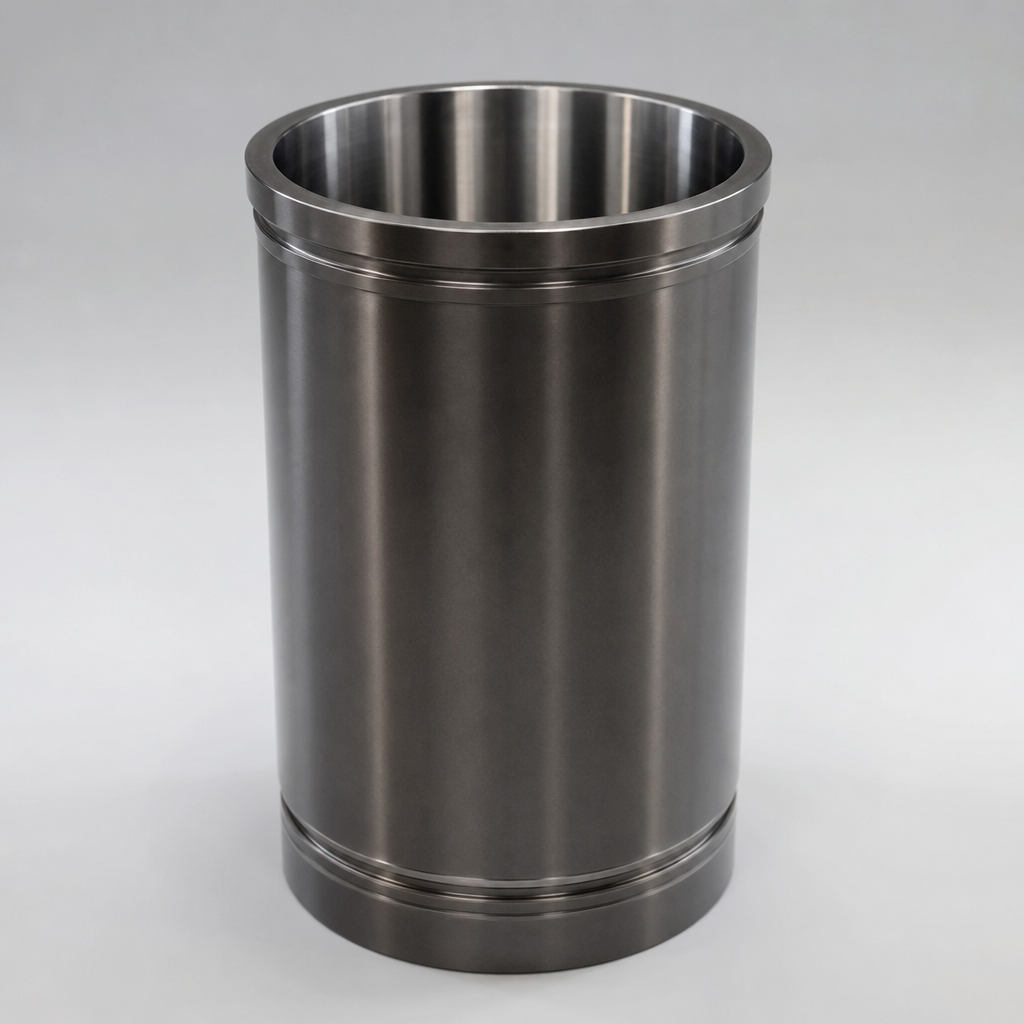
Buying Acura-fit cylinder liners at wholesale level is not a box-ticking exercise. The part sits at the center of bore geometry, heat transfer, oil control, and rebuild consistency, so a low quote can become expensive fast if tolerance drift, weak traceability, or unstable replenishment shows up later.
For most distributors, service-part buyers, and repair-chain procurement teams, the real question is simpler: which supplier can deliver repeatable dimensions, usable documentation, and a supply plan that matches the business model? That means checking more than catalogue fitment. Buyers need material data, machining condition, hardness range, inspection logic, MOQ structure, packaging detail, and lead-time assumptions they can actually plan around.
This article breaks down the decision process for the cylinder liner acura wholesale market in a more practical way: what to verify first, where supplier risk usually hides, how to compare offers without overvaluing piece price, and when a project should move from standard sourcing into custom production. Driventus is an independent aftermarket manufacturer; brand names are referenced for fitment only.
Start with the few checks that eliminate weak quotes quickly
Before comparing ten specification lines, screen for the items most likely to affect interchangeability and rebuild yield. A liner may appear acceptable in a generic quotation yet still create machining delays, sealing issues, or inconsistent install results if wall thickness, flange height, concentricity, or surface finish are loosely controlled.
A serious quotation for Acura-fit liners should state at least:
Liner type: dry liner, wet liner, or repair sleeve
Base material: usually alloyed cast iron with controlled hardness and graphite structure, such as pearlitic alloy cast iron with a declared chemistry window
Nominal size set: internal diameter, outer diameter, total length, flange diameter, and flange height where applicable
Bore and outer diameter tolerances: for example, semi-finished ID tolerance such as +0.03 / +0.08 mm and OD tolerance such as ±0.02 mm or as agreed to drawing
Wall thickness variation: maximum deviation, commonly controlled within 0.03-0.05 mm depending on liner size
Roundness and concentricity: typical control target such as ≤0.02 mm after finish machining
Surface finish: internal bore finish before final honing or plateau finishing, often specified around Ra 0.8-1.6 μm for semi-finished bores
Heat treatment and hardness range: often declared in HB, for example 180-240 HB or according to project requirement
Corrosion protection and packaging method: oil dip, VCI paper, sealed polybag, carton quantity, and pallet standard
Batch traceability and inspection records: heat number, production lot, inspection date, and shipment linkage
Then move to the commercial filter. In cylinder liner acura wholesale buying, a technically acceptable supplier can still be the wrong fit if MOQ, replenishment logic, or mixed-SKU handling do not work for your stocking pattern.
Ask for hard numbers, not broad promises:
Sample quantity
Trial-order MOQ
Mass-order MOQ
Price breaks at 300 / 500 / 1,000 pcs where relevant
Routine lead time
Repeat-order lead time after approval
Mixed-SKU consolidation support
If you also source related engine parts, it helps to confirm whether the supplier can combine liners with pistons, rings, gaskets, or water pumps through our catalog or broader engine components.
Spec deep-dive: the data that should be in writing before PO release
Cylinder liners are unforgiving parts. Catalogue dimensions are not enough. Buyers should request the controlled specification sheet and the inspection method behind each value, especially for repeat wholesale supply.
Item
What to confirm
Why it matters
Material grade
Alloyed cast iron chemistry, microstructure, and metallographic control
Affects wear resistance, thermal stability, and machinability
Internal diameter
Finished or semi-finished bore tolerance, such as +0.03 / +0.08 mm before final honing
Determines final fit after honing
Outer diameter
Press-fit or location tolerance, commonly ±0.02 mm or per drawing
Controls interference and block retention
Total length
Overall dimensional tolerance, often within ±0.03-0.05 mm
Prevents deck and seating issues
Flange height/diameter
If flanged design is used, with axial and radial tolerance stated
Critical for axial location
Wall thickness variation
Maximum wall variation and concentricity limit, such as ≤0.05 mm
Supports even heat transfer and bore stability
Hardness
Typical Brinell or equivalent range, for example 180-240 HB
Balances wear resistance with machining behaviour
Surface roughness
Bore Ra/Rz value before finishing stage, often Ra 0.8-1.6 μm
Influences ring seating process
Chamfer detail
Edge condition, angle, and lead-in geometry, for example 0.5 × 45° if specified
Reduces installation damage
Coating/oil protection
Rust preventive specification and salt-air transit protection method
Protects stock in transit and storage
</tr></thead><tbody> </tbody></table>Where supply is based on a drawing or physical sample rather than an established shelf item, ask for the control plan before confirming the order. This matters most for custom oversize repair sleeves, low-volume service parts, and projects where the machining sequence differs from a standard product. For those cases, custom manufacturing may be more relevant than a generic SKU.
Inspection frequency: 100% for critical dimensions or sampling by lot, such as ANSI/ASQ Z1.4 AQL 1.0 or 1.5
Drawing revision control: issue number and date on every quotation and production record
Machining condition: rough-machined, semi-finished, or finish-honed supply state
Oversize options: for example +0.25 mm, +0.50 mm, +0.75 mm, +1.00 mm where relevant to the programme
Interference-fit recommendation: installation allowance matched to block material and service practice
Published management-system standards also belong in technical due diligence. At minimum, review whether the factory operates under IATF 16949:2016 and ISO 9001:2015, and whether materials and substances are managed in line with REACH (EC) No 1907/2006 for applicable export markets. If customer approval requires it, ask whether the supplier can issue material certs, hardness reports, dimensional reports, and PPAP-style documents at agreed submission levels.
Where cylinder liner projects usually fail: factory and audit risk points
Most liner problems do not start at final inspection. They start earlier: unstable castings, loose machining allowance control, poor gauge discipline, inconsistent honing, or weak lot traceability. That is why a supplier audit should focus on failure modes, not just machine count.
Process controls worth checking
Ask how the factory manages these stages:
Raw casting inspection for shrinkage, porosity, cracks, chill defects, and dimensional allowance before machining release
Material verification and hardness checks by batch, including melt or heat traceability
Rough turning, finish turning, and boring sequence with defined machining allowance at each stage
Stress relief or stabilising step where used to reduce post-machining distortion
Honing parameters, cross-hatch target, and bore measurement frequency
Cleaning, rust prevention, drying time, and protective packing before boxing
Lot identification through production and dispatch, including carton-to-batch linkage
The right audit conversation is numerical. Ask what the process is allowed to do, how often it is checked, and what happens when it drifts.
Useful checkpoints include:
Incoming casting checks: sample size per batch, rejection criteria for porosity, and whether wall stock allowance is verified against drawing
Machining allowance control: how much stock is left after rough boring and before final honing, often in the range of 0.02-0.06 mm depending on supply condition
In-process dimensional checks: whether OD, ID, length, and flange dimensions are checked at first-off, every setup change, and every defined piece interval such as every 20-50 pcs
Gauge capability: smallest readable increment, calibration cycle, and GR&R evidence for critical bore measurements
Final inspection release: whether critical dimensions are checked 100%, by tightened sampling, or by standard lot plan
Audit questions procurement teams often use
During a remote or on-site audit, practical questions include:
1. Are gauges calibrated and traceable to a documented schedule, such as 6- or 12-month calibration intervals? 2. Is concentricity measured on every batch or by sampling plan, and what is the acceptance limit in millimetres? 3. How are non-conforming castings segregated, labelled, reviewed, and dispositioned? 4. Can the factory issue dimensional reports with each shipment, including actual readings rather than pass/fail only? 5. Are PPAP-style documents, control plans, process flow charts, and material certificates available where required? 6. What is the normal process scrap rate and rework rate for this liner family? 7. How long are batch records retained, and can the factory trace a carton label back to the machining lot and casting batch?
A strong quality system should show process-FMEA thinking, incoming inspection records, in-process checks, final-release criteria, and corrective-action handling. For buyers serving regulated markets, it also makes sense to confirm document retention periods and recall traceability capability before approving a cylinder liner acura wholesale source. In practice, buyers often ask for retention of production and inspection records for 2-5 years, depending on customer and market requirements.
Commercial reality check: MOQ, replenishment, and packaging that actually work
A technically sound supplier can still fail commercially. This happens when MOQ is too rigid, repeat orders are slow, packaging is built for factory dispatch rather than importer handling, or labels do not match warehouse systems.
Align these points before the first order:
MOQ by item: whether it is set per SKU, per diameter range, or by total order value
Sample policy: paid samples, tooling samples, or pre-production approval samples
Lead time: standard production cycle plus transit planning
Forecast handling: blanket-order support for rolling demand
Packaging: individual rust-protective wrap, inner boxes, export cartons, and pallets
Labelling: buyer SKU, batch code, country-of-origin marking, and barcode requirements
Mixed loading: ability to consolidate other engine parts in one shipment
For side-by-side quote comparison, convert these into numbers:
Sample quantity: for example 2-10 pcs
Trial-order MOQ: often 50-100 pcs per SKU for non-stock or custom-machined items
Mass-order MOQ: often 200-500 pcs per SKU or a minimum order value if several sizes are mixed
Tooling or fixture charge: whether it is amortised into unit price, charged once, or waived after volume commitment
Repeat-order lead time: commonly shorter than first order because tooling, sample approval, and packaging files are already frozen
Packaging deserves more scrutiny than many buyers give it. Liners are heavy. They rust, chip, and bruise if edge protection or pallet stability is poor. Confirm carton burst strength, pallet stacking logic, and whether desiccant or VCI protection is used for sea freight. Also confirm pieces per inner box, boxes per carton, carton gross weight, and pallet height limit so warehouse and freight teams can judge handling efficiency. Many importers keep individual export cartons below roughly 20-25 kg gross to reduce damage and manual-handling risk.
Lead time should also be separated into real stages:
Samples from existing tooling: around 7-15 days
First production with new setup or custom packaging: around 30-45 days
Repeat orders for approved items: around 20-30 days subject to casting availability
Sea freight transit: route dependent, often 20-40 days port to port
If the programme includes private label, confirm artwork control, barcode placement, carton drop resistance, and final carton approval before mass production.
A practical scorecard for comparing cylinder liner suppliers
Price alone is a poor decision tool for Acura-fit service parts. The better comparison is total supply performance: dimensional consistency, paperwork quality, replenishment reliability, and the hidden cost of claims or stockouts.
A simple weighted scorecard can work well:
30% Technical compliance: dimensions, material, hardness, finish, and consistency
20% Quality assurance: certifications, traceability, calibration, and CAPA response
20% Supply performance: MOQ, lead time, on-time delivery history, and capacity
15% Service support: quotation speed, engineering response, and documentation quality
To make the comparison usable, ask every supplier for the same data format rather than open-ended sales language. Examples include:
Dimension capability: actual tolerance commitment in millimetres for ID, OD, length, and flange features
Inspection commitment: 100% check or sampling level for critical dimensions
Capacity: monthly output by size family, such as 3,000 pcs, 5,000 pcs, or more per month
MOQ structure: per SKU, per family, or per total order value
On-time delivery KPI: last 6-12 months performance if available
Claim response time: how many working days to issue containment and corrective action
Price basis: EXW, FOB, or CIF, with packing included or listed separately
If the supplier quotes an OE cross-reference already provided by the buyer, present it in the form OE 06A107065 or another generic-format reference only where it is relevant to the sourcing brief. Fitment claims should never replace dimensional verification.
Also make suppliers state what is standard and what is customised. That includes machining allowance, final honing responsibility, oversize options, and any deviation from catalogue specification. Ambiguity at RFQ stage usually becomes dispute later.
When comparing price, calculate at least four cost layers:
1. Unit price at target volume 2. Tooling or setup cost spread over annual quantity 3. Inspection and claim risk cost if the supplier provides weak process control 4. Logistics cost per piece after carton density and pallet efficiency are confirmed
That is often why a slightly higher piece price produces a lower annual landed cost in a cylinder liner acura wholesale programme.
When standard sourcing stops working and a custom programme makes more sense
Some enquiries do not fit a shelf product. The trigger may be non-standard wall thickness, a special repair-sleeve size, private packaging, or machine-shop requirements that differ by region. In those cases, buyers should stop treating the project like a normal stock quote and move it into a controlled development path.
Custom programmes generally work better when the buyer provides:
Target dimensions and tolerances
Material and hardness requirement
Annual volume estimate
Packaging specification
Market compliance requirements
Inspection documents needed at shipment
This is where engineering support matters. The supplier should be able to say what is manufacturable, what needs tooling, and which tolerance stack is realistic in serial production. For long-term accounts, combining standard items with custom manufacturing can reduce vendor complexity and simplify inbound planning.
For custom liner projects, expect a staged process:
1. RFQ review: drawing, sample, and application data checked for manufacturability 2. Technical clarification: nominal dimensions, tolerance stack, material, hardness, and supply condition confirmed in writing 3. Tooling or fixture decision: whether existing tooling can be used or new tooling is required 4. Sample production: often 2-10 pcs for dimensional and installation review 5. Pilot lot: commonly 30-100 pcs to verify repeatability, packaging, and inspection flow 6. Mass production release: after dimensional approval and commercial sign-off
Buyers should also ask the supplier to identify which dimensions are critical, major, and general so inspection effort stays focused on failure cost. ID, OD, flange height, concentricity, and hardness usually deserve tighter control than cosmetic marks on non-functional surfaces. If a custom oversize sleeve is involved, confirm whether the part is delivered with machining allowance left in the bore or to a near-finished size, because that directly affects installation practice at the machine shop.
A useful custom RFQ also defines the business case in numbers: annual demand, launch quantity, acceptable tooling budget, target unit price at volume, and required repeat lead time. Without those inputs, factories tend to quote cautiously, adding cost buffers or longer delivery windows.
If you want to review available part families, see our catalog. Driventus is an independent aftermarket manufacturer; brand names are referenced for fitment only.
Frequently asked questions
MOQ depends on whether the part is a stock item or a custom size. In practice, samples may be supplied in small quantities such as 2-10 pieces, trial orders may start around 50-100 pieces per SKU, and regular production MOQ may move to 200-500 pieces per SKU or a minimum order value when several sizes are consolidated. Buyers should also confirm price breaks, sample policy, and mixed-SKU consolidation before placing a first order.
Common documents include the commercial invoice, packing list, certificate of origin where required, batch traceability record, dimensional inspection report, and material or hardness data when specified. For controlled programmes, buyers may also request carton-label approval records, lot-number mapping, and PPAP-style documents such as control plans or material certificates.
Use approved drawings or controlled specifications, request first-sample validation, review packaging standards for sea freight, and audit the supplier’s calibration and traceability process. It also helps to define numerical acceptance criteria in advance, such as tolerance limits, hardness range, sampling plan, and report format. Clear acceptance criteria before production are usually more effective than post-arrival sorting.
If you are qualifying a cylinder liner supplier for distribution, private label, or contract manufacturing, we can review your specification and supply plan. Use our contact page to request a quote: /contact.html